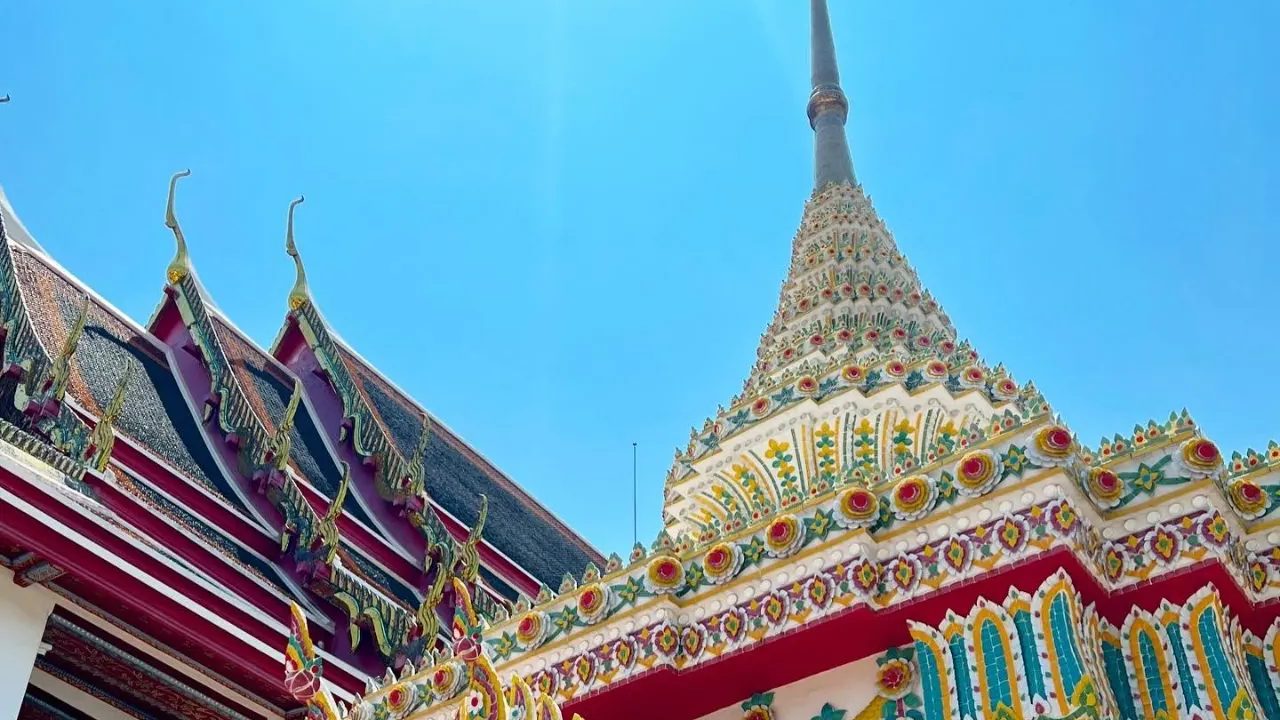
Thailand has a reputation for being easy, and mostly it really is. The food is amazing, the transport works and you can go from a Bangkok rooftop to a jungle temple to a beach in a week, which is exactly why so many first trips go wrong, as people try to fit in everything and end up on the wrong coast for the season or spending half their holiday in transit.
I travelled through Thailand as part of a longer loop around Indochina, and these are the things I’d pass on to a friend booking their first trip.
When is the best time to visit Thailand?
For most of the country the cool, dry season from roughly November to February is the best time to go, with lower humidity, clear skies and comfortable evenings in Bangkok and the north. It’s also the busiest and most expensive time, so book your beach stays early.
The hot season runs roughly March to May, and April is the toughest month of all. Songkran, the Thai New Year water festival, falls in mid-April and is great fun if you want to join in and a real obstacle if you don’t. From roughly February to April the north can also get smoky haze from agricultural burning, which really flattens the views around Chiang Mai.
The rainy season is roughly June to October. It usually means heavy afternoon downpours rather than all-day rain, with greener landscapes and fewer crowds. The islands are where the timing really matters though.
Andaman or Gulf coast: which Thai islands are best when?
Thailand has two coasts with different weather patterns, and picking the right one is probably the biggest decision you’ll make on a first trip.
- Andaman coast (Phuket, Krabi, Koh Lanta, Koh Phi Phi): best roughly November to April. From about May to October the southwest monsoon brings rougher seas, some boat routes run less often and some of the smaller resorts close.
- Gulf coast (Koh Samui, Koh Phangan, Koh Tao): generally drier from roughly January to August, which makes it the better choice during the European summer. Its wettest spell is usually October to December.
So if you’re travelling in July or August I’d head to the Gulf, and if you’re going over Christmas the Andaman side is usually the safer bet.
A classic two-week Thailand itinerary
Two weeks is enough for three bases, and I’d try hard not to add a fourth. The route below is a classic, going from the city up to the mountains and then down to the sea, so you reach the beach just when you need it most.
Bangkok: three nights
That’s enough time for the Grand Palace and Wat Pho, a trip along the Chao Phraya river, Chinatown after dark and a day that’s mostly just eating. Arrive, get some sleep and do the big temples early on your first full morning, before the heat and the tour groups arrive.
Chiang Mai and the north: four nights
You can fly, or take the overnight sleeper train, which is a great experience in itself. Chiang Mai’s old city is full of temples, and Doi Suthep above the town is worth the trip up for the view. Add a day trip into the hills or a cookery class, or a night or two in Chiang Rai.
The islands: six or seven nights
Fly south to Krabi or Phuket for the Andaman side, or to Koh Samui for the Gulf, depending on the season. I’d pick one or two islands at most, as every island hop costs you half a day of ferries and packing.
Any extra days are best added to whichever base you liked most. With three weeks, Ayutthaya’s temple ruins make an easy side trip from Bangkok, and the jungle lakes of Khao Sok fit neatly between Bangkok and the Andaman coast.
How do you get around Thailand?
Domestic flights are frequent and quick, and usually the best way to cover long distances. The overnight train between Bangkok and Chiang Mai is slower, but it saves you a night’s accommodation and it’s far more memorable than an airport.
In Bangkok the BTS Skytrain and MRT get you around the traffic, and the river boats are the easiest way to reach the old city. Suvarnabhumi Airport has a rail link into the city, which is much better than a taxi at rush hour. Ride-hailing apps like Grab and Bolt are widely used and take away any haggling. On the islands, ferries and speedboats connect everything, although there are fewer of them in the low season.
Lots of people hire scooters. If you do, make sure you have the right licence and that your travel insurance actually covers you, always wear a helmet and be honest with yourself about your experience, as these roads are no place to learn.
How much money do you need for Thailand?
I’m not going to give you figures, as they change and depend so much on how you travel, so check current prices before you set a budget. A few things hold true whatever your style though.
- Street food and local restaurants are cheap and often the best meals you’ll have, while Western food and hotel dining cost far more.
- Accommodation is where budgets really split. The islands in peak season are the most expensive part of most trips, so book those first.
- Alcohol is heavily taxed and adds up quickly.
- Your own bank’s foreign ATM and card fees can quietly cost more than you’d expect, and Thai ATMs usually add a withdrawal fee too, so take out larger amounts less often.
- Always pay in Thai baht when a card machine gives you the choice, as letting it convert to pounds usually costs more.
What should you wear to temples in Thailand?
Cover your shoulders and knees. That means no vests, crop tops or shorts at the major temples, and staff at places like the Grand Palace will turn you away if you get it wrong. A light scarf and loose trousers sort it out. Take your shoes off before going into temple buildings, and don’t point your feet at Buddha images or monks.
There are a few other things worth knowing. The head is considered sacred, so don’t touch anyone’s, including children’s. Women shouldn’t touch monks or hand things to them directly. Always show respect for the monarchy too, as Thailand has strict laws on this and they apply to visitors as well.
If you’re not sure when that is, my guide to golden hour and blue hour explains the timing.
Common scams in Thailand (and how to avoid them)
Thailand is generally safe and friendly, but there are a handful of old tricks that still catch first-timers out.
- ”The Grand Palace is closed today.” It almost certainly isn’t. The friendly stranger is steering you towards a tuk-tuk tour that ends up at a gem or tailor shop.
- Cheap tuk-tuk tours. Same story. Agree a price to one destination, or use a ride-hailing app.
- Taxis that won’t use the meter. Get out and flag another one, or book through an app.
- Jet-ski and scooter damage claims. Photograph or film the vehicle all the way round before you ride, and never leave your passport as a deposit.
Do you need a visa for Thailand?
Thailand extended visa-free stays to 60 days in 2024, but from 15 September 2026 that was cut back to 30 days for UK passport holders and travellers from most other eligible countries. You’re now generally limited to two visa-free entries a year, and you may be asked to show where you’re staying, an onward ticket within 30 days and proof you’ve got enough money for your trip. The rules can change quickly, so always check the Royal Thai Embassy website and the UK Foreign Office travel advice before you book.
You’ll also need to fill in the online Thailand Digital Arrival Card before you land. Only use the official government site, as there are plenty of lookalike sites that charge for something that’s free.
What to skip on your first trip to Thailand
- Elephant rides and tiger selfies. Choose a genuine sanctuary where you watch the animals rather than ride or bathe them. My piece on ethical wildlife photography explains what to look for.
- Too many islands. Two is plenty in a week.
- The famous floating markets on a coach tour. They’re heavily staged, and you’ll have a much better time eating at a normal local market.
- Khao San Road for more than an evening. It’s worth seeing once, but I’d stay somewhere with more character.
If you get the season right, keep the route simple and eat everywhere, you’ll have an amazing time! My Thailand gallery should give you some ideas, and Base Camp has the full route I’d follow.
Frequently asked questions
Is two weeks enough for Thailand?
Two weeks is ideal for a first trip if you limit yourself to three bases, such as Bangkok, Chiang Mai and one island area. That gives you the city, the mountains and the beach without spending half the trip in transit. Trying to add more usually means more packing and ferries and less time enjoying the places you actually came to see.
What is the best month to visit Thailand?
For most of Thailand, including Bangkok, the north and the Andaman coast around Phuket and Krabi, November to February is the best time, with cooler, drier weather. The Gulf islands of Koh Samui, Koh Phangan and Koh Tao follow a different pattern and are generally drier from roughly January to August, which makes them a good choice in summer.
What should I avoid doing in Thailand?
Avoid wearing revealing clothes at temples, touching people’s heads, pointing your feet at Buddha images and saying anything disrespectful about the monarchy. Skip elephant rides and tiger attractions, never hand over your passport as a deposit on a rental, and be wary of strangers who tell you a major sight is closed and offer you a different tour.
Is Thailand good for first-time travellers to Asia?
Thailand is one of the best introductions to Asia. It has well-developed tourist infrastructure, frequent domestic flights, easy ride-hailing apps, plenty of English spoken in tourist areas and a huge range of places to stay. The food is excellent and affordable, and the classic route of Bangkok, Chiang Mai and the islands is easy to plan on your own.
Do UK citizens need a visa for Thailand?
No, UK passport holders can visit Thailand visa-free for up to 30 days for tourism. You’re generally limited to two visa-free entries a year and may be asked for proof of accommodation, onward travel and funds. Complete the online Thailand Digital Arrival Card before you fly, and check the UK Foreign Office advice for the latest rules.