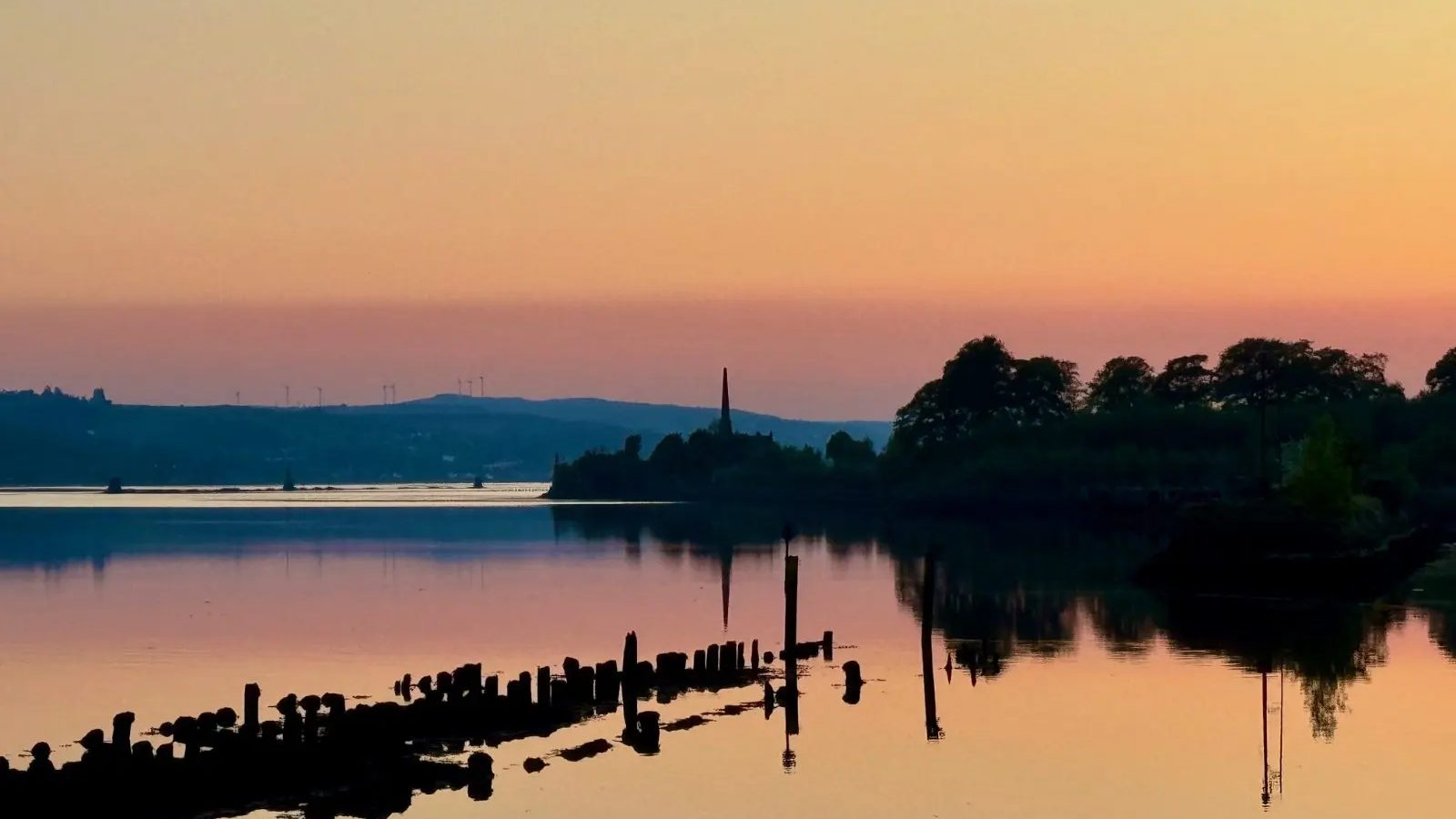
If someone asked me for one piece of advice on taking better travel photos, I’d tell them to think about the time of day before they think about their camera. The light in the hour or so around sunrise and sunset does more for a picture than any lens I own, and it doesn’t cost a thing.
Photographers call these windows golden hour and blue hour. The names are handy, although the “hour” part is a bit misleading, so below I’ve explained what’s actually going on, how to predict it and how I shoot it.
What is golden hour?
Golden hour is the time just after sunrise and just before sunset when the sun is low in the sky. Its light has to travel through more of the atmosphere, which scatters away the blue wavelengths, so what reaches you is warm and soft and comes in from the side. Shadows get long, textures really stand out and it’s very kind to faces.
A common working definition, used by apps like PhotoPills, is when the sun is between roughly 6 degrees above the horizon and 4 degrees below it. The exact boundaries are approximate, and all you really need to remember is low sun and warm light.
What is blue hour?
Blue hour comes before sunrise and after sunset, when the sun has dropped below the horizon but the sky is still lit. There’s no direct sunlight, so the whole scene is lit by the sky itself and you get a cool, even, deep blue. It’s usually defined as the sun being roughly 4 to 6 degrees below the horizon, which falls within civil twilight.
I think blue hour is the best time of all for city photography. The sky still has colour and detail in it and the lights are on, so you can balance the two in one frame without the black, empty sky you get later at night.
What time is golden hour?
There’s no fixed time, because golden hour is tied to the angle of the sun, so it depends on where you are and the date. As a rough guide the evening golden hour starts about an hour before sunset and ends shortly after it, and the morning one is the same the other way round. Blue hour lasts roughly 10 to 30 minutes after sunset (or before sunrise), depending on where you are and the time of year.
If you want anything more precise than that you’ll need an app, and I’ve listed the ones I use further down.
Why golden hour is longer in some places
How long golden and blue hour last depends on the angle at which the sun crosses the horizon, and that changes with latitude and season.
Near the equator the sun rises and sets almost vertically, so it passes through the golden and blue bands very quickly. Golden hour can be well under an hour and blue hour just a few minutes. When I was shooting in Singapore and Bali I learnt to be set up and ready before the light arrived, as there was no time to change my mind once it did.
The further you go from the equator, the shallower the sun’s path and the longer the light hangs around. In a British summer golden hour can easily stretch beyond an hour, and above the Arctic Circle around midsummer the sun can skim the horizon all night and give you hours of low golden light. Even in southern Norway, well below the Arctic Circle, the summer evenings seemed to go on forever, and it completely changed how I planned my days. My guide to the midnight sun explains where and when that happens.
How to find golden hour and blue hour times
These are the tools that do most of the work for me.
- PhotoPills: shows golden and blue hour times for any location and date, plus the sun’s direction on a map, and lets you plan alignments in augmented reality.
- The Photographer’s Ephemeris (TPE): really good for seeing exactly where the sun will rise and set in relation to the landscape.
- Your phone’s weather app: gives you sunrise and sunset times, which is enough for a rough plan.
- A cloud forecast: apps like Windy or Clear Outside show cloud at different heights. Some high or mid-level cloud often gives the best colour, while a solid low layer usually kills it.
Direction matters just as much as timing. In the northern summer the sun rises in the north-east and sets in the north-west, and in winter it swings round towards the south-east and south-west, so check where it will actually be before you commit to a viewpoint.
Golden hour photography tips and camera settings
Golden light is forgiving, but it can be very contrasty when you shoot towards the sun. These are the settings I’d start with.
- Shoot RAW so you can recover highlights and adjust the colour later.
- Set white balance to Daylight or Cloudy rather than Auto, as Auto tries to neutralise the warmth you came out for.
- Use a low ISO (100 to 400) while there’s still plenty of light.
- Expose for the highlights. Shadows can be lifted, but you can’t get back a blown-out sky.
- Bracket when shooting into the sun, taking three to five exposures to blend later.
- Choose your aperture for the job, f/8 to f/11 for landscapes and wide open for portraits and soft backgrounds.
Blue hour photography tips and settings
Blue hour is darker than it looks and the light changes quickly, so it really helps to have a plan.
- Use a tripod. Exposures run from a second or two up to 30 seconds as the light fades.
- Keep ISO low (100 to 200) and use f/8 to f/11 for front-to-back sharpness.
- Use a two-second timer or remote release to avoid shake.
- Try a cooler white balance (around 3,200 to 4,000K) to deepen the blue and neutralise orange street lights, or keep Daylight for a more natural mix.
- Watch the balance point. For cities the best frame often comes when the brightness of the sky roughly matches the lights, usually some minutes after sunset.
- Keep shooting. Take a frame every minute or two, as the best one isn’t always the one you’d expect.
Can you shoot golden hour and blue hour on a phone?
Absolutely, and I shoot plenty on my iPhone. A few simple habits make a big difference. Tap to focus on your subject, then slide the exposure down so the sky keeps its colour, and turn the flash off. Use RAW (ProRAW on recent iPhones) if you’re going to edit, and let HDR or Smart HDR handle the high-contrast scenes.
At blue hour, let night mode do the work, and brace the phone against a wall or railing, or use a small tripod, so it can take a longer exposure. Give the lens a clean first too, as a smudge you’d barely notice at noon turns every street light into a smear at dusk.
Compositions that suit each light
With golden hour it’s all about direction. Backlight gives you glowing edges and flare, side light brings out the texture in dunes, stone and mountains, and rim light on a person or animal separates them from a darker background. If you shoot straight into the sun you’ll get silhouettes, which work best with a strong, simple shape against a bright sky.
Blue hour is more about mood. Cityscapes, bridges and lit-up buildings come alive, and so do reflections in water. Wide open landscapes suit it as well, especially with a lit window or a campfire giving a warm point against all that cool blue. For more ideas, have a look at my guide on how to take better travel photos.
How to plan a travel day around the light
I treat golden and blue hour as fixed appointments and fit the rest of the day around them, and it’s made a real difference to the photos I bring home.
- Scout at midday. The harsh light is poor for photos but it’s great for finding viewpoints, checking access and working out compositions.
- Check the sun’s direction for each location, and decide which is a sunrise spot and which is a sunset spot.
- Rest in the afternoon. You’ll be up early and out late.
- Have a backup close by in case cloud rolls in at your main spot.
Sunrise spots are usually quieter than sunset ones, which is one more reason to set the alarm, and my list of the best sunrise spots in the world is a good place to start. If you fly a drone, dawn is often the calmest time too, with softer light and lighter winds, and there’s more on that in my drone travel photography guide.
Frequently asked questions
What time is golden hour today?
It depends on your location and the date. Roughly, the evening golden hour starts about an hour before sunset and ends shortly after it, while the morning golden hour runs from around sunrise to an hour later. For exact times, use an app such as PhotoPills or The Photographer’s Ephemeris, which work it out from the angle of the sun.
How long does golden hour last?
Rarely exactly an hour. Near the equator the sun sets steeply, so golden hour can be much shorter. At higher latitudes, particularly in summer, the sun sets at a shallow angle and golden light can last well over an hour. Above the Arctic Circle around midsummer, low golden light can carry on for several hours through the night.
Is blue hour before or after golden hour?
Both, depending on the time of day. In the morning blue hour comes first, before sunrise, and golden hour follows as the sun comes up. In the evening it’s the other way round, as golden hour ends around sunset and blue hour follows once the sun sinks a few degrees below the horizon and the sky turns deep blue.
What are the best camera settings for blue hour?
Use a tripod, a low ISO of around 100 to 200 and an aperture of f/8 to f/11. Exposures will usually run from a second or two up to 30 seconds. Shoot RAW, use a two-second timer to avoid shake, and try a cooler white balance of around 3,200 to 4,000K for rich blues and neutral street lights.
Is golden hour better at sunrise or sunset?
Both give warm, low light, but they’re a little different. Sunrise is usually quieter, calmer and clearer, with less haze and often still water for reflections. Sunset tends to be warmer and hazier and is more convenient, but popular viewpoints get crowded. For landscapes and busy landmarks I’d usually choose sunrise, and for cities and people, sunset and the blue hour after it work beautifully.