I have been lucky enough to stand in some of the most photographed places on earth, and I have found that whether a visit feels amazing or a bit miserable usually comes down to how many other people are there with you. The good thing is that crowds are really quite predictable, as they tend to turn up on the same buses at the same times and follow the same routes around, and then they all head off for lunch together.
Once you get a feel for that rhythm you can step out of it. You don’t need special access or a big budget for any of the tricks below, just an early alarm and a willingness to do things a little differently from everyone else.
What is the best time of day to avoid crowds?
Almost always the first hour after opening and the last hour before closing. Most big sights follow the same pattern, quiet at the gate and then filling up steadily from about 9am as the tour groups and day-trippers arrive. It peaks from late morning into mid-afternoon and then thins out again as the coaches head back for dinner.
1. Be first through the gate
This is the one that makes the biggest difference, and it’s also the one people put off the most. Petra opens early, and if you are through the gate at opening you can walk the Siq in near silence and reach the Treasury while the light is still soft and there is hardly anyone about. Come back mid-morning and the same spot is absolutely packed with people and camels.
2. Or be the last to leave
If early mornings really aren’t for you, the late shift works nearly as well. Check the last entry and closing times, get there a couple of hours before and then just take your time. The light is usually better later in the day too, which is why it’s always been my favourite window as a photographer, and as tour coaches rarely hang around for sunset the final hour can feel like you have the place to yourself.
3. Sleep on site, or as close as you can
Day-trippers make up most of any crowd, and they have to stick to transport timetables. If you stay overnight in the village, hut or nearest town you get the evenings and mornings after they have gone. Staying in Wadi Musa rather than doing Petra as a day trip from the coast is the obvious example. The same goes for sleeping in Aguas Calientes for Machu Picchu, or picking a small hill town to stay in rather than commuting in from a big city.
How do you avoid tour groups at popular attractions?
4. Reverse the tour-bus route
Tour groups almost always go round a site in the same order, main entrance first, then the headline sight and a photo stop before heading back to the bus. So do it backwards. At Petra most people walk to the Treasury, have a look along the Street of Facades and then turn round. If you carry on past them and climb the 800 or so steps up to the Monastery first, you will often have it nearly to yourself, and then you can work your way back down as everyone else is on their way up.
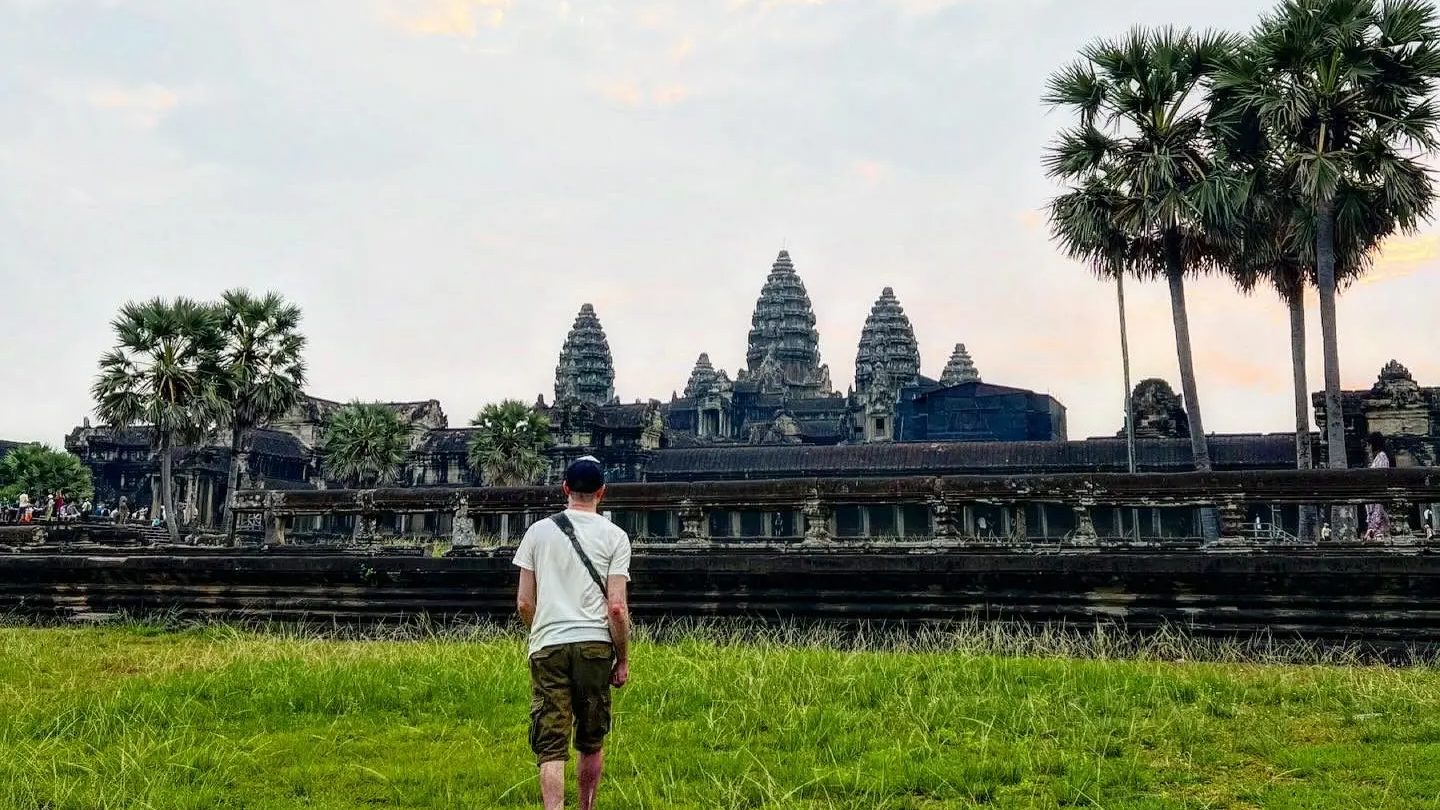
Angkor was much the same when I was there. Hundreds of people gather at the left-hand reflecting pool in front of Angkor Wat for sunrise, all jostling for the same reflection. I found the right-hand pool far calmer, and once the sun is up it’s well worth heading straight into the temple itself while the sunrise crowd drifts back to their tuk-tuks for breakfast. Ta Prohm and the Bayon are also much quieter first thing than they are by 10am. There is more on the temples in my Indochina journal.
5. Walk further than 500 metres
Most visitors stay within a few hundred metres of the car park, bus stop or cable car, and it’s amazing how reliably that happens. Walk for 20 minutes along the coast path, round the next bend of the lake or over the first rise and the numbers drop right off. In Italy I remember one village square being absolutely heaving with people while a lane just two streets back was completely empty.
6. Find the alternative viewpoint
The famous angle is famous because everyone stands in the same spot. I like to look at a map and the satellite view before I go and ask around for where the locals go, and quite often the better photo is from across the valley or from a hill above town. It’s quieter and you come home with a shot that doesn’t look like every postcard.
When is shoulder season, and is it worth it?
7. Travel in shoulder season
Shoulder season is the window either side of peak season, when the weather is still good but the school holidays and summer crowds either haven’t arrived yet or have already gone home. In most of Europe that means roughly April to early June and then September to October. Prices are often lower and the light is gentler, and you aren’t stuck queuing in 35 degree heat.
It does vary a lot by destination so it’s worth checking. The Mediterranean is lovely in late September, but a Norwegian mountain hike can have a much narrower season. When I walked to Trolltunga I realised just how short the summer window is for such a long hike, and the crowds really build up on fine weekends in July and August. Setting off early on a weekday made a big difference, and camping overnight is well worth thinking about too. There is more on that in my Norway fjords journal.
8. Go midweek, and check the cruise-ship calendar
Weekends bring domestic visitors on top of international ones, so Tuesday to Thursday is usually the calmest. In port towns the bigger thing to watch is cruise ships, as one large ship can put thousands of people into a small old town between about 9am and 5pm. Lots of ports publish their cruise schedules online, so I check before booking and save the famous sights for days with no ships in, or for early morning and evening.
Do timed entry tickets really help?
9. Book the first entry slot
More and more of the big sights now use timed or capped entry, from Italian galleries and archaeological sites to popular hiking trails and viewpoints. It can feel a bit restrictive, but it actually works in your favour if you book the very first slot of the day, as you’re guaranteed a place, you skip the ticket queue and you get in before it has had a chance to fill up. For anything in peak season book as far ahead as the system lets you, and always buy from the official website rather than a reseller.
10. Use the lunchtime lull and bad weather
The big sights often have a little dip around lunchtime when the groups go off to eat, so eat early or late and make the most of it. Drizzle and low cloud clear the crowds faster than anything else as well. Some of my moodiest images have come from days that everyone else wrote off.
How do you avoid overtourism and travel more responsibly?
11. Choose the second city, or the alternative
Probably the easiest way to avoid crowds is to go somewhere else in the first place. For every Santorini there is a quieter island with the same blue water, and that’s exactly why I put together a guide to the quieter Greek islands. Plenty of overloaded cities have a second city nearby with half the visitors and just as much character, and my list of underrated travel destinations is a good place to start looking.
It’s also the more responsible thing to do. Overtourism puts real pressure on housing and on the daily lives of people who actually live in these places, so spreading your trip across quieter towns and seasons shares the benefit around more evenly, and you usually end up having a better time too.
12. Be respectful when you do find the quiet
Having a sunrise viewpoint all to yourself is a real privilege, so treat it that way. Keep your voice down, don’t fly a drone where it isn’t allowed, and stay on the paths. When other people do arrive, try not to block their view with your tripod. Follow the local rules and spend your money with local businesses where you can.
A simple plan for any famous sight
- Check opening times, last entry and whether you need a timed ticket.
- Book the first slot of the day, from the official website.
- Stay overnight as close to the site as you can.
- Look up cruise ship and public holiday calendars for your dates.
- Do the headline sight first, or reverse the standard route.
- Walk at least 20 minutes beyond the main viewpoint.
- Plan a second visit late in the day if you can.
Put three or four of these together and you’ll be amazed at how different the same place can feel! If you’d like to see how I timed each stop in the Middle East, have a look at my Petra to the Pyramids journal, and the full day-by-day timings I use are all in Base Camp.
Frequently asked questions
What time do tourist attractions get busiest?
Most famous sights are busiest from about 10am to 3pm, when tour groups, cruise passengers and day-trippers all overlap. The quietest times are usually the first hour after opening and the last hour or two before closing. Weekends and public holidays bring extra domestic visitors, so a midweek morning is usually the calmest time to visit any popular attraction.
What is shoulder season in travel?
Shoulder season is the period either side of a destination’s peak season, when the weather is still good but the crowds and prices are lower. In much of Europe it runs roughly from April to early June and from September to October. The exact window varies from place to place, so check the typical weather and school holiday dates before you book.
Is it worth getting up for sunrise to avoid crowds?
Usually, yes. Most visitors arrive mid-morning, so the first hour of the day is often the only time you can see a famous site close to empty, and you get softer, warmer light for photos too. The exception is a famous sunrise spot like Angkor Wat’s reflecting pools, where you may want to stand somewhere a little different from the crowd.
How do I avoid cruise ship crowds in port towns?
Check the port’s cruise ship schedule, which lots of harbours publish online, and plan your sightseeing for days with few or no ships in. On busy days, visit the old town early in the morning or in the evening once passengers are back on board. Staying overnight rather than visiting on a day trip gives you both of those quieter windows.
How can I travel responsibly and avoid overtourism?
Travel outside peak season where you can, pick less-visited alternatives to the most crowded places, stay overnight rather than day-tripping and spend your money with locally owned businesses. Stick to local rules on visitor numbers, drones and access, and stay on marked paths. Spreading visits around takes pressure off local communities and usually gives you a better trip as well.