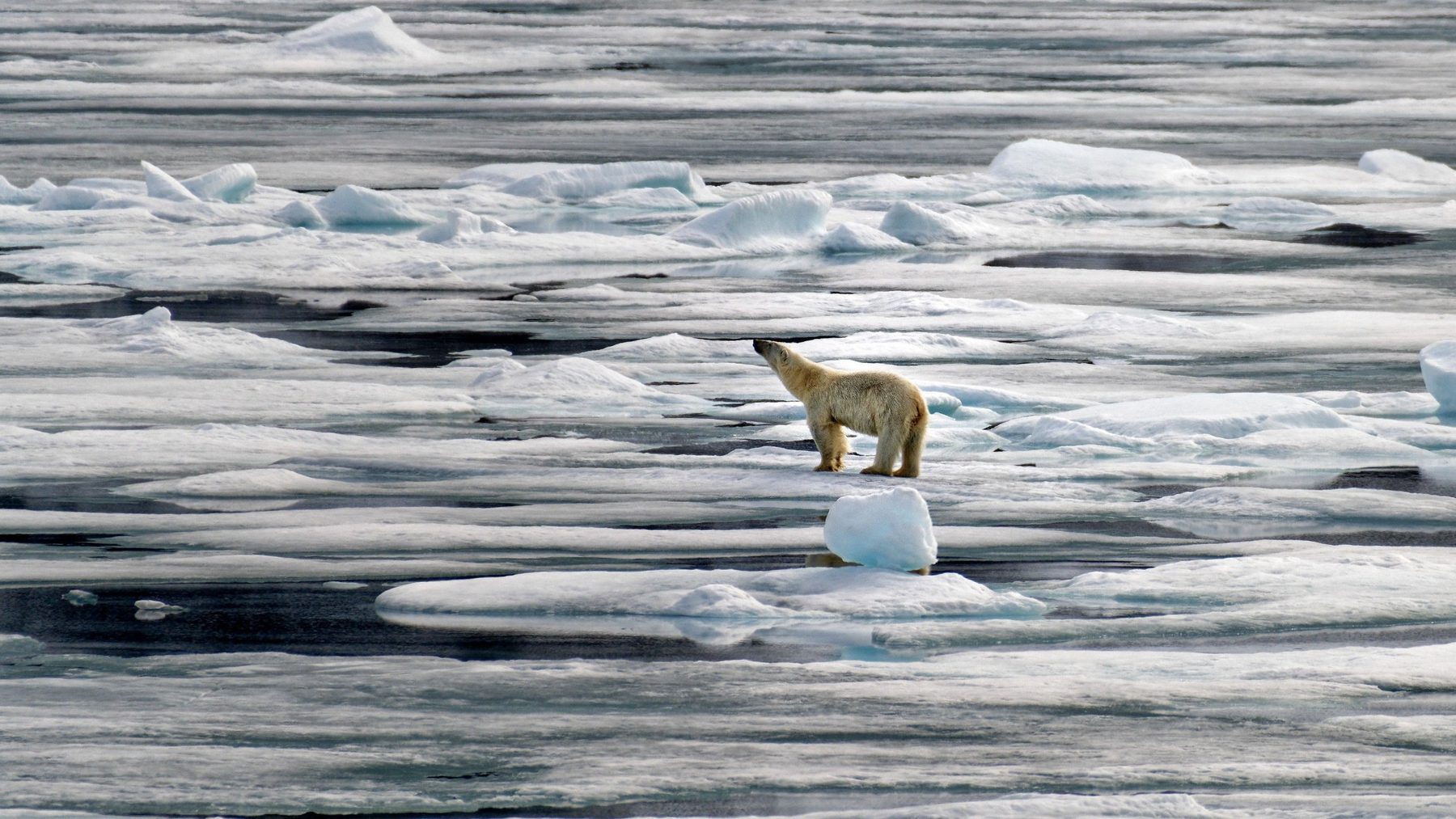
There’s something about polar bears that grabs people like no other animal. Seeing one walking across the sea ice, the biggest land predator on Earth in its own world of white, is the kind of wildlife moment that ends up on a lot of bucket lists, including mine. And the most accessible place in Europe to try is Svalbard, a remote group of Norwegian islands high in the Arctic Ocean.
I haven’t been to Svalbard yet, so this is a researched guide rather than a trip report. Having been on safari in Botswana this autumn, I know how much the right season, the right guide and a lot of patience matter when you’re hoping for a particular animal. This covers where Svalbard is, how people actually see polar bears there, the best time to go, the stricter rules since 2025, costs, kit and photography.
Where is Svalbard?
Svalbard is an archipelago roughly halfway between mainland Norway and the North Pole. It belongs to Norway, and the main island is Spitsbergen. More than half of the land is covered by glaciers, and almost everything outside the few settlements is protected as national parks and nature reserves.
Almost every trip starts in Longyearbyen, the main town, with a population of a few thousand, an airport, hotels, restaurants and the famous polar bear warning signs on the edge of town. There are direct flights from Oslo taking around three hours, and some routes go via Tromsø. Svalbard sits outside the Schengen area, so bring your passport, as there’s a passport check when you fly from mainland Norway.
Can you see polar bears in Svalbard?
Yes, but it’s never guaranteed. Svalbard’s bears belong to the Barents Sea population, shared with Russia, and they spend most of their lives out on the sea ice hunting seals. They roam widely and follow the ice, which means they can turn up almost anywhere, but you can’t simply book a day trip from Longyearbyen and expect to see one.
You also can’t go looking for them on your own. Polar bears are genuinely dangerous, and anyone travelling outside the settlements must carry a means of scaring them off, with the Governor of Svalbard advising that this includes a firearm. In practice, visitors go with experienced guides who carry rifles and flares and know how to keep everyone safe. Shooting a bear is only ever an absolute last resort, and every incident is investigated.
How to see polar bears: expedition cruises
The best chance by far is a summer expedition cruise around the archipelago. The season runs roughly from late May or June to August, sometimes into early September, with trips usually lasting between about one and two weeks. As the sea ice retreats north in summer, ships head up to the pack ice edge and around the northern and eastern islands, such as Nordaustlandet and the Hinlopen Strait area, where bears are most likely to be found.
Days are spent scanning the ice and shorelines from the deck, with landings and zodiac cruises along the coast. When someone spots a bear, often as a tiny cream dot through binoculars, the ship slows and everyone heads up on deck. Some trips see several bears, some see one far away, and a few see none at all. Longer cruises that reach the pack ice give you the best odds.
In late winter and spring, snowmobile and dog sledding trips from Longyearbyen are a fantastic way to experience the Arctic, but polar bear sightings on them are rare. I’d treat a bear on those trips as a lucky bonus rather than the reason to go.
What are the new rules on polar bears in Svalbard?
Svalbard’s environmental rules were tightened considerably from 1 January 2025, partly to protect wildlife as more visitors arrive. According to the Governor of Svalbard, visitors must keep at least 300 metres from polar bears, increasing to 500 metres from March to the end of June when mothers are out with young cubs, and you must move away if you find yourself closer than that. It was already illegal to disturb, attract or pursue polar bears.
There are also new limits on how close you can get to walrus haul-outs, speed limits near bird cliffs, restrictions on motorised traffic on the sea ice in some fjords, a 200-passenger limit for ships in the national parks and rules on where groups can land. For you as a traveller, that means close-up bear photos like the ones in older brochures are much less likely, and a good long lens matters more than ever. Rules can change, so check the latest on the Governor of Svalbard (Sysselmesteren) and Visit Svalbard websites.
When is the best time to visit Svalbard?
Svalbard has very extreme seasons, and the light changes everything. Which month you choose depends on what you want to see.
Polar night: November to January
From around mid November to the end of January, the sun stays well below the horizon and it’s dark around the clock, with only a little blue twilight around midday at the start and end of that period. It’s a strange and atmospheric time, and one of the few places on Earth where you can see the northern lights in the middle of the day. If the aurora is your main goal, my guide on how to see the northern lights compares Svalbard with the easier options. When I travelled round Iceland in November 2023 it was dark by about 6pm, and Svalbard is far more extreme than that.
Light winter: February to May
The sun returns in February, and March to May brings long, bright days, deep snow and frozen landscapes. This is the season for snowmobiling, dog sledding, ice caves and ski touring, with chances of aurora in the early part. It’s cold, often well below minus 15°C.
Summer and the midnight sun: June to August
From around late April to late August the sun never sets, which is why summer is expedition cruise season. Temperatures hover just above freezing on the coast, the seabird cliffs are full and the wildlife is at its most active. My guide to the midnight sun has more on how it works and other places to see it.
What other wildlife can you see in Svalbard?
Even if the bears don’t show, a summer cruise is packed with wildlife. These are the animals you have a good chance of seeing.
- Walrus, hauled out on beaches in groups, snorting and jostling for space.
- Svalbard reindeer, a short-legged local subspecies, often grazing around Longyearbyen itself.
- Arctic foxes, brown in summer and white in winter, patrolling below the bird cliffs.
- Seals, including bearded and ringed seals resting on ice floes.
- Whales, with beluga, minke, humpback and fin whales all possible in summer.
- Seabirds by the hundreds of thousands, including little auks, Brünnich’s guillemots, kittiwakes, puffins and Arctic terns.
If you’re building a wildlife wish list, my guide to the best places to see wildlife around the world has plenty of other trips worth planning.
Choosing an expedition ship, and what it costs
I’d always pick a small expedition ship. Fewer passengers means more time ashore and on the zodiacs, quicker landings and more flexibility to change plans when someone spots a bear. Look for experienced expedition leaders and naturalists, an ice-strengthened hull, a good ratio of zodiacs to passengers and plenty of open deck space for wildlife watching. Membership of AECO, the Association of Arctic Expedition Cruise Operators, is a good sign, as members follow shared guidelines for responsible operation.
There’s no getting round it: Svalbard is expensive. Expedition cruises often cost several thousand pounds per person even for the simplest cabins, before flights to Oslo and Longyearbyen, and prices in Longyearbyen itself are high. Booking early gets the best choice of cabins, and some operators release discounts closer to departure if you can be flexible.
What to pack for Svalbard
Even in summer, it’s cold out on the deck and in the zodiacs, especially in the wind. Check what your ship provides, as many lend out boots and sometimes a parka.
- A warm, windproof and waterproof jacket, plus waterproof trousers for zodiac trips.
- Thermal base layers, a fleece or down mid-layer, a warm hat, a neck gaiter and two pairs of gloves.
- Good binoculars, which you’ll use more than you expect.
- Sunglasses and sun cream, as the glare off ice and snow is intense.
- An eye mask for sleeping under the midnight sun.
- A dry bag for your camera on the zodiacs, and seasickness remedies.
The ethics of visiting Svalbard
The Arctic is warming much faster than the global average, and Svalbard is one of the fastest-warming places on the planet. Shrinking sea ice is the biggest threat to polar bears, and there’s no avoiding the fact that flying to the Arctic and cruising around it has a carbon cost. I don’t think that means you shouldn’t go, but it does mean choosing operators who take their impact seriously, following the rules to the letter and treating it as a once-in-a-lifetime trip rather than a quick getaway.
Respect for the animals matters just as much. A bear that changes its behaviour because of you, or a walrus herd that stampedes into the sea, is a bear or herd that’s been disturbed. My guide to ethical wildlife photography goes into more detail, and the principles are much the same on the ice as on safari in Africa, where I took the photos in my Botswana gallery.
How to photograph polar bears and Arctic wildlife
With the new distance rules, a long lens is essential. Something like a 100 to 400mm or 150 to 600mm zoom is ideal, and a camera with a crop sensor or plenty of megapixels helps you get closer in the edit. Use a fast shutter speed of at least 1/1000 second, as the ship is always moving slightly, and don’t bother with a tripod on deck, where the engine vibration will only add blur. Brace your elbows on the rail or use a beanbag instead.
On the zodiacs, keep your kit simple, with one camera and one lens in a waterproof bag and a cloth for salt spray. Snow and ice fool the camera’s meter into underexposing, so you’ll usually need to dial in some positive exposure compensation. Cold drains batteries fast, so keep spares in an inside pocket. And don’t forget the wider shot: a small bear on a huge expanse of ice often tells a far stronger story than a tight portrait.
Frequently asked questions
When is the best time to see polar bears in Svalbard?
The best chance of seeing polar bears in Svalbard is on a summer expedition cruise, roughly from June to August, when ships can reach the pack ice in the north and east where bears hunt. Sightings are never guaranteed. Winter and spring trips from Longyearbyen, such as snowmobile tours, only rarely see polar bears, so treat any sighting then as a bonus.
Can you see polar bears in Longyearbyen?
Polar bears do occasionally wander close to Longyearbyen, which is why there are warning signs at the edge of town, but you shouldn’t expect to see one there and it’s not a sighting anyone wants up close. Visitors can’t leave the settlement unguided without a means of scaring bears off. For a realistic chance of seeing a bear, join an expedition cruise.
How close can you get to polar bears in Svalbard?
Under the rules in force since January 2025, visitors must keep at least 300 metres from polar bears, rising to 500 metres from March to the end of June, and must move away if they find themselves closer. Disturbing or pursuing bears is illegal. Rules can change, so check the Governor of Svalbard’s website before you travel.
How much does a Svalbard polar bear cruise cost?
Svalbard expedition cruises are expensive, often costing several thousand pounds per person even for the simplest cabins, plus flights to Longyearbyen via Oslo. Prices depend on the length of the trip, the ship and the cabin. Booking early gives you the best choice, and some operators offer discounts closer to departure if you can be flexible with your dates.
Can you see the northern lights in Svalbard?
Yes. Svalbard is so far north that during the polar night, roughly from mid November to the end of January, it’s dark enough to see the northern lights even in the middle of the day. The aurora season runs through the darker months until the light returns in spring. There are no northern lights to see in summer because of the midnight sun.