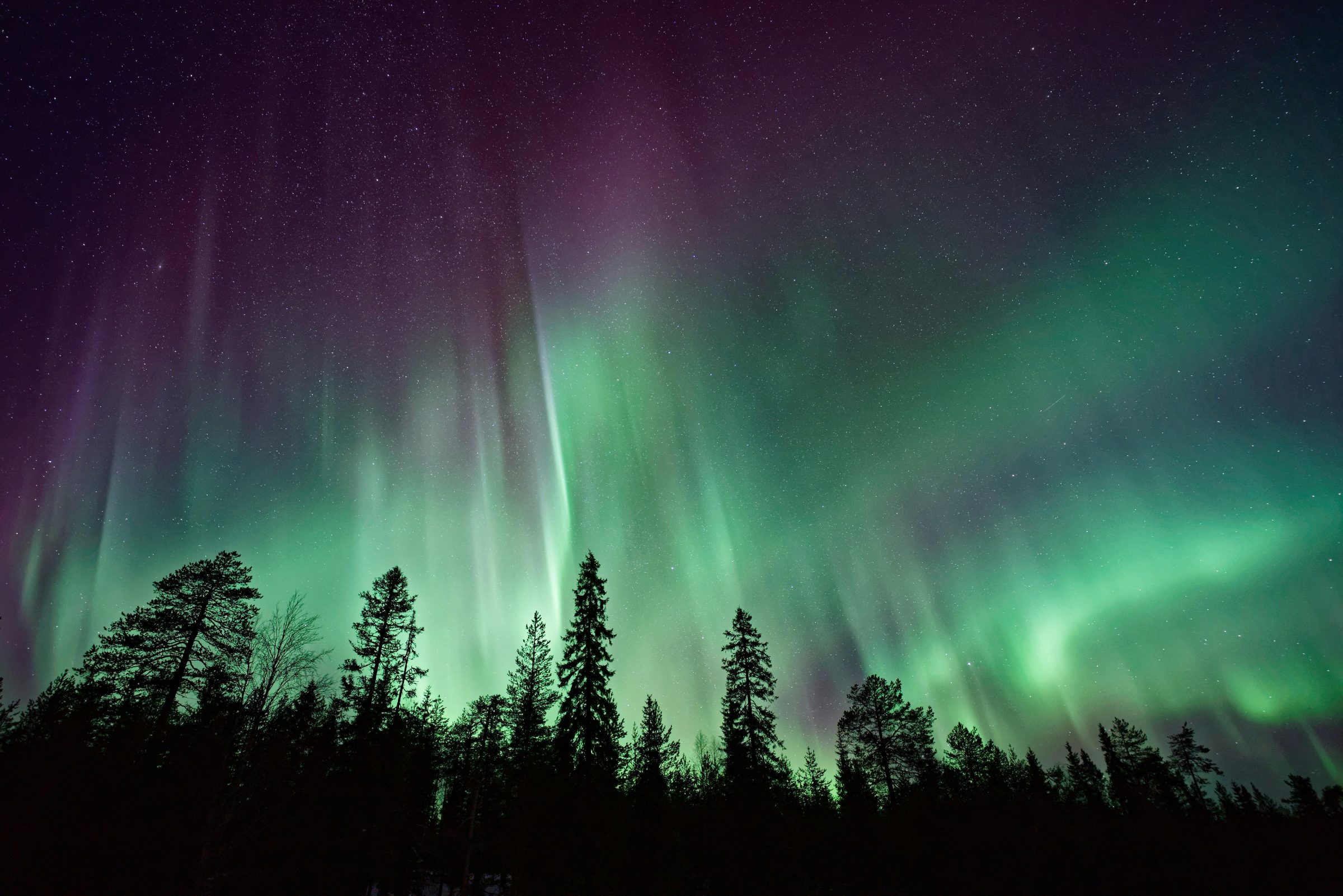
Everyone wants the same photo: green light dancing over a still, dark landscape. What most people don’t realise is that seeing the northern lights is less about luck and more about being in the right latitude, in the right season, on a clear night, with a little patience. Get those four things lined up and your chances go from a gamble to a near-certainty.
Where to go
Aim for the “auroral oval”, the ring around the magnetic pole where activity is most frequent. In practice that means northern Norway (Tromsø and the Lofoten Islands), Icelandic wilderness away from Reykjavík’s glow, Finnish Lapland, northern Sweden, and the Yukon or Alaska. You don’t need a huge storm at these latitudes, even quiet nights often produce a show.
When to travel
You need darkness, so the season runs roughly late September to late March. The equinoxes in September and March are statistically the most active periods of the year. Plan at least three or four nights in one location; a single night is a coin toss, but across several nights a clear window almost always appears.
Read the forecast like a local
Two numbers matter. The Kp index (0–9) estimates how far south activity will reach, Kp 3 is plenty when you’re already up north. Far more important is the cloud forecast. Learn to chase clear skies: if your base is socked in, be willing to drive an hour to a gap in the clouds. A car and a flexible plan beat any single “best” viewpoint.
How to shoot it
Use a tripod, a wide lens at its widest aperture (f/2.8 or faster), ISO 1600–3200, and a shutter of 5–15 seconds, shorter when the lights are moving fast so the curtains stay crisp. Focus manually on a distant light or a bright star. Put something in the foreground, a cabin, a mountain, a person, so the scale reads.
Manage your expectations, then beat them
To the naked eye a faint aurora can look like grey haze; the camera reveals the colour. But on a strong night it fills the whole sky and moves faster than you can point. Dress for standing still in deep cold, bring spare batteries (they drain fast), and don’t spend the whole show behind the viewfinder.