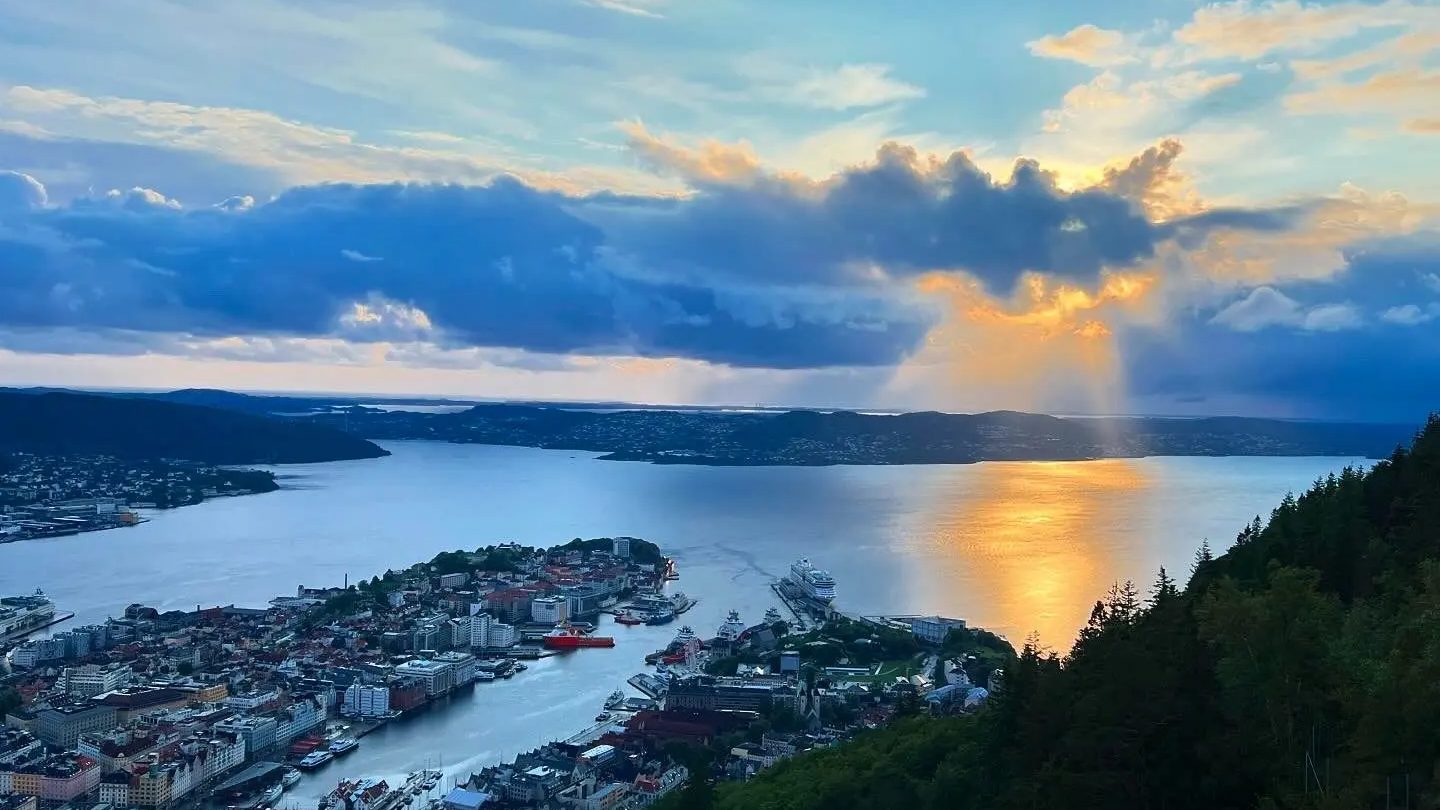
There’s a really strange moment the first time you check the time, see it’s gone midnight and realise the sun is still well above the horizon. It’s one of those things you learn about in geography at school that doesn’t really sink in until you’re out there standing in it.
In this guide I’ll go through why it happens, where and when to see it and how to make the most of days that never end, including how to get some sleep.
What is the midnight sun and why does it happen?
The Earth is tilted on its axis by about 23.4 degrees. Around the June solstice the northern hemisphere leans towards the sun, and above the Arctic Circle (roughly 66.5 degrees north) the sun stays above the horizon for the full 24 hours, and the further north you go the longer that lasts.
At the Arctic Circle itself it’s only a few weeks around midsummer, helped along by atmospheric refraction, which lifts the sun’s image slightly above the horizon. At the North Pole it’s around six months. In winter the opposite happens with the polar night, which is when you head north for the northern lights instead.
The southern hemisphere gets its own midnight sun around the December solstice, but south of the Antarctic Circle there’s only Antarctica, so for most of us it’s very much an Arctic thing.
When is the midnight sun?
It’s centred on the June solstice, around 21 June. Every place north of the Arctic Circle gets a window either side of that date, and the window gets longer the further north you are. These are rough dates for the main places, and they shift a little from year to year and with the local terrain, as mountains can easily hide a low sun.
- Bodø, Norway: roughly early June to early July.
- Lofoten Islands, Norway: roughly late May to mid-July.
- Tromsø, Norway: roughly 20 May to 22 July.
- North Cape (Nordkapp), Norway: roughly mid-May to the end of July.
- Svalbard: roughly late April to late August.
- Finnish Lapland (far north, around Utsjoki): roughly mid-May to late July.
- Abisko, Swedish Lapland: roughly late May to mid-July.
- Grímsey, Iceland: a short window around the solstice.
Where to see the midnight sun
1. Tromsø, Norway
Tromsø is the easiest place to start, with direct flights and mountains right on the doorstep. Take the Fjellheisen cable car, or climb the steps beside it if you’re feeling energetic, and watch the sun skim the horizon over the city and the islands. For something quieter, drive out to Kvaløya or Sommarøy and watch it circle over the sea.
2. The Lofoten Islands, Norway
If you love photography like I do, Lofoten is the place I’d point you to. Jagged peaks rise straight out of the sea, and the north-facing beaches at Uttakleiv, Haukland and Eggum put the midnight sun right in front of you. The hike up Ryten above Kvalvika beach is one of the great midnight walks in Europe, although the popular trails are busy even at 1am in July, so go on a weeknight if you can.
3. North Cape, Norway
The cliff-top plateau at Nordkapp, looking north over the Barents Sea, is the classic place people travel to for the midnight sun. It’s exposed and often foggy, so give yourself a couple of nights. Hurtigruten coastal voyages stop nearby, and the drive up through Finnmark is fantastic in its own right.
4. Svalbard
At around 78 degrees north, Longyearbyen gets the longest stretch of midnight sun of any town you can easily get to, roughly four months of it. Expedition cruises and boat trips run all through the summer, with glaciers and walrus and, if you’re lucky, polar bears. The bears are also the reason you have to go outside the settlements with a properly equipped guide, so check the latest rules before you book.
5. Iceland
Iceland is a bit of an odd one, as almost all the mainland sits just south of the Arctic Circle, so strictly speaking there’s no midnight sun on the Ring Road. The sun dips below the horizon for a short while around midsummer, but it never gets dark and sunset rolls straight into sunrise. For the real thing you’d need to take the ferry or a short flight to Grímsey, the tiny island that sits on the Arctic Circle. Up on the north coast in June you still get hours of low, glowing light around midnight, which for photography is almost better anyway, and the Ring Road takes you right round to it.
6. Lapland, Alaska and the Yukon
In Finnish and Swedish Lapland the midnight sun comes with lakes and forests and a sauna, and the fells around Kilpisjärvi and Abisko are lovely for late evening walks. Bring insect repellent, as July can be mosquito season. In North America, Fairbanks is just south of the Arctic Circle but still gets near-endless light in June, and for the true midnight sun you can fly to Utqiaġvik on Alaska’s north coast or drive the Dempster Highway north across the Arctic Circle through the Yukon.
The best things to do under the midnight sun
- Midnight hikes: summits are quieter, the light is warmer and it’s cooler than walking in the middle of the day.
- Kayaking or paddleboarding: fjords can be completely still at 1am, with the sun reflected in the water.
- Fjord and coastal cruises: the Hurtigruten route up the Norwegian coast is at its best in midsummer.
- Wildlife by boat: seabird cliffs, puffins and sea eagles along the coast, and whales in some areas.
- Road trips: drive through the night when the roads are empty and the light is at its best.
Even down in the western fjords, well south of the Arctic Circle, midsummer nights never get properly dark. On my trip through the Norwegian fjords I soon learnt to save the big walks for the evening and let the light do the work.
How to sleep when the sun never sets
It sounds like a small thing until you’re wide awake at 3am in broad daylight, so here are a few things that help.
- Pack a proper eye mask even if your room has blackout blinds, as not all of them do.
- Pick a rough bedtime and stick to it, rather than going by the light outside.
- Put the screens away and keep your coffee to the morning, as your body clock has no sunset to go on.
- Plan your meals and shopping in advance. The supermarkets keep normal hours, even if the sky looks like mid-afternoon.
- Build in a lie-in or a slow morning after a midnight hike.
How to photograph the midnight sun
For a photographer the best thing is the time you get. At home golden hour lasts about an hour, but above the Arctic Circle in midsummer the sun swings low across the northern sky for hours, so that warm, low light can go on from late evening right through to the early morning.
Around midnight the sun sits roughly due north, so scout north-facing coastlines and viewpoints in advance, and an app like PhotoPills or The Photographer’s Ephemeris will show you exactly where the sun will be. I’d shoot a mix of wide landscapes and long-lens shots of the sun sitting on the horizon, and bracket your exposures, as there’s a lot of contrast between the sky and the foreground.
If you fly a drone, check the local rules and registration requirements before you go, and keep well away from nesting birds on the coastal cliffs. My Norway gallery shows what that northern summer light does to a landscape, and there’s more in my guide to golden hour and blue hour photography.
Why the midnight sun makes a great coolcation
More people are heading north in summer to escape the heat in southern Europe, and the Arctic makes a lot of sense for that. Daytime temperatures in northern Norway are often in the teens and sometimes warmer, with fresh nights. You won’t be sunbathing much, but for hiking, kayaking and long days outdoors it’s pretty much ideal.
Pack layers, a waterproof, good walking boots and a warm hat for those midnight summits. The weather on the coast changes quickly, and a clear evening can turn to fog in minutes.
Midnight sun or northern lights?
Sadly you can’t see both on one trip. The midnight sun means no darkness, so there’s no aurora to see between roughly mid-April and late August in the far north, and if you want the lights you’ll need to come back between roughly late September and late March. The good thing is that places like Tromsø, Lofoten and Lapland are fantastic in both seasons, so one trip very often leads to another.
If you’d like my full Arctic routes, stops and timings, they’re all in Base Camp.
Frequently asked questions
When is the midnight sun in Norway?
The midnight sun in Norway is centred on the June solstice. Rough windows are early June to early July in Bodø, late May to mid-July in Lofoten, around 20 May to 22 July in Tromsø, mid-May to late July at the North Cape, and roughly late April to late August in Svalbard. The further north you go, the longer it lasts.
Where is the best place to see the midnight sun?
For most people northern Norway is the best choice. Tromsø is easy to get to and has mountain viewpoints close to town, while the Lofoten Islands have the most dramatic scenery for photography. The North Cape is the classic trip, and Svalbard has the longest season. Finnish and Swedish Lapland, and northern Alaska, are good alternatives too.
Can you see the midnight sun in Iceland?
Only just. Mainland Iceland sits slightly south of the Arctic Circle, so the sun dips briefly below the horizon around midsummer, although it never gets dark. For the true midnight sun, visit Grímsey, a small island off the north coast that sits on the Arctic Circle, around the June solstice. The north coast still gives you long, glowing light at midnight.
Does it get dark at all during the midnight sun?
No. During the midnight sun the sun stays above the horizon for the full 24 hours, so there’s no darkness or even twilight. It sits lowest in the northern sky around midnight, which gives you soft, golden light. Just outside the midnight sun zone, including most of Iceland and the Norwegian fjords, the nights are bright twilight rather than proper darkness.
Can you see the northern lights during the midnight sun?
No. The aurora is still happening, but the sky is far too bright to see it. In northern Norway and Lapland there’s effectively no aurora viewing from roughly mid-April to late August. For the northern lights, plan a trip between roughly late September and late March, when the nights are long and dark.