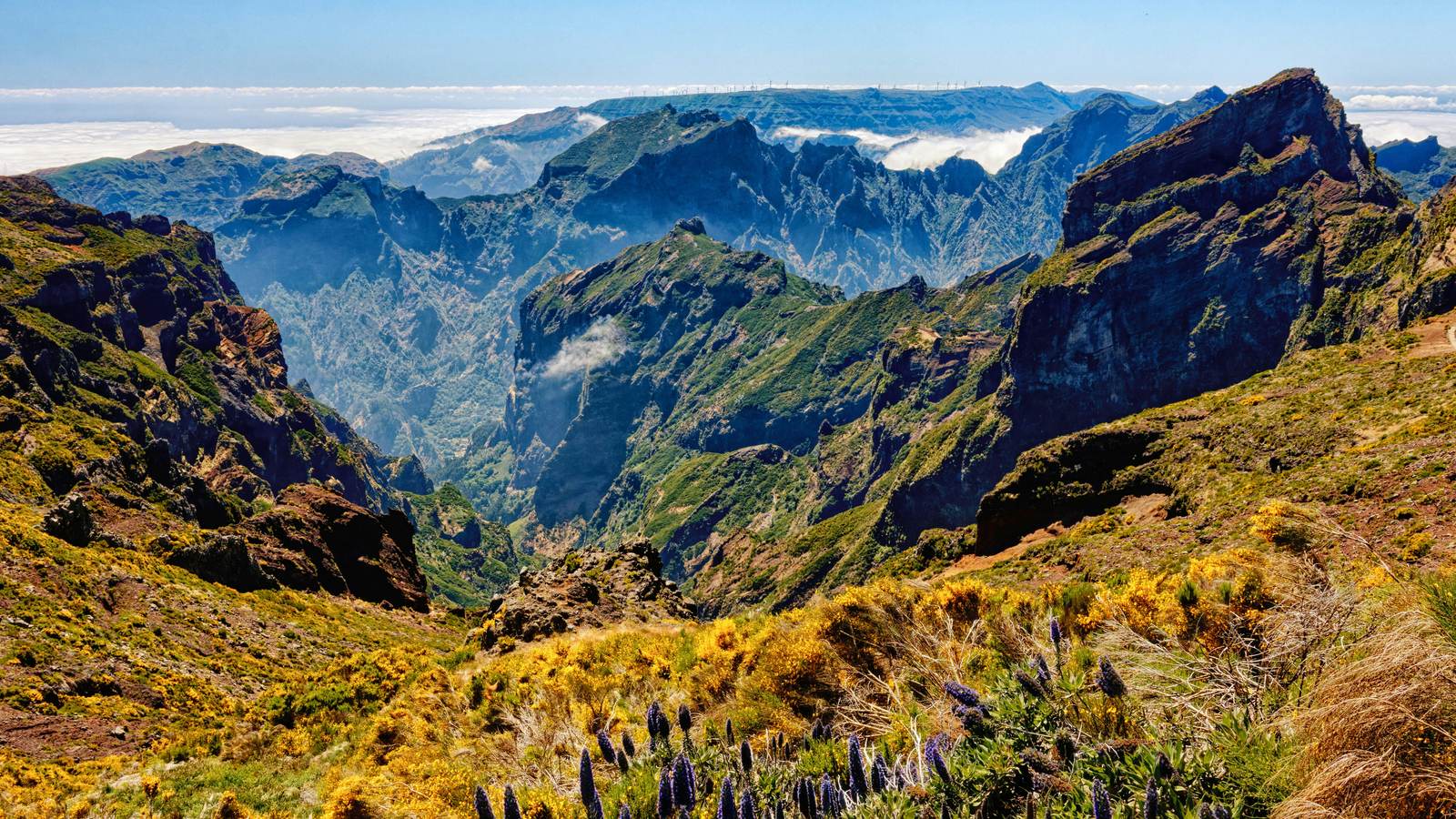
Madeira is one of those places I keep coming back to when I’m planning, as it ticks so many of the boxes I love. It’s a small volcanic island out in the Atlantic, closer to Morocco than to mainland Portugal, with mountains well over 1,800 metres, green cloud forest, sea cliffs and a mild climate that means you can walk there pretty much all year.
It’s also only a few hours’ flight from the UK, which makes it a really easy trip for a week of hiking and photography. This guide covers the best levada walks, the big mountain hike, the main things to do in Madeira, getting around and when to go.
What is a levada?
Levadas are irrigation channels that were cut into the hillsides over centuries to carry water from the wet north and the mountains down to the farms on the drier south. Alongside most of them runs a narrow maintenance path, and because the water has to flow gently, the paths are often fairly level. That’s what makes Madeira such a good walking island, as you can get deep into the mountains and the laurel forest without a huge amount of climbing.
Much of that forest, the Laurisilva, is a UNESCO World Heritage Site, and walking through it on a misty morning is something else. Some levada paths are wide and easy, while others are narrow with big drops beside them, sometimes with a cable to hold and sometimes without, so read up on each walk before you go.
The best levada walks in Madeira
Levada dos Balcões (easy)
If you only have time for one short walk, this is a lovely one. It starts at Ribeiro Frio and follows a flat, easy path for a short distance to the Balcões viewpoint, which looks out over a deep green valley towards the central peaks. It’s fine for most people and good for families. It gets busy with tour groups later in the day, so an early start really helps.
Levada das 25 Fontes and Risco (moderate)
Probably the most popular walk on the island. It starts at Rabaçal, high on the Paul da Serra plateau in the west, and follows the levada through the forest to a pool fed by lots of small waterfalls (the 25 springs of the name). A short detour takes you to the tall Risco waterfall. There’s parking up on the main road, and from there you either walk down a paved road or take the shuttle bus when it’s running. Go very early or late in the afternoon, as it gets extremely busy.
Levada do Caldeirão Verde (moderate to challenging)
A longer out-and-back walk from Queimadas, near Santana in the north, through some of the best laurel forest on the island. It passes through several tunnels, so you’ll need a head torch, and there are narrow sections with drops beside the path. It ends at a waterfall dropping into a green bowl in the cliffs. The trail was closed for a while after a landslide last winter and reopened in early 2025, which is a good reminder to always check the status before you go.
Pico do Arieiro to Pico Ruivo: can you still do the hike?
The ridge walk between Pico do Arieiro and Pico Ruivo, the island’s highest peak, is the hike most people come to Madeira for. The path (PR1) follows the ridge on carved steps, through tunnels and along exposed edges, with views over the peaks and down to the sea of clouds. It sounds like an absolutely fantastic day out, and if big mountain walks like this are your thing, my guide to the world’s greatest multi-day treks has some longer routes to add to the list.
The catch is that the main PR1 trail was badly damaged in the wildfires of August 2024 and, as of summer 2025, it’s still closed for repairs. You can still drive up to the viewpoint at Pico do Arieiro, which is one of the best sunrise spots in the world when the clouds sit below you. To reach Pico Ruivo, the usual route at the moment is the shorter path (PR1.2) from Achada do Teixeira, which is a lot less exposed. Check the official regional forestry (IFCN) website or Visit Madeira for the latest trail status, as closures change often.
Do you have to pay to hike in Madeira?
Since the start of 2025, non-residents over a certain age pay a small fee to use many of the official classified walking routes (the ones marked PR), including the popular levadas. You pay online in advance through the regional government’s Simplifica portal. The idea is to help pay for maintenance, as the paths take a real battering from storms, fires and the number of walkers.
There has also been talk of adding timed bookings or daily limits on the busiest trails, so check the current rules, which trails are included and how to pay before you set off.
Other things to do in Madeira
- Funchal. Wander the old town (Zona Velha) with its painted doors, visit the Mercado dos Lavradores for fruit and fish, and take the cable car up to Monte and its gardens.
- The Monte toboggans. Wicker sledges steered by two men in straw hats, sliding down the streets from Monte towards Funchal. Touristy, but a lot of fun.
- Ponta de São Lourenço. A dry, windswept peninsula at the eastern tip with red and ochre cliffs. The walk is exposed with no shade, so go early and take plenty of water.
- Porto Moniz. Natural pools in the black lava rock on the north-west coast, filled by the Atlantic waves.
- Cabo Girão. One of the highest sea cliffs in Europe, with a glass-floored viewpoint.
- Fanal. Ancient, twisted laurel trees on a high plateau, at their most atmospheric when the fog rolls in.
- Seixal. A black sand beach on the north coast with green mountains rising straight up behind it.
Getting around Madeira: should you hire a car?
For hiking and photography, I’d definitely hire a car. Buses exist but they’re mostly aimed at locals and don’t reach many trailheads at useful times, while taxis and tours add up quickly. With a car you can chase the clear weather and reach the trailheads early, before the tour groups arrive.
The roads are good, with lots of tunnels on the main expressways, but the smaller roads are very steep, with tight hairpins and narrow village streets. A car with a bit of power makes life easier, and you’ll want to be comfortable with hill starts. After driving the single-track roads of the NC500 in Scotland I’d be happy on them, but take your time. My guide on how to plan a road trip has more on picking a hire car and planning your days.
Madeira’s microclimates and the weather
Madeira’s weather changes a lot from one side of the island to the other. The south coast around Funchal and Calheta is usually the sunniest and warmest. The north is greener and wetter, and the mountains often gather cloud during the day, although you can be above it at the high viewpoints.
The trick is to check the forecast and the live webcams each morning and pick your walk to match, rather than locking in a plan. If it’s raining in Funchal, it may well be sunny in the west, and the other way round. Always carry a waterproof and a warm layer in the mountains, even in summer.
When is the best time to visit Madeira?
Madeira is a genuine year-round destination, often called the island of eternal spring, as the coast rarely gets very hot or very cold. Spring (roughly April to June) is lovely for walking, with flowers everywhere and fresh green forests. Summer is the driest and most settled time, with the warmest sea, but also the busiest on the popular trails. Autumn is often still warm and a bit quieter.
Winter is mild on the coast and popular with UK visitors wanting some sun, but it’s the wettest time of year, and the mountains can be cold, windy and occasionally closed after storms. New Year in Funchal is famous for its huge firework display, so book early if you’re thinking of going then. If you like mountain walking in summer, my guide to summer mountain holidays in the Alps might give you a few other ideas too.
Where to stay in Madeira
Funchal is the best base for a first trip, with the most restaurants and hotels and easy access to the east and the central mountains. It’s also where you’ll get the most sunshine. The west and south-west, around Calheta and Ponta do Sol, is quieter, sunnier and good for sunsets, and puts you close to Rabaçal and Paul da Serra. The north, around Santana, São Vicente and Porto Moniz, is greener and wilder, and ideal if you’re mainly there to hike, though it’s often cloudier. Because the island is small, splitting a week between Funchal and one other base works really well.
Frequently asked questions
What is the best levada walk in Madeira?
Levada das 25 Fontes from Rabaçal is the most popular, with forest, waterfalls and the Risco falls nearby. Levada do Caldeirão Verde is longer and wilder, with tunnels and a waterfall at the end. For something short and easy, Levada dos Balcões from Ribeiro Frio leads to a great valley viewpoint. Always check the trail status before you go.
Is the Pico do Arieiro to Pico Ruivo hike open?
The main PR1 trail between Pico do Arieiro and Pico Ruivo was closed after the August 2024 wildfires and was still closed for repairs in summer 2025. You can still drive to the Pico do Arieiro viewpoint and reach Pico Ruivo on the shorter PR1.2 path from Achada do Teixeira. Check the IFCN or Visit Madeira websites for the latest status.
Do you need a car in Madeira?
A car isn’t essential, but it makes a big difference for hiking and photography. Buses don’t reach many trailheads at useful times, and a car lets you follow the better weather and arrive early before the crowds. The main roads are good, but smaller roads are very steep and narrow, so be comfortable with hill starts and take your time.
What is the best time to visit Madeira?
Madeira works all year thanks to its mild climate. Spring, roughly April to June, is great for walking and flowers, and summer is the driest and most settled time, though the popular trails get busy. Winter is mild on the coast but wetter, and the mountains can be cold and windy. Autumn is often warm and a little quieter.
Do you have to pay to walk the levadas in Madeira?
Since 2025, non-residents over a certain age have paid a small fee to use many of Madeira’s official classified walking routes, including popular levadas such as 25 Fontes and Caldeirão Verde. It’s paid online in advance through the regional government’s Simplifica portal. Rules, prices and which trails are included can change, so check the official information before you hike.