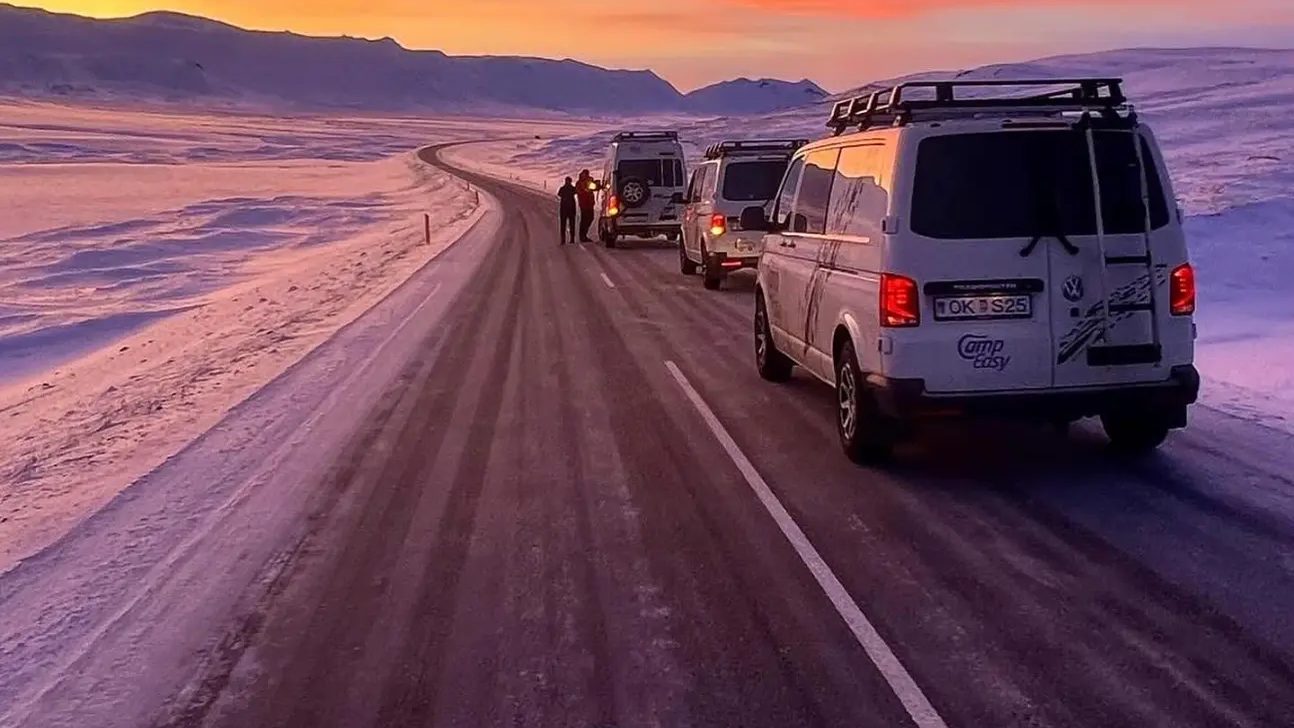
Some of my favourite trips have been on four wheels. Driving Iceland’s Ring Road in a campervan in 2023 gave me a real taste for life on the road, and in April 2025 I spent 15 days going round Scotland’s North Coast 500 in another campervan, which was such an easy trip with just a short flight from Gatwick to Glasgow. I’ve also done the long run up Australia’s east coast. Each one taught me something, and most of it was about pacing myself and booking the right things early rather than the vehicle.
This is the process I now follow for any road trip, from a long weekend to a month away.
Step 1: Choose your route and the right season
I always think about the season before the route, as the same road can be fantastic one month and closed, flooded or far too hot the next. Iceland’s Ring Road can be driven all year in principle, but winter brings short days, ice and closures. Northern Australia has a wet season, roughly November to April, that can shut roads and bring stingers to the coast. The Scottish Highlands are gorgeous in late spring and early autumn, and a lot busier (and midgier) in high summer, which is one of the reasons I went in April.
Once you know when you’re going, sketch out the route as either a loop or a one-way run. A loop saves you a one-way drop-off fee on a hire car or campervan, which can be quite a lot, while a one-way route like Sydney to Cairns lets you cover far more ground without doubling back.
Think about which way round to go too. Most people I talked to about the NC500 would go anticlockwise, but the campervan company suggested I start from Loch Lomond and go clockwise so I had far more time on the scenic West Coast, and as I love landscape photography that was the plan! Locals and hire companies often have tips like this.
How many hours a day should you drive on a road trip?
This is where most itineraries go wrong. Google Maps might say a day’s drive is four hours, but once you add photo stops, fuel, lunch, a short walk and the odd wrong turn it easily ends up being seven. My rule of thumb is no more than three to four hours of actual driving on most days, with the occasional longer day, and at least one day in every four or five with no driving at all.
On single-track and mountain roads you need to cut your estimates even further. Average speeds on parts of the NC500 are much lower than the distances suggest, especially in a campervan, and the Bealach na Bà to Applecross is not one to rush. The loop is roughly 500 miles and deserves at least five to seven days, though I was glad I had longer, as it gave me time to climb Ben Nevis too. My NC500 journal has all the stops I wouldn’t skip.
Step 2: Book the bottleneck accommodation first
Every route has a few pinch points where the handful of rooms or campsite pitches sell out months ahead. On the NC500 that’s the far north-west, and in Iceland it’s parts of the south coast and the east fjords in summer. Book those nights first, ideally with free cancellation, and fill in the easier ones around them.
If the route allows, leave one or two nights unbooked, as that bit of flexibility is what lets you stay an extra night when the weather finally clears.
Step 3: Choose the right car and understand the insurance
Pick a vehicle that suits the roads you’ll actually be driving. A compact car is ideal for narrow Highland lanes and much easier to park in old towns, and a smaller campervan is a lot less stressful on single-track roads than a big motorhome. In Iceland the Ring Road is paved and fine in a normal car or campervan, but the mountain F-roads legally need a 4x4, only open in summer (roughly late June to early September, depending on conditions) and often involve unbridged river crossings that hire insurance usually won’t cover.
Read the insurance small print carefully. Standard hire cover often has a high excess, and damage to tyres, windscreens and the underside may be excluded, plus gravel, sand and ash damage in Iceland. A standalone excess policy bought before you travel is often cheaper than the rental company’s own, and always photograph the vehicle all the way round before you drive off.
Do you need an International Driving Permit?
It depends on your licence and where you’re driving. Some countries accept a UK photocard licence on its own, others need an International Driving Permit alongside it, and there are different types of IDP for different countries. The rules do change, so always check the latest official guidance (GOV.UK for UK licence holders) and your hire company’s terms before you go.
While you’re at it, read up on the local driving rules, such as which side of the road to drive on, speed limits, headlight rules and whether you need to carry any safety kit. Iceland and Australia both take speeding seriously and the fines can be steep.
Step 4: Plan fuel and EV charging on remote routes
On busy routes you can fill up whenever you like, but on remote ones that isn’t always the case. In the Highlands, the east of Iceland and inland Australia fuel stations can be a long way apart and may close early, so my simple rule is to never let the tank drop below half when I’m somewhere remote. In Iceland lots of the pumps are unattended and card-only, so make sure your card works with a PIN.
If you’re driving electric, plan charging stops before you set off and have a backup for each one, as coverage on remote routes can still be patchy and one broken charger can cost you half a day.
How do you drive on single-track roads with passing places?
Single-track roads are common in the Scottish Highlands and islands and they can be a bit nerve-racking the first time, but the etiquette is simple once you know it:
- If a passing place is on your left, pull into it to let oncoming traffic pass.
- If it is on your right, stop opposite it and let the other car pull round you.
- Pull in to let faster vehicles behind you overtake. Locals are often driving to work.
- Never park in a passing place, even for a quick photo.
- A small wave to say thanks is expected.
Look well ahead and it becomes second nature really quickly.
Road trip checklist: what to pack
- Driving licence, IDP if required, passport and hire paperwork.
- Insurance documents and your excess policy details.
- Phone mount, in-car charger and a power bank.
- Offline maps downloaded for the whole route.
- Refillable water bottles and snacks for long stretches.
- A small first aid kit, headtorch and basic tools.
- Warm layers and waterproofs, even in summer.
- Sunglasses, sun cream and insect repellent (essential in Highland midge season).
- A cool bag for picnic lunches away from the crowds.
- Microfibre cloth for camera lenses and the windscreen.
Step 5: Plan photo stops around golden hour
I try to do the longer drives in the middle of the day when the light is flat and harsh, and be at the most photogenic stop for the first or last hour of sunlight. In Iceland’s summer that can mean some very late evenings, and on Australia’s east coast sunrise over the Pacific is well worth the early start.
In Australia, try to avoid driving at dawn and dusk in rural areas, as that’s when kangaroos and other wildlife are most active on the roads, and some hire agreements don’t allow driving after dark in remote areas. My Australia east coast journal covers the stretches where this matters most.
Step 6: The apps and offline maps worth having
- Google Maps or Maps.me with offline areas downloaded before you set off.
- The official road conditions site for your country. In Iceland, check road.is for road status and safetravel.is for alerts and weather warnings.
- A reliable weather app, plus a mountain forecast for high routes.
- A fuel price or EV charging app for your region.
- A sunrise and sunset app to time photo stops.
In Iceland especially, I’d check road.is and safetravel.is every single morning, as conditions can change really fast and roads do close. My Iceland Ring Road journal has more on how I planned around the weather in the campervan.
If you work through it in this order you’ll find the rest falls into place much more easily. And if you’d like my exact routes, overnight stops and daily driving times, they are all in Base Camp.
Frequently asked questions
How far should you drive in a day on a road trip?
Aim for around three to four hours of actual driving on most days. Stops for fuel, food, photos and short walks usually double the time a map suggests, and on single-track or mountain roads you should allow even longer. Build in a rest day every four or five days so the trip doesn’t turn into one long blur of tarmac.
How far in advance should I plan a road trip?
For popular routes in peak season, start planning three to six months ahead. The most important early bookings are the hire car or campervan and your accommodation on remote stretches with very few places to stay. Shorter trips in quieter seasons can be planned a few weeks out, but booking the scarce nights early always takes a lot of the stress away.
Do I need a 4x4 to drive Iceland’s Ring Road?
No. Route 1, the Ring Road, is paved and fine for a normal car or campervan in summer. You do legally need a 4x4 for Iceland’s F-roads, the mountain tracks that open roughly from late June to early September depending on conditions. In winter a 4x4 with good tyres is sensible. Always check road.is and safetravel.is before you drive.
What should I pack for a road trip?
Pack your licence, any International Driving Permit you need, your hire and insurance documents, a phone mount, charger and power bank, and offline maps. Add water, snacks, a first aid kit, a headtorch, warm layers and waterproofs. Sun cream and insect repellent are useful almost everywhere, and a cool bag makes roadside picnics really easy.
What is the etiquette for passing places on single-track roads?
If a passing place is on your left, pull into it to let oncoming traffic by. If it is on your right, stop opposite it so the other car can pull round you. Pull in to let faster traffic behind you overtake, never park in a passing place, and give a quick wave to say thanks.