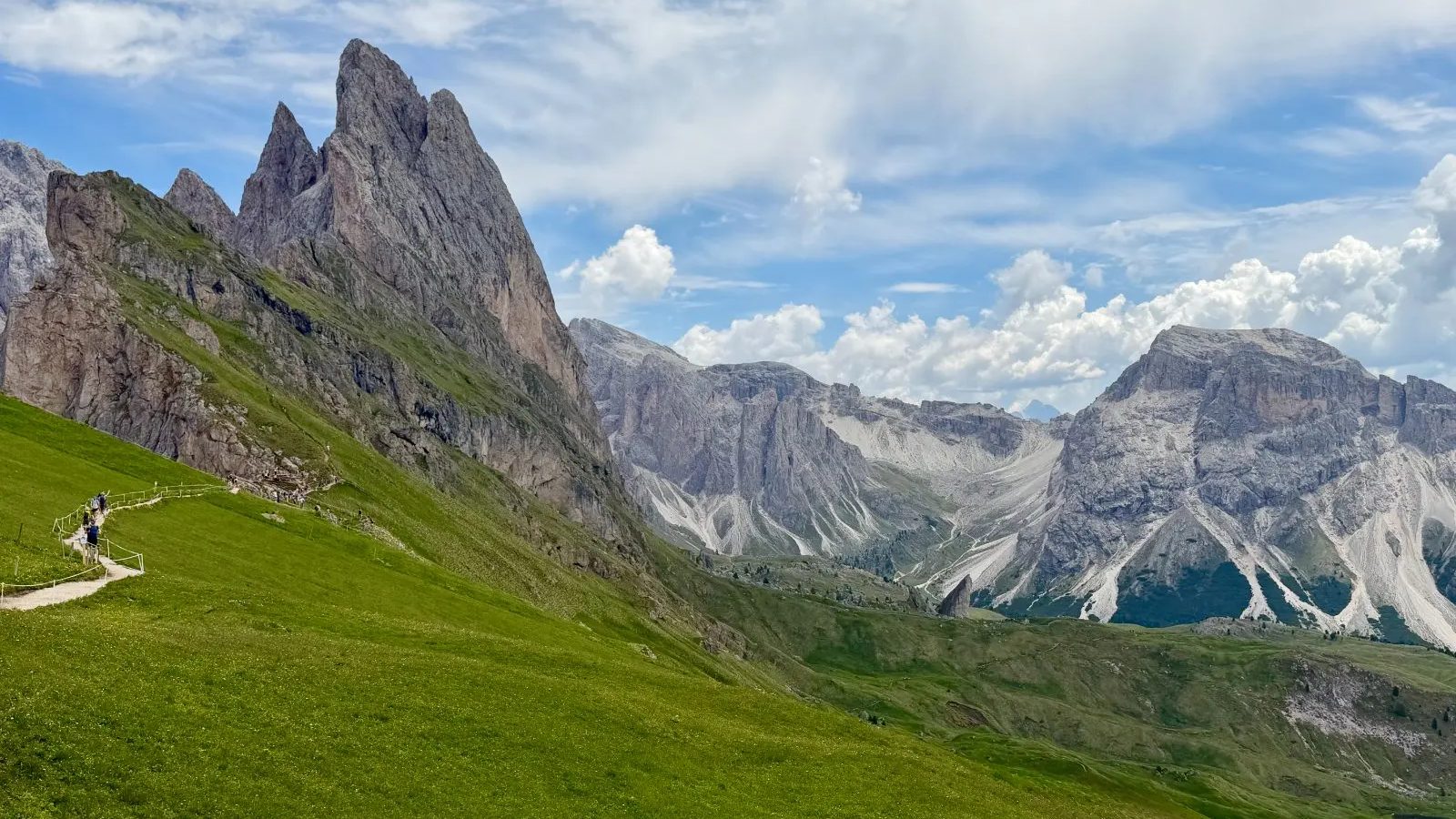
Most people think of the Alps as a winter place, and for years I did too, but I’ve come to think summer is when they’re at their very best. The same lifts that carry skiers up in February take hikers, climbers and people who just fancy lunch with a view, and the valleys are green and cool and full of cowbells instead of traffic.
I’ve photographed the Dolomites and Chamonix and I know Val Thorens well, and every time I come home I wonder why more people don’t do this. So this is everything I’d tell a friend planning a summer mountain holiday, and you won’t need a pair of skis for any of it!
Why go to the mountains in summer?
For me the first reason is the temperature. When the cities of southern Europe are baking, a base at 1,500 metres can feel ten degrees kinder, and the nights are cool enough that you actually sleep properly. More and more people seem to be heading somewhere cooler in summer (the so-called “coolcation”), and if you live in Europe the Alps are the obvious answer.
The lifts are the other big draw, as they put high mountain scenery within reach of anyone with reasonable fitness. You can ride up to 2,000 metres and walk a ridge that would otherwise take a full day of climbing to reach. And then there’s the light, with long days, clear mornings and some really dramatic evening skies, which matters a lot to me as a photographer.
When do the Alpine summer lifts open?
This is the thing to get right. Most summer lifts run from roughly mid or late June to mid-September, but it varies from resort to resort, and some French resorts only open theirs from early July to late August. Mountain huts keep a similar season, and after a big winter the high trails can hold snow well into July.
- Late June: quiet and green with wildflowers everywhere, although some high passes may still have patches of snow.
- July: everything is open and the weather is reliably warm, so it’s the classic month for hut-to-hut routes.
- August: the busiest and most expensive month, as much of Europe is on holiday, so book early.
- Early to mid-September: my favourite time to go, with settled weather, clearer air and far fewer people around. Check lift closing dates though, as some shut mid-month.
The best summer mountain destinations in Europe
It really depends what you’re after, so rather than pick one winner here are the bases I’d point a friend towards, starting with the ones I know well.
1. The Dolomites, Italy
If it’s pure drama you want, the Dolomites are very hard to beat. Pale limestone towers rise straight up out of the meadows, and the lift network is so good that you can put together amazing days without much climbing at all. I’d base myself in Val Gardena (Ortisei or Selva), Alta Badia (Corvara or La Villa) or Cortina d’Ampezzo.
The big sights are Seceda, which you reach by lift from Ortisei and which has that famous tilted grassy ridge, the Tre Cime di Lavaredo loop, around three to four hours of walking round the three peaks, and Lago di Braies, the lake you’ve probably seen on a screensaver. In the busy summer months road access to Braies has been limited to people with a booking or arriving by shuttle, so check the current rules before you set off. You can see what the light does here in my Dolomites gallery.
When I was in the Dolomites the difference between 7am and 10am at the popular spots was huge. Go early, or go late in the afternoon once the day-trippers have headed home. Lots of the lifts close around 5pm though, so plan your evening shots somewhere you can reach on foot or by car.
2. Chamonix, France
Chamonix is a proper mountain town, with Mont Blanc towering over the high street. The Aiguille du Midi cable car climbs all the way to 3,842 metres and puts you face to face with glaciers even if you never leave the viewing terrace. Try to catch the first cabin on a clear morning, as the cloud often builds by late morning.
For hiking, the walk up to Lac Blanc is the classic, and on a still day the whole Mont Blanc massif is reflected in it. It’s popular so start early. The Tour du Mont Blanc passes through the valley too, and you can walk single stages as day hikes if the full circuit isn’t on the cards this time. My Chamonix gallery shows what the valley looks like in good light.
3. Val Thorens and the Three Valleys, France
Val Thorens sits at around 2,300 metres, which makes it one of the highest resorts in Europe, and in summer it turns into a base for hiking, mountain biking and trail running with real high mountain air. The season is short, roughly early July to late August, and the wider Three Valleys network opens selected lifts to walkers and bikers.
It feels very different from the Dolomites, more open and almost lunar, with big glacial views out towards the Vanoise. Without the ski crowds it’s so much quieter and wilder. Have a look at my Val Thorens gallery to see the contrast.
4. Switzerland: Zermatt and Lauterbrunnen
Switzerland is expensive, but everything works so well that a short trip is really easy. Zermatt is car-free and sits right beneath the Matterhorn, and the Gornergrat railway and the Five Lakes walk (the 5-Seenweg) are the obvious ways to spend your first couple of days. Lauterbrunnen is a deep glacial valley lined with waterfalls, with the car-free villages of Wengen and Mürren up above it and a web of trains and lifts linking them all. Look into the Swiss rail passes and local guest cards, as they make getting around far simpler.
What to do in the Alps in summer
Hut-to-hut hiking
Staying in mountain huts (rifugi in Italy, refuges in France) is one of the great experiences of travelling in Europe. You walk all day, eat a big hearty dinner at altitude and wake up above the valleys. For July and August you’ll need to book the popular huts months ahead, so bring a sleeping bag liner and expect shared dormitories. If you fancy going further, my guide to the world’s greatest multi-day treks includes the Tour du Mont Blanc.
Via ferrata
The Dolomites are the home of the via ferrata, protected climbing routes with steel cables, ladders and rungs bolted into the rock. They let people who aren’t climbers get to some amazing places, but they’re graded for a reason. You’ll need a helmet, a harness and a proper via ferrata lanyard with an energy absorber, and you can hire all of it locally. If you’ve never done one before I’d hire a mountain guide for the first day, as it’s money well spent.
Lifts and lift passes
Most regions sell multi-day summer passes, like the Dolomiti Supersummer card or the Mont Blanc Multipass in Chamonix. If you’re planning to use the lifts most days they usually work out better than single tickets, but check current prices and opening dates against your plans. Some hotels include a local guest card with free or cheaper lifts, so it’s always worth asking when you book.
What is the weather like in the Alps in summer?
Mornings are usually the clearest part of the day. As the air warms up, cloud builds over the peaks and afternoon thunderstorms are common in July and August, and they can arrive with very little warning. Getting caught by lightning on an exposed ridge or on a via ferrata cable is a serious danger.
So start early and aim to be off exposed ground by early afternoon. Check a proper local mountain forecast each evening rather than a general weather app, and be happy to swap a big day for a valley day if it looks unsettled. It can be cold up high even in August too, so don’t judge what it’ll be like on top by how warm it feels in town.
Altitude: do you need to worry?
For most summer visitors altitude is a minor issue, but it’s still worth respecting. Riding a lift straight from the valley to 3,800 metres can leave you breathless and light-headed or give you a headache. Move slowly, drink plenty of water and come back down if you start to feel unwell.
If you’re sleeping high, as you will in Val Thorens or in some of the huts, give yourself an easier first day. Anyone with heart or lung conditions should get medical advice before going very high.
What to pack for a summer Alpine holiday
- Broken-in hiking boots or trail shoes with good grip
- A waterproof jacket and a warm mid-layer, even in August
- Sun hat, sunglasses and high-factor suncream (UV is stronger at altitude)
- A 20 to 30 litre daypack, water bottle and snacks
- Walking poles for the steep descents
- A blister kit and a small first aid kit
- Cash for the huts, as not all of them take cards
- A head torch if you’re planning to catch sunrise from a trail
If you’d like to plan a dawn start around the light, my list of the best sunrise spots in the world has a couple of Alpine favourites on it.
How to plan your Alpine summer escape
I’d pick one or two bases and not try to see everything. A week split between Val Gardena and Cortina, or a week in Chamonix with a day trip through the Mont Blanc Tunnel to Courmayeur, is plenty. Plan your days around the weather, keep a spare day or two up your sleeve and save the big lift days for the clearest mornings.
My main advice is to go early, both in the day and when you book, as the best beds and the quiet trails tend to go to the people who plan ahead. If you’d like the full routes and day-by-day plans, you’ll find them in Base Camp.
Frequently asked questions
When is the best time for a summer holiday in the Alps?
July and early September are the sweet spots. July has everything open and reliably warm weather, while early to mid-September brings settled conditions, clearer air and fewer people. Late June is beautiful and green, but high trails can still hold snow. August works well too, but it is the busiest and most expensive month, so book accommodation and huts early.
Are the lifts open in the Alps in summer?
Yes. Most Alpine resorts run summer lifts for hikers and mountain bikers from roughly mid or late June to mid-September. Some French resorts, including the Three Valleys, open for a shorter season of roughly early July to late August. Dates change each year, so check the official resort or lift company website before you finalise your plans.
Is the Dolomites or Chamonix better in summer?
It depends what you want. The Dolomites have gentler, more varied hiking, a huge lift network and pretty villages beneath dramatic limestone towers. Chamonix is higher and more glaciated, with more of a mountaineering feel and Mont Blanc right on the doorstep. For a first summer visit the Dolomites are usually easier, and for big glacier views I’d choose Chamonix.
Do you need experience to do a via ferrata?
You don’t need climbing experience for the easier routes, but you do need a head for heights, reasonable fitness and the right kit, which means a helmet, a harness and a via ferrata lanyard with an energy absorber. Routes are graded, so start with an easy one. For your first, hiring a qualified mountain guide is the safest option, and they can supply the equipment.
How do you avoid thunderstorms when hiking in the Alps?
Start early. Summer storms in the Alps usually build in the afternoon, so aim to finish exposed sections, ridges and via ferratas by early afternoon. Check a local mountain forecast the evening before, keep an eye out for tall clouds building by late morning, and turn back if you hear thunder. Never shelter under isolated trees or stay near metal cables.