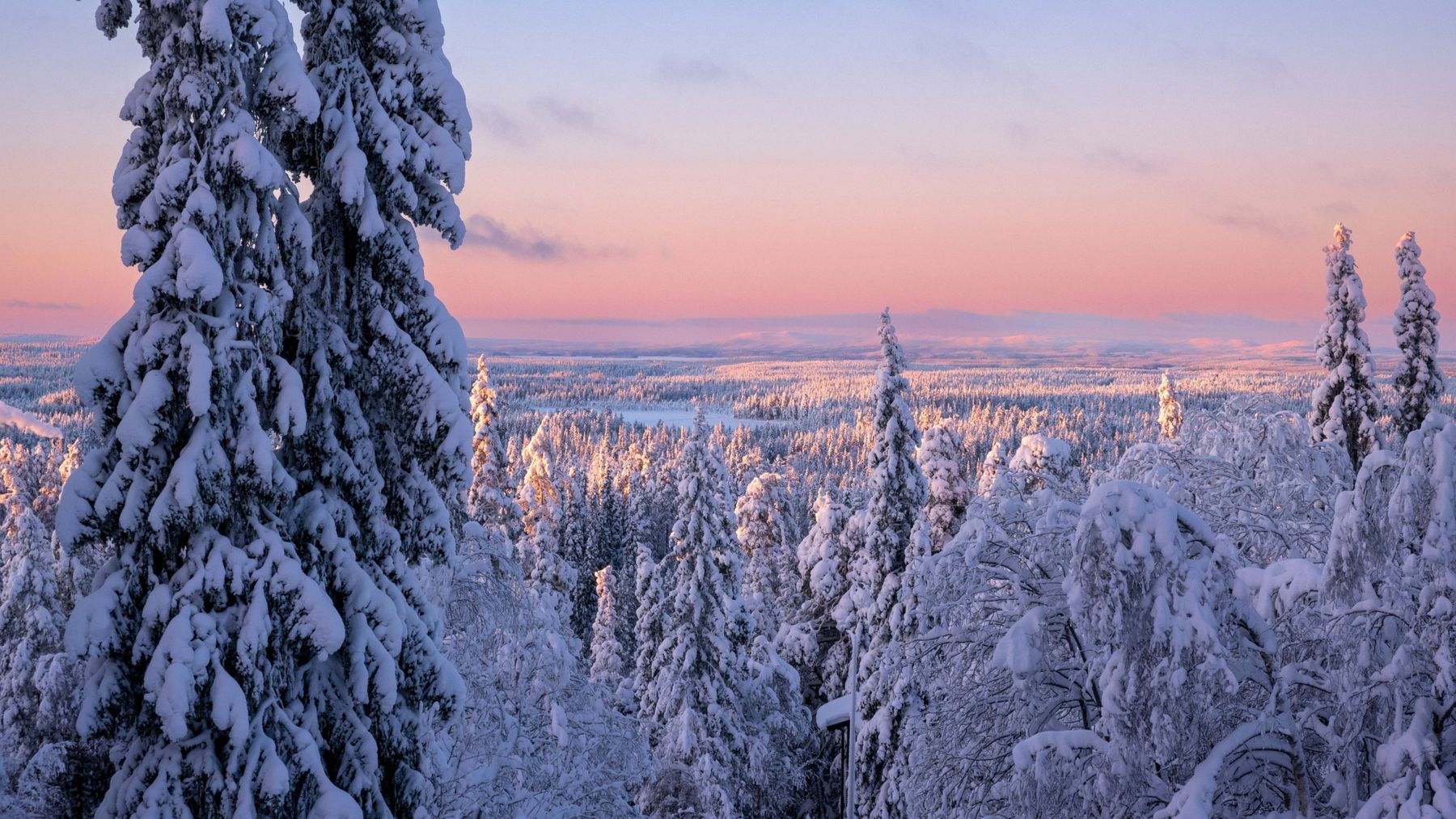
Lapland is one of those places that seems to be on everyone’s list, from families wanting to meet the real Santa to photographers chasing the northern lights over snowy forests. It’s been on mine for a long time too. I’ve watched the aurora dance over Iceland in November and spent time in Norway, and Lapland feels like the natural next step: proper Arctic winter, deep snow, huskies and reindeer, and skies that light up green on a clear night.
Just to be clear, this guide is about the real Lapland in the Arctic, mainly Finnish and Swedish Lapland, and not the Christmas attraction in Berkshire with a similar name. It covers when to go, where to stay, getting there from the UK, the best things to do, how cold it gets and what to wear, and a few tips for photographing it all.
Where is Lapland?
Lapland isn’t a country. The name covers the far north of Scandinavia and Finland, mostly above or around the Arctic Circle. Finnish Lapland is the region most UK holidays go to, with Rovaniemi as its capital. Swedish Lapland covers the north of Sweden around Kiruna and Abisko, and Norway’s far north is often included too. It’s also the traditional homeland of the Sámi, the Indigenous people of the region, whose land, Sápmi, stretches across Norway, Sweden, Finland and part of Russia.
When is the best time to visit Lapland?
It depends on what you want from the trip, and each part of the winter has a different feel.
December for Christmas and Santa
December is peak season for family trips, and it’s the busiest and most expensive time to go, especially around the school holidays. It’s also the darkest month. Around the winter solstice, the sun barely rises in Rovaniemi, and further north it doesn’t come above the horizon at all for several weeks. The Finns call this period kaamos. It isn’t pitch black all day, though, as you get a few hours of soft blue and pink twilight around midday, which is lovely to photograph. Early December can be cheaper, but snow cover isn’t always guaranteed that early, so check what the operators promise. If it’s festive atmosphere you’re after without the Arctic price tag, my guide to the best Christmas markets in Europe has some easier options.
January to March for snow and the northern lights
If Santa isn’t the main reason you’re going, I’d go between January and March. The snow is deep and reliable, the crowds thin out after New Year, and the nights are still long and dark enough for the northern lights. January and February are the coldest months. March is my pick for a first trip, with longer days, bright sunshine on the snow, slightly milder temperatures and a good chance of the aurora at night.
In summer it’s a completely different place, with the midnight sun, hiking and lakes, which I cover in my guide to the midnight sun.
Rovaniemi and Santa Claus Village
Rovaniemi is the easiest place to start, and it’s where most Santa trips go. Santa Claus Village sits right on the Arctic Circle, a few kilometres north of town and very close to the airport. Entry to the village is free, and you can visit Santa in his office, send post from Santa’s main post office and cross the line marking the Arctic Circle. Meeting Santa is usually free, but the official photos cost extra. SantaPark, a separate attraction built inside a cave nearby, is ticketed.
It’s commercial, there’s no getting away from it, but for young children it’s genuinely magical. My advice is to go early in the morning, as queues to see Santa can be long in December, and to balance it with a husky ride or reindeer farm out in the forest, which is where Lapland really comes alive.
Where to stay in Lapland
- Rovaniemi. The best base for families and short trips, with the most hotels, restaurants and tour operators, and Santa on the doorstep.
- Levi. Finland’s biggest ski resort, with a lively village, good slopes and plenty of activities, close to Kittilä airport.
- Ylläs. Quieter than Levi, with long cross-country ski trails and a more peaceful, outdoorsy feel.
- Saariselkä. Further north and closer to the wilderness, near Ivalo airport and Urho Kekkonen National Park, and home to the well-known glass igloos at Kakslauttanen.
- Inari. Small and remote, on the shores of Lake Inari, and the place to learn about Sámi culture at the Siida museum.
- Abisko and Kiruna in Sweden. Abisko National Park is known for its clear skies and the Aurora Sky Station, while the Icehotel at Jukkasjärvi, near Kiruna, is rebuilt from river ice every winter.
Glass igloos and aurora cabins with glass roofs are now found all over Finnish Lapland. They’re expensive, so book well ahead for the best months, and remember the aurora is never guaranteed, so think of it as a lovely place to sleep with a chance of a show rather than a sure thing.
Seeing the northern lights in Lapland
Lapland sits under the auroral oval, so on a clear, dark night your chances are genuinely good. The season runs from roughly late August or September to late March or early April, and the main things you need are darkness and a clear sky. The further north you go and the further you get from town lights, the better your odds. In Sweden, Abisko has a reputation for clearer weather than the surrounding area, which is why it’s so popular with aurora hunters.
I’d book at least three or four nights to give yourself a few chances at clear weather, and consider a guided aurora hunt by minibus or snowmobile, as guides will drive to wherever the clouds are breaking. My guide on how to see the northern lights explains the forecasts and the KP index, and the same dark skies make Lapland one of the best places for stargazing in Europe.
The best things to do in Lapland
- Husky sledding, either as a passenger or driving your own team. Even a short ride through silent snowy forest is a highlight.
- Visiting a reindeer farm, ideally one where a Sámi or local herding family tells you about their way of life.
- Snowmobiling across frozen lakes and through the forest. You’ll usually need a full driving licence to drive one yourself, so check with the operator.
- Ice fishing, snowshoeing and cross-country skiing, which are all easy to try with a guide.
- A traditional sauna, followed by a roll in the snow or a dip through a hole in the ice if you’re brave enough!
- An aurora hunt, by minibus, snowmobile or even reindeer sleigh.
Choosing ethical husky and reindeer experiences
Huskies love to run, and a well-run farm is a happy, noisy place. Still, standards vary, so I’d choose operators that are open about how the dogs are kept, how many runs they do a day, how they rest and what happens to them when they retire. Many good kennels are happy to show you around. With reindeer, look for small family farms rather than places where animals are tethered all day for photos.
Treat Sámi culture with respect too. Choose Sámi-owned experiences where you can, ask before photographing people, and avoid anything selling fake traditional dress as a costume, as this has long been a sore point in the region.
How cold does Lapland get?
Very cold! In the depths of winter, minus 10 to minus 20°C is normal, and on clear, still nights it can drop to minus 30°C or lower. March is often a little milder. The air is usually dry and still, so it can feel more bearable than a damp, windy day in the UK, but you do need the right clothing. Many packages include thermal outerwear and boots, which saves a lot of money and suitcase space.
What to wear in Lapland
- A thermal base layer top and bottoms, ideally merino wool, and no cotton next to the skin.
- A warm mid layer such as fleece or a light down jacket.
- An insulated outer layer, or the thermal overalls provided by your tour operator.
- Thick wool socks, and snow boots with plenty of room for your toes.
- A warm hat that covers your ears, a buff or neck warmer, and mittens over thin liner gloves.
- Hand and foot warmers, which are cheap and make a huge difference on long evenings outside.
How to get to Lapland from the UK
In winter there are direct flights from several UK airports to Rovaniemi, Kittilä (for Levi and Ylläs) and Ivalo (for Saariselkä and Inari), usually taking around three and a half to four hours. Many are charter flights sold as part of package holidays, though some scheduled seasonal routes run too, and they change from year to year. Otherwise, you can connect via Helsinki, and there’s an overnight train from Helsinki to Rovaniemi, which is a fun way to arrive. For Swedish Lapland, most people fly to Kiruna via Stockholm, and Abisko is reached by train.
Package holiday or DIY?
Lapland isn’t cheap, and costs add up quickly once you include activities, which are often the main expense. For a Santa trip in December with young children, a package makes a lot of sense, as flights, transfers, clothing hire and activities are all sorted, and some even run as day trips from the UK. Outside the Christmas period, doing it yourself is usually better value: book flights and a hotel or cabin, then add a few activities locally. Prices rise sharply in school holidays, so travel outside them if you can, and check current entry rules and travel advice on GOV.UK before you book.
Photographing Lapland in the cold
The low winter sun turns the snow pink and gold for hours at a time, so even short days can be great for photography. The cold is the challenge. Batteries drain fast, so carry spares in an inside pocket close to your body and swap them as needed. When you come back indoors, put your camera in a closed bag first and let it warm up slowly, otherwise condensation will form inside the lens. For aurora shots you’ll need a tripod and manual settings, which I cover in my guide to night photography for beginners.
Frequently asked questions
What is the best month to go to Lapland?
December is best for Christmas and seeing Santa, though it’s the busiest and most expensive month. For snow, activities and the northern lights, January to March is ideal, with March bringing longer days and slightly milder temperatures. Early December can be cheaper, but snow cover isn’t always guaranteed that early in the season.
How cold is Lapland in winter?
In mid-winter, temperatures of minus 10 to minus 20°C are normal in Finnish Lapland, and on clear, still nights it can drop to minus 30°C or below. The air is usually dry and calm, which helps. Many package holidays include thermal overalls and boots, but you’ll still need good base layers, warm socks, a hat and mittens.
Can you see the northern lights in Lapland?
Yes. Lapland sits under the auroral oval, so the northern lights are often visible on clear, dark nights from around September to March. The aurora is never guaranteed, so stay at least three or four nights, get away from town lights and consider a guided aurora hunt, as guides will drive to wherever the sky is clearest.
How long is the flight to Lapland from the UK?
Direct winter flights from the UK to Rovaniemi, Kittilä or Ivalo in Finnish Lapland usually take around three and a half to four hours. Many are charter flights sold with package holidays, and routes change each season. You can also fly via Helsinki and connect by plane or the overnight train to Rovaniemi.
Is Lapland UK the same as Lapland in Finland?
No. Lapland UK is a Christmas attraction in Berkshire, England. The real Lapland is in the Arctic, covering northern Finland, Sweden and Norway, and it’s where you’ll find Rovaniemi and Santa Claus Village on the Arctic Circle, husky sledding, reindeer farms, glass igloos and the northern lights. It’s around a four-hour flight from the UK.