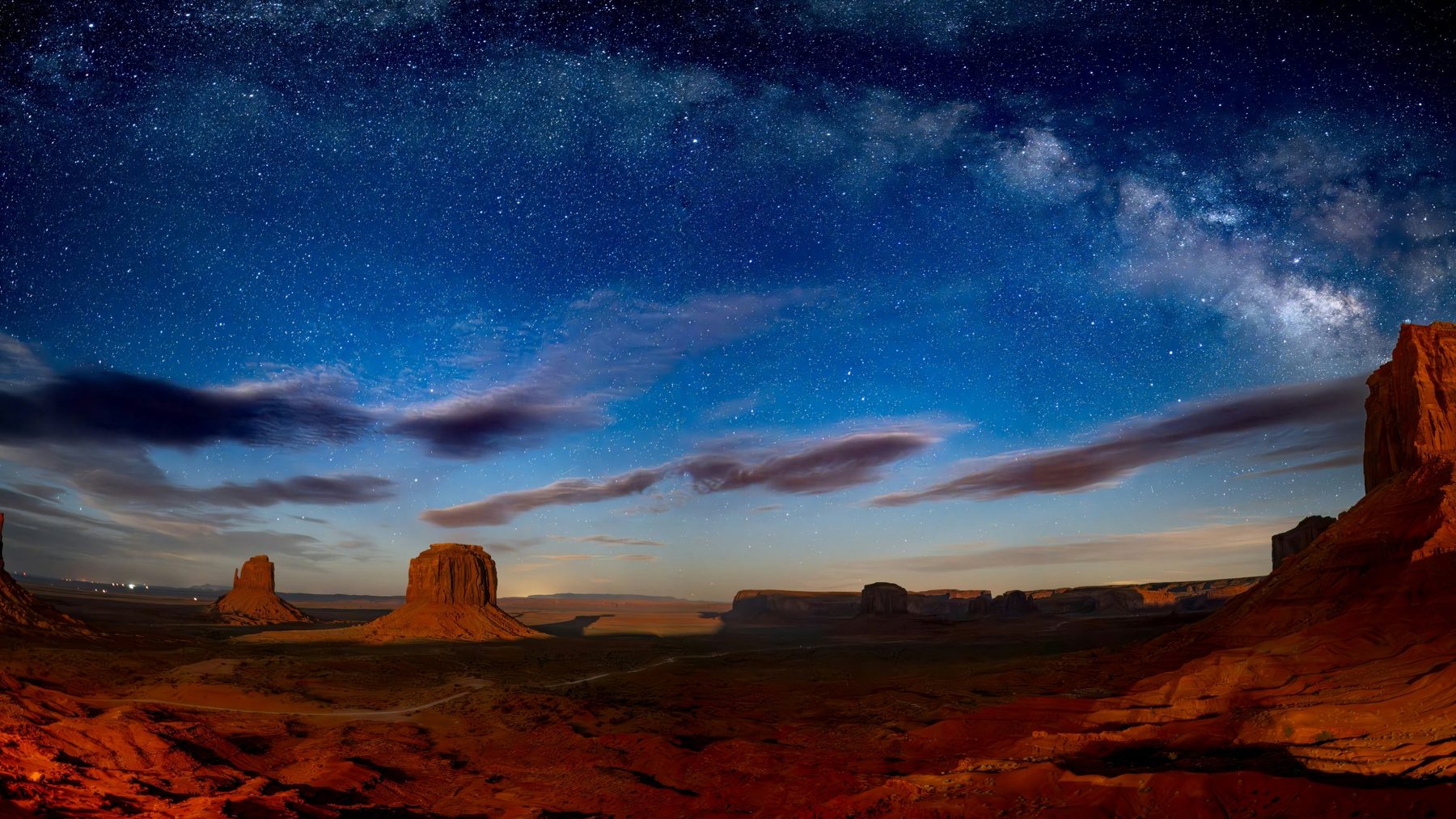
Some of my favourite travel memories have happened after dark. Lying in a transparent bubble in an Icelandic pine forest with the northern lights moving overhead, at what I called my five million star hotel on my Iceland Ring Road trip, is still right up there. So is a freezing night at a desert camp in Wadi Rum earlier this year, sat round a campfire at the foot of a huge sandstone cliff, miles from the nearest town.
Most of us in the UK rarely see a properly dark sky, so the first time you do it’s a bit of a shock how many stars there are. This guide covers what makes a good place for stargazing, when to go, my pick of the best places in the world and here in the UK, and the kit and apps that help.
What makes a good place for stargazing?
It comes down to three things: darkness, clear dry air and, ideally, a bit of altitude. Light pollution is the big one. The glow from a town can be seen from a long way off, and from most of southern England you’ll only ever see the brightest few hundred stars. Astronomers often rate sky darkness on the Bortle scale, from 1 (the darkest skies on Earth) to 9 (an inner city), and you don’t need to be at a 1 to be amazed. Getting away from a 7 or 8 to a 3 or 4 makes a huge difference.
Dark Sky International (until recently called the International Dark-Sky Association) certifies Dark Sky Places around the world. Parks and sanctuaries are protected areas with very dark skies, while a Dark Sky Reserve has a dark core surrounded by communities that have agreed to control their lighting. A separate organisation, the Starlight Foundation, certifies some places too, including parts of the Canary Islands. Certification doesn’t promise clear weather, but it does mean the lighting is managed and there’s usually good information, events and sometimes an observatory to visit.
When is the best time to go stargazing?
Check the moon before anything else. A full moon washes out all but the brightest stars, so aim for the week or so around the new moon, or for the hours after the moon has set. I’d always plan the dates of a stargazing trip around it.
If you want to see the bright core of the Milky Way, the season in the northern hemisphere runs roughly from March to September. Early in the year it rises in the small hours before dawn, and by late summer it’s up in the evening. In the UK it sits low in the southern sky, and around June the nights never get fully dark, so late August and September are usually better. Winter brings the longest nights, Orion and the best chance of the northern lights further north, while in the far north in summer it doesn’t get dark at all, as I explain in my guide to the midnight sun.
Meteor showers are a great excuse to get out too. The dates shift a little each year, so check before you go.
- The Perseids, which usually peak around 12 to 13 August, warm enough to lie out on a blanket.
- The Geminids, usually around 13 to 14 December, often the strongest shower of the year if you can face the cold.
- The Quadrantids in early January, with a short, sharp peak.
The best places for stargazing in the world
These are the places I’d choose if I were planning a trip around the night sky.
Atacama Desert, Chile
The Atacama is one of the driest places on Earth, it’s high, and it has clear nights for much of the year, which is why some of the world’s biggest observatories are built there. Most visitors base themselves in San Pedro de Atacama, where small local observatories run evening tours with telescopes. From the southern hemisphere you get the Magellanic Clouds and the Milky Way core passing high overhead, especially in the southern winter from around June to August. Further south, the Elqui Valley is home to the Gabriela Mistral Dark Sky Sanctuary. Nights at altitude are cold, so pack proper layers.
NamibRand Nature Reserve, Namibia
This private reserve in southern Namibia, not far from the dunes of Sossusvlei, was Africa’s first International Dark Sky Reserve and has some of the darkest skies ever measured. There are no towns nearby, the air is dry, and several lodges have stargazing decks or the option to sleep out under the sky. The dry season, roughly May to October, usually gives the clearest nights.
Aoraki Mackenzie, New Zealand
On New Zealand’s South Island, around Lake Tekapo and Aoraki Mount Cook, this is one of the largest dark sky reserves in the world. There’s an observatory on Mount John above Tekapo with guided tours, and the combination of mountains, lakes and the southern sky is hard to beat. The long nights of the southern winter, roughly May to August, are best, and on a lucky night you might even catch the aurora australis.
Mauna Kea, Hawaii
The summit of Mauna Kea on Hawaii’s Big Island sits at over 4,200 metres, above most of the weather, and is home to a cluster of major observatories. Most stargazers stop at the visitor centre at around 2,800 metres, as you need a 4x4 to go higher and the altitude is a real health risk, with official guidance against children and people with heart or breathing conditions going to the summit. The mountain is also sacred to Native Hawaiians, so treat it with respect, and check which visitor programmes are running before you go.
The Canary Islands
For UK travellers, this is the closest world-class sky, around four hours away. La Palma has protected its night sky by law for decades and is home to the observatory at Roque de los Muchachos, high on the rim of the Caldera de Taburiente. On Tenerife, Teide National Park sits well above the cloud layer that often covers the coast, and sunset and stargazing tours are easy to book.
Utah and Arizona, USA
The high, dry and sparsely populated Colorado Plateau has one of the biggest concentrations of dark sky parks anywhere. Natural Bridges National Monument in Utah was named the world’s first International Dark Sky Park in 2007, and the Grand Canyon, Bryce Canyon, Canyonlands and Arches are all certified too. Monument Valley, on Navajo Nation land, gives you those famous buttes as a foreground for the Milky Way. Access to the valley after dark is limited, so check the tribal park rules and consider staying on site. Spring and autumn avoid the worst of the summer heat and afternoon storms.
Wadi Rum, Jordan
Our camp in Wadi Rum was properly in the middle of nowhere, with basic but beautifully decorated wooden huts sheltered by an enormous cliff, and the evening was spent round the fire telling stories and toasting marshmallows. I’ll be honest, I didn’t take a single photo that night, and the temperature dropped to low single digits. With no towns for miles and dry desert air, it’s a superb place for stargazing, and many camps now offer bubble tents with clear roofs so you can watch from bed. My guide on how to visit Petra and Wadi Rum covers the camps and the best time of year.
Jasper, Canada
Jasper National Park in the Canadian Rockies is one of the largest dark sky preserves in the world, and it usually hosts a dark sky festival in October. You’ve got mountains and lakes for foregrounds and a decent chance of the northern lights. Parts of the park and town were hit by wildfire in 2024, so check what’s open before you plan.
Kerry, Ireland
The Kerry International Dark Sky Reserve covers a stretch of the Iveragh Peninsula around the Skellig Ring, between the mountains and the Atlantic. It’s one of the darkest places in Europe and an easy trip from the UK. The catch is the Atlantic weather, so give yourself a few nights to get a clear one.
Pic du Midi, France
The Pic du Midi de Bigorre in the French Pyrenees has an observatory at nearly 2,900 metres, reached by cable car from La Mongie. You can book an overnight stay at the summit with dinner and a session at the telescopes, and the area sits within a dark sky reserve. Places are limited, so book well ahead.
The best places for stargazing in the UK
You don’t need a long-haul flight to see a dark sky. The UK has some excellent Dark Sky Places, and the darkest of them are just as good as plenty of famous spots abroad on a clear night.
- Galloway Forest Park, Scotland. The UK’s first Dark Sky Park, with huge areas of forest and hills and very few lights.
- Northumberland and Kielder. Northumberland International Dark Sky Park covers a vast area, and Kielder Observatory runs popular evening events.
- Exmoor. Europe’s first International Dark Sky Reserve, with open moorland and coast for foregrounds.
- Bannau Brycheiniog (Brecon Beacons) and Eryri (Snowdonia). Both are Dark Sky Reserves, with mountains and lakes to frame the sky.
- The South Downs. Close to home for me in Sussex, and one of the most accessible reserves for anyone in London or the south east.
- The Isle of Coll and Sark. Two small islands with almost no street lighting, both recognised for their dark skies.
Scotland’s far north also gets the northern lights on active nights, and my guide on how to see the northern lights explains how to read the forecasts.
What do you need for stargazing?
The good news is that you don’t need a telescope to start. Your eyes and a decent pair of binoculars will show you far more than you’d expect, and a few apps make planning much easier.
- A light pollution map, so you can find the darkest spot within reach.
- A star app such as Stellarium or SkySafari, which shows what’s above you when you hold up your phone.
- A cloud forecast app, as the normal weather forecast doesn’t tell you enough about cloud at night.
- A head torch with a red light mode.
- Binoculars, as something like 7x50 or 10x50 is a great all-rounder for the night sky.
- Warm layers, a hat, a flask and something to lie on, as you’ll get cold quickly standing still.
How to photograph the night sky
If you want to bring the night home with you, you’ll need a tripod, a wide lens and full manual control. As a starting point, try the widest aperture your lens allows, an ISO of around 1600 to 6400 and an exposure of 15 to 25 seconds, with the focus set by hand on a bright star. Modern phones have impressive night modes too, so it’s worth experimenting with a phone on a small tripod. My guide to night photography for beginners goes through the settings step by step.
What makes a night shot work, though, is usually the foreground. A rock arch, a lone tree, a mountain or a tent lit from inside gives the sky a sense of scale, which is why places like Monument Valley and Wadi Rum are so popular with night photographers.
Stargazing safety and etiquette
Dark places are usually remote places, so tell someone where you’re going, check the route in daylight and take more warm clothing than you think you’ll need. In deserts and mountains the temperature can drop fast once the sun goes down. Keep white lights to a minimum, and don’t park somewhere that blocks a road. Respect the rules at observatories and protected sites, as those rules are what keep the skies dark for everyone.
Frequently asked questions
Where is the best place in the world for stargazing?
The Atacama Desert in Chile is often called the best place for stargazing in the world, thanks to its dry air, altitude and clear nights, which is why major observatories are built there. Other top choices include NamibRand in Namibia, Aoraki Mackenzie in New Zealand, Mauna Kea in Hawaii and La Palma in the Canary Islands.
Where is the best place for stargazing in the UK?
Galloway Forest Park in Scotland and Northumberland International Dark Sky Park, around Kielder, have some of the darkest skies in the UK. Exmoor, Bannau Brycheiniog (Brecon Beacons), Eryri (Snowdonia) and the South Downs are all Dark Sky Reserves too, and the islands of Coll and Sark have very little artificial light.
What is a dark sky reserve?
A dark sky reserve is an area recognised by Dark Sky International for its exceptionally dark night sky. It has a very dark core zone surrounded by a wider area where councils, businesses and residents have agreed to manage their lighting to protect it. Parks and sanctuaries are similar certifications, usually covering protected areas rather than inhabited land.
When is the best time to see the Milky Way?
In the northern hemisphere, the bright core of the Milky Way is visible roughly from March to September, rising before dawn early in the season and in the evening by late summer. In the UK, late August and September are usually best, as nights around June never get fully dark. Always aim for the days around the new moon.
Do you need a telescope for stargazing?
No. Under a properly dark sky you can see thousands of stars, the Milky Way and meteor showers with the naked eye. A pair of 7x50 or 10x50 binoculars is the best next step, showing star clusters, the Moon’s craters and even the Andromeda Galaxy. Many dark sky areas also have observatories that run telescope evenings for visitors.