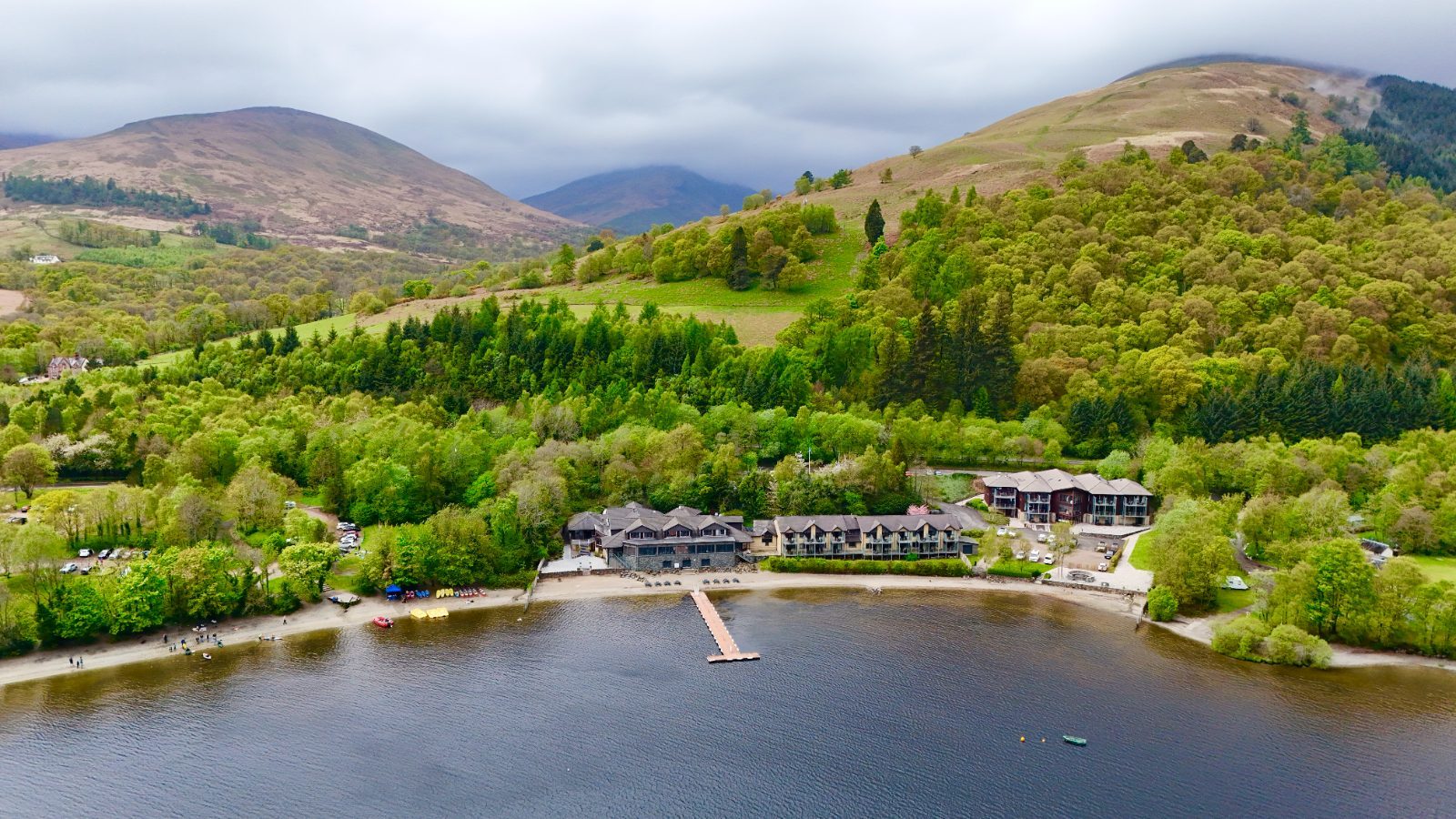
People often ask me what camera I use, and I think they’re sometimes a little surprised when I tell them that my main camera is my phone. I’ve just upgraded to the iPhone 17 Pro Max, and along with my DJI Mini 4 Pro drone and a small phone tripod, that’s pretty much everything I take on a trip.
That doesn’t mean a phone is the best camera for everyone though. It depends a lot on what you like to photograph, how much you’re happy to carry and how much time you want to spend learning, so this guide goes through what really matters in a travel camera, the main types worth looking at in late 2025, who each one suits, and then what I use and why.
What makes a good travel camera?
Before looking at specific models, it helps to think about what travelling actually asks of a camera.
- Size and weight. A camera you leave in the hotel because it’s heavy takes no photos at all, so be realistic about what you’ll carry on a long day of walking.
- Lenses and zoom range. A wide angle for landscapes and cities and some zoom for details and wildlife cover most travel photography.
- Sensor size. Bigger sensors generally give cleaner low light photos and more natural background blur, but they also mean bigger cameras and lenses.
- Weather sealing. Rain, sea spray, sand and dust are all part of travelling, and some cameras cope with them far better than others.
- Battery life and charging. Being able to charge over USB-C from a power bank makes life much easier on the road.
- Ease of use. If a camera is fiddly you’ll miss moments, so the controls need to feel natural to you.
For me size and weight come first every time, as I’d much rather have a slightly less capable camera in my hand than a better one sitting in my bag back at the guesthouse, and I’ve found that the more gear I carry, the less I actually enjoy taking photos.
Is an iPhone good enough for travel photography?
For most people, yes, and I’d say that even as someone who takes photography seriously. The latest flagship phones combine good sensors with very clever processing, and they handle tricky light like bright skies and dark shadows remarkably well. The iPhone 17 Pro has three 48MP cameras, including a telephoto that gives you 4x and 8x zoom, and it shoots ProRAW if you like to edit. The Samsung Galaxy S25 Ultra and Google Pixel 10 Pro are very capable too.
Phones do have limits. The small sensors struggle with fast moving subjects in low light, the zoom can’t match a proper telephoto lens for distant wildlife, and the background blur is created by software, so it isn’t always convincing. Shooting all day also drains the battery quickly, so a power bank is essential. If those things don’t bother you much, a good phone might be all you need.
Types of travel camera, and who each one suits
Flagship smartphones
Best for travellers who want great photos with no extra weight, people who travel light or solo, and anyone who’d rather spend time enjoying a place than fiddling with settings. A phone is always with you, doesn’t draw attention and makes sharing easy.
Compact travel zoom cameras
These are pocket cameras with long built-in zooms, like the Sony RX100 series and the Panasonic Lumix TZ series (sold as the ZS series in the US). The RX100 models use a 1-inch sensor that’s bigger than the sensors in most phones, while the TZ99 goes for a very long 30x zoom on a smaller sensor. They suit travellers who want more reach than a phone without carrying lenses, but they aren’t weather sealed and sand in a retracting lens is bad news.
Premium compact cameras
The Ricoh GR III and Fujifilm X100VI put a large APS-C sensor into a small body with a fixed, non-zooming lens, and Ricoh has just announced the GR IV too. The image quality is lovely and they’re discreet, which makes them favourites for street photography and city breaks. You zoom with your feet though, so they’re best for people who enjoy that way of shooting rather than as an all-in-one. The X100VI has been hard to get hold of at times, so check availability.
Mirrorless cameras
If you want the best image quality and the flexibility to change lenses, a mirrorless camera is the way to go. Good travel options include the Sony a6700, Fujifilm X-S20 and Nikon Z50 II, which all use APS-C sensors in fairly compact bodies, and the Canon EOS R50, which is small, light and very beginner friendly. For full frame quality in a lighter body, the Canon EOS R8 is worth a look.
They suit keen photographers, wildlife lovers and anyone planning to print large. The trade-off is weight, bag space and cost, especially once you add lenses. A single all-in-one zoom lens keeps things manageable and saves swapping lenses in dusty places.
Action cameras
The GoPro HERO13 Black, DJI Osmo Action 5 Pro and 360 cameras like the Insta360 X5 are tiny, tough and waterproof, and they’re brilliant for snorkelling, surfing, cycling and anything where a normal camera would get wrecked. They’re mainly video cameras with very wide lenses, so they’re great alongside a phone or camera but not really a replacement for one.
Drones
A drone shows you a place in a way nothing else can, and small drones like the DJI Mini 4 Pro weigh under 250g and fold down to fit in a daypack. DJI has also just launched the Mini 5 Pro with a larger 1-inch sensor. Drone rules vary a lot between countries and many national parks ban them, so always check the local rules before you go. My guide to drone travel photography goes into this in much more detail.
What is the best camera for travel beginners?
My honest advice is to start with the phone you already have and learn composition and light first, as that’s what really makes a photo, and my guide on how to take better travel photos is a good place to begin. If you then want a dedicated camera, a compact travel zoom is the easiest step up, and a small mirrorless camera like the Canon EOS R50 or Nikon Z50 II with its kit lens gives you room to grow without being overwhelming.
What I actually use for travel photography, and why
My iPhone 17 Pro Max is now my main camera, and I’ve only just started using it, but my reasons for shooting on a phone haven’t changed. It’s always in my pocket, it doesn’t make me stand out, and I’m not carrying a heavy bag around all day, which matters a lot as I often travel on my own and carry everything myself (my solo travel tips cover more on that side of things). I shoot in ProRAW for landscapes and edit everything in Lightroom, and I’ve written up my Lightroom workflow for travel photos if you’d like to see how.
The DJI Mini 4 Pro is the other half of my kit. It’s small enough to take on every trip, and some of my favourite photos from the Norway fjords and the Scotland NC500 were taken from the air. A Zeadio phone tripod with a Bluetooth remote handles blue hour, night shots and photos of myself when I’m travelling solo, and everything goes in my Osprey Farpoint 40L cabin pack, which keeps it all with me on flights. That matters with a drone, as spare lithium batteries normally have to go in your hand luggage anyway.
There are times I miss a bigger camera, mainly for distant wildlife like the birds and monkeys in Costa Rica, where even a good phone zoom runs out of reach. For the way I travel though, carrying less has made me happier and I think it’s made my photos better too.
How to choose a travel camera: a quick checklist
- What do you photograph most, landscapes, cities, people, wildlife or adventure?
- How much weight are you really happy to carry all day?
- Do you need more zoom than your phone can give you?
- Will you be in rain, sand, snow or water a lot?
- Do you want to edit raw files, or just share straight away?
- Can it charge over USB-C from a power bank?
- Does it feel comfortable and simple in your hands? Try it in a shop if you can.
In the end the best travel camera is the one that fits the way you travel, and for plenty of people that’s already in their pocket, so think about the trips you actually take and the photos you actually love taking before you spend anything.
Frequently asked questions
What is the best camera for travel in 2025?
There’s no single best camera for everyone. For most travellers a flagship phone like the iPhone 17 Pro is the best all-rounder. If you want more zoom, look at compact travel zooms like the Sony RX100 or Panasonic TZ series, and for the best image quality a small mirrorless camera such as the Sony a6700 or Fujifilm X-S20.
Is an iPhone good enough for travel photography?
Yes, for most people a recent iPhone is more than good enough, with multiple lenses, excellent processing and ProRAW for editing. It’s small, always with you and easy to share from. Its limits show with distant wildlife, fast action in low light and natural background blur, where a dedicated camera with larger lenses still has the edge.
What is the best camera for travel beginners?
Start with the phone you already have and learn composition and light first. If you want a dedicated camera, a compact travel zoom is the simplest step up, as there are no lenses to change. For more room to grow, a small, beginner-friendly mirrorless camera like the Canon EOS R50 or Nikon Z50 II with its kit lens is a great choice.
Is it worth buying a camera for travel if I have a good phone?
Only if you regularly hit your phone’s limits. A dedicated camera makes sense if you photograph wildlife, want real background blur, shoot a lot in low light or plan to print large. If most of your photos are landscapes, cities and moments shared online, a recent flagship phone will do the job and saves carrying extra weight.
What camera do travel photographers use?
It varies a lot. Many professionals use mirrorless cameras from Sony, Canon, Nikon or Fujifilm with a couple of lenses, often alongside a drone. Plenty also shoot a lot on their phones, as they’re light and discreet. I’m one of them, as my main camera is an iPhone, paired with a DJI Mini 4 Pro drone for aerials.