A lot of bucket lists end up as a pile of famous names with no plan attached, which is probably why so many never get ticked off. So for each of these I’ve added the season I’d aim for and the booking step people tend to miss.
I’ve been lucky enough to stand at a good number of them with a camera, some at dawn and some in the pouring rain, and the rest are still on my own list because they really do deliver if you plan them properly.
What makes a good bucket list experience?
For me it has to be something you can’t recreate at home, and something that’s even better in person than it looks on a screen. It also needs to be achievable with a bit of planning. Timing matters more than anything, as the same place can be amazing in late May and miserable in August, so for each one I’ve given the window I would aim for.
Natural wonders
1. See the northern lights
Go between roughly late September and late March, when the Arctic gets proper darkness, and base yourself somewhere for several nights so you have a few chances. Northern Norway, Iceland and Finnish Lapland are the easiest bets, and my full guide to seeing the northern lights covers forecasts and camera settings.
2. Hike to Trolltunga above a Norwegian fjord
The rock ledge above Ringedalsvatnet is a long, tough day on foot, so start early and carry proper layers. The unguided season runs roughly June to September, and outside that you should go with a guide. I combined it with a slow drive through the fjords, which you can read about in my Norway fjords journal.
3. Walk among the Dolomites
The jagged peaks of the Italian Dolomites look almost unreal when you’re standing underneath them. I’d aim for roughly late June to September when the lifts and mountain huts are open, and try to sleep high at least one night so you’re up on the ridge for first light.
4. Watch sunset on the Avenue of the Baobabs
These giant trees near Morondava on Madagascar’s west coast are best in the dry season, roughly April to November, when the dirt roads are passable. Stay for sunset and then hang around for the stars, and there are more shots in my Madagascar gallery.
5. Snorkel the Great Barrier Reef
Pick an operator that goes out to the outer reef rather than the busiest inshore sites, and go roughly June to October for clearer, calmer water and fewer marine stingers. Cairns and Port Douglas are the classic bases, and it fits really nicely into an east coast road trip.
6. Stand on the rim of the Grand Canyon at sunrise
The South Rim is open all year and much easier to reach, while the North Rim is quieter but only opens in the warmer months. Sunrise at a viewpoint like Mather Point or Yavapai beats midday every time, and it’s worth booking lodging inside the park well ahead.
Ancient sites
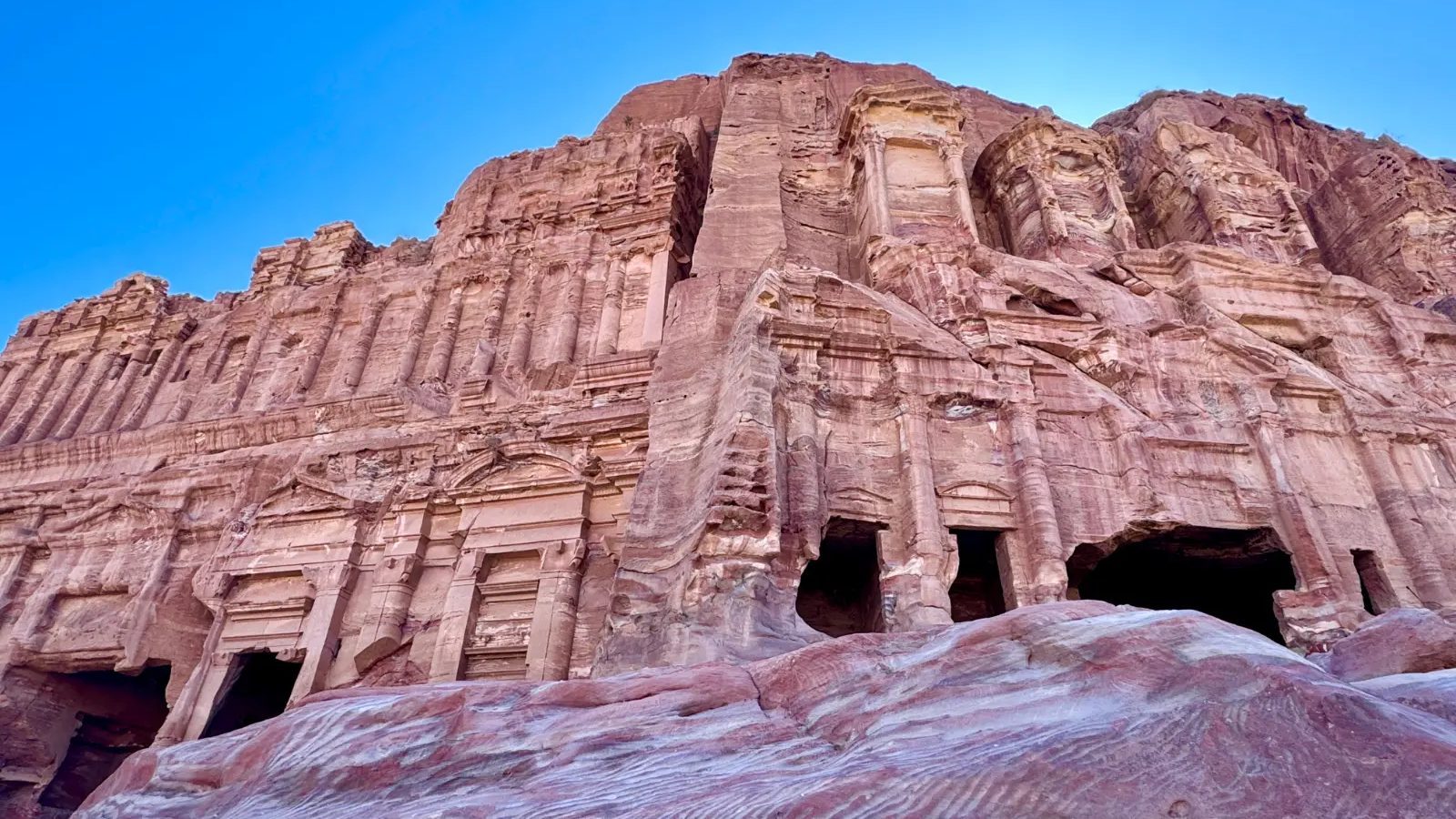
7. Walk the Siq into Petra
Get there at opening time and the Treasury appears through the canyon walls with hardly anyone around. I’d buy a multi-day pass so you can climb up to the Monastery without rushing, and check the current days for Petra by Night. Spring and autumn are the most comfortable seasons, and it’s the opening chapter of my Petra to the Pyramids journal.
8. Watch sunrise over Angkor Wat
Buy your temple pass the day before and be at the reflecting pools well before dawn. Then, while everyone heads off for breakfast, go straight on to the quieter temples. The drier, cooler months of roughly November to February are the most pleasant.
9. Reach Machu Picchu
Entry is by timed ticket and the classic Inca Trail permits sell out months ahead, so this is one to book early (the trail also closes each February for maintenance). Give yourself a few days in Cusco first to acclimatise, as I found the altitude in Peru really slowed everything down.
10. Hike a wild section of the Great Wall
Skip Badaling and head for a section like Mutianyu or Jinshanling instead, where you can walk between the watchtowers with room to breathe. Autumn brings clear air and lovely colour on the hills.
11. See the Pyramids of Giza, then go south to Luxor
Giza is the headline, but the temples and tombs around Luxor are where Egypt really gets under your skin. Go roughly October to April to avoid the fierce summer heat, and get to the big sites as soon as they open.
Wildlife encounters
12. Look for sloths and turtles in Costa Rica
The dry season, roughly December to April, is the easiest time to travel, but green turtles nest at Tortuguero roughly July to October. I’d hire a local guide for your first walk, as they spot so much that you’d walk straight past.
13. Hear the indri in Madagascar
The eerie call of the indri, the largest living lemur, carries right through the rainforest around Andasibe, a few hours’ drive from the capital. Go out with a local guide early in the morning when the groups are calling and on the move.
14. Follow the Great Migration
The herds move in a rough loop through the year, calving in the southern Serengeti around January and February and crossing the Mara River roughly July to October. Decide which month you want first and then choose your camp.
15. Trek to see mountain gorillas
Visits in Rwanda and Uganda are strictly limited by permit, and permits are expensive and in short supply, so check current availability before you plan anything else. Expect steep, muddy hiking followed by an hour with the group, and the drier months are easier underfoot.
16. Watch humpback whales off eastern Australia
Humpbacks migrate along the east coast roughly June to November, and Hervey Bay is a favourite place to see them resting with their calves. A smaller boat on a calm morning makes all the difference.
Great journeys
17. Drive Iceland’s Ring Road
Route 1 loops the whole island past waterfalls, glaciers and black-sand beaches. I did it by campervan in 2023 and it gave me a real taste for campervan life! Give it at least ten days so you’re not just driving, and go roughly June to early September for open roads and long light. My Iceland Ring Road journal shows how I split up the loop.
18. Take on the North Coast 500
The loop officially starts from Inverness and is best in late spring, before the midges and summer traffic peak. I went clockwise from Loch Lomond on a tip from the campervan company, which gave me far more time on the West Coast, and as much of it is single-track it’s worth learning how passing places work.
19. Spend a night on the water in northern Vietnam
The limestone karsts rising out of Ha Long Bay and neighbouring Lan Ha Bay are best seen from a boat at dawn, once the day-trippers have gone home. An overnight cruise in the cooler, clearer months, roughly October to April, is how I’d do it.
20. Complete a multi-day trek
The Tour du Mont Blanc is the classic, starting from Chamonix and circling the massif through France, Italy and Switzerland. It’s walkable from roughly late June to mid-September, and the refuges book up early.
21. Ride a great mountain railway
Norway’s Bergen Line and Switzerland’s Glacier Express both climb through scenery that’s well worth a window seat and a slow pace. Book the side with the view and travel in daylight.
Once-in-a-lifetime moments
22. Sleep under the stars in Wadi Rum
The red desert of southern Jordan is at its best from a Bedouin-style camp well away from any lights. Go in spring or autumn, and if you care about the Milky Way, time it for a new moon.
23. Experience the midnight sun
Above the Arctic Circle the sun stays up all night for weeks either side of the summer solstice, roughly late May to late July in northern Norway. Hiking at midnight in golden light feels really strange and absolutely wonderful.
24. See the lantern festival in Chiang Mai
Yi Peng falls in November on dates set by the lunar calendar, at the same time as Loy Krathong. The big lantern releases are now mostly ticketed events with local rules, so check this year’s arrangements before you go.
25. Stand in the path of a total solar eclipse
Totality only lasts a few minutes and you have to be inside a narrow band to see it. The 12 August 2026 eclipse crosses Iceland and northern Spain, and the 2 August 2027 path runs through southern Spain, North Africa and Egypt. Accommodation along the path books up years ahead.
How do you turn a bucket list into actual trips?
A list of 25 things can feel a bit overwhelming, whereas five trips feels much more doable. What works for me is grouping them by region and by season, then picking one main experience for each trip and building everything else around it.
- Cluster by region. Petra, Wadi Rum and Egypt fit nicely into one trip, and Angkor, Ha Long Bay and Chiang Mai into another. The Great Barrier Reef and the humpbacks share a coast and a season too.
- Plan by season. The northern lights, Egypt and Angkor are winter trips, while Trolltunga, the Dolomites, the midnight sun and the Ring Road all suit summer.
- Book the bottlenecks first. Inca Trail permits, gorilla permits, eclipse accommodation and mountain refuges all run out, and everything else can wait.
- Leave some slack. The weather decides a lot of these, so build in a spare day wherever the big moment depends on clear skies or calm seas.
Which bucket list trips should you do first?
I’d do the physical ones while you can, and the fragile ones before they change, like reefs, glaciers and places where visitor numbers are being limited. The easier, more accessible trips can wait a few years. When you’re ready to commit, Base Camp has full itineraries for many of the places above.
Frequently asked questions
What should be on a travel bucket list?
A good travel bucket list mixes natural wonders, ancient sites, wildlife encounters and great journeys. Classics include the northern lights, Petra, Angkor Wat, Machu Picchu, the Great Barrier Reef and a road trip like Iceland’s Ring Road. Choose experiences you can’t recreate at home, and note the best season next to each one so the list turns into actual trips.
How do I start planning a bucket list trip?
Start with the season. Find the months when your chosen experience is at its best, then check whether anything needs booking far ahead, such as permits, timed tickets or mountain huts. Book those bottlenecks first, then flights and accommodation. Group nearby experiences into the same trip and leave a spare day for the weather, which decides a lot of bucket list moments.
What is the number one bucket list experience?
There isn’t a single answer, but seeing the northern lights regularly tops wish lists because it’s spectacular, natural and never the same twice. For an ancient site, Petra and Machu Picchu are hard to beat. The best choice is really the one that excites you enough to get up before dawn for it, as timing makes such a difference to these experiences.
How far in advance should I book bucket list trips?
For most trips, three to six months is enough. Anything with limited permits or space needs longer, such as Inca Trail permits, gorilla trekking permits, popular mountain refuges and accommodation in the path of a solar eclipse, which can sell out many months or even years ahead. Check the official booking windows first, then plan everything else around them.
Which bucket list experiences are best in winter?
Winter is ideal for the northern lights, which need long dark nights, and for hot destinations like Egypt, Jordan and Cambodia, where temperatures are far more comfortable. It’s also a good time for Costa Rica’s dry season and the migration calving season in the southern Serengeti. Summer suits the midnight sun, Alpine hiking and Iceland’s Ring Road.