An Epic Five-Country Adventure Through Wild Southern Africa
Hiking Table Mountain, scaling Namibian dunes, safari at Etosha and sunsets at Victoria Falls: 27 days, five countries and one unforgettable overland adventure through the wild heart of Southern Africa.
My Planned Route
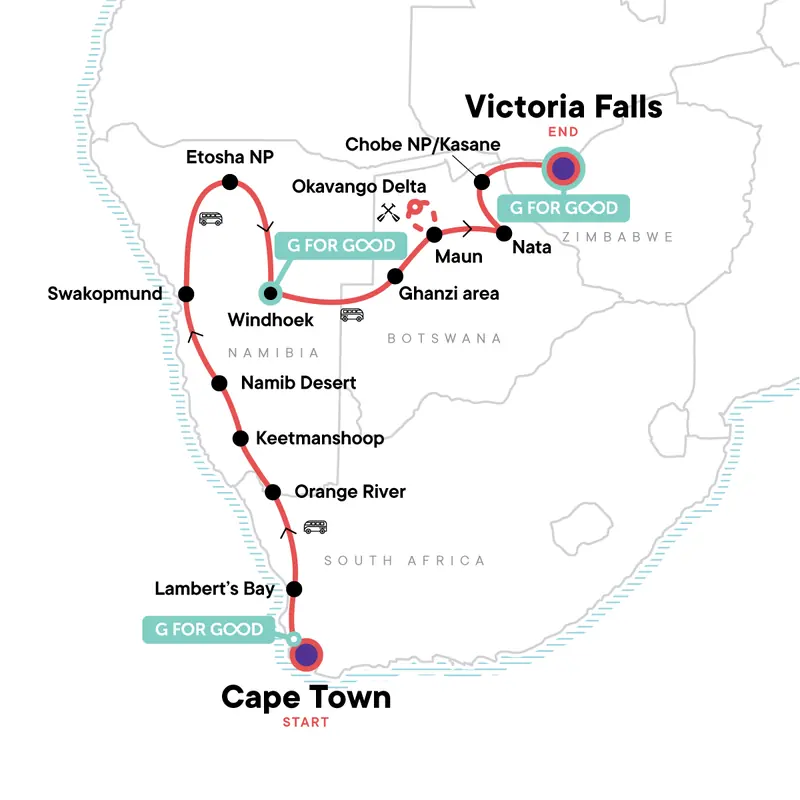
A 27-day overland journey through five countries: an 18-day small-group tour, topped and tailed by my own days in Cape Town and Victoria Falls.
I have always wanted to do one of those trips that joins the dots across a whole region, rather than just ticking off a single country, and Southern Africa had been calling me for years. Deserts, safaris, wild coastlines and one of the 7 Natural Wonders of the World, all in one go? It was an easy decision.
The plan was simple on paper: fly into Cape Town and spend a few days exploring on my own, then join a small group and head north by road through Namibia and Botswana, all the way to Victoria Falls in Zimbabwe, before crossing into Zambia to finish. Five countries, one adventure.

Mountains, Coastline & the Mother City
My flight from Gatwick landed in Cape Town quite late in the evening, so the first night was all about getting my head down in an Airbnb overlooking the coast, ready to make the most of the days ahead.
The next morning I moved to the Terra by O’Two Hotels in Mouille Point, a really nice hotel right at the start of the Sea Point Promenade, before heading off very early to Table Mountain.
I had been told to get there for opening time to beat the crowds, which I did, only to find a queue five people wide and about a mile long! It took me around two hours to get in, and that was first thing in the morning. My tip: book your cable car ticket online in advance.
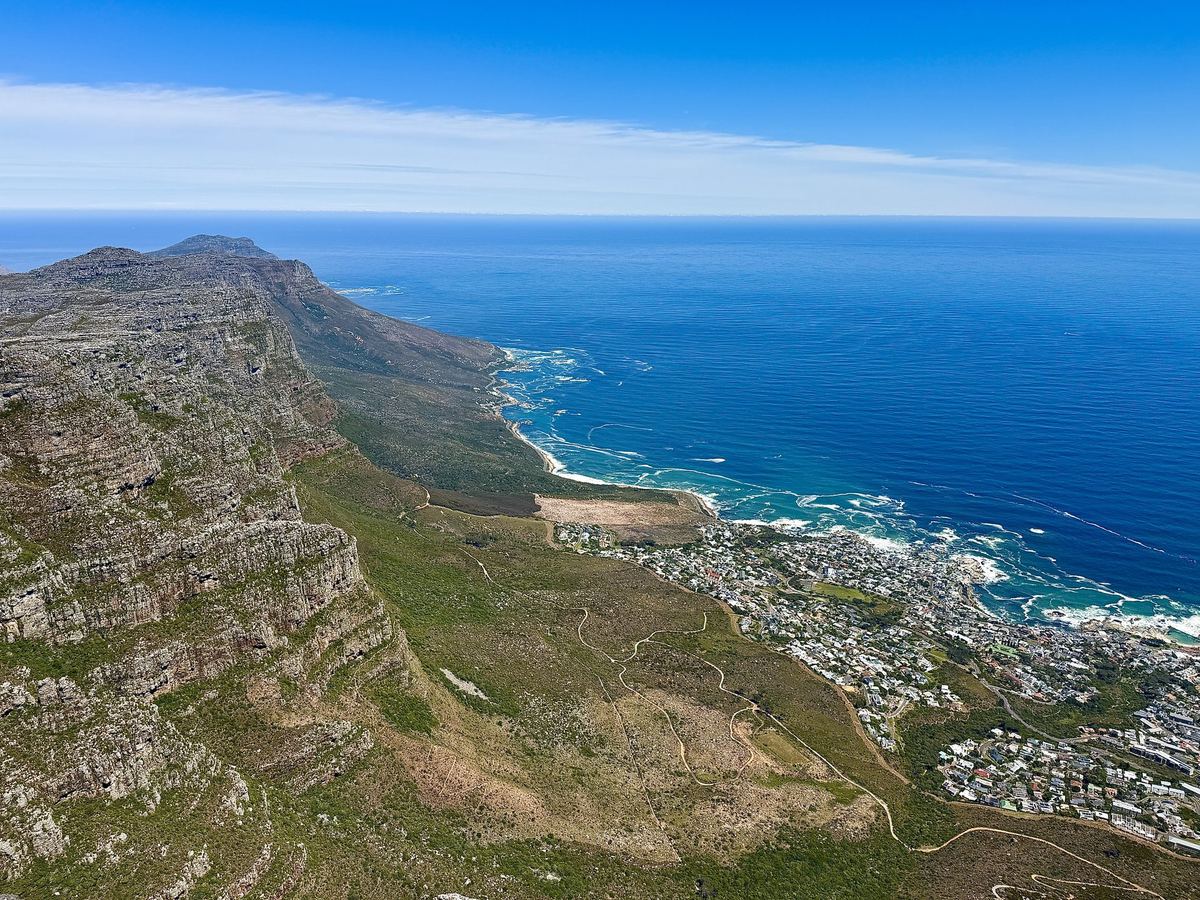
It was worth the wait though. The weather was perfect, crystal clear, and the cable car (the floor actually rotates as you go up!) whisked me to the top in just a few minutes. Table Mountain is one of the New7Wonders of Nature, and standing on that huge flat top it was easy to see why. I spent the morning hiking all around the summit plateau, and the views back down over the city, the coastline and Lion’s Head were fantastic.


After taking the cable car back down, I had lunch at the V&A Waterfront, then walked the length of the Sea Point Promenade along the coast. There were great photo opportunities all along the way, and plenty of wildlife, including Cape fur seals lounging around the harbour.

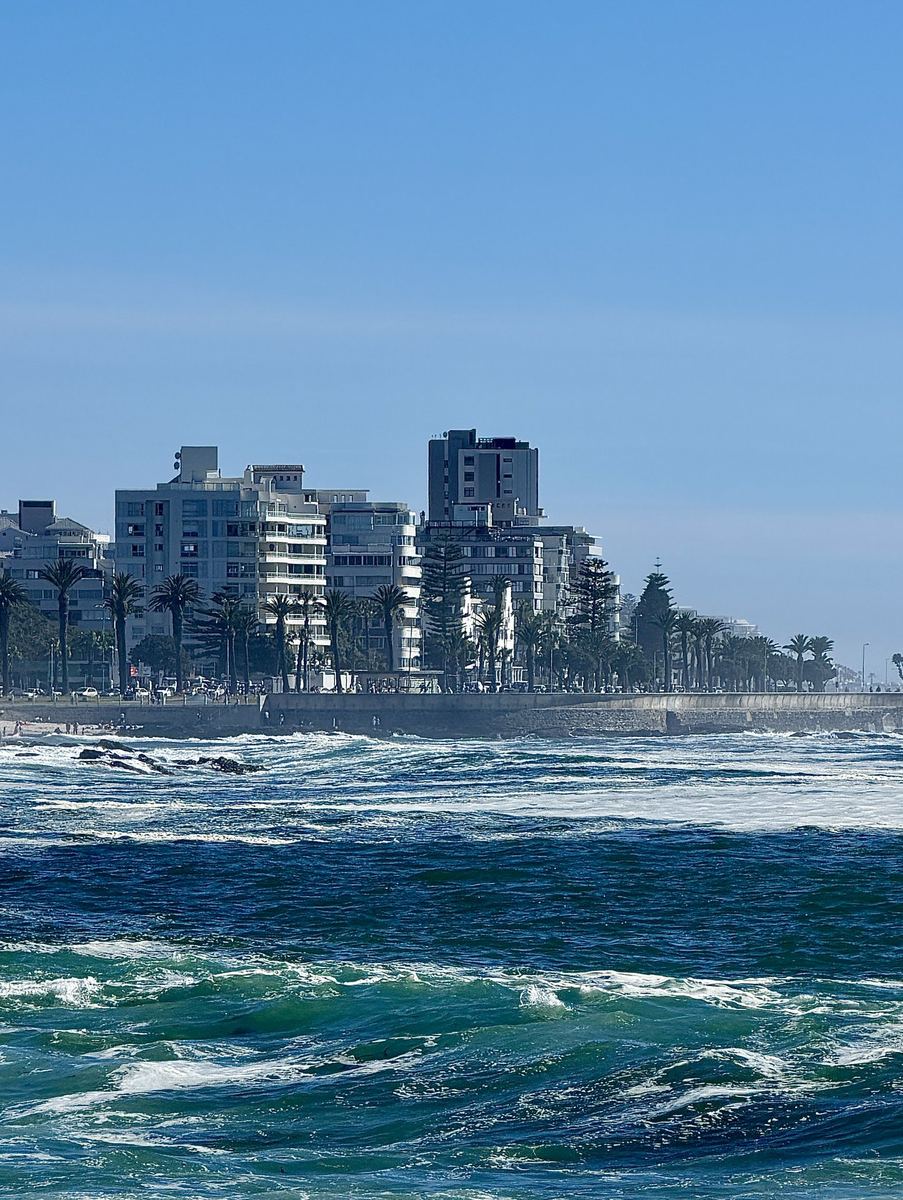
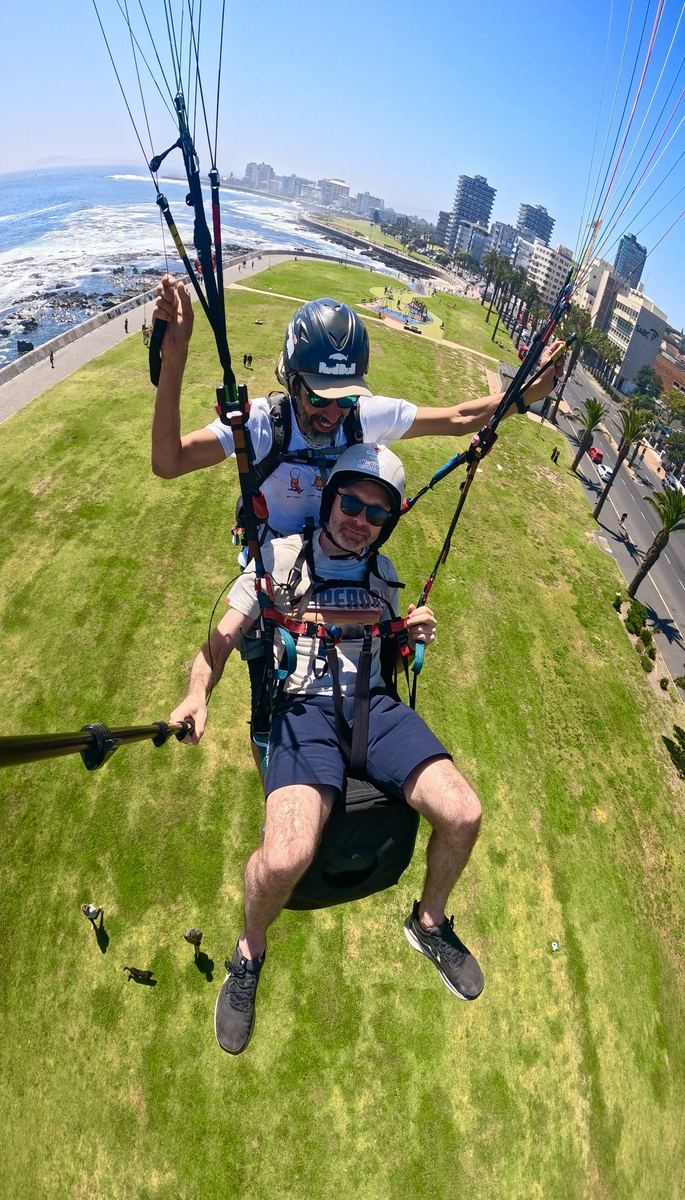
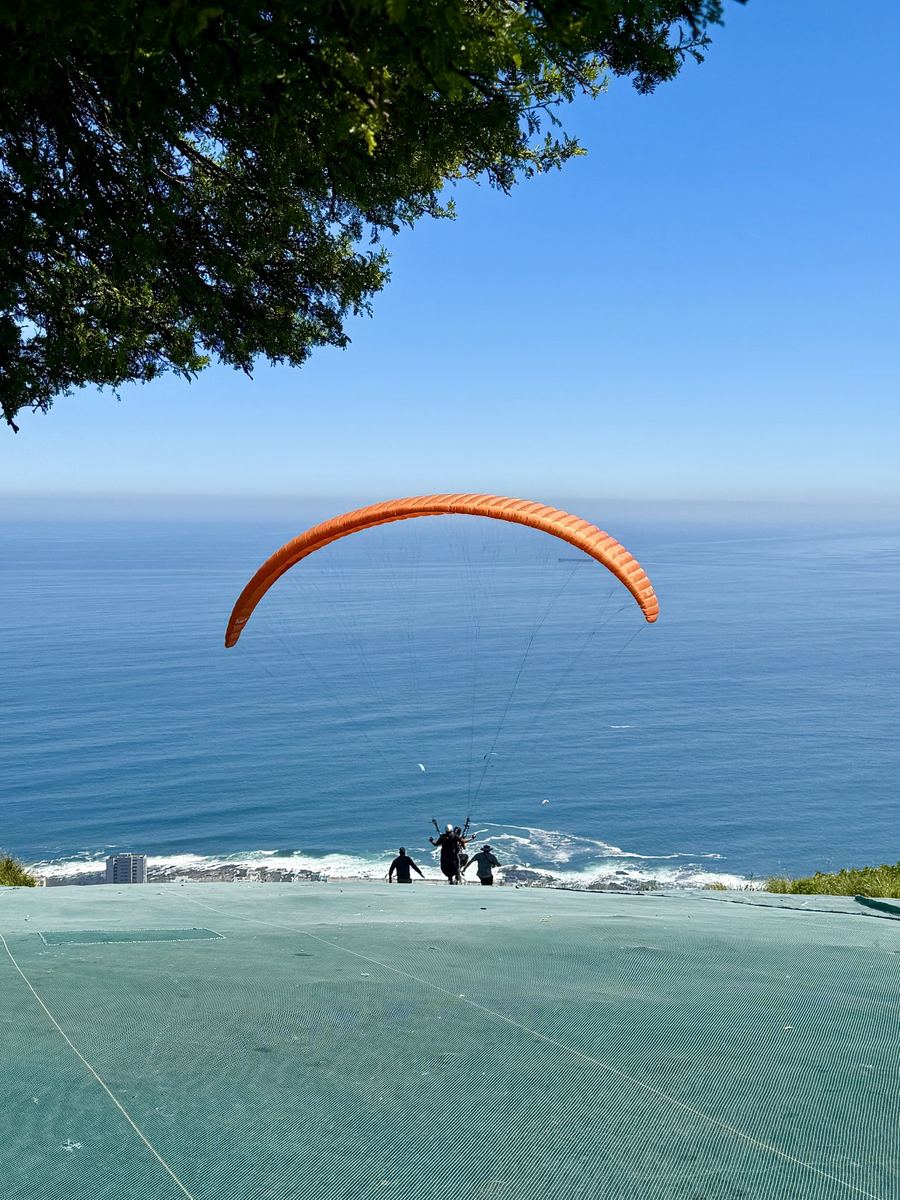
Day 3 started with something I had been really looking forward to: a tandem paraglide off Signal Hill with Hi5 Tandem Paragliding! Floating out over the city with the Atlantic below was an incredible experience, and I came away with some great footage and photos. We landed right on the Sea Point Promenade, the very same stretch of coast I had walked the day before.
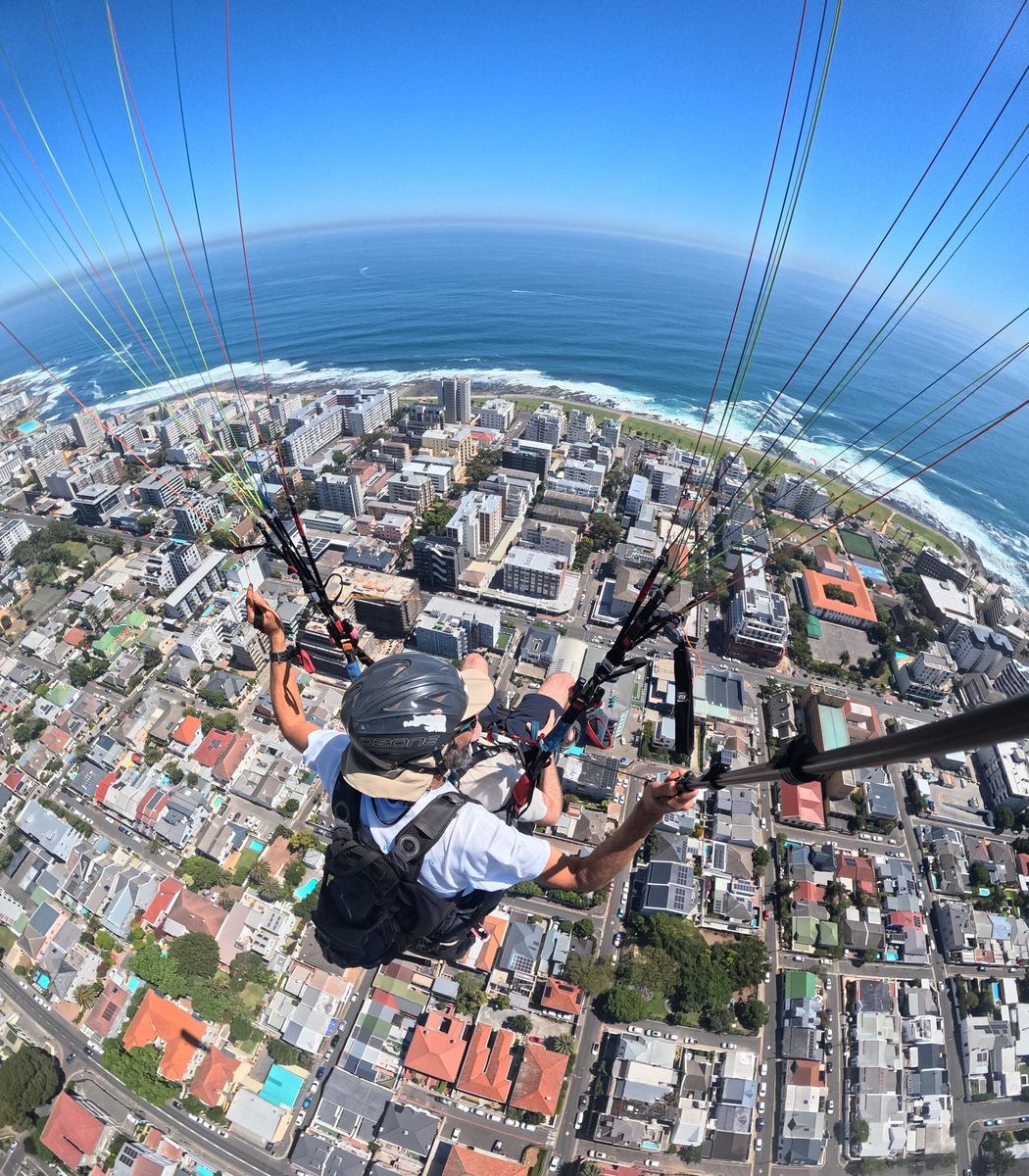
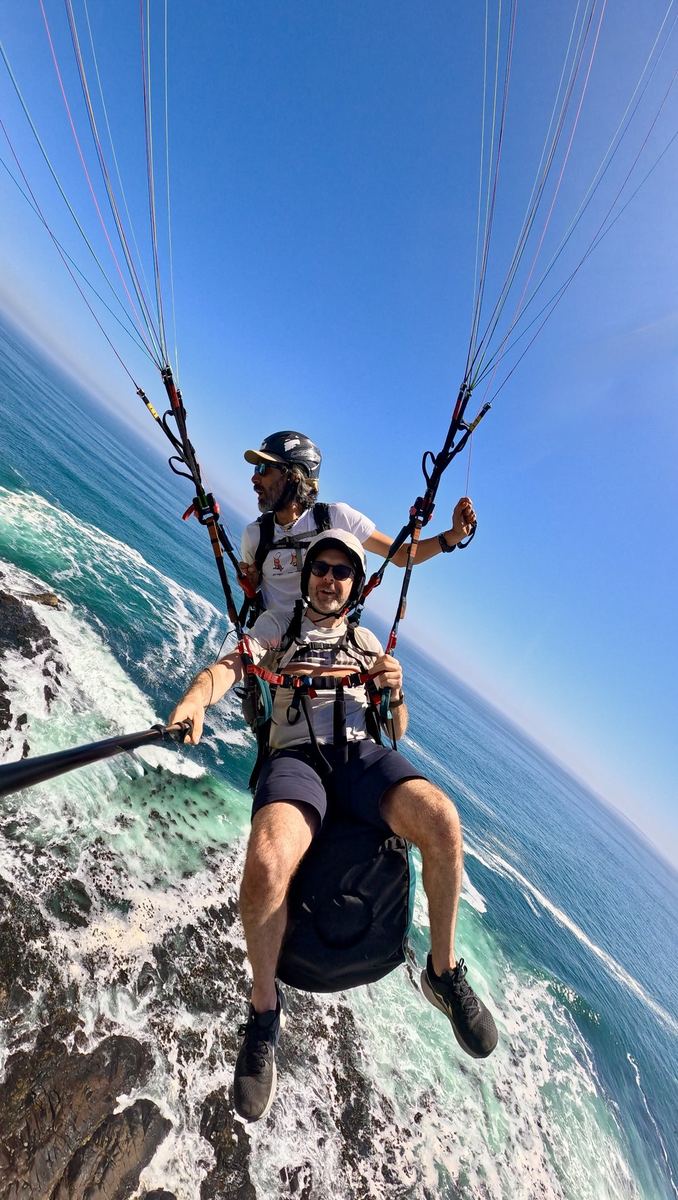

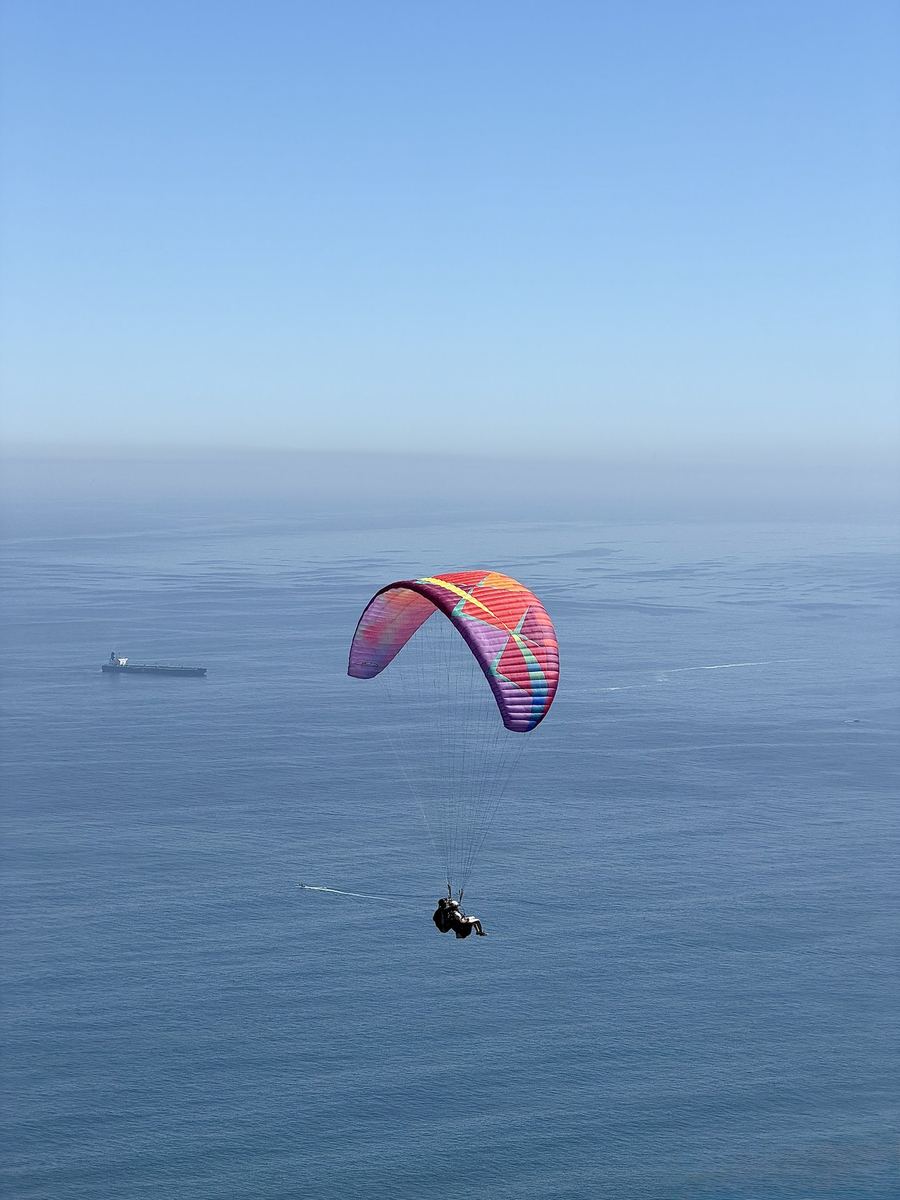
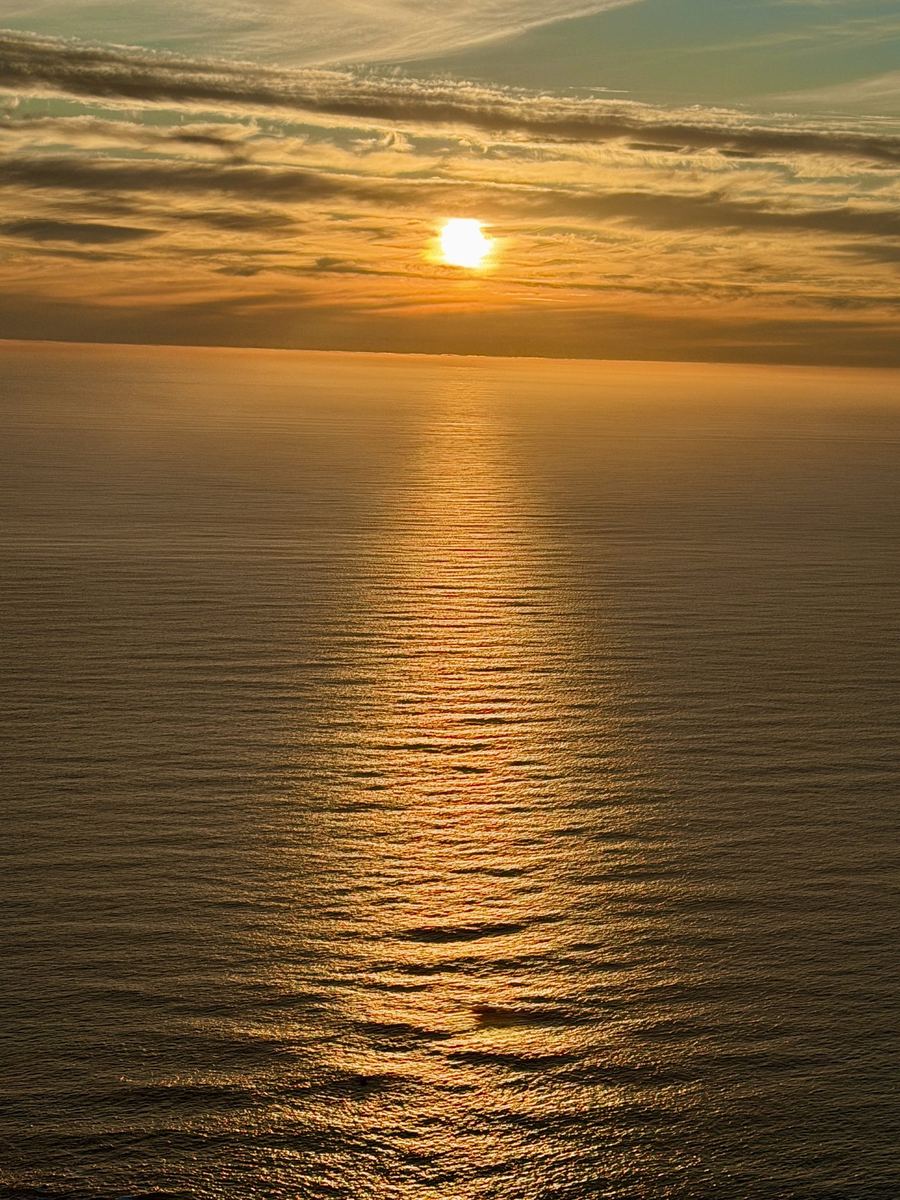
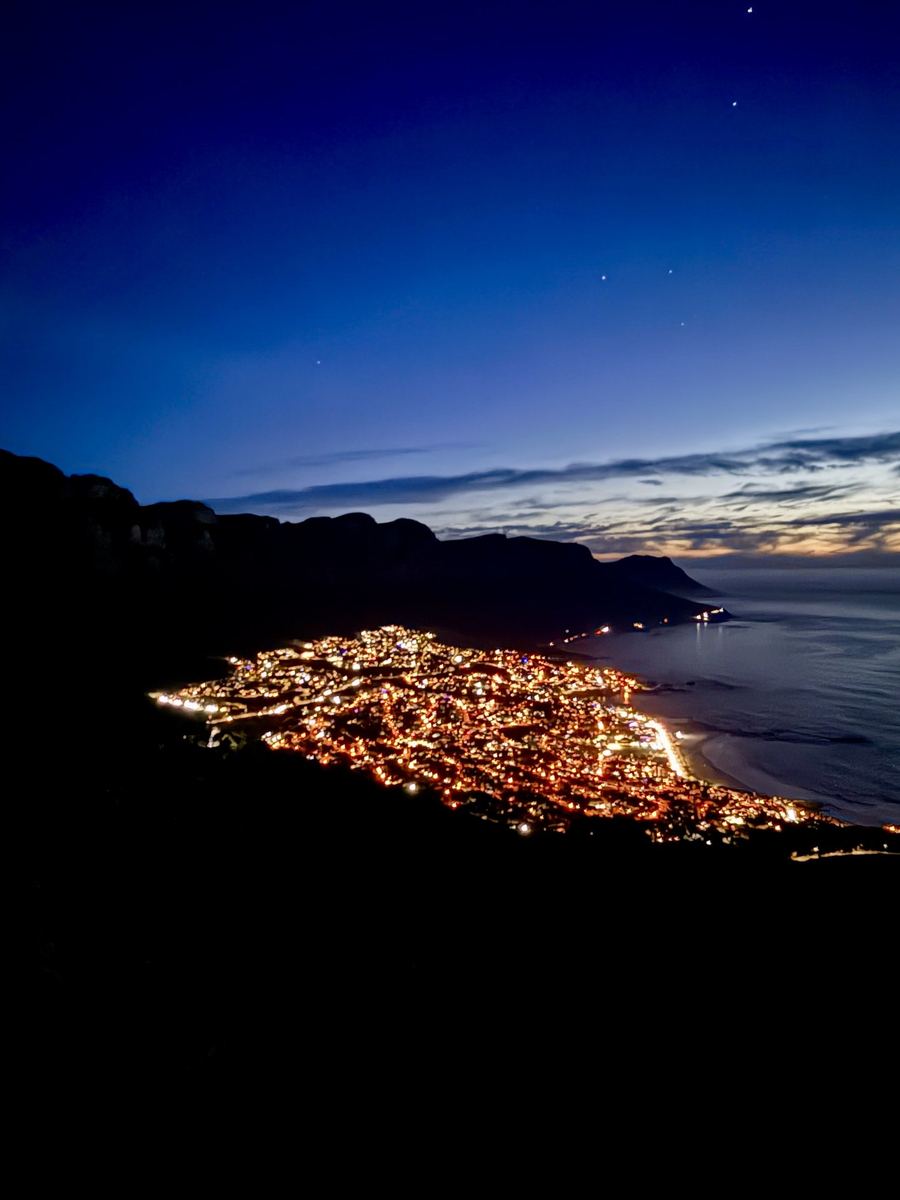
After lunch in Cape Town, I decided to hike up Lion’s Head in the evening to watch the sunset. It’s one of the city’s most famous hikes, and little did I know it would be a lot harder than I thought! There were plenty of people heading up with me, and the sunset from the top was absolutely stunning, with amazing views all around the coast.

Penguins, Lighthouses & a Navy Dog
For the next couple of days I wanted to be further south on the peninsula, so I took an Uber down to Simon’s Town and checked into the Simon’s Town Quayside Hotel, right on Jubilee Square overlooking the harbour.

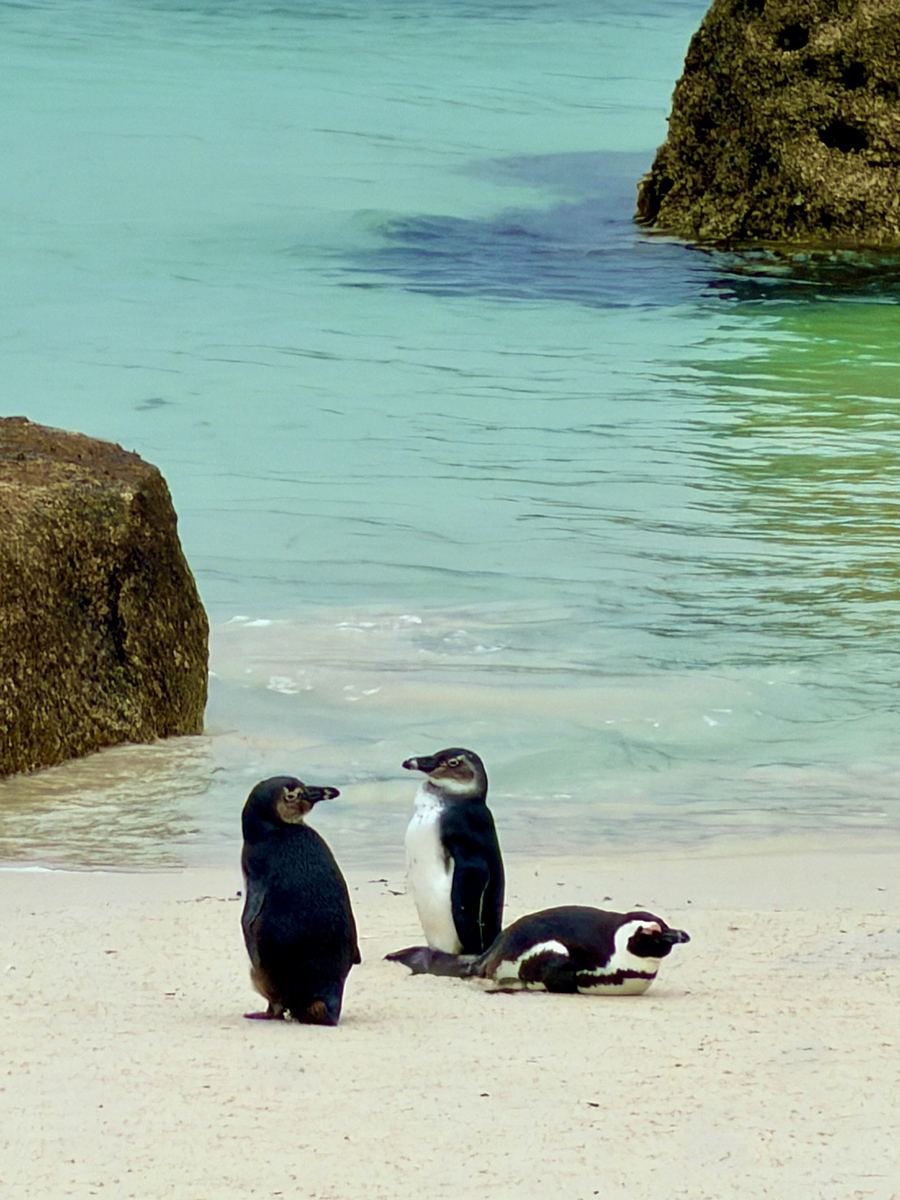
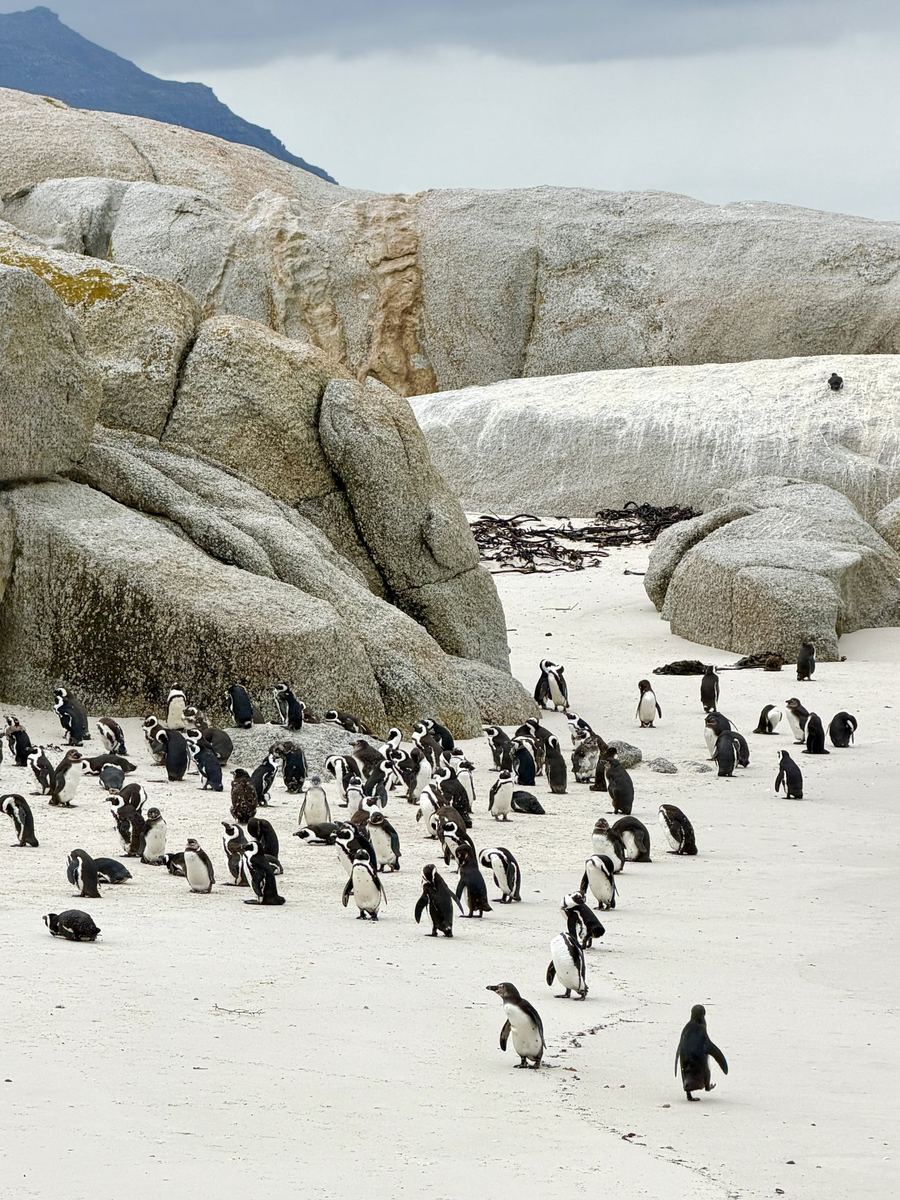
The reason for the move was Boulders Beach, home to a colony of African penguins, and I spent most of the day there just watching them. They were great! Boardwalks let you get really close without disturbing them, and the penguins waddle between the granite boulders and the sea as if they own the place, which I suppose they do. Sadly they’re now Critically Endangered (in 2024 they became the first penguin species in the world to get that label), so seeing a thriving colony this close felt really special.
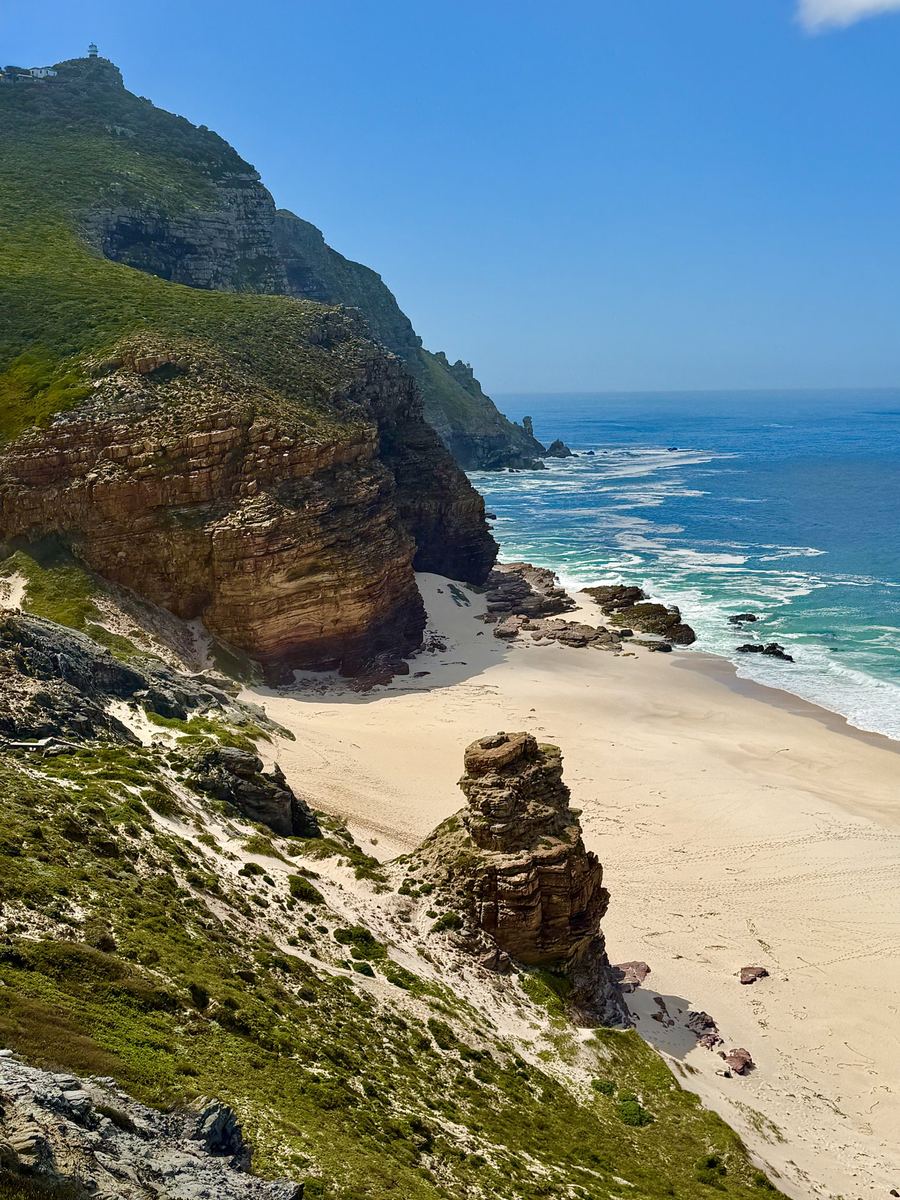
Day 5 I took an Uber to the Cape of Good Hope and hiked all around the coastline, about an hour to an hour and a half of fantastic views. From there I walked on to Cape Point and up to the lighthouse.
Here’s something I didn’t know: Cape Point is often mistaken for the southern tip of Africa, but it’s actually the most south-westerly point. The true southern tip is Cape Agulhas, about 150km further east.
Along the way I had my first taste of Africa’s land wildlife, with a tortoise plodding along beside the road and several ostriches running alongside us. A sign of things to come!


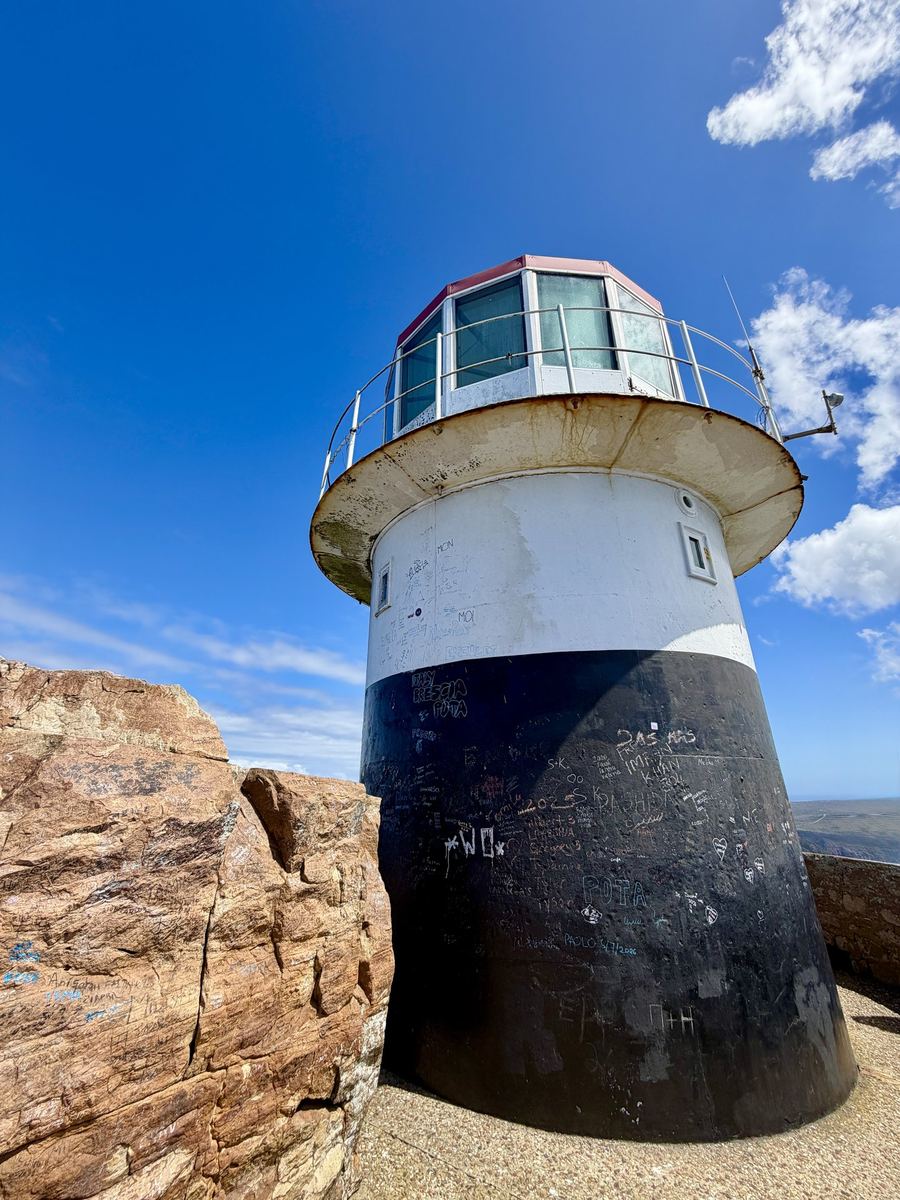
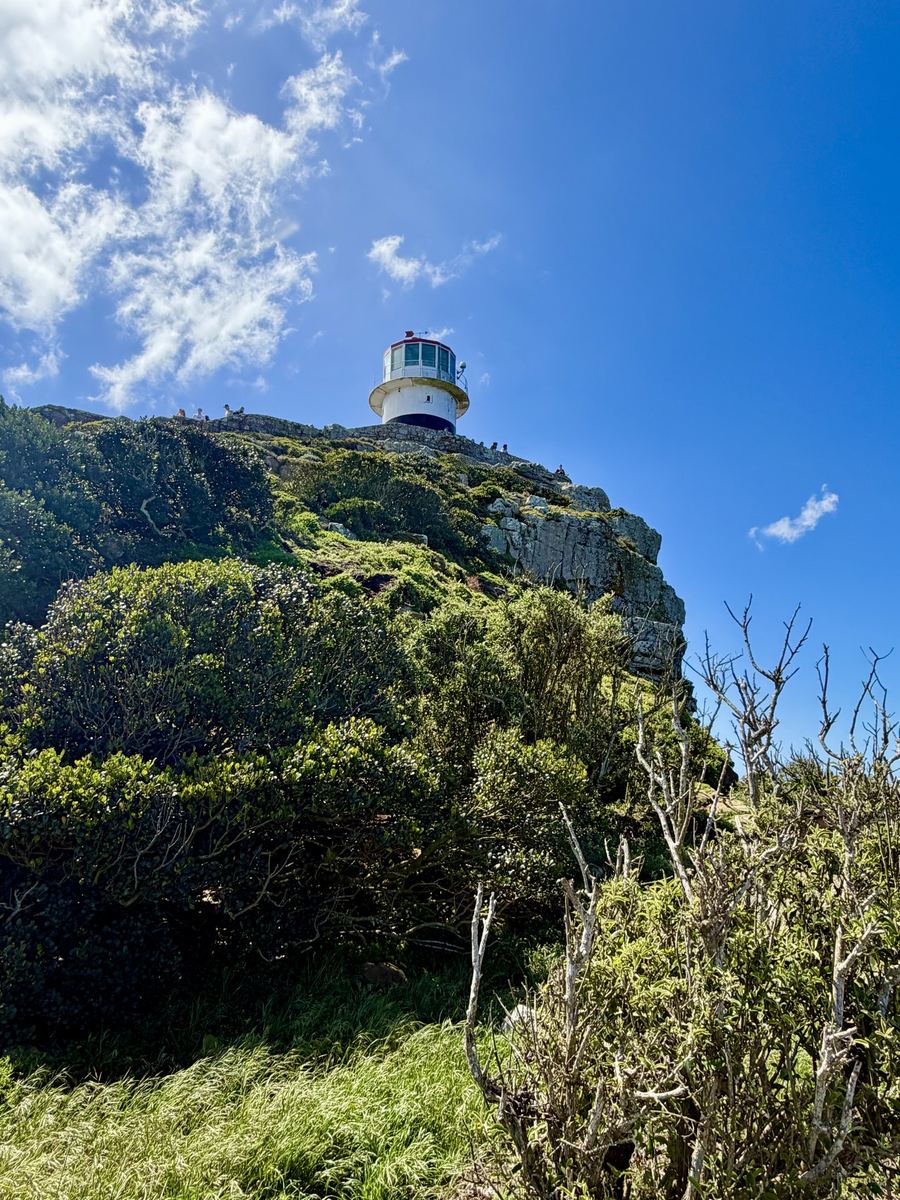
Back in Simon’s Town I visited the submarine museum right next to my hotel, the SAS Assegaai, a retired South African Navy submarine that is now Africa’s first submarine museum. It was great.
That evening I had dinner at Cafe Pescado, just across the square, and the lovely owner chatted to me for ages about the town’s most famous resident: Just Nuisance, a Great Dane who became the only dog ever officially enlisted in the Royal Navy! He served in Simon’s Town during the Second World War, riding the trains with the sailors, and his statue still stands in Jubilee Square, overlooking the harbour.
My solo days were coming to an end, so I headed back to Cape Town and checked into the Cresta Grande in the city centre. I had a lazy last afternoon at the V&A Waterfront doing some souvenir shopping, before heading back to the hotel to meet the small group I was due to be travelling north with.
There were around ten of us, and they were a really nice bunch of people. After the welcome briefing it was an early night, ready for the road ahead.
On the Road North
Our home for the long drives ahead was a 20-seater minibus, and with only ten of us there was plenty of room to spread out, which turned out to be a real blessing!
On the drive north we stopped at the !Khwa ttu San Culture and Education Centre (the “!” is a click sound in the San language), a heritage centre that tells the story of the San people, Southern Africa’s oldest inhabitants, and trains young San from across the region.
We arrived in Lambert’s Bay on the West Coast in the afternoon and headed to Bird Island Nature Reserve. Thousands and thousands of birds! Bird Island is one of only a handful of Cape gannet breeding colonies in the world, and the only one you can walk out to, so you can watch them up close from a hide right among the nests.
In the evening we had a local wine tasting. I don’t actually drink, but our host was fantastic and talked us through how each wine paired with different foods, so even as a non-drinker it made for a great evening.
Country Two of Five
Day 8 was a very long drive, about ten hours, from Lambert’s Bay north and across the border into Namibia. The border post was literally in the middle of nowhere, but with our guide smoothing the way we were through in no time. Country number two!
That night we stayed at the Norotshama River Resort, right on the banks of the Orange River, which forms the border between South Africa and Namibia. After ten hours of dry, empty landscape, the green riverbanks and vineyards came as a real surprise. The resort was unbelievable. We watched the sun go down over the river and had a fantastic meal. Real luxury!
Canyons, Quiver Trees & a Giant’s Playground
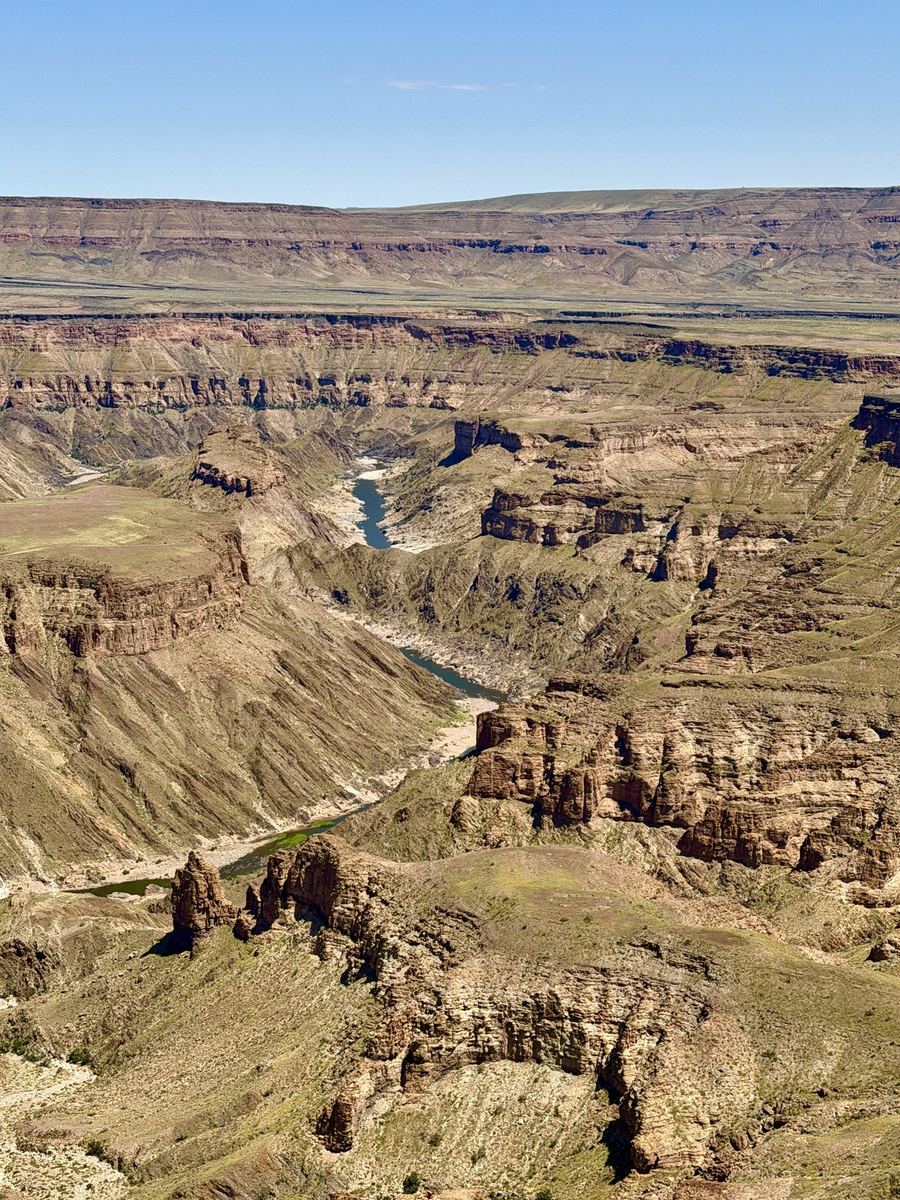
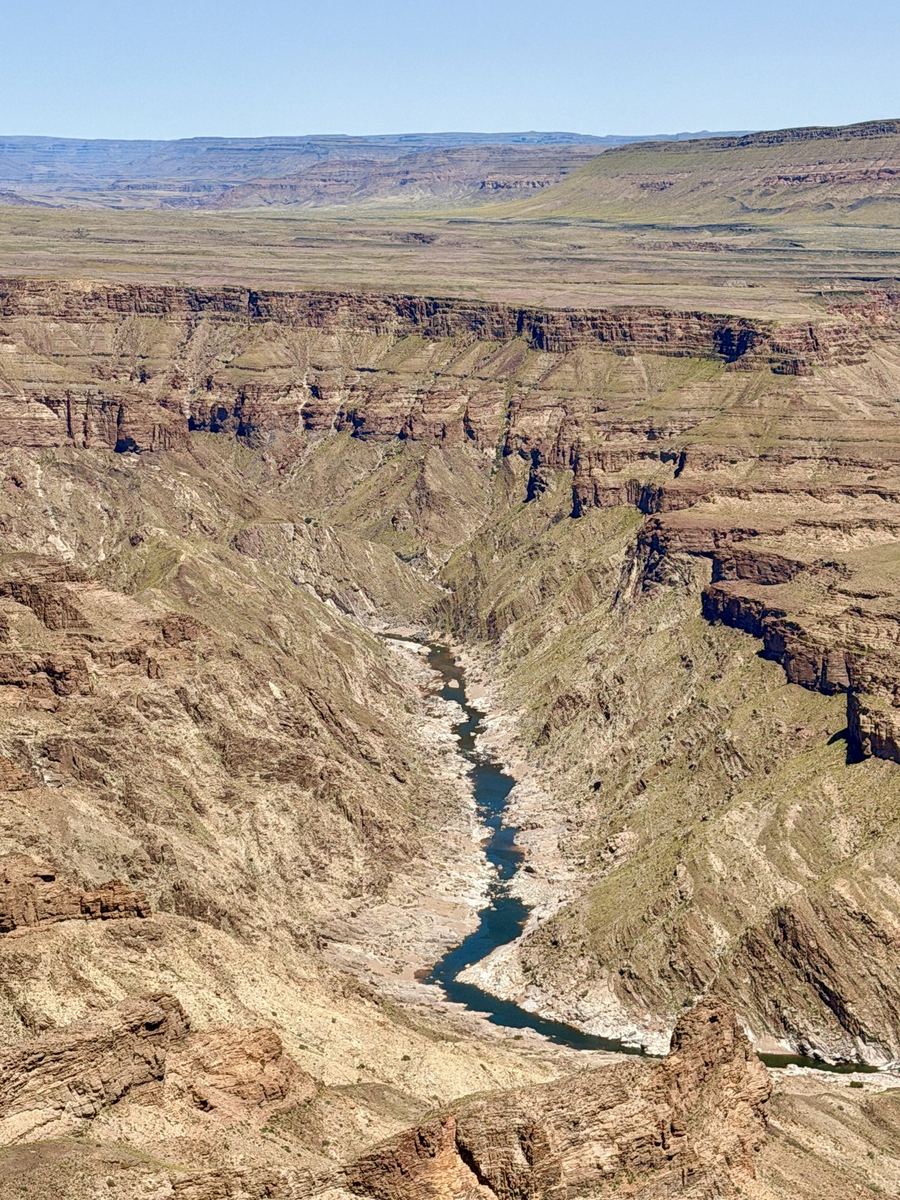
First stop was the Fish River Canyon, Africa’s largest canyon and often called the second largest in the world after the Grand Canyon. It’s around 160km long and over 500m deep, and despite being one of Namibia’s most visited sights, there was hardly anyone there! You can get really close to the edge, which gave us fantastic 360° views right along the canyon.
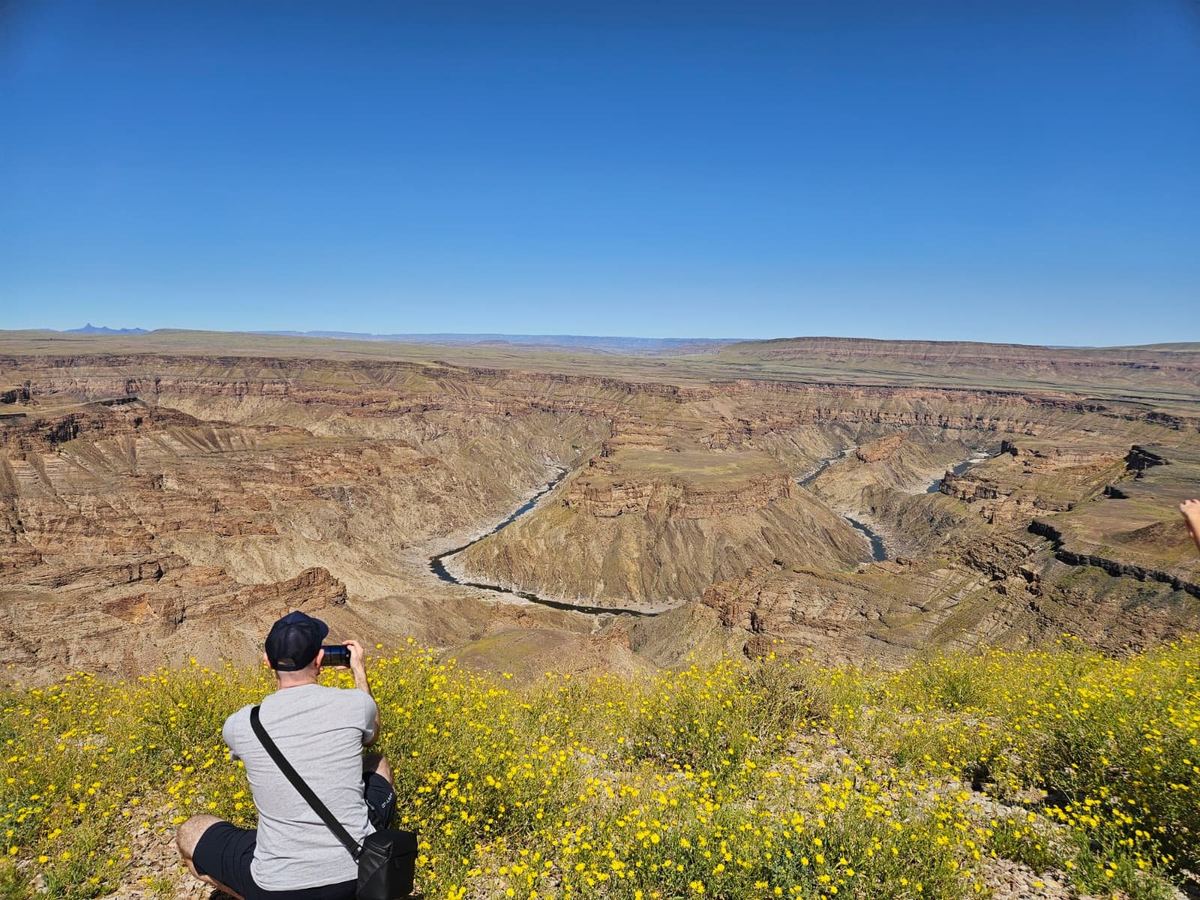
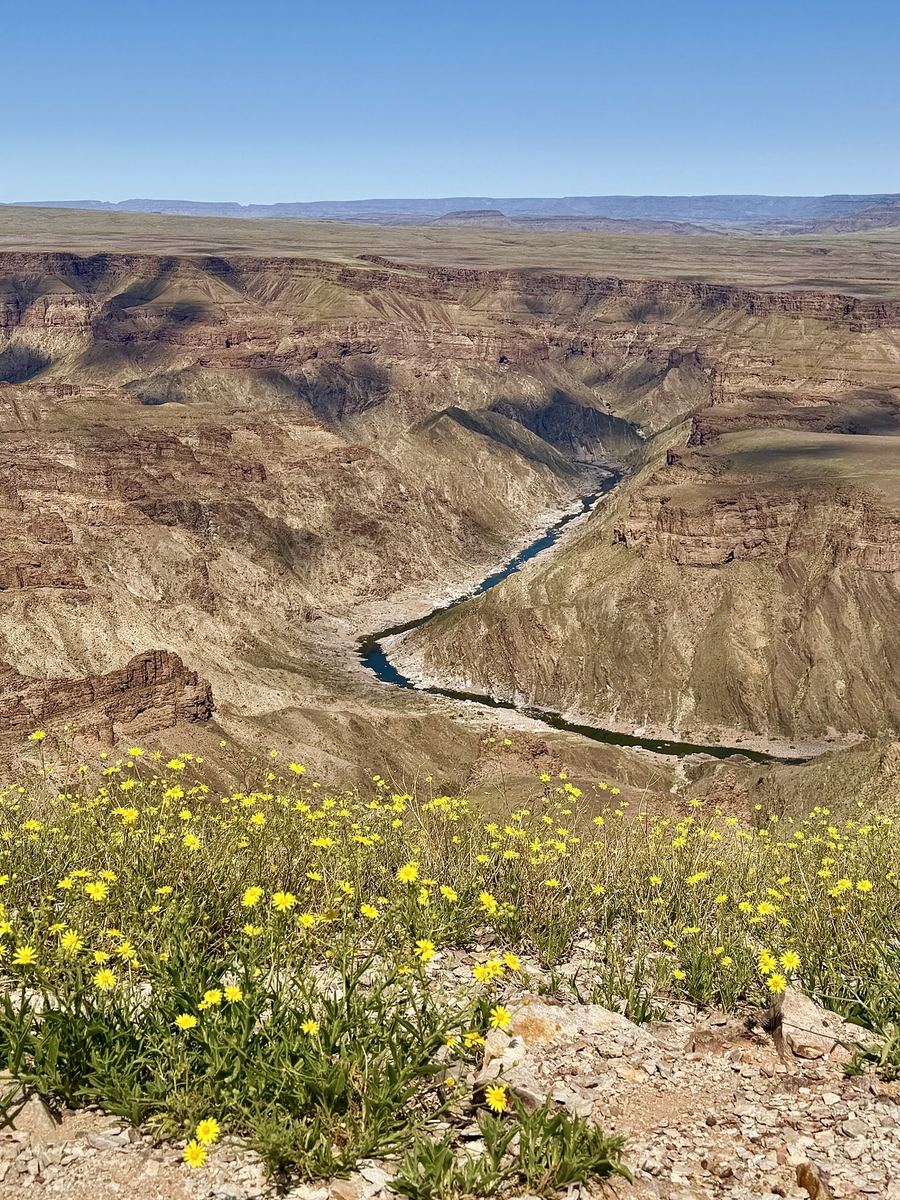
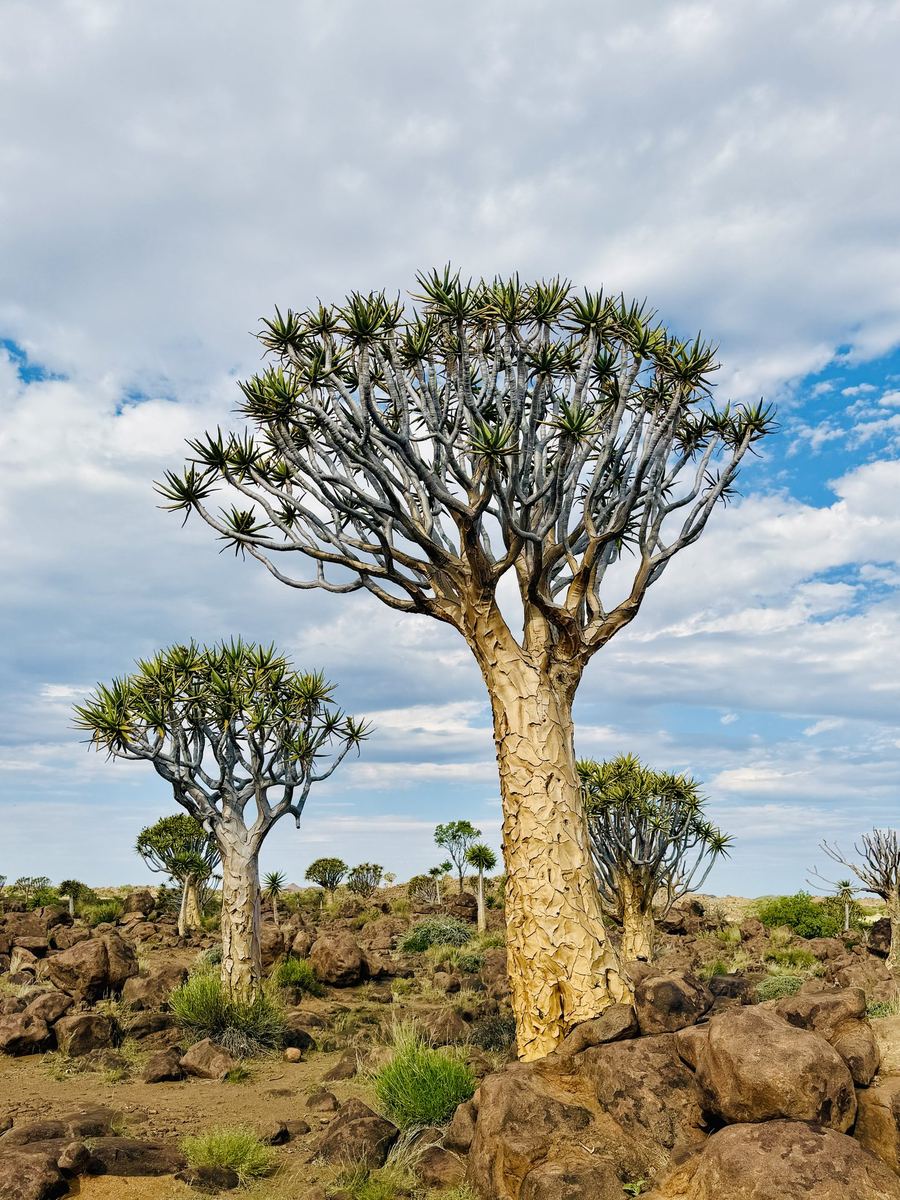
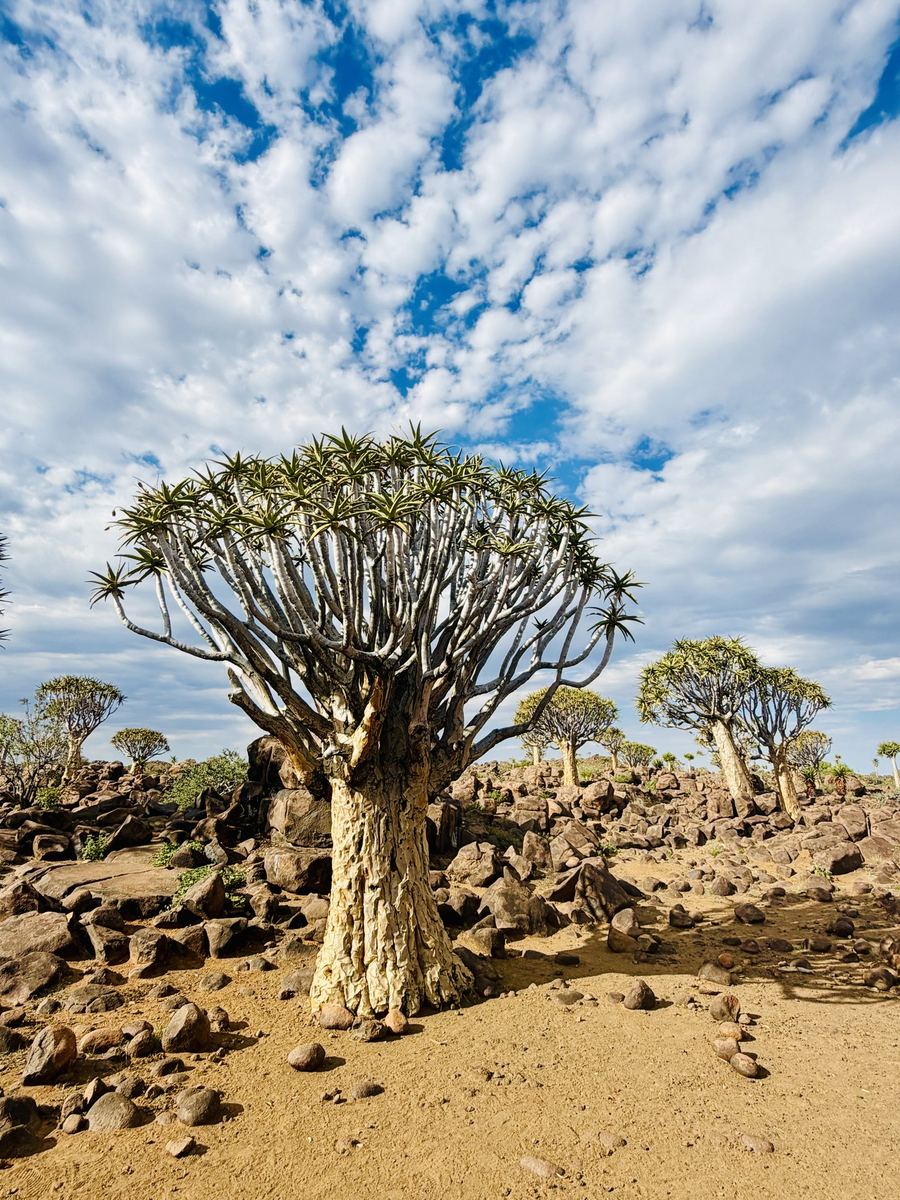
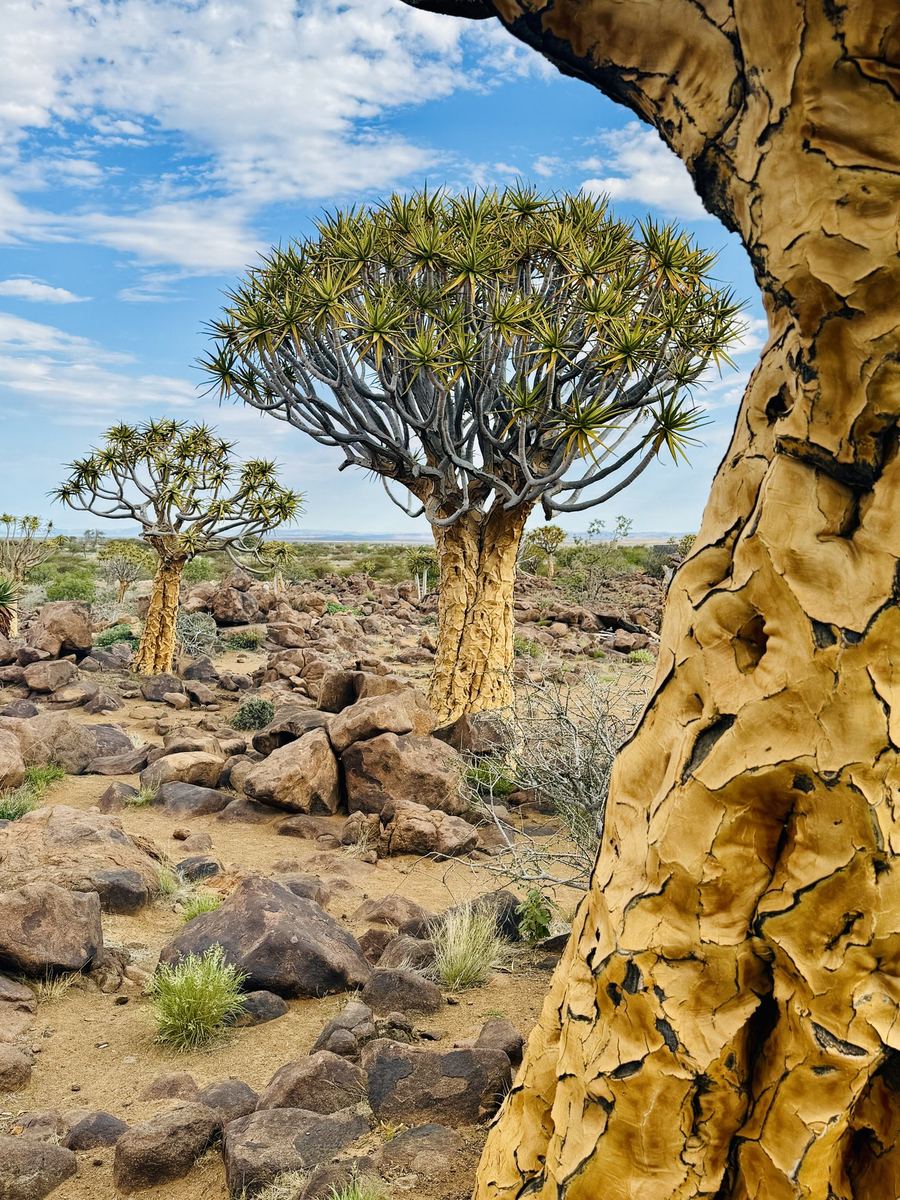
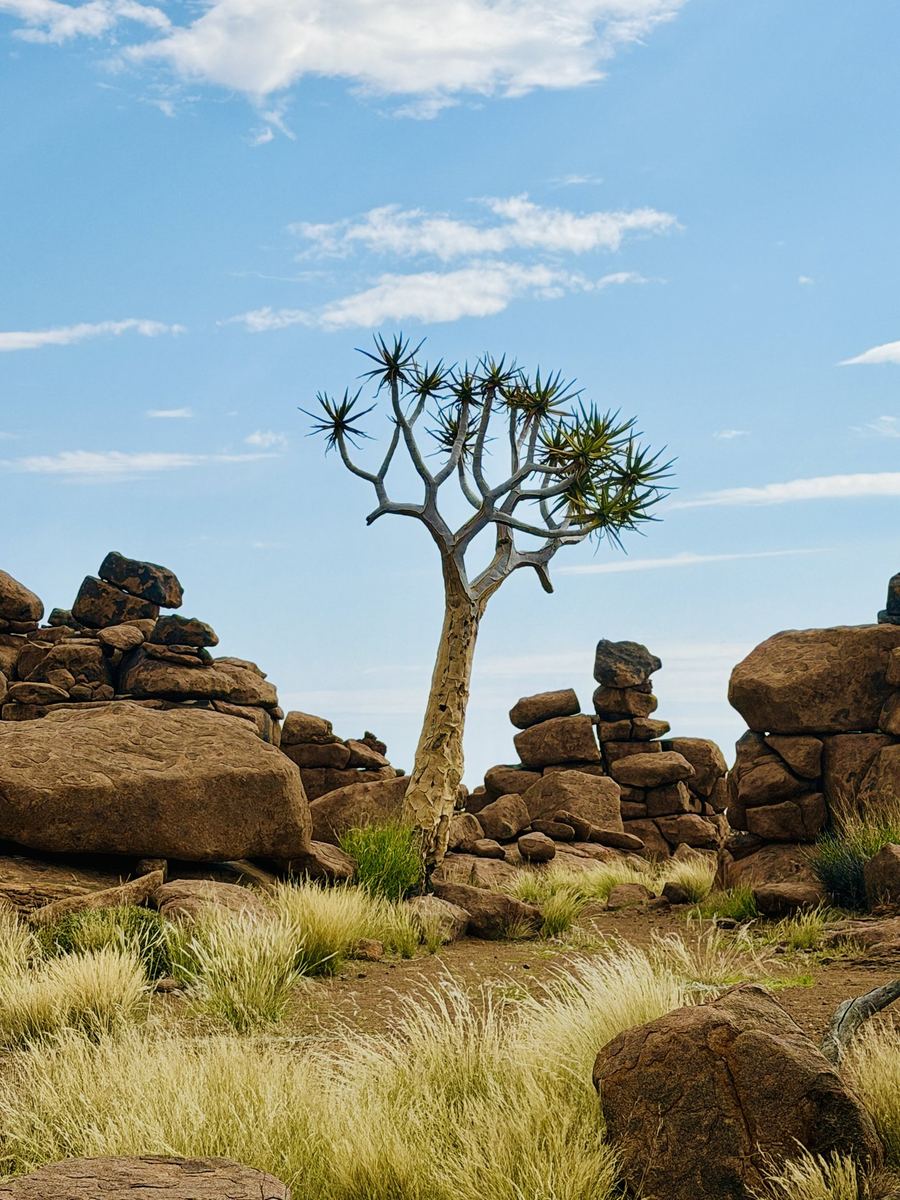
Next came one of my favourite places of the whole trip, the Quiver Tree Forest just outside Keetmanshoop. It felt like a prehistoric land that had been taken over by prehistoric trees. Some of them are thought to be two to three hundred years old. Funnily enough, they aren’t actually trees at all but giant aloes. The San people used their hollowed-out branches to make quivers for their arrows, hence the name.


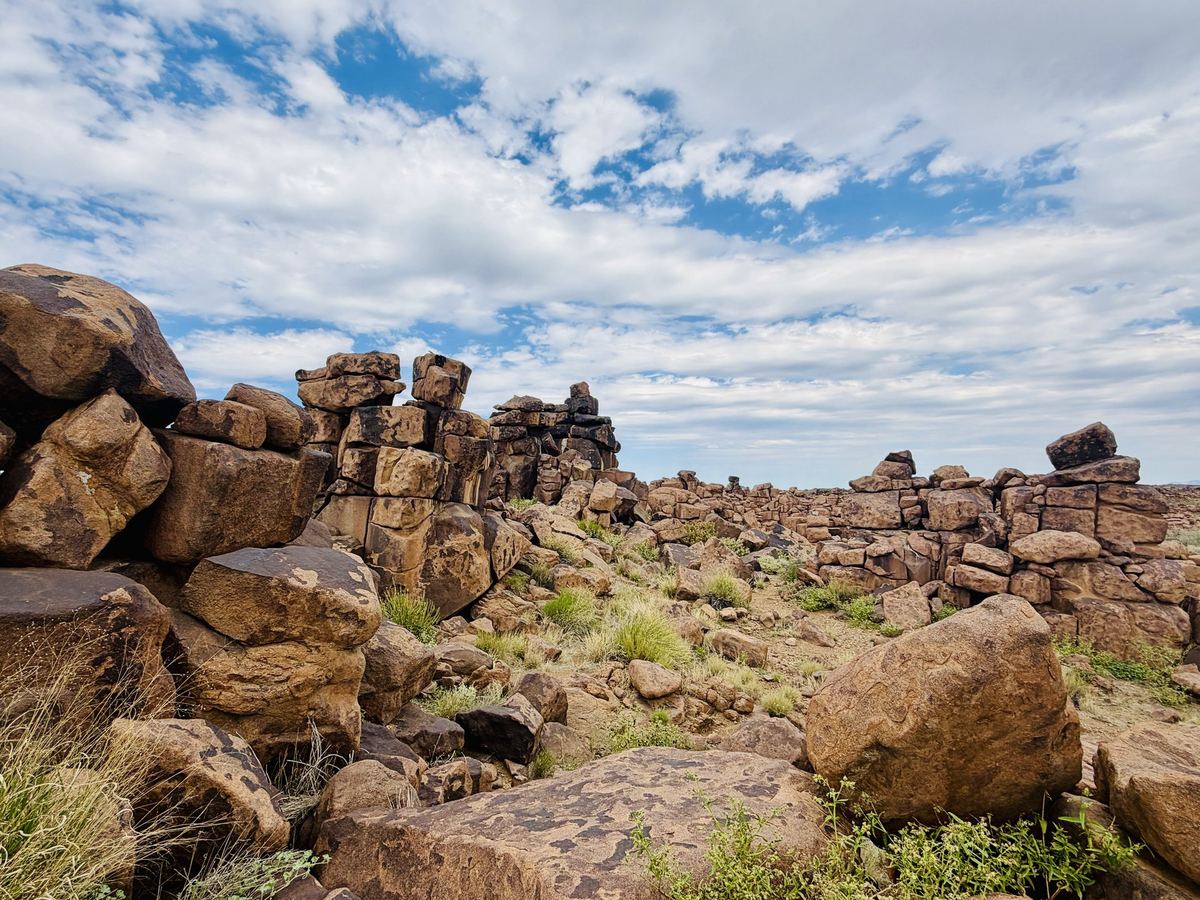
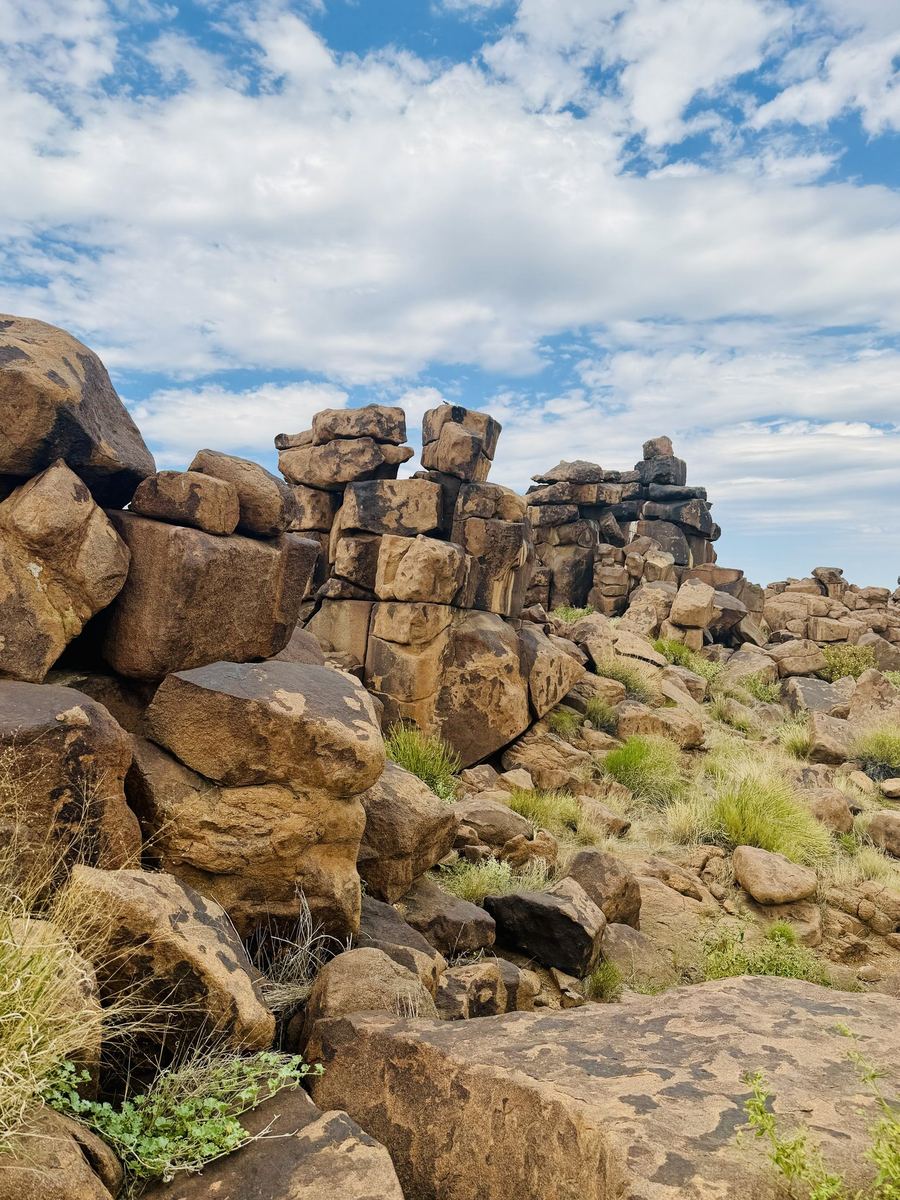
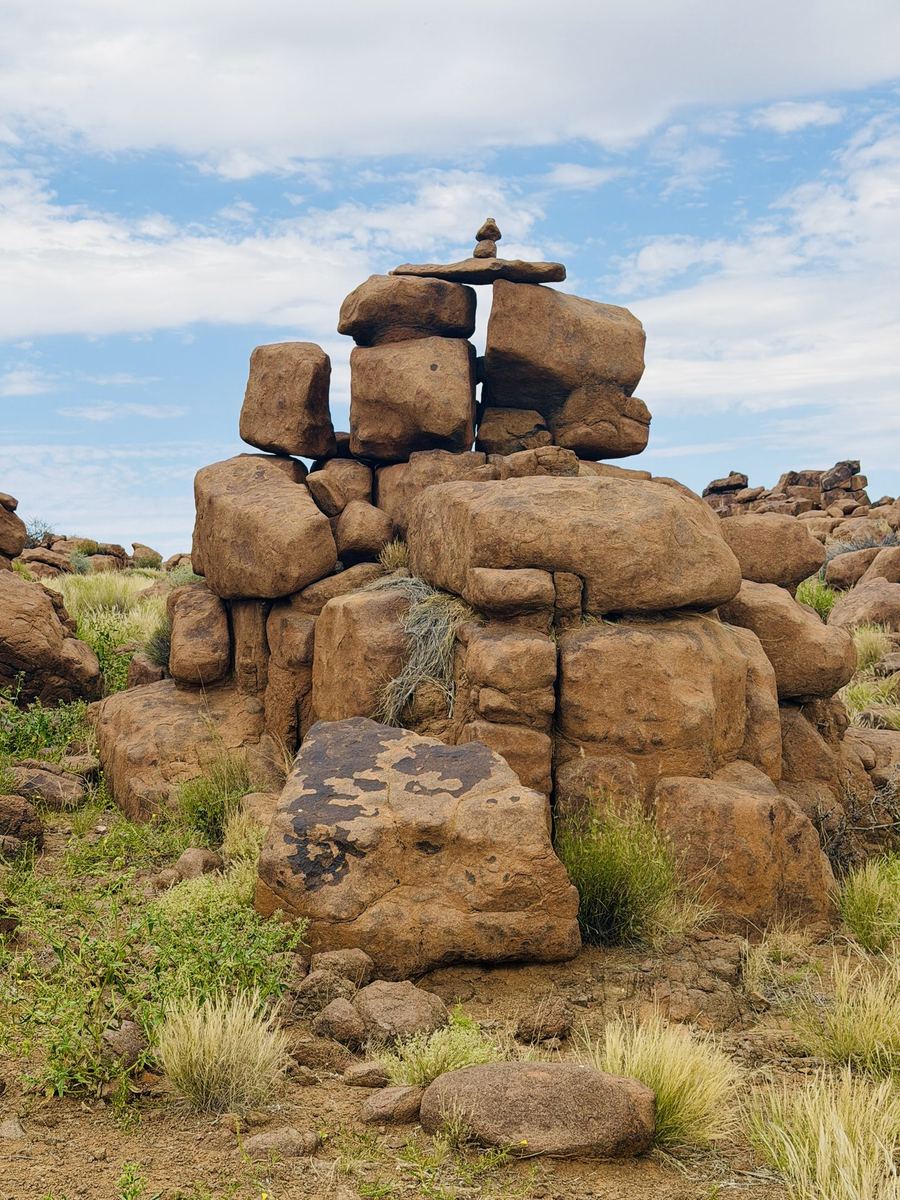
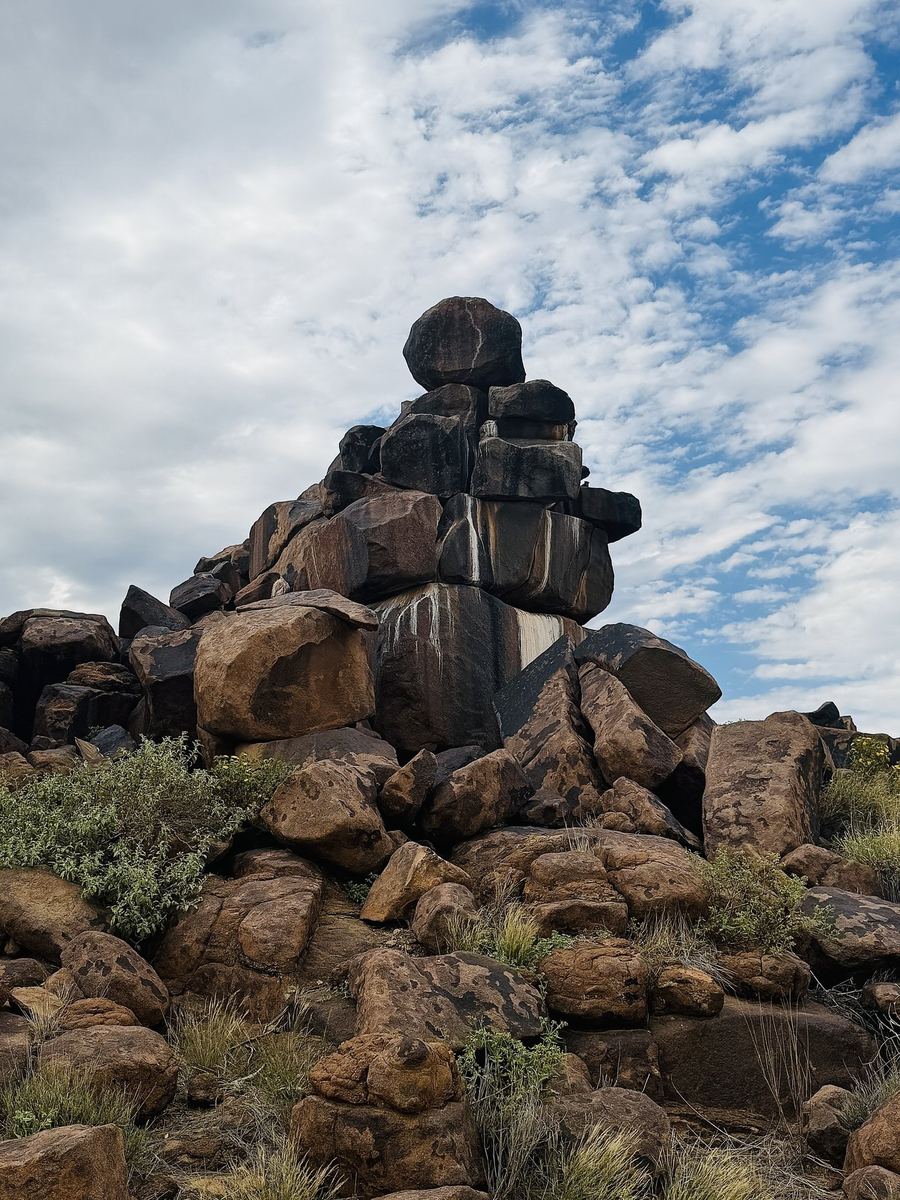
Just down the road was the Giant’s Playground, which looks completely surreal: piles and piles of huge boulders stacked on top of each other, as if a giant had been playing with building blocks. I wondered what on earth the rock was, and it turns out it’s dolerite, around 180 million years old, from molten rock that cooled underground when the supercontinent Gondwana was breaking apart. That night we stayed at the Quiver Inn Guesthouse in Keetmanshoop. A fantastic day!
Red Dunes & Dead Trees
Another incredibly long drive took us north-west towards the Namib Desert. I took travel-sickness tablets and wore travel-sickness bands on my wrists to get through it (a tip for anyone who suffers on long, bumpy roads)!
This was our first night camping, at the Sossus Oasis Campsite right by the gate to Sossusvlei. It was absolutely boiling: 40°C when we arrived, and we had to put our tents up in it. Once they were up, the dark tents soaked up the heat, which made sleeping that first night very difficult.
We sat around the campfire well into the evening before turning in. Then, unable to sleep at 2am, I stuck my head out of the tent and saw the Milky Way, as bright as anything I had ever seen. Sometimes a sleepless night is worth it! If the night sky is your thing, take a look at my guide to the best places for stargazing.
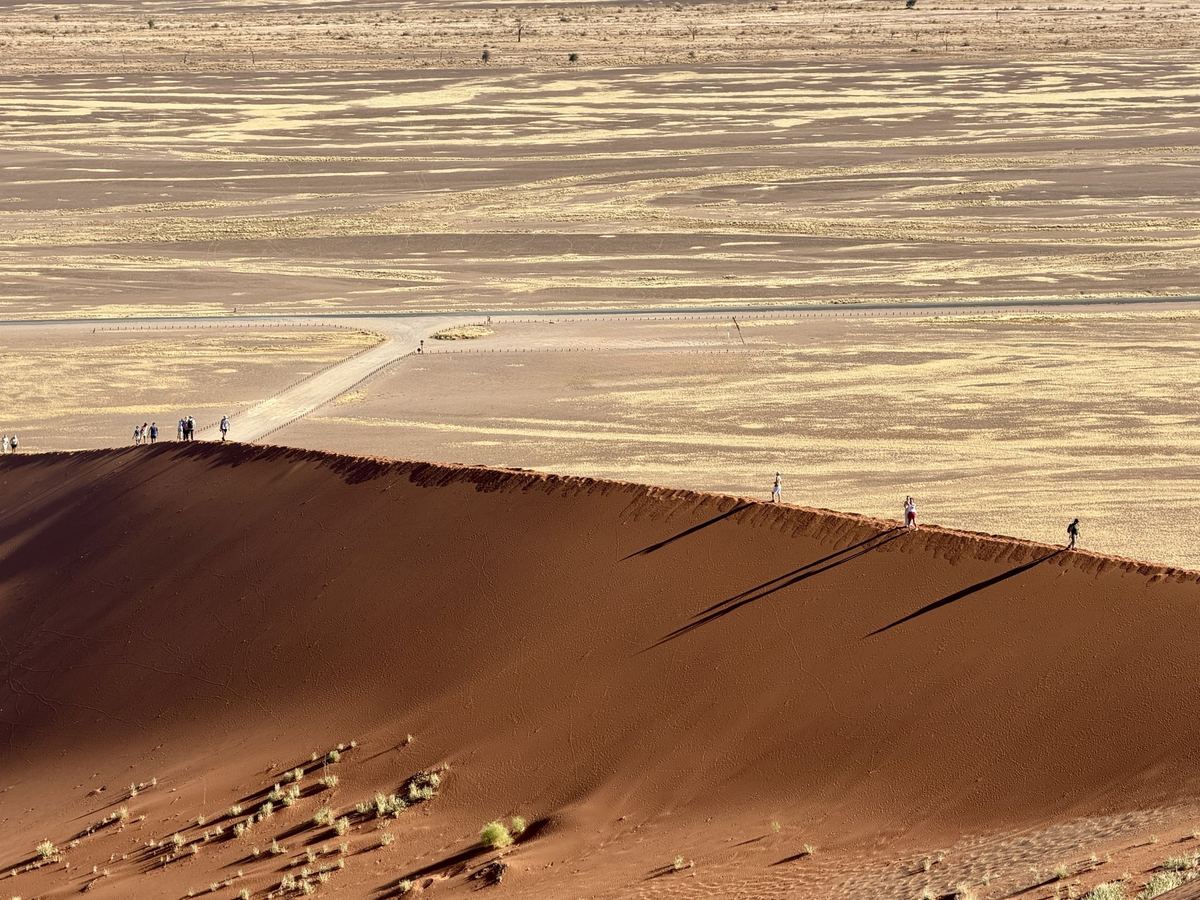
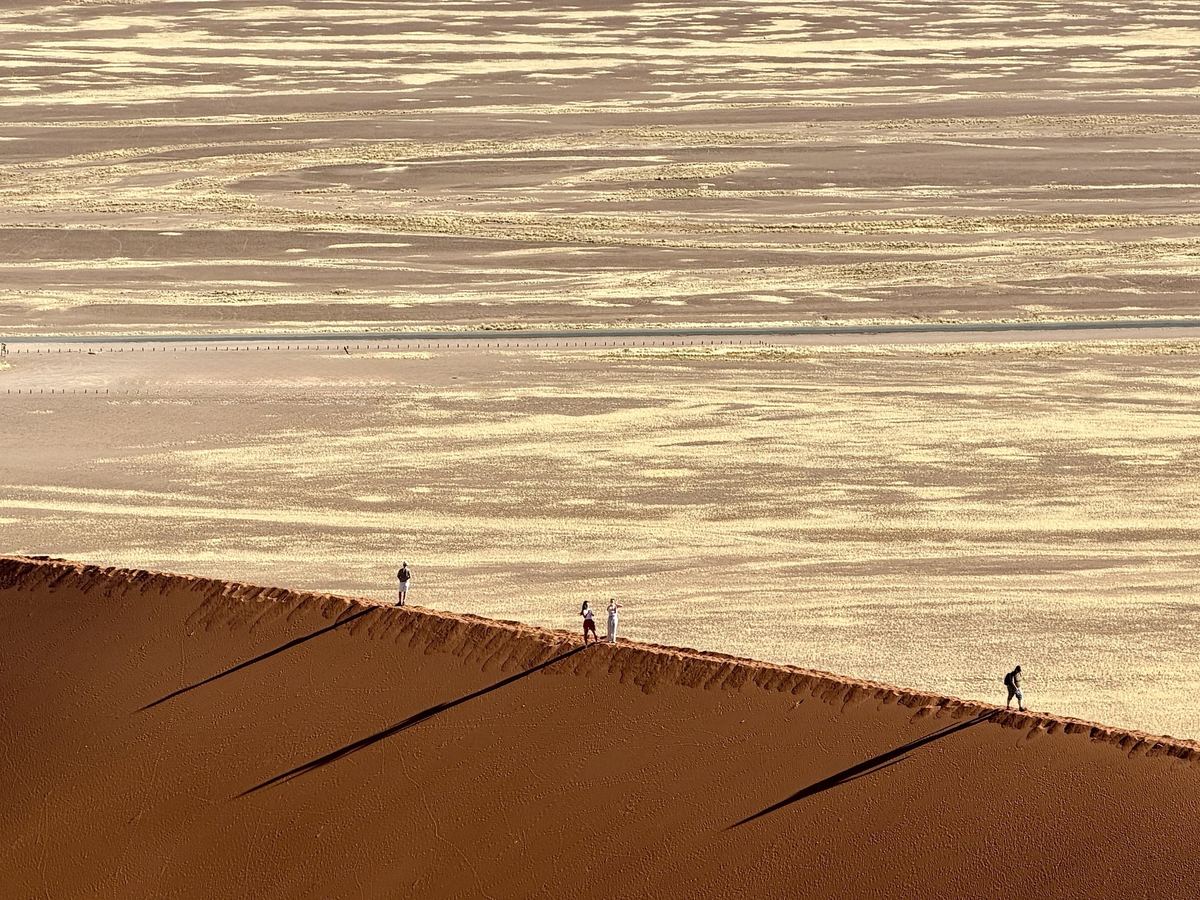
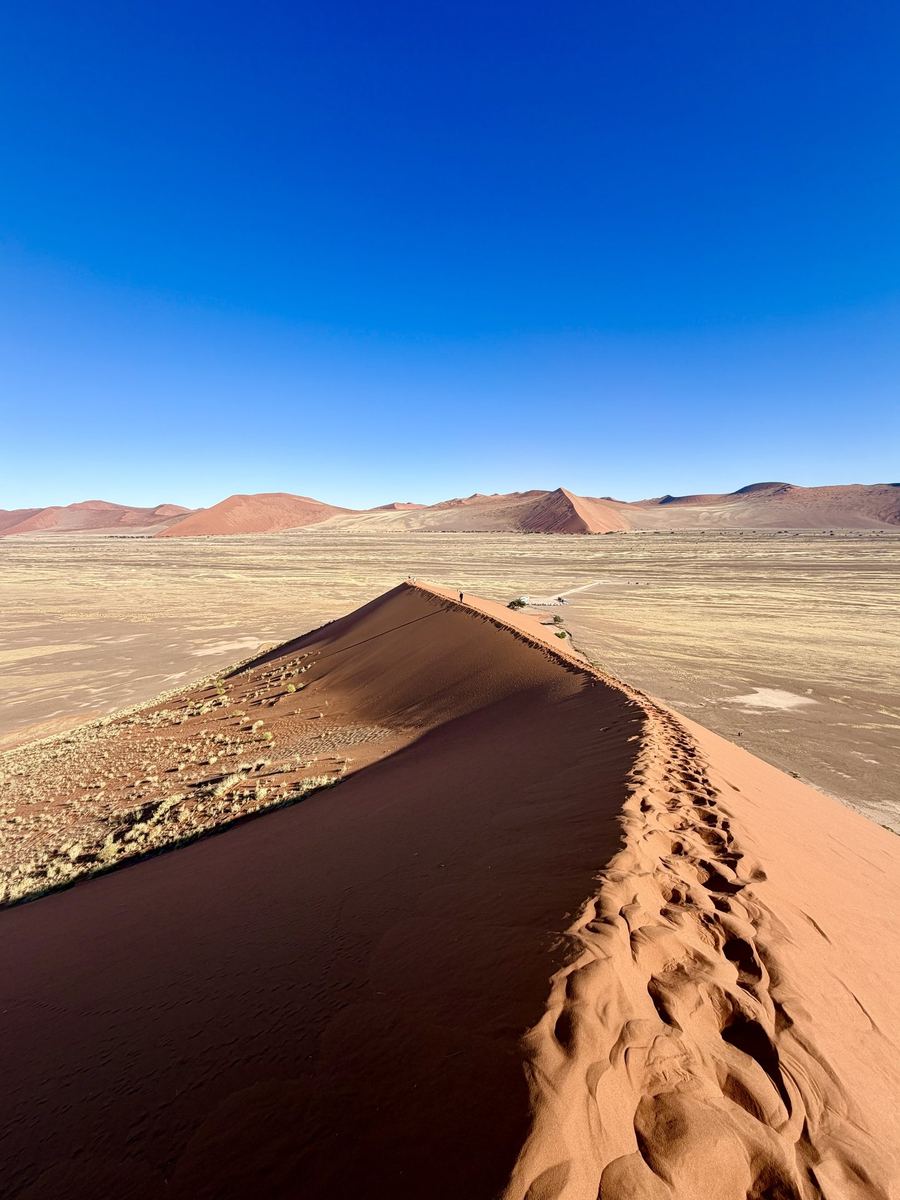
An early start took us straight to Dune 45 for sunrise, and the colours of the orange sand were just out of this world. It looked surreal.
It’s called Dune 45 simply because it sits 45km down the road from the park gate, and it’s around 80 metres from bottom to top. That doesn’t sound much, but hiking up it in soft sand was really hard going, as every step slides you back half a step! The views from the top were incredible though, and the shadows cast by people climbing the ridge behind me were just stunning.

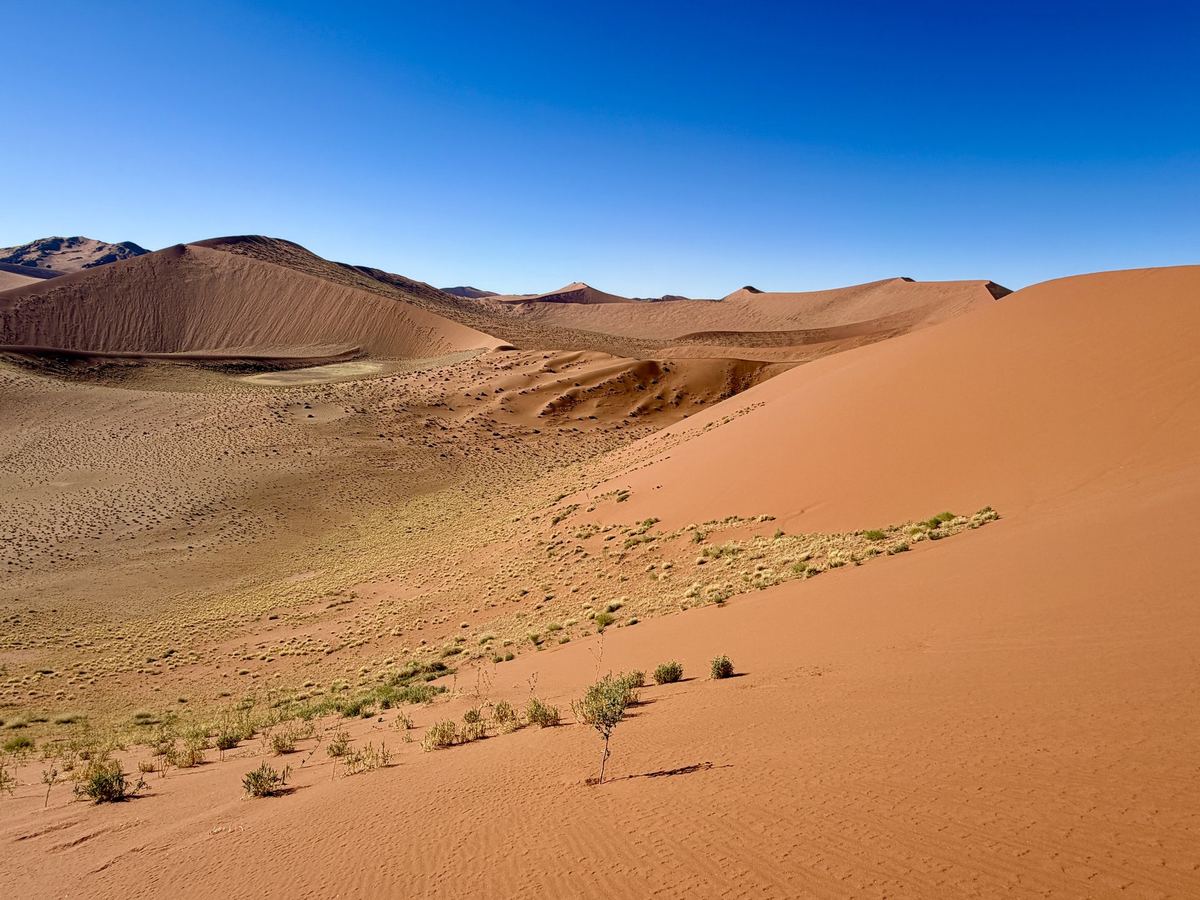



We then walked all around the Sossusvlei pan, a salt and clay pan surrounded by giant red dunes, where we spotted oryx, Namibia’s national animal, picking their way across the sand.
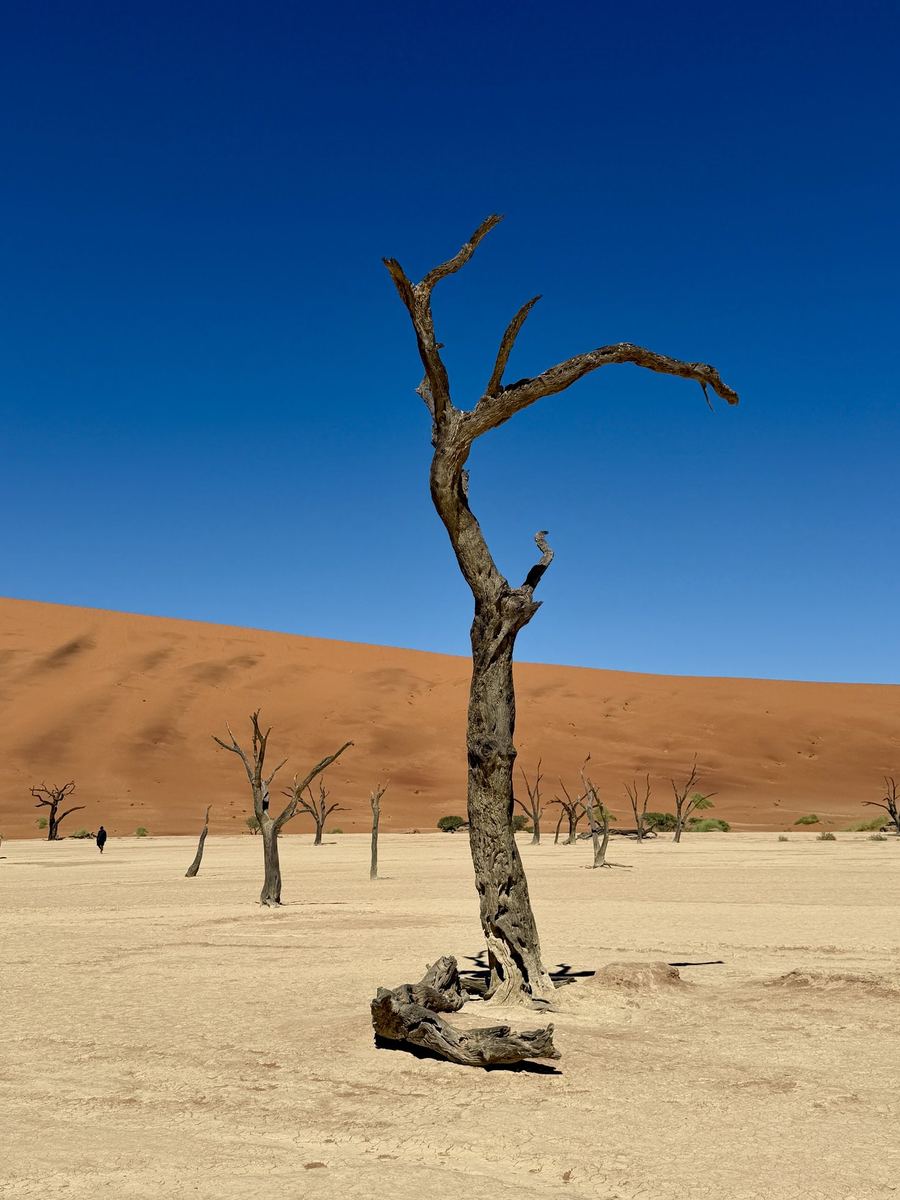
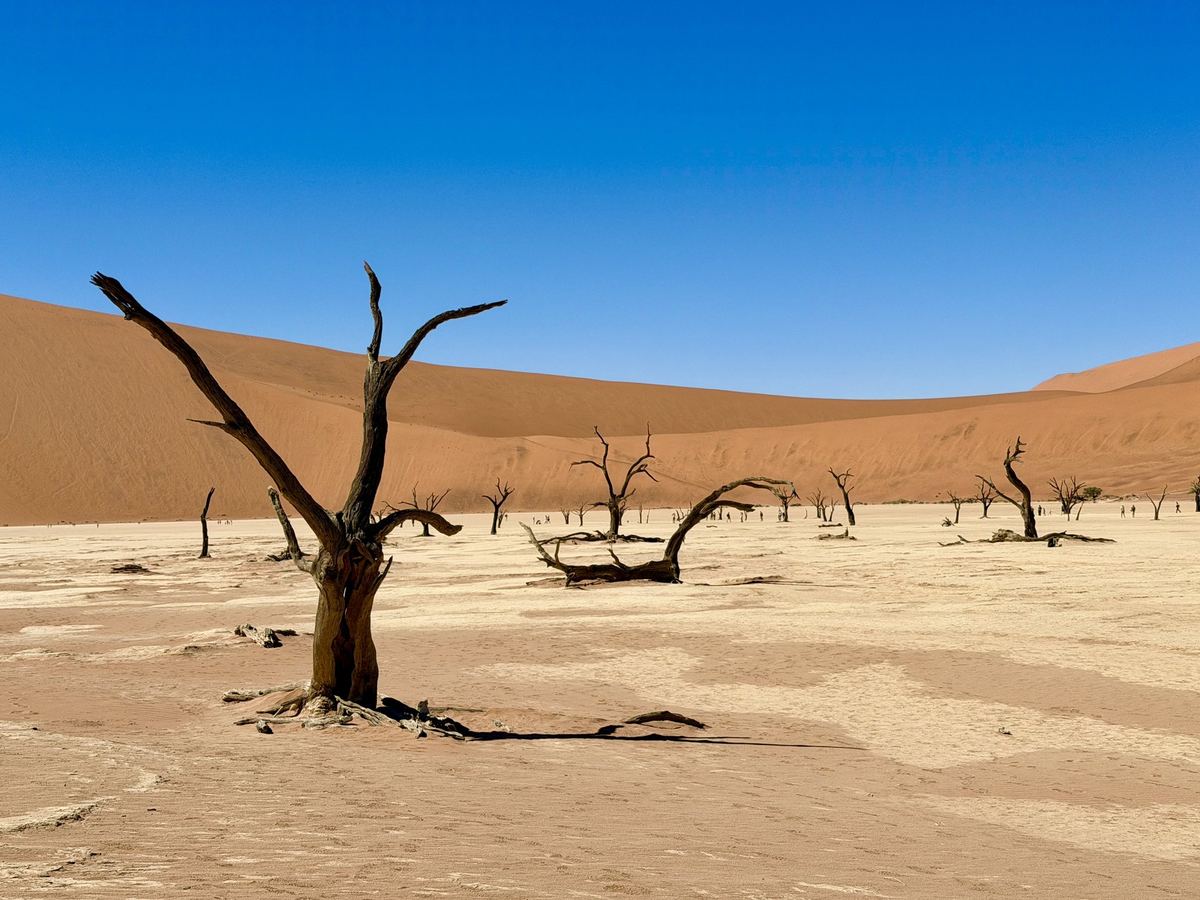
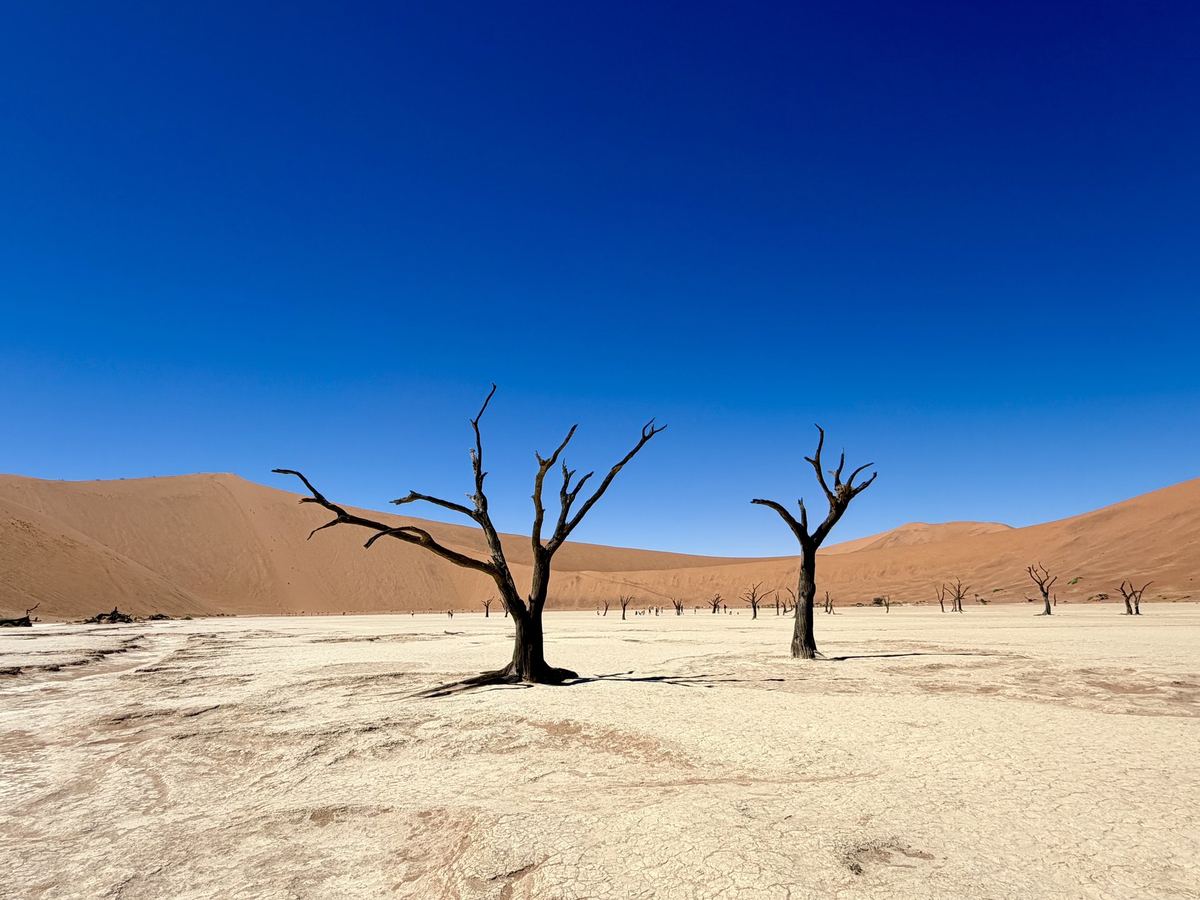
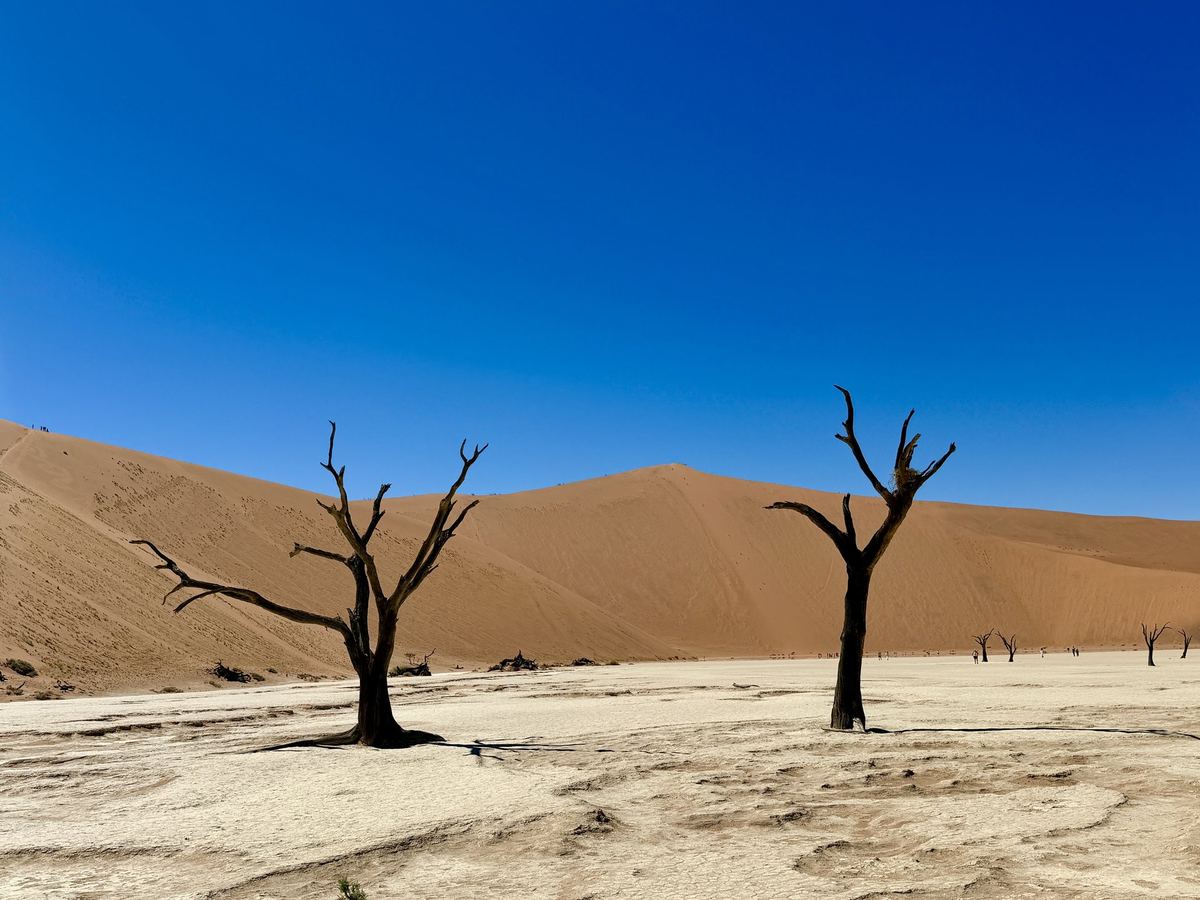
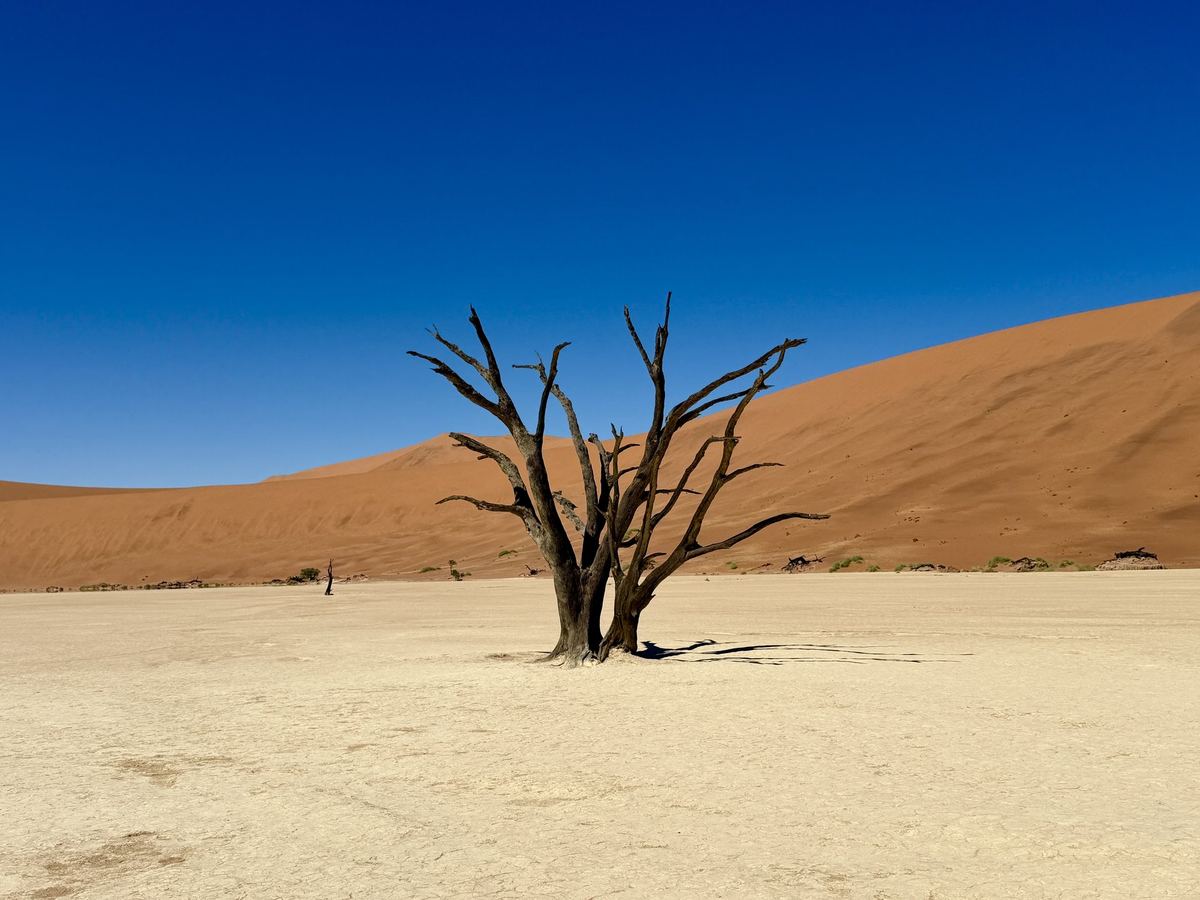
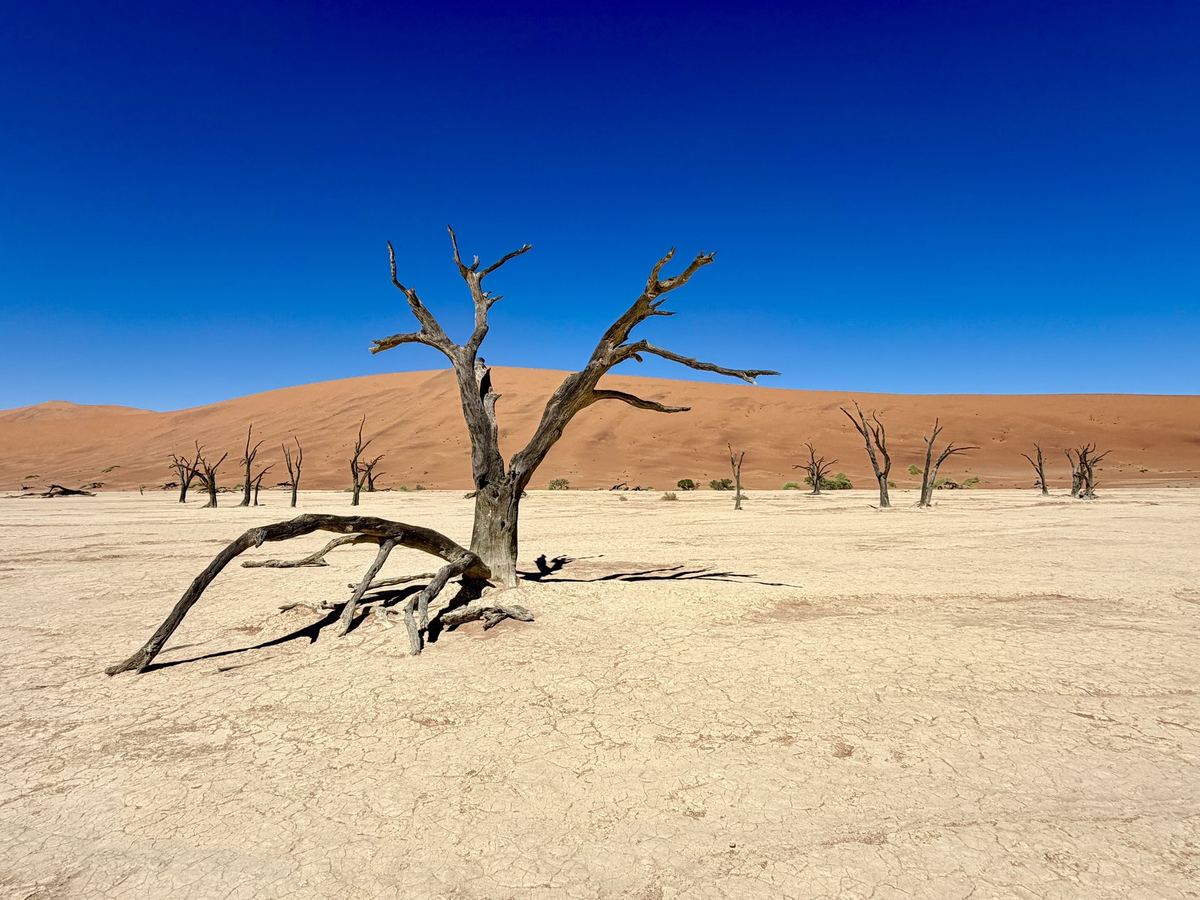
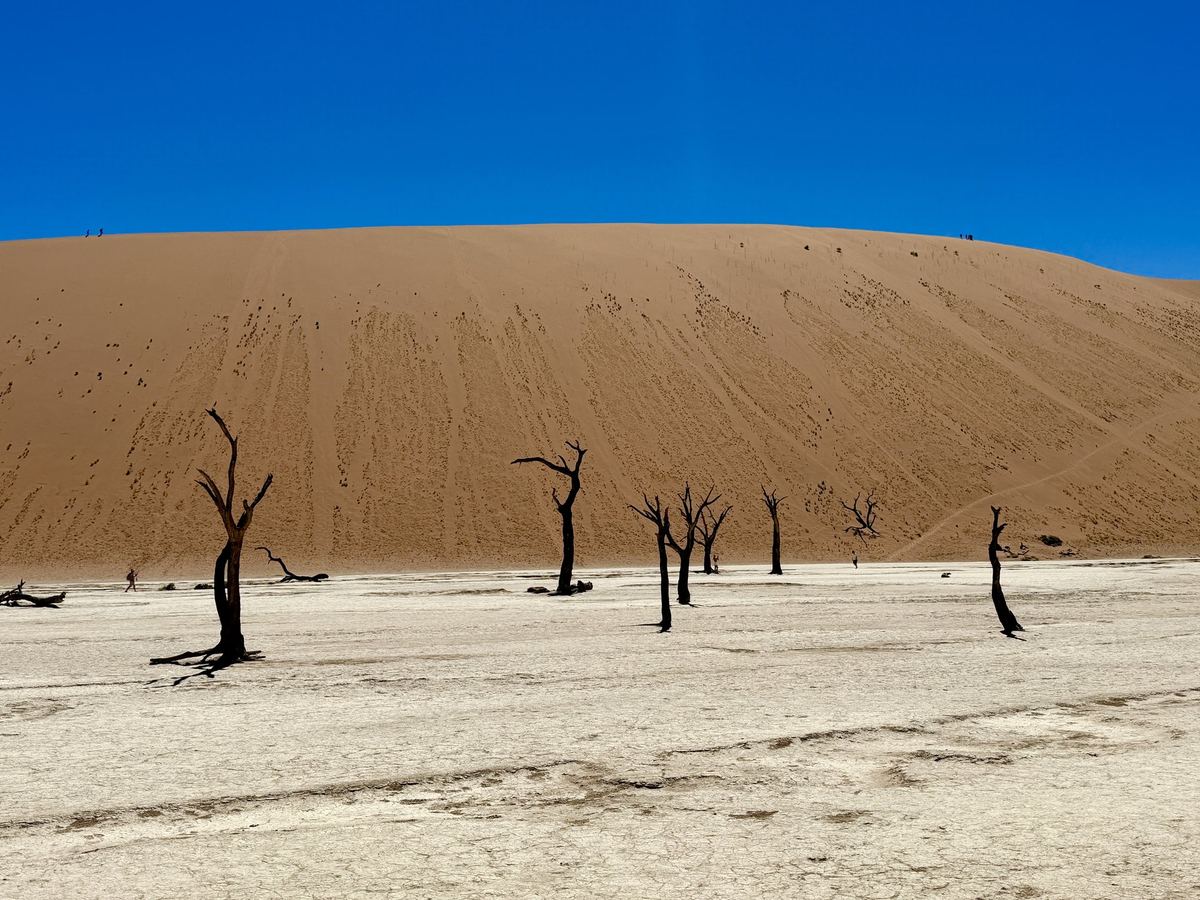
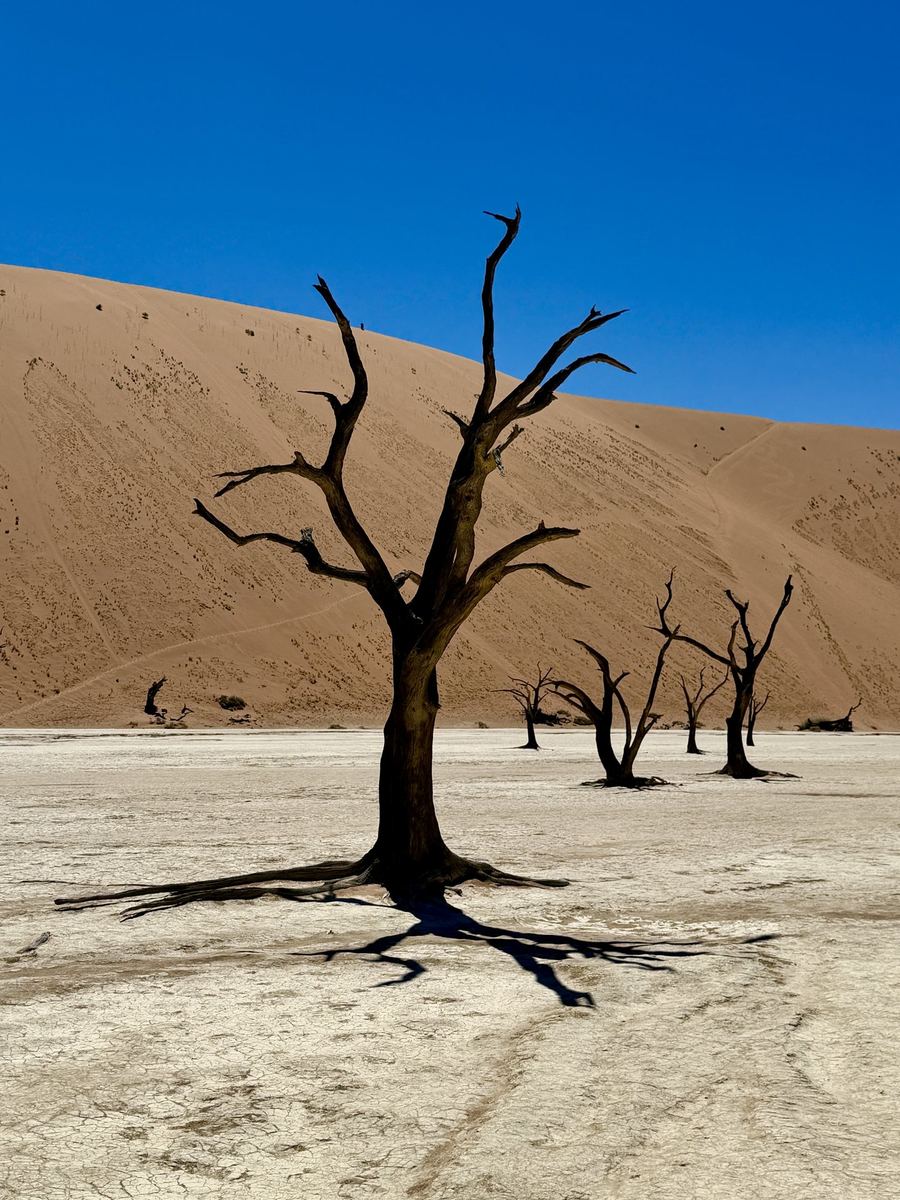
Next was Deadvlei, which really was a photographer’s dream. Blackened skeletons of camel thorn trees stand on a bright white clay pan, surrounded by brilliant orange dunes, and we were lucky enough to have a bright blue sky. The trees died around 600 to 700 years ago, and the air here is so dry that they have never decomposed, simply scorched black by the sun.
Black, sun-scorched trees, white clay, orange dunes and a perfect blue sky. Deadvlei looked like another planet, and it was a photographer’s dream.
I took some of my favourite photographs of the whole trip here. A definite must-do if you’re ever in Namibia.


By the time we reached Sesriem Canyon, a narrow gorge up to 30 metres deep and just a couple of metres wide in places, the temperature was touching the early 40s. We walked right through it, despite the heat.
That evening we had dinner at the Sossusvlei Lodge and watched the sunset from the top of its tower. The buffet was unbelievably good, with chefs dotted all around cooking dishes from all over the world. I had a vegetable stir-fry cooked right in front of me, before heading back to the campsite for the night.
Where the Desert Meets the Sea
Another long drive took us from the desert to the coast, with a coffee stop at Solitaire, a tiny desert settlement famous for its apple strudel and the rusting old cars scattered around it, and a photo stop at the Tropic of Capricorn sign.
We arrived in Swakopmund, a German colonial seaside town on the Atlantic coast, and checked into the Hotel Deutsches Haus for a well-earned rest. The next day just happened to be my birthday…
This was probably one of the best birthdays I have ever had, because of the setting, the group I was with and the sheer excitement for the activities ahead.
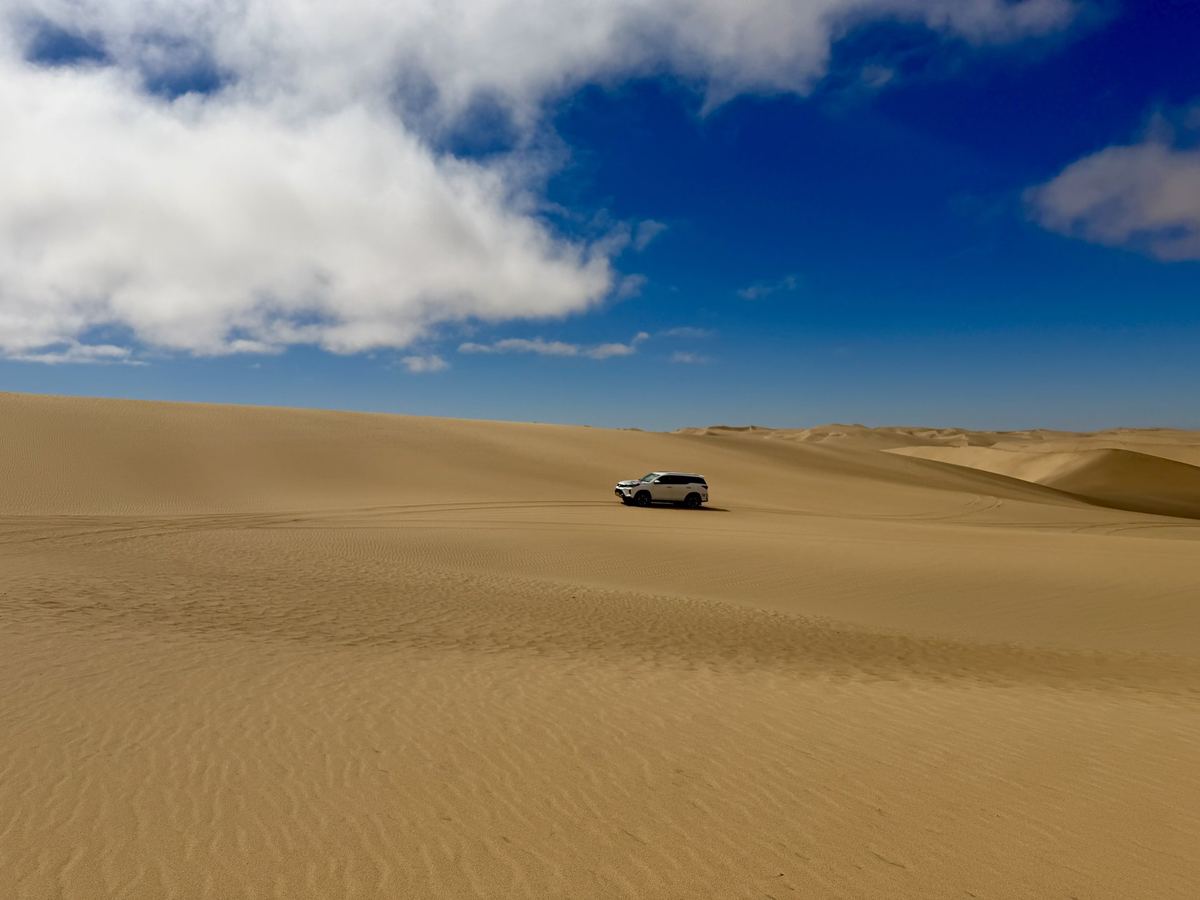
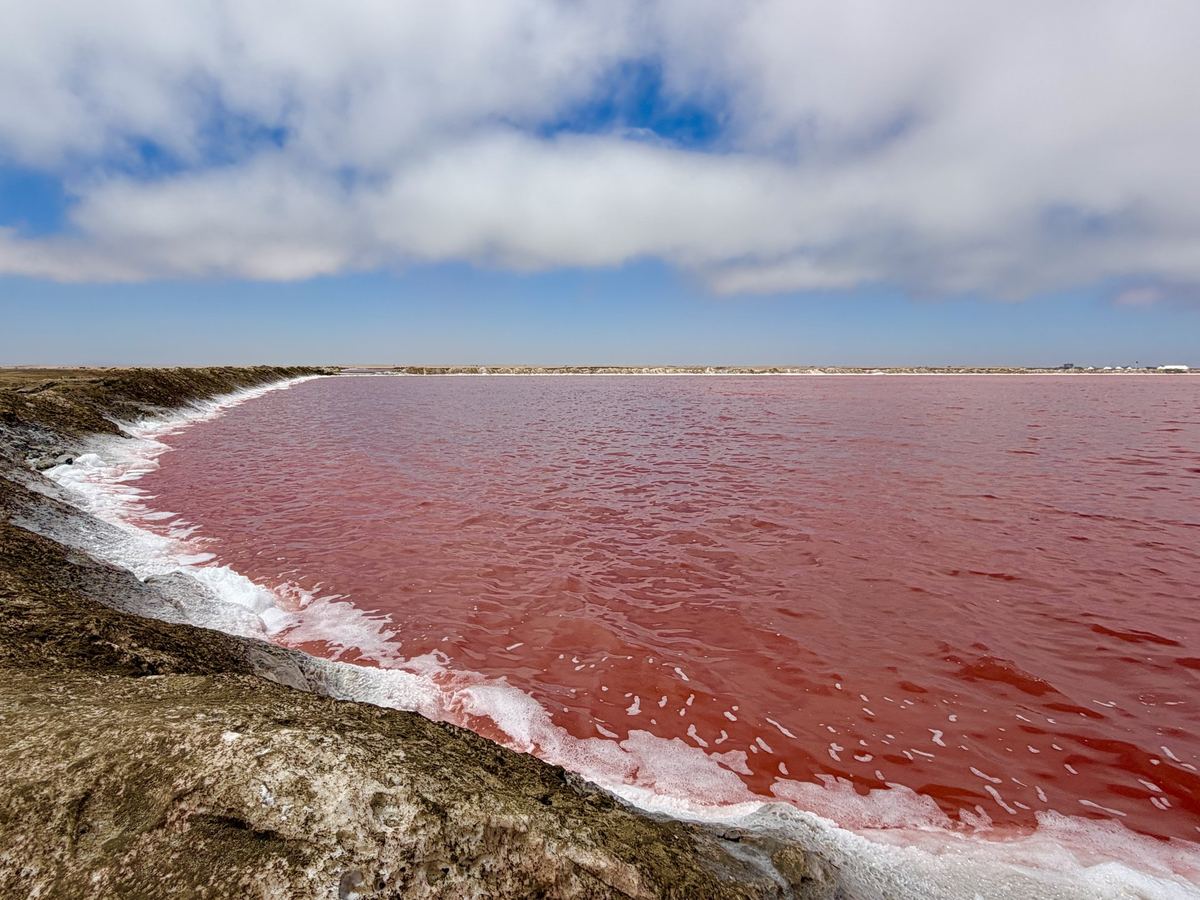
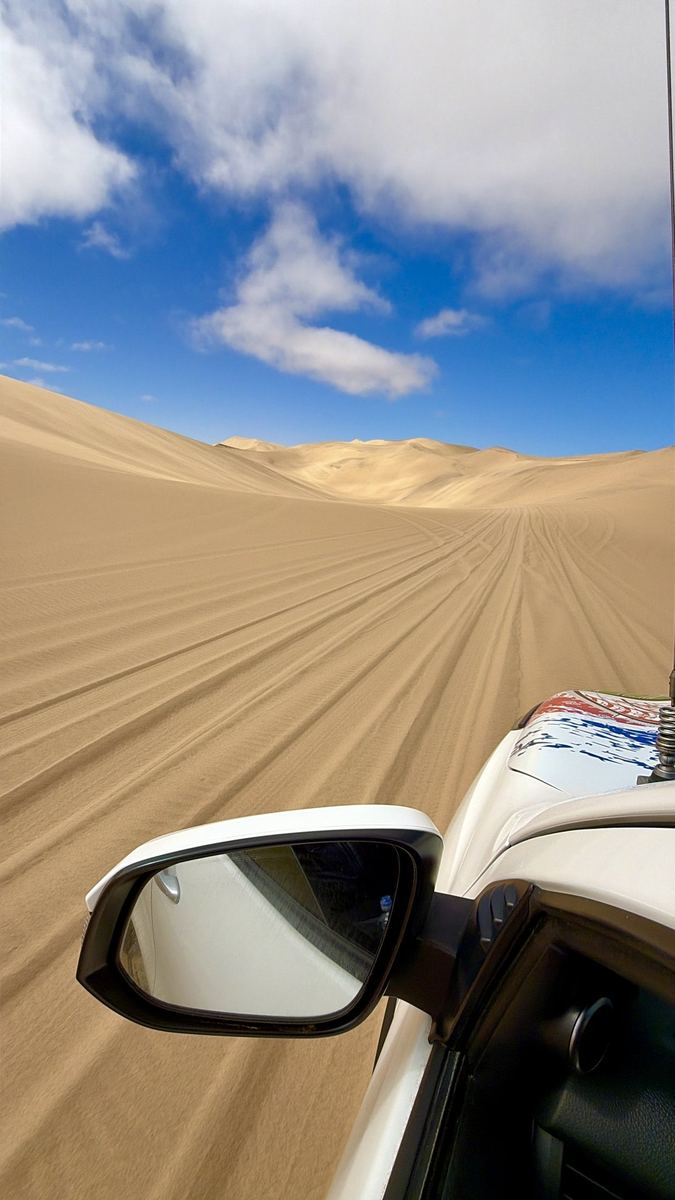
We were up early for a half-day 4x4 tour to Sandwich Harbour. The vehicles were huge, with huge tyres, and we stopped on the way to let air out of them so they could grip the sand better on the dunes. On the way we passed the Walvis Bay lagoon with its flamingos, and the pink salt lagoons. Did you know? Their colour comes from tiny salt-loving algae and microorganisms that thrive in the salt works’ evaporation ponds.
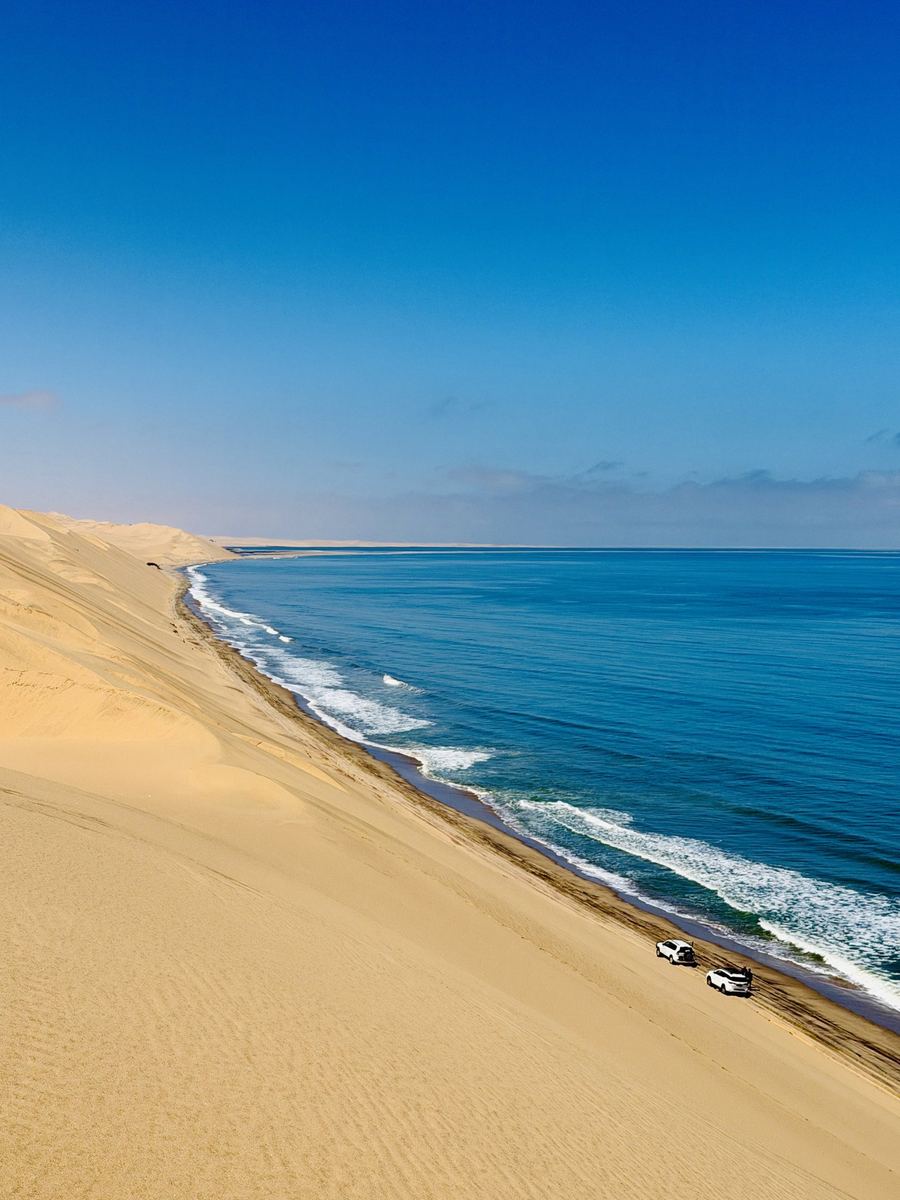
About an hour and a half later we reached Sandwich Harbour, where giant sand dunes come right down to meet the Atlantic Ocean. It was unearthly: nothing but sand dunes plunging into the sea, with us driving along the shoreline in between.
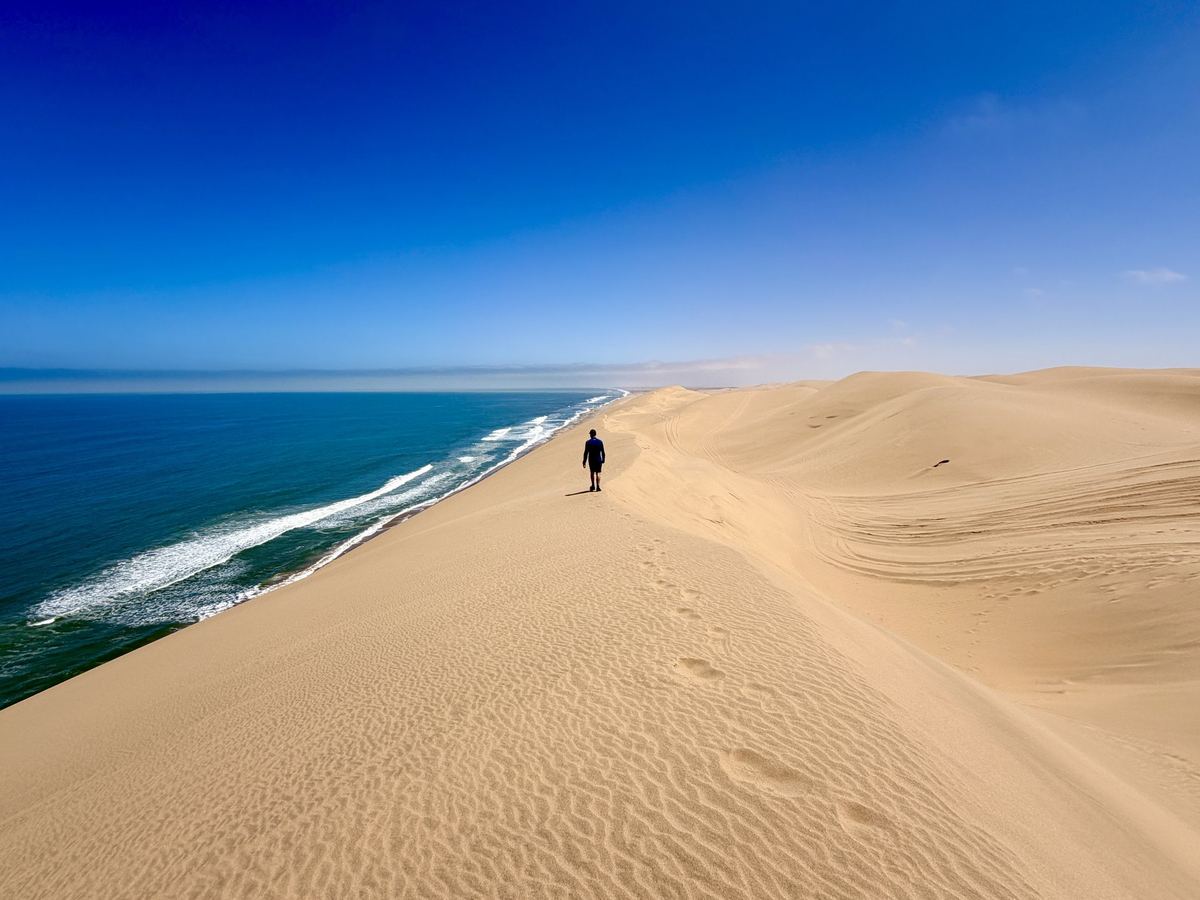
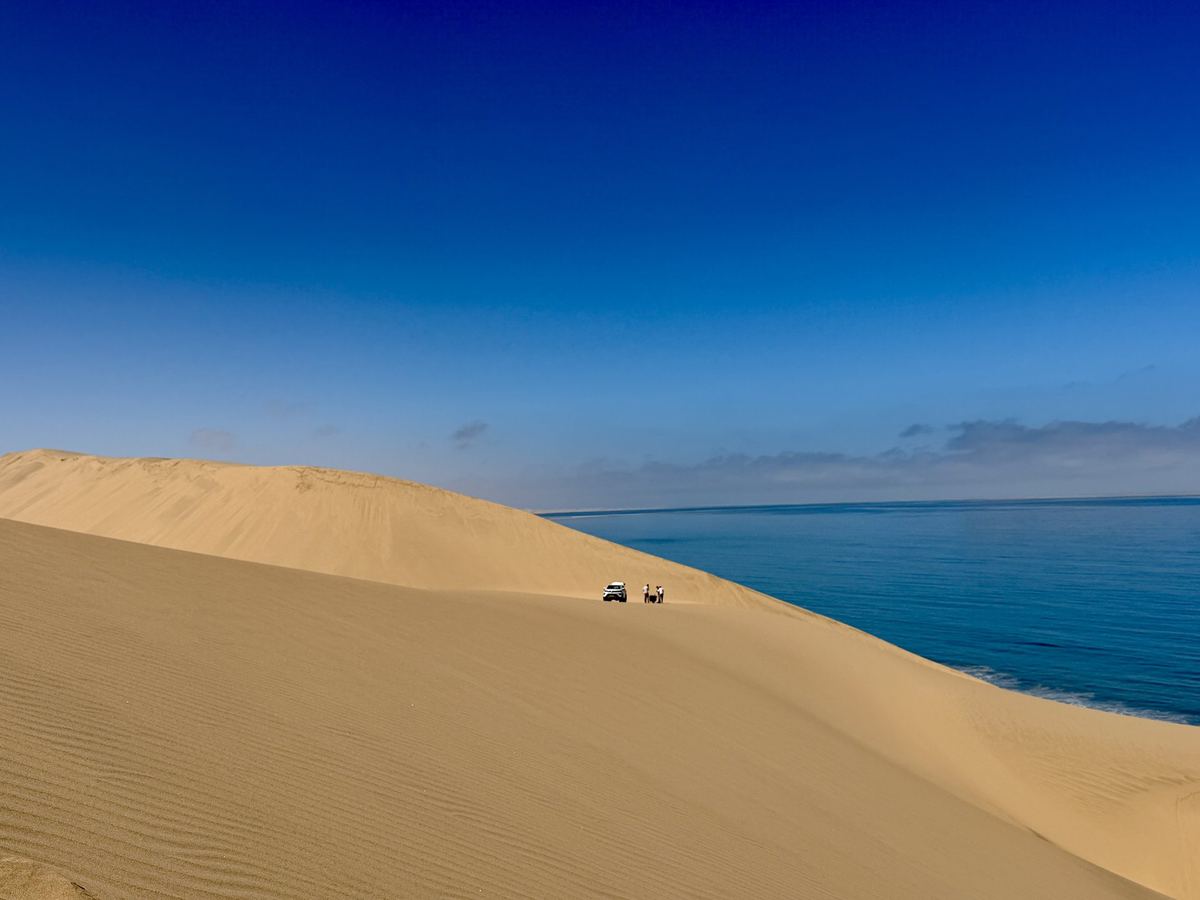

The range of wildlife was phenomenal: Cape fur seals and their pups, a family of black-backed jackals, flamingos and even humpback whales cruising up and down the coast. We stopped for lunch on top of the dunes, looking down the coastline to where the desert meets the sea. It’s hard to think of a better spot for a birthday lunch!
Lunch on top of a dune, the Atlantic crashing below and humpback whales passing by. The best birthday I could have asked for.
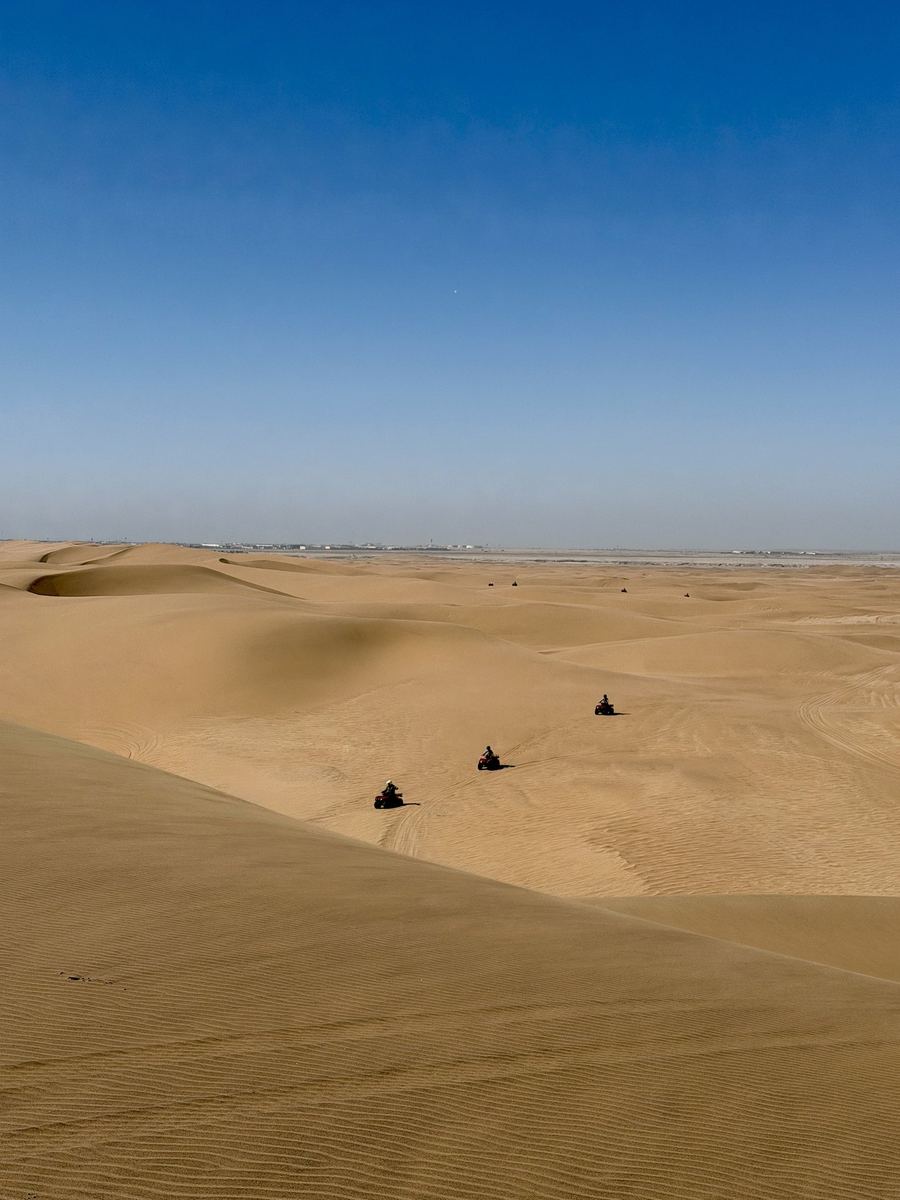
The afternoon was all about adrenaline, with quad biking and sandboarding. I went down head first lying on the board, and the dunes were sooo steep!
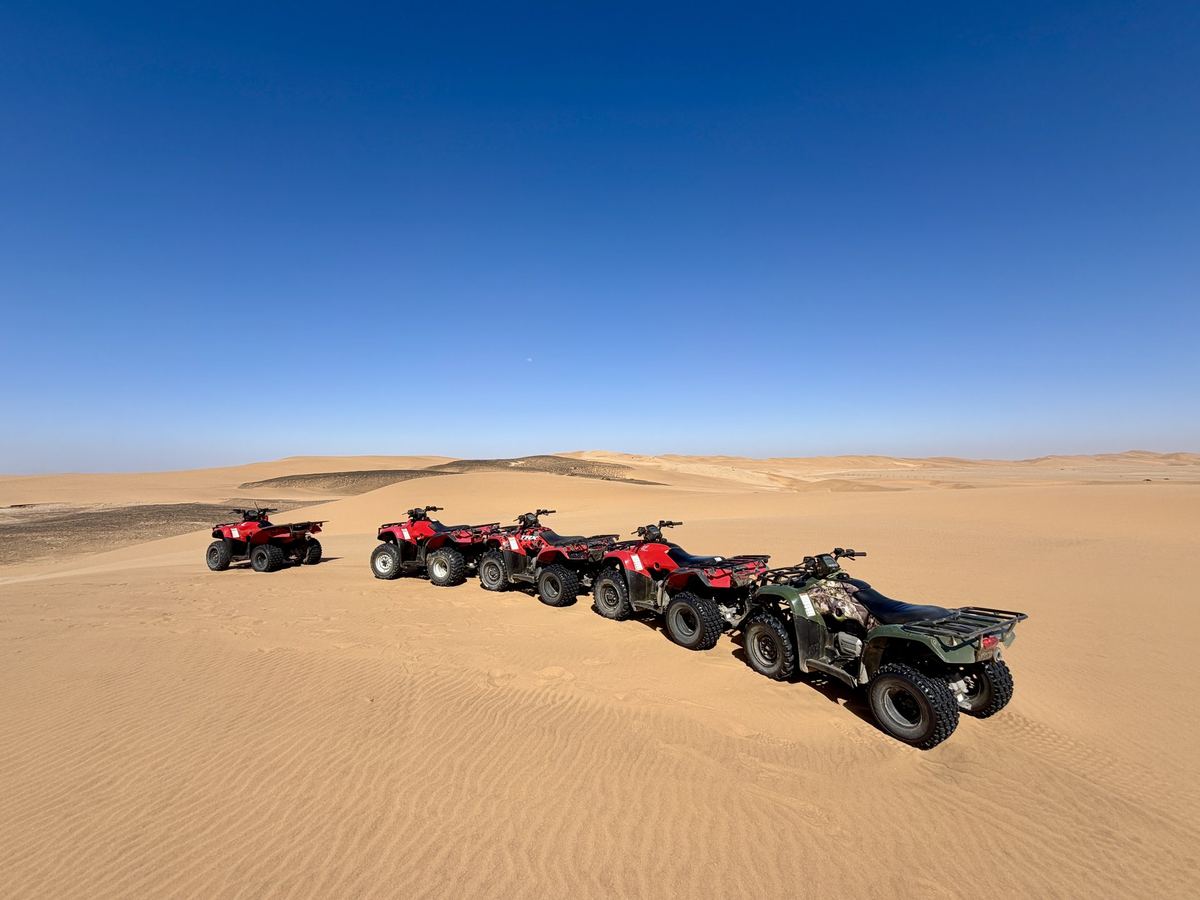
That evening the group took me out for a birthday meal at a restaurant in Swakopmund. Everyone sang Happy Birthday and the restaurant brought out a cake. A birthday I will never forget.
Rhinos at the Waterhole
Day 14 was another very, very long day on the road, heading north to Etosha National Park. We stayed at Okaukuejo, the park’s main rest camp, which sits right in front of a famous floodlit waterhole.
As the sun went down we sat by the waterhole and were stunned when a black rhino and a herd of 10 to 15 elephants, babies included, came down to drink, along with all sorts of other animals. We stayed well into the evening, watching under the floodlights.
What made it even more special is that black rhino were almost wiped out by poaching, and Namibia now has more of them than anywhere else in the world, with Etosha the biggest stronghold. So to see one just wander down for a drink was a real privilege.

Day 15 was a full-day safari with a local guide, from 5am right through to early evening, and it was blisteringly hot, in the early to mid 40s, with no let-up all day. Our guide did a great job, though, of getting us to all the best spots.
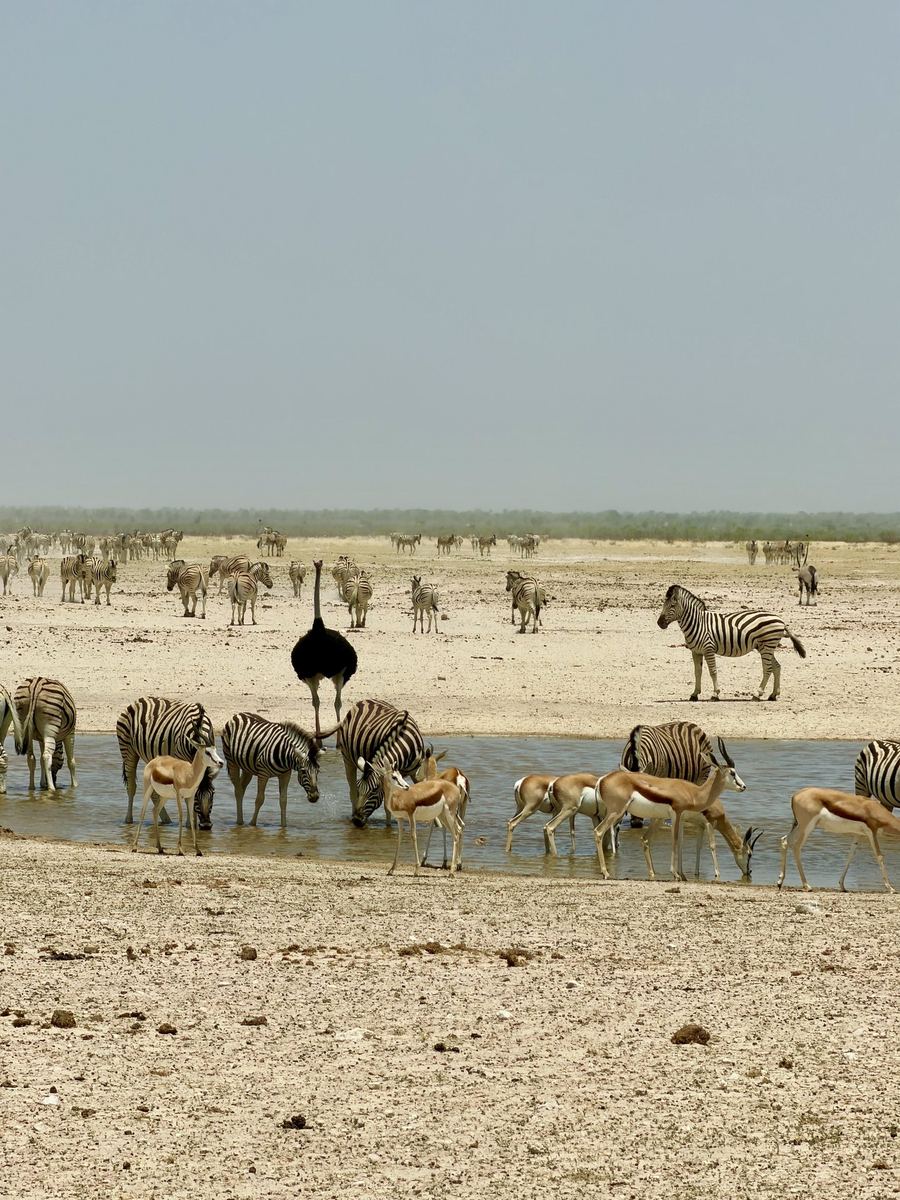
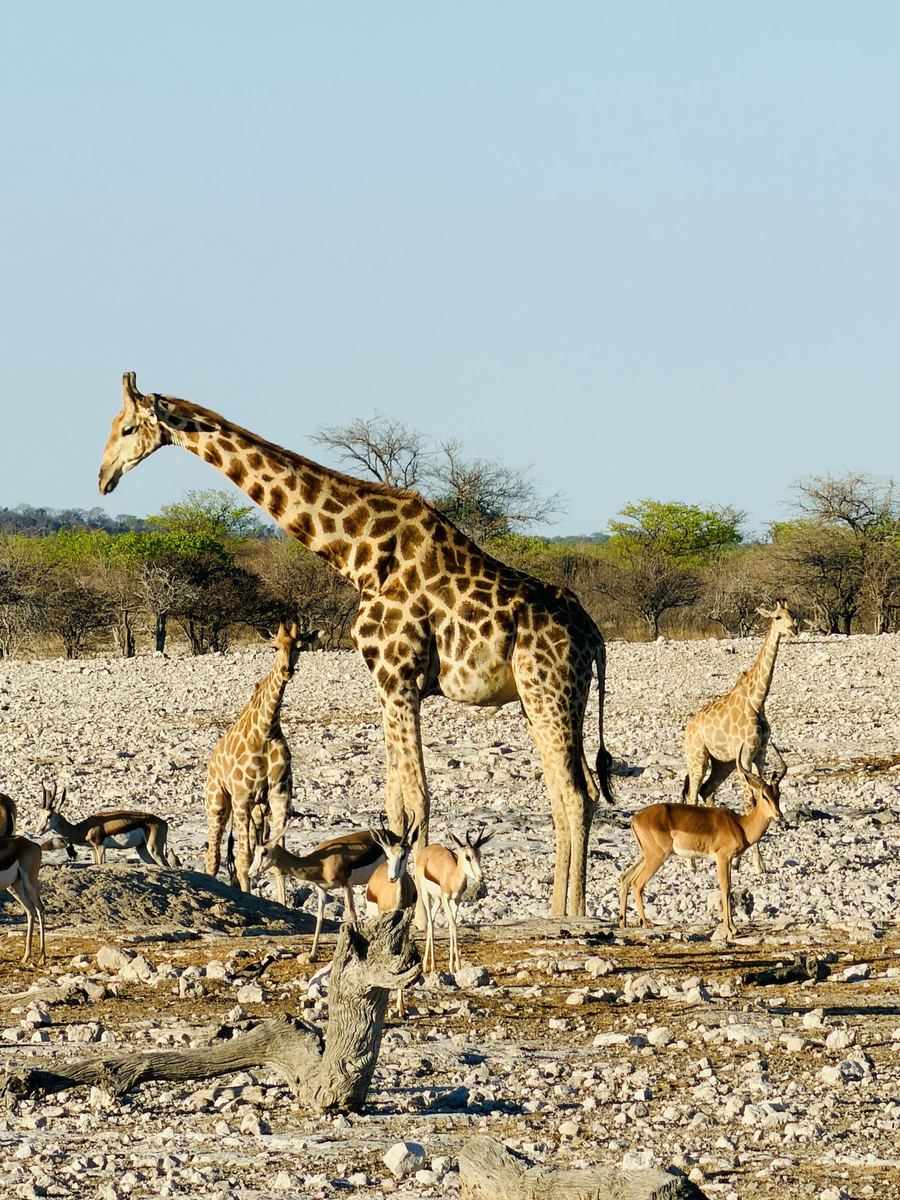
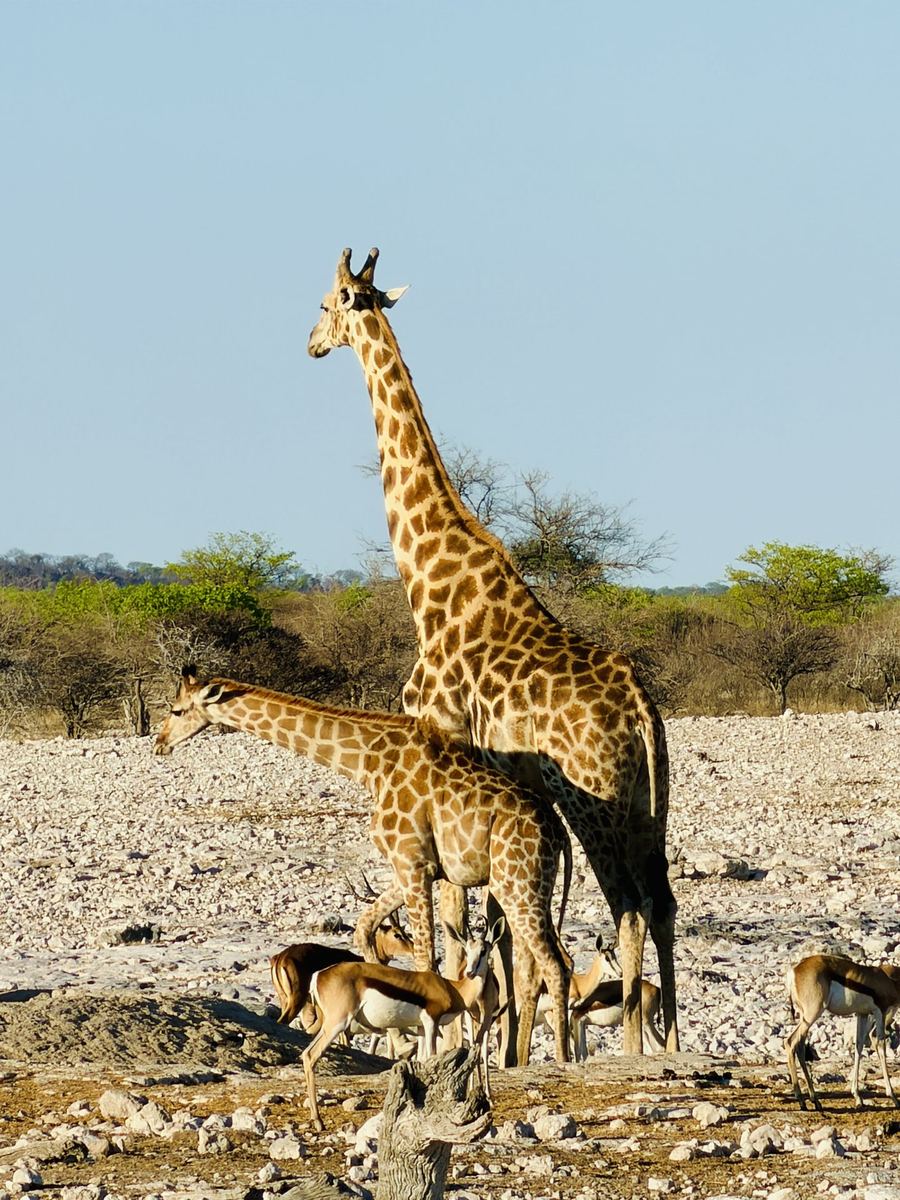
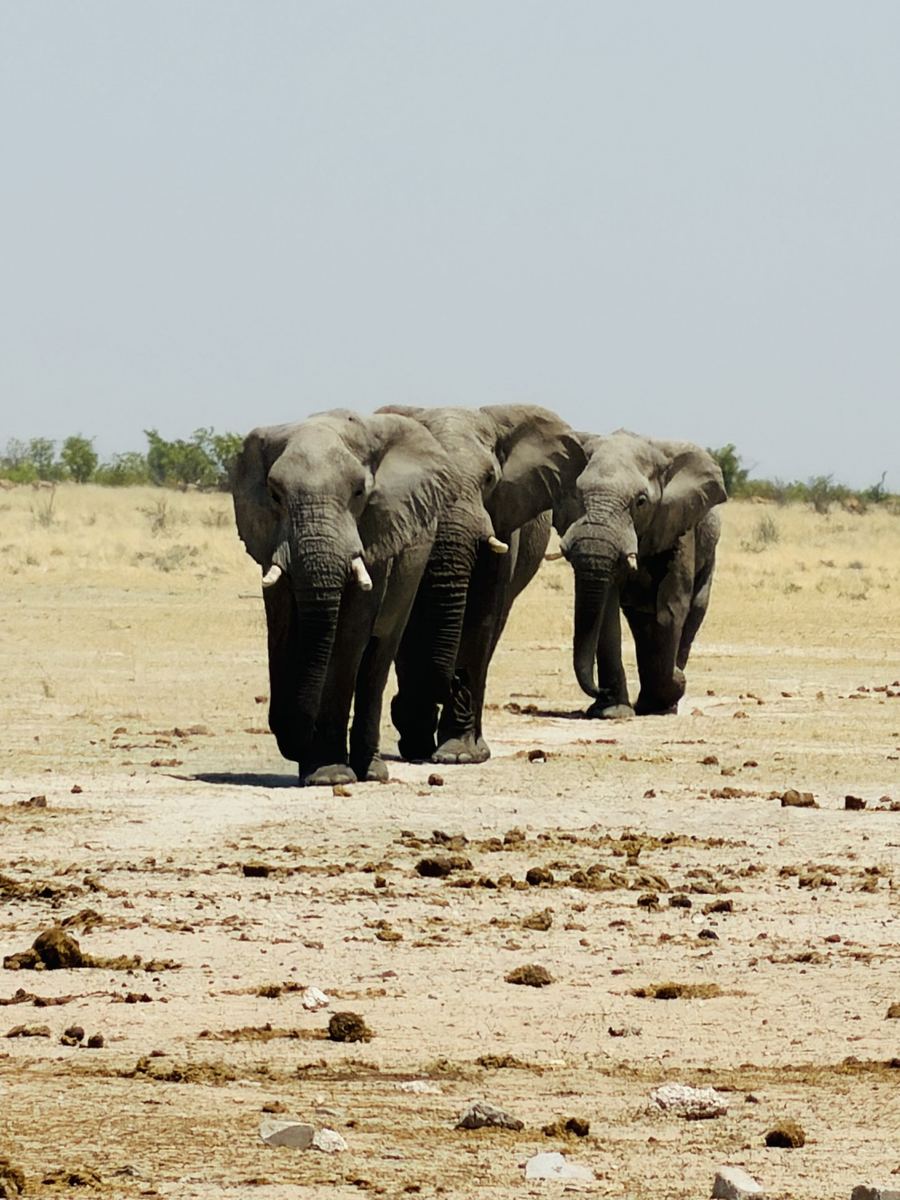
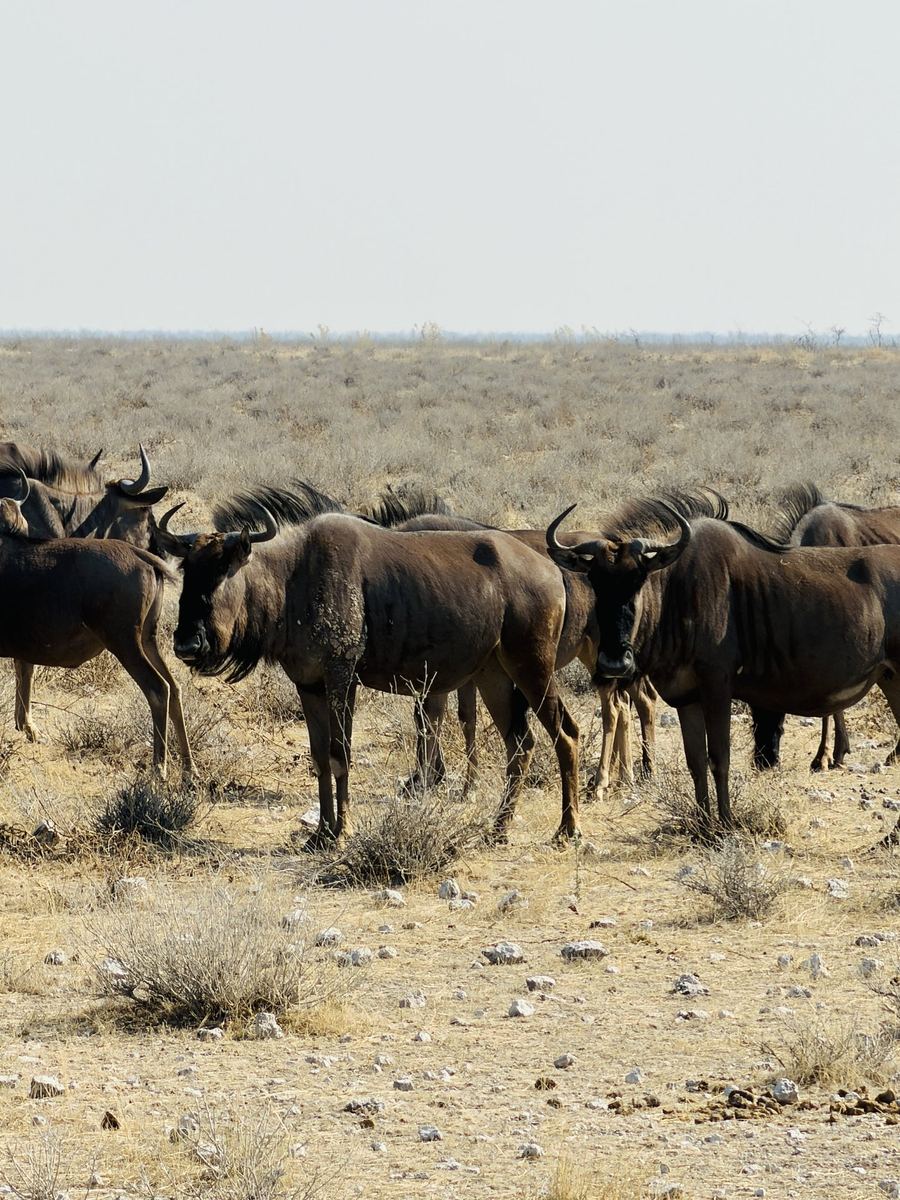
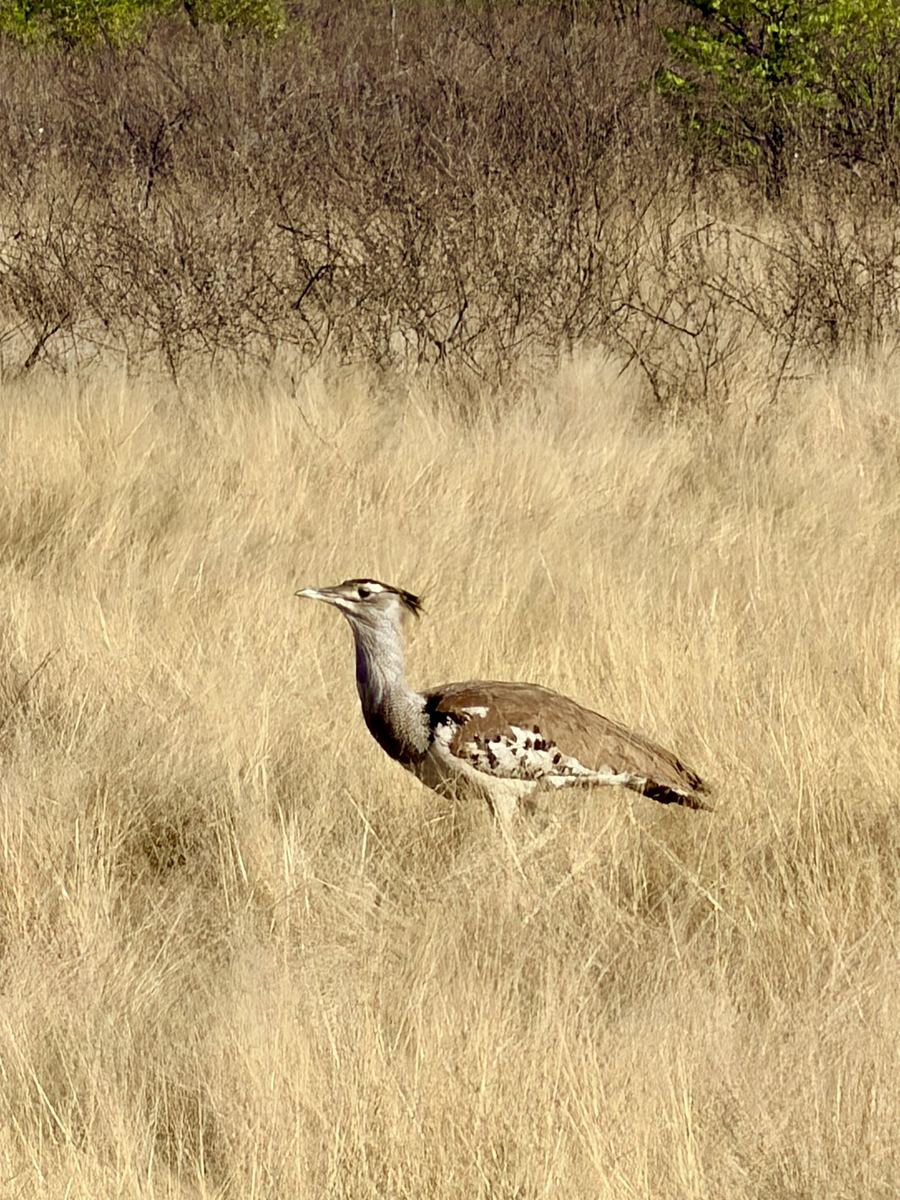
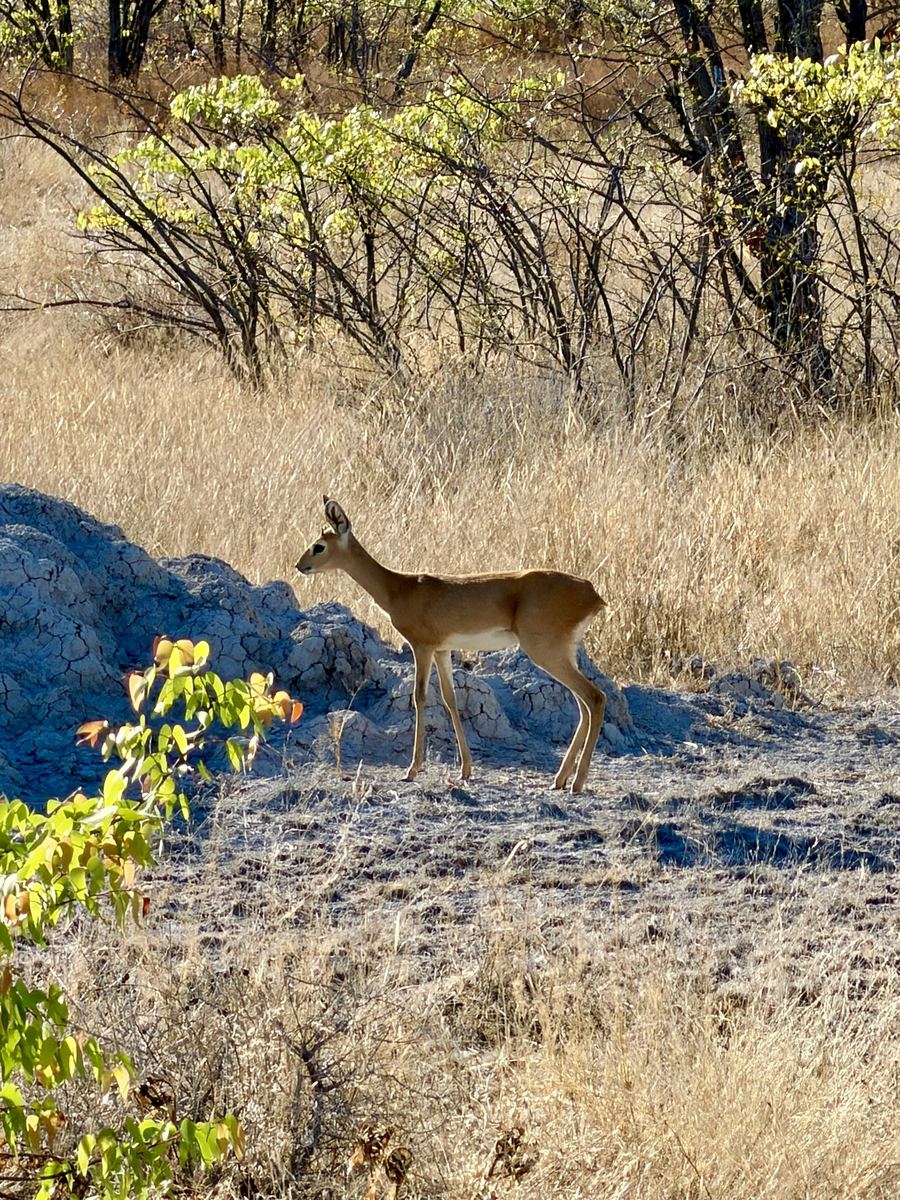
At one waterhole there were hundreds and hundreds of zebra, alongside springbok and other antelope, ostriches, giraffes, elephants and loads of different birds. We even spotted dik-diks, tiny antelope barely knee-high. From towering giraffes to dik-diks, it was quite the line-up!

Then, after driving for a large part of the day, we came across a whole pride of lions, around 18 of them including cubs. The male was hunting in the bushes, while the lionesses kept the cubs in whatever shade they could find. Even the lions were struggling with the heat!
That evening back at the Okaukuejo waterhole, I watched one of the best sunsets of my life, and a solitary rhino came down to drink again, along with a family of elephants. The perfect way to end our time in Etosha.
A black rhino stepping out of the dusk to drink as the sun went down: one of the rarest animals on Earth, just metres away.

An Unplanned Stop
Another long drive took us south to Windhoek, Namibia’s capital, where we had lunch at a women’s craft co-operative that trains and employs local women in crafts like textiles, beadwork and pottery. We stayed at the Auas City Hotel.
By this point, though, I was starting to feel unwell, with a fever, aching muscles and flu-like symptoms. I was worried, because I had been bitten many times before I had started my malaria tablets.
I decided not to take any chances and went to a hospital in Windhoek to be tested for malaria. Thankfully, the test was negative! It turned out to be a bacterial infection that had built up over several days from food and drink, and a course of antibiotics sorted it out.
It did mean I had to stay behind while the group drove on into Botswana, missing two days of long driving, but getting checked out was absolutely the right call. My advice from this:
- Start your malaria tablets when your travel clinic tells you to, and use insect repellent from day one.
- If you get a fever after being in a malaria area, get tested straight away.
- Take care with food and drink on long overland trips.
- Get the right level of travel insurance before you go.
- Check TravelHealthPro for the vaccines, medication and precautions you need for every country you’re visiting.
Country Three of Five, by Air
Feeling much better, I caught up with the group the only way I could: on a very small propeller plane from Windhoek to Maun in Botswana, booked with Airlink and operated by Namibia’s Westair. So country number three was entered by air rather than by road! A taxi took me to the Sedia Hotel, where I met up with the group again, ready for the Delta.
We were up nice and early for a three-hour safari drive deep into the Okavango Delta, to a bush camp on the banks of the river where we would spend the night. It was extremely hot again, but the drive took us right down to the water’s edge, where we could hear hippos grunting and saw buffalo. We were literally in the middle of nowhere.
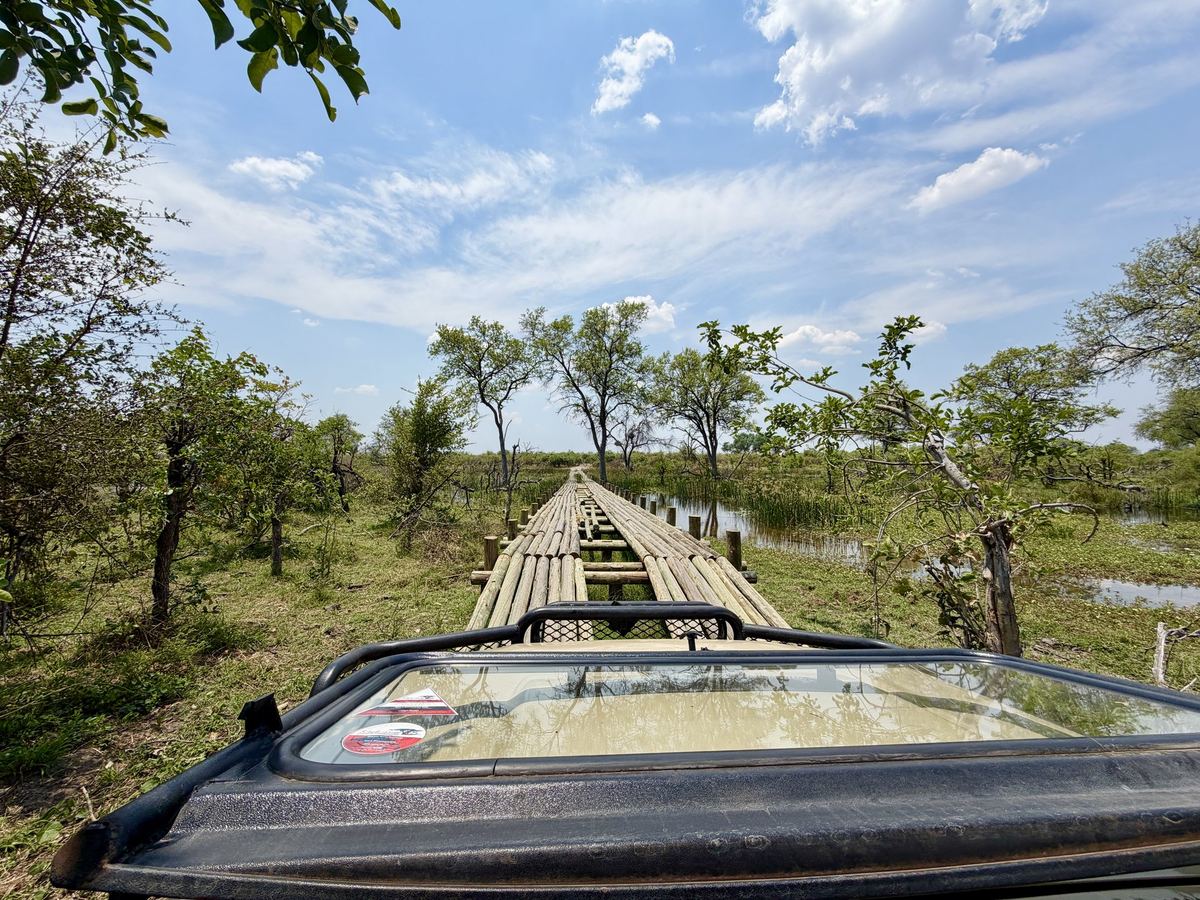
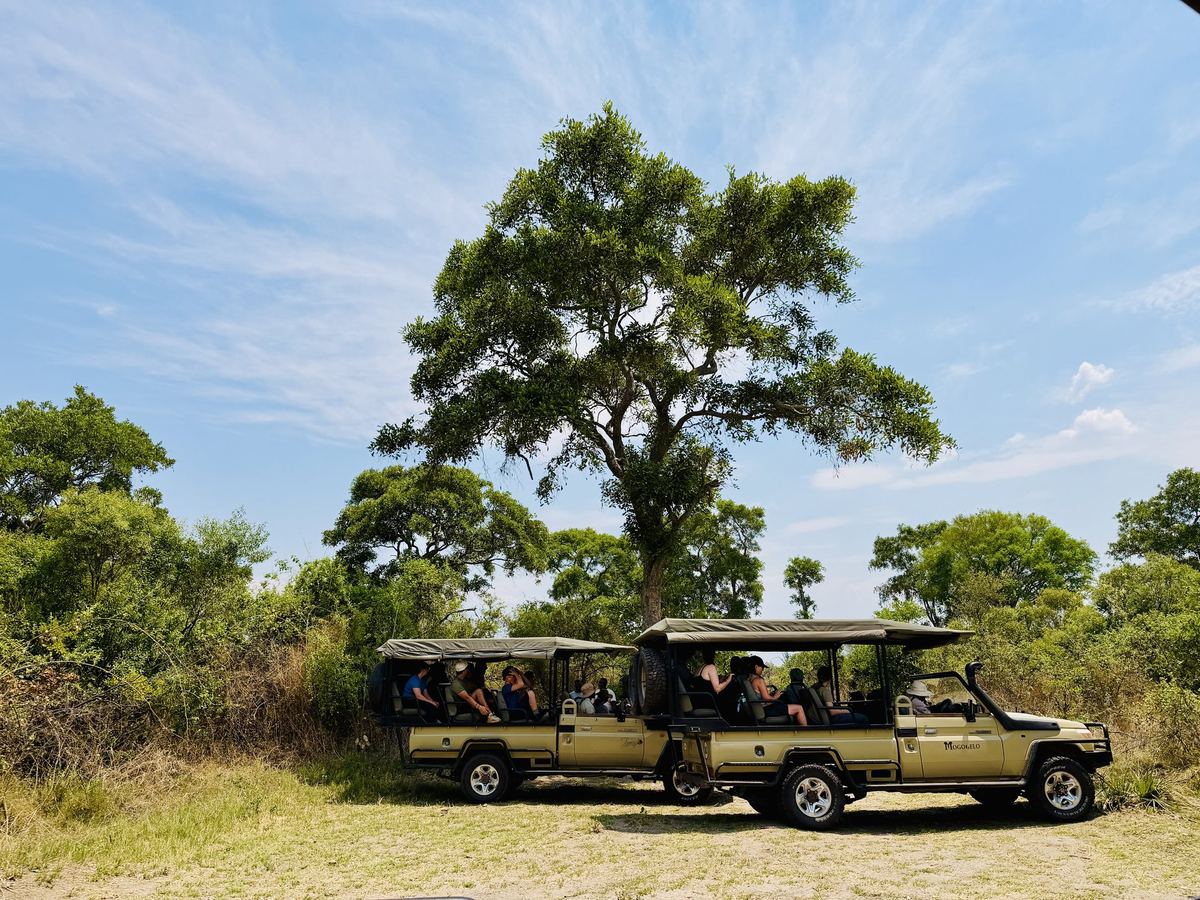
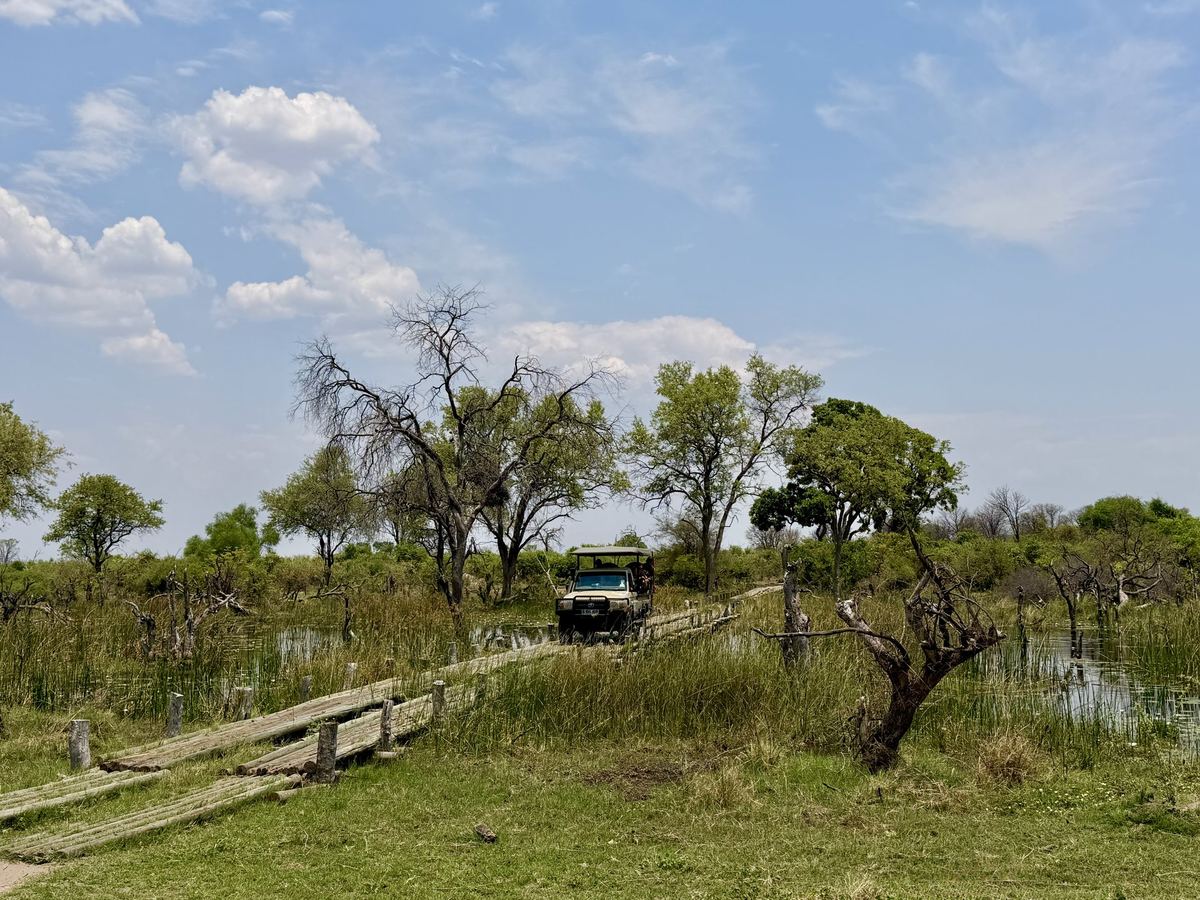
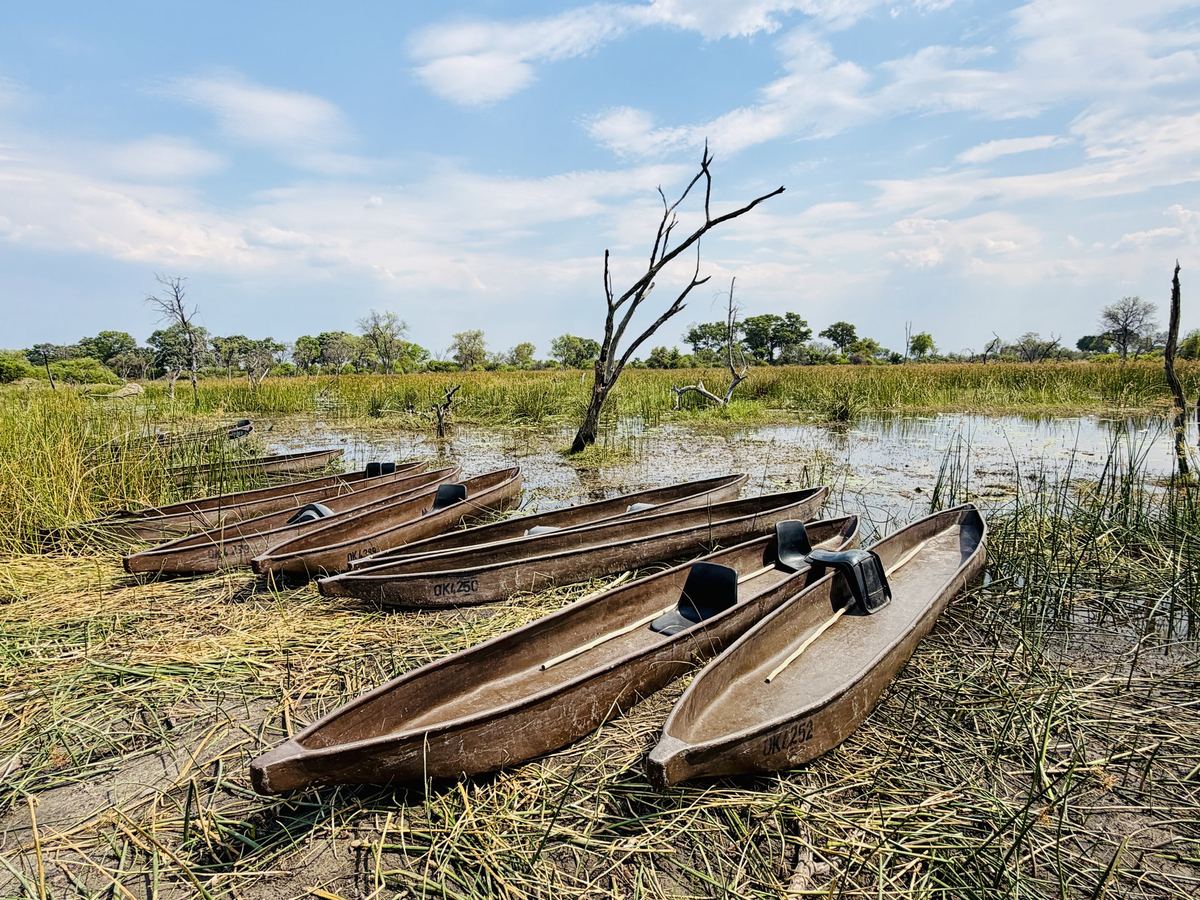
The camp was a proper bush experience. The tents were almost like glamping tents, and the shower was a bag of water hung from a pole, with a little valve at the bottom to let the water out. Basic, but brilliant! It’s a special place too: the Okavango River never actually reaches the sea, it just spreads out into the Kalahari Desert, and in 2014 the Delta became the 1,000th UNESCO World Heritage Site.
During the day we set off on a walking safari on foot, and came across lots of elephants. Seeing them at ground level, without a vehicle around you, is a completely different feeling!
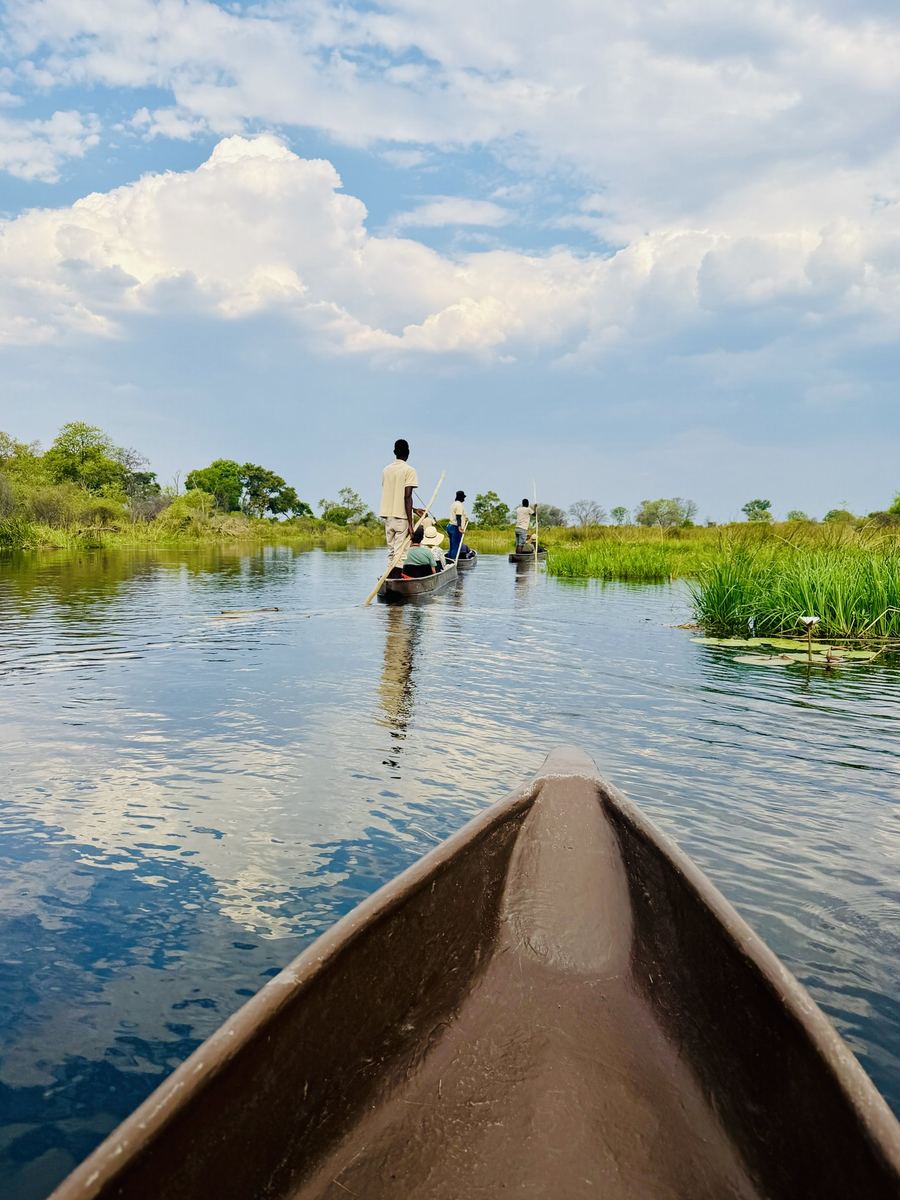
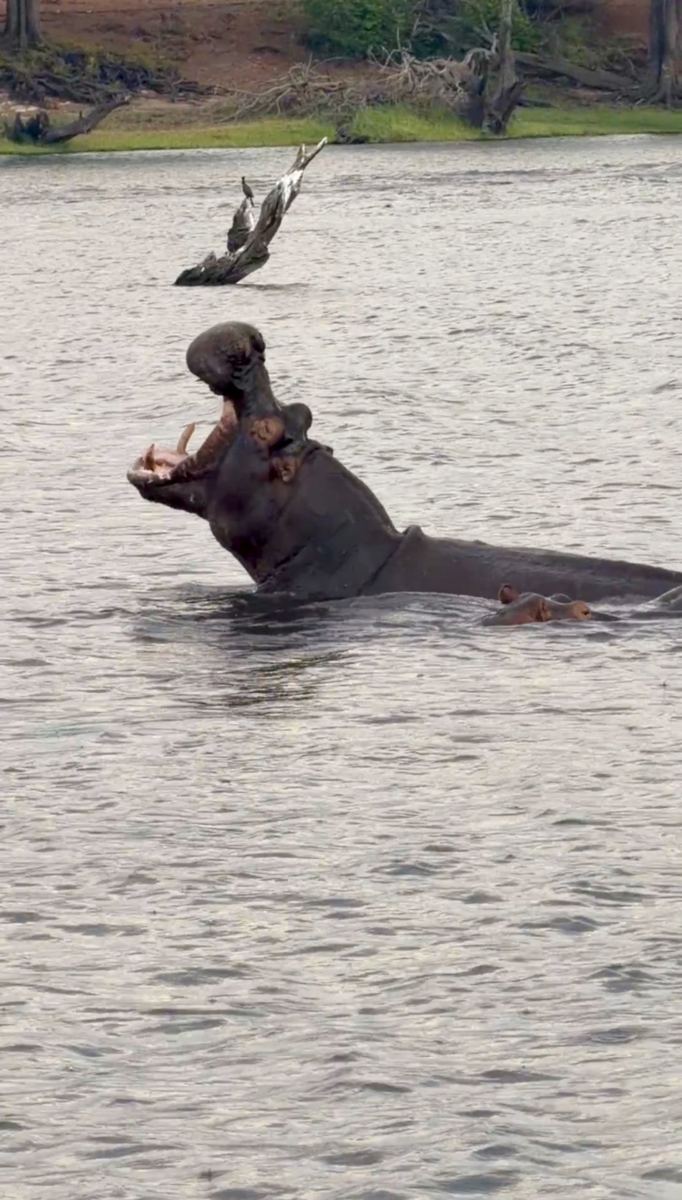
As the evening drew in, we climbed into mokoros, traditional dug-out canoes pushed along by local polers standing at the back, for a two-hour ride through the Delta as the sun went down. The scenery was fantastic, and we were lucky enough to get quite close to hippos in their natural habitat.
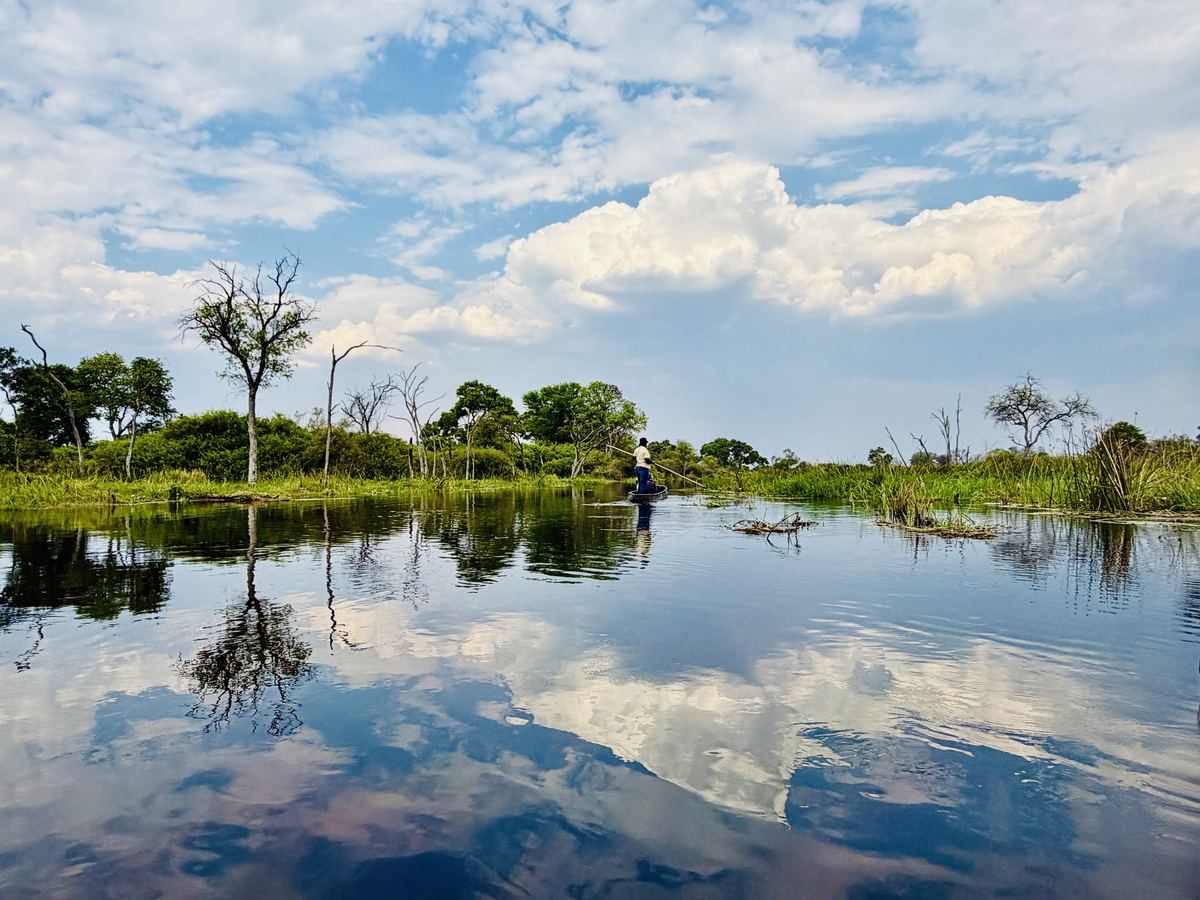
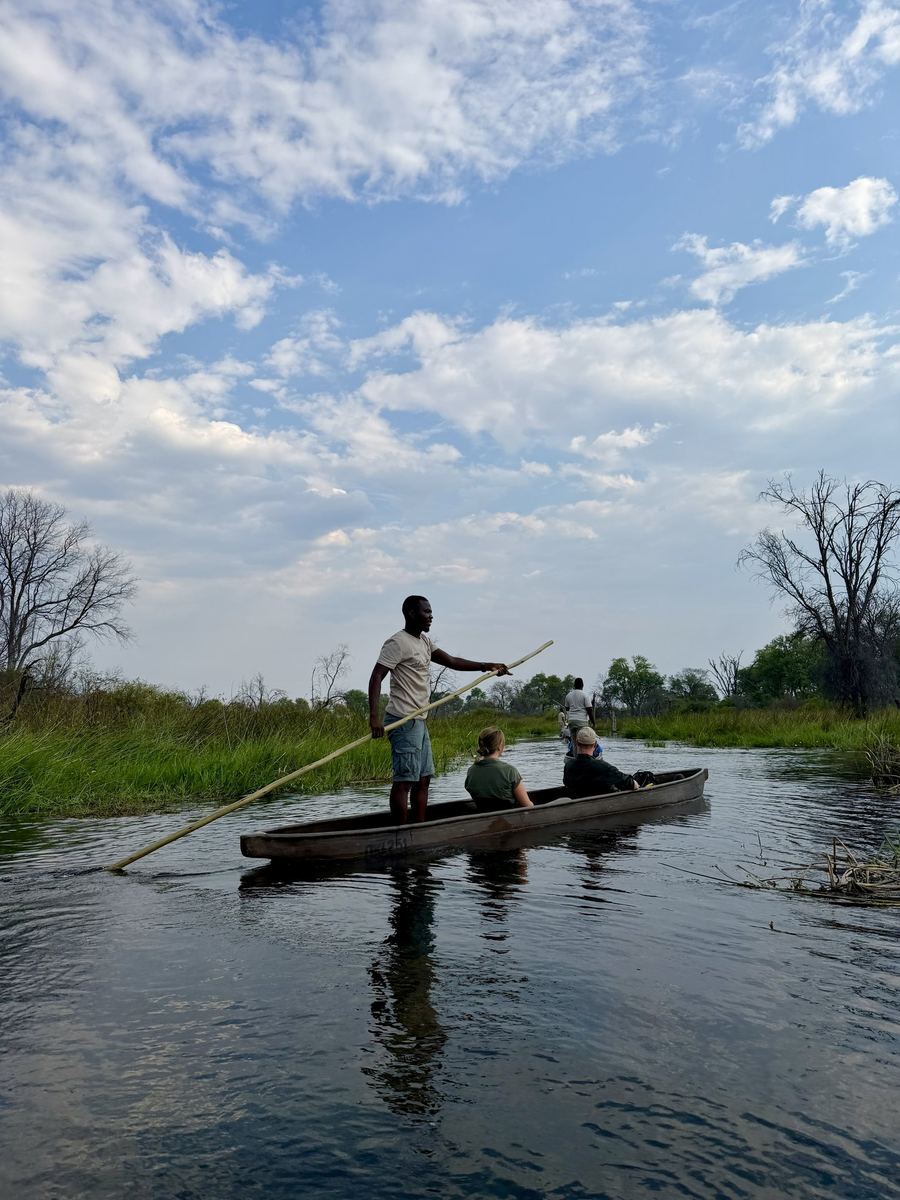
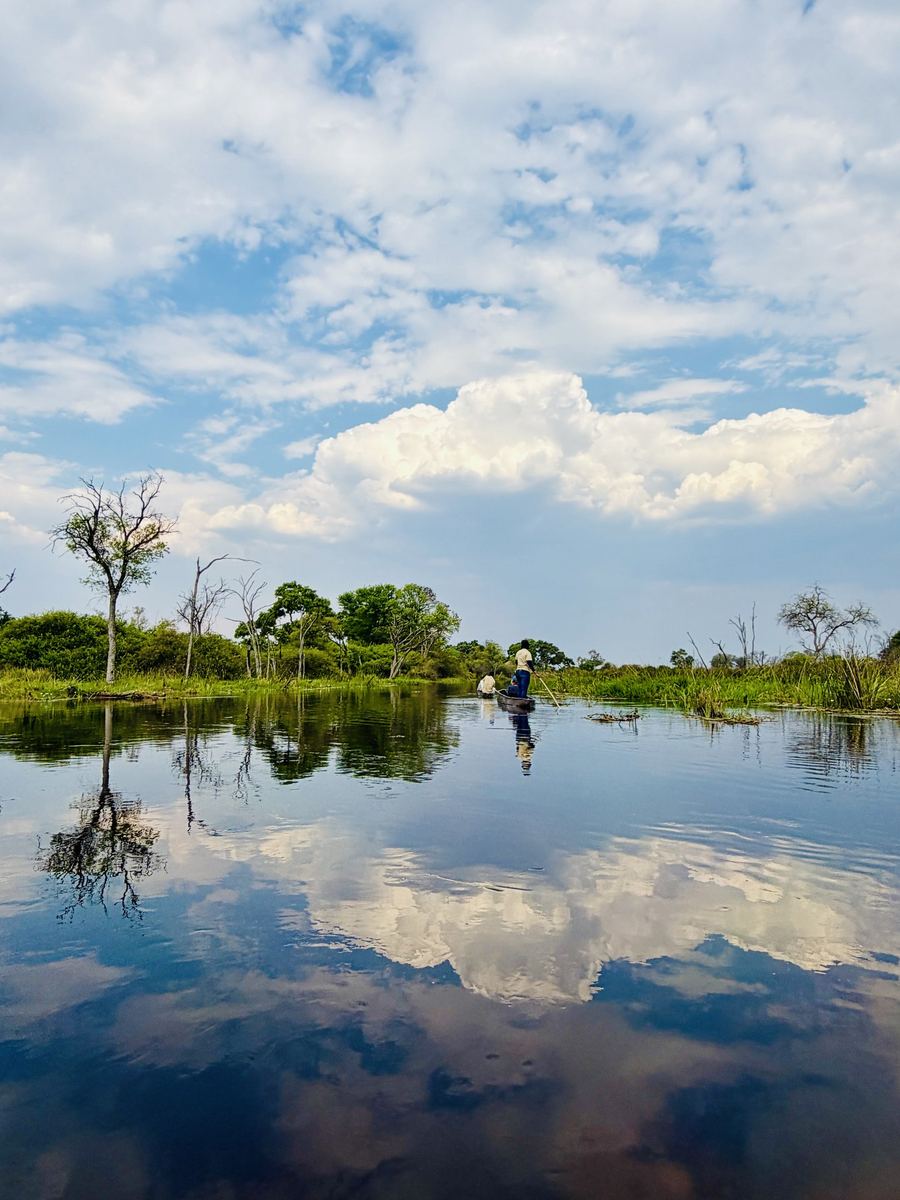
After dinner under the stars, the locals put on traditional dancing around the campfire and we played games. We had also met up with another large group, which doubled our numbers and made it an extremely exciting evening and one to remember.
As I went to bed, all I could hear were the calls of the wild, and even the roar of a lion somewhere in the distance. When I looked out of the tent door, the stars were just as clear as they had been in the Namib.
Lying in a tent in the middle of the Delta, nothing between me and the wild but canvas, and a lion roaring somewhere in the dark.
Elephants on the Doorstep
Another long drive took us from the Delta to Nata and the Elephant Sands Lodge, which was just incredible. The lodges are built around a waterhole, and the elephants are there all day long, walking right up to and between the chalets, then bathing in the mud and drinking right next to the restaurant while you eat!
We had literally just finished our safety talk and were heading to our rooms when a whole line of elephants blocked our path, and we had to wait for every single one of them to wander past. Welcome to Elephant Sands!
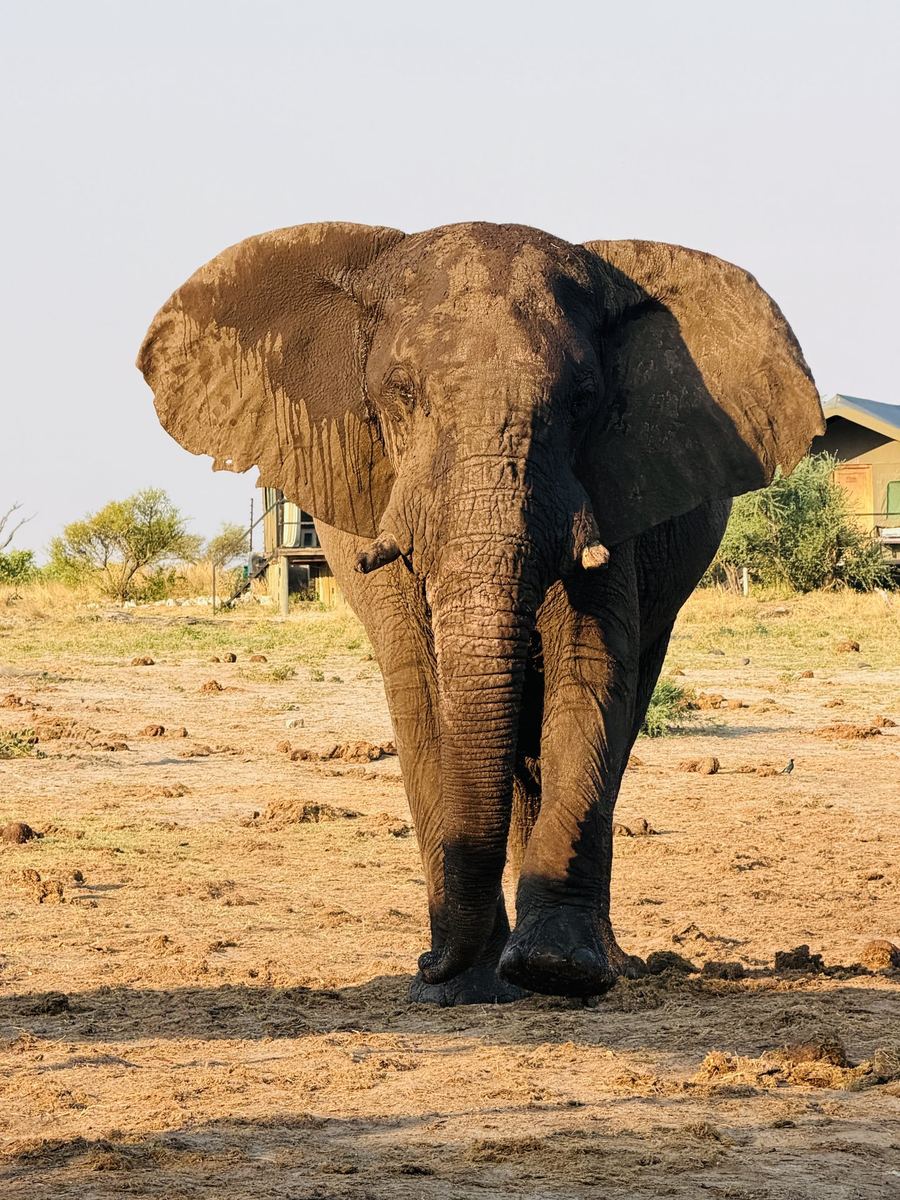
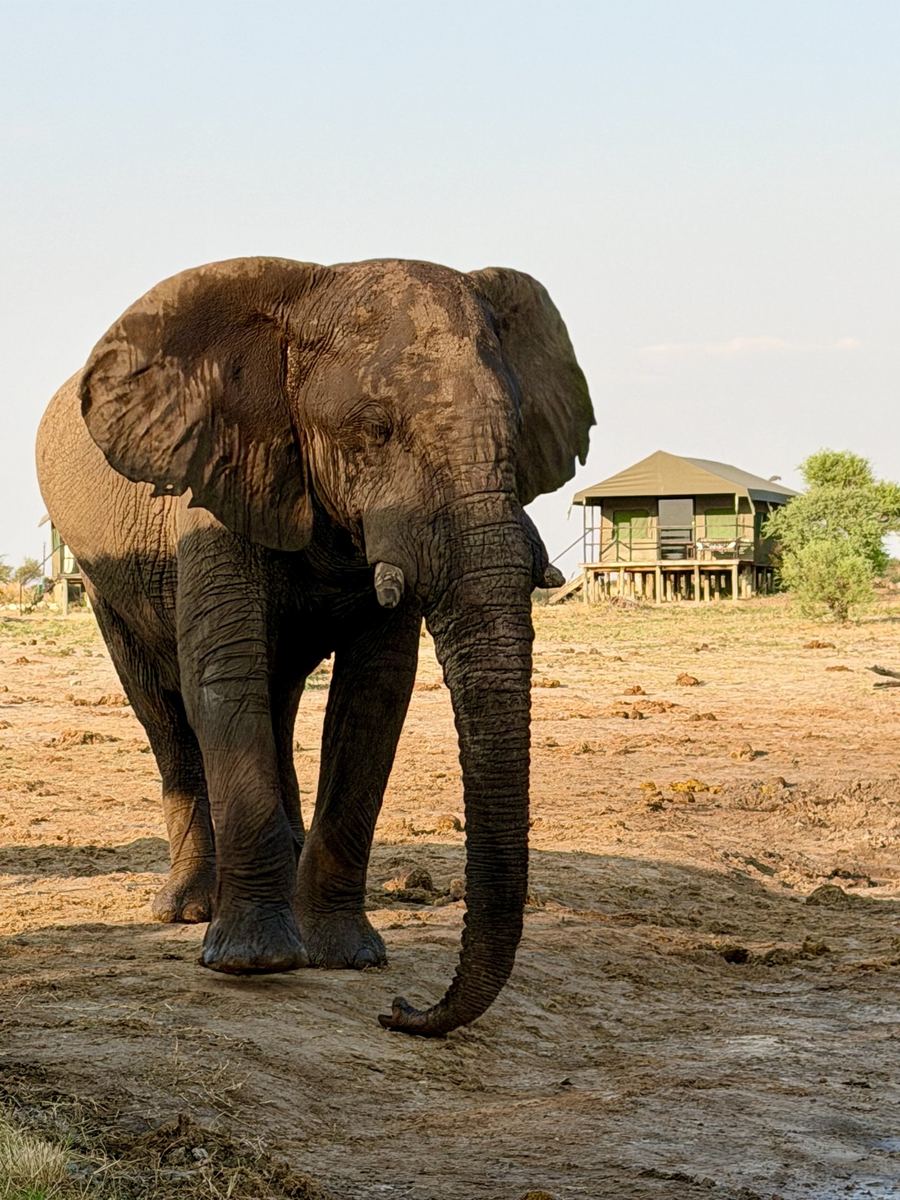
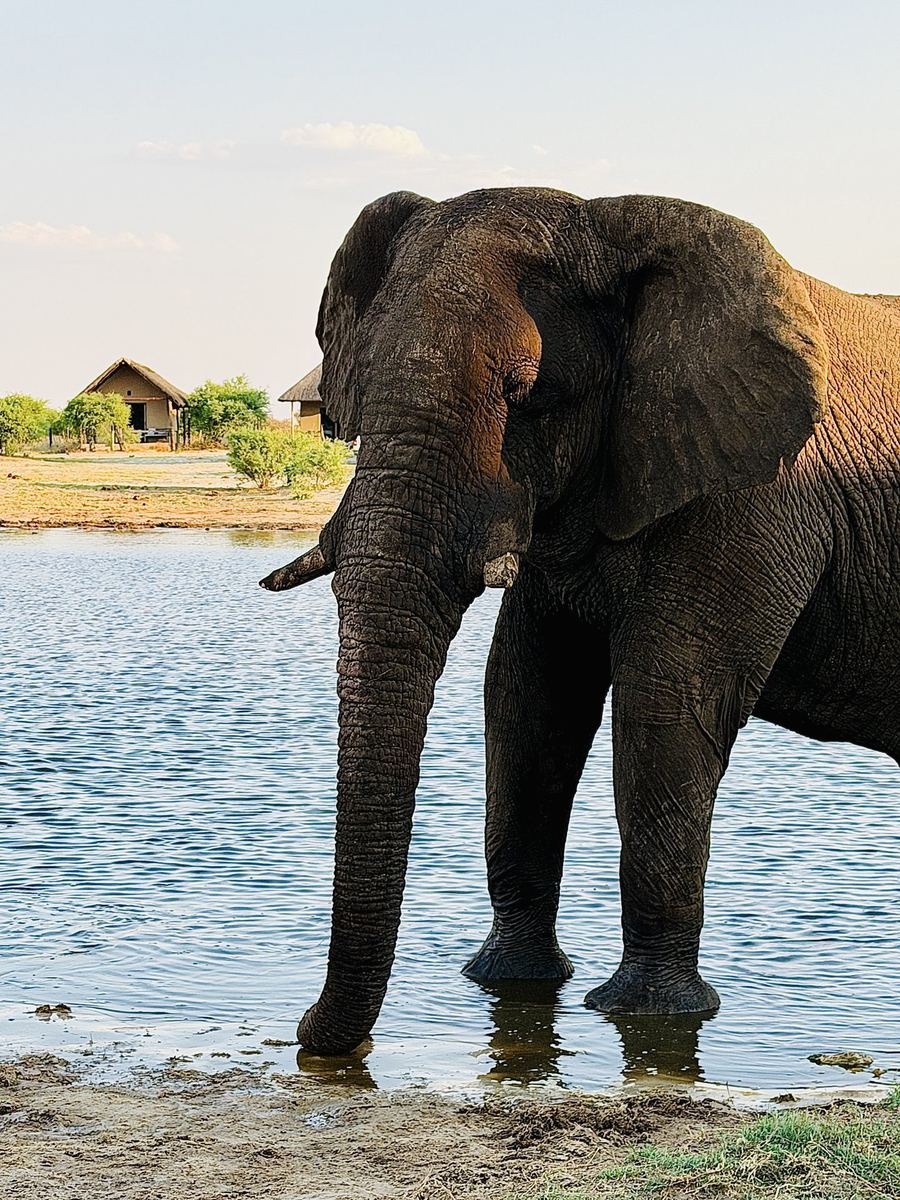
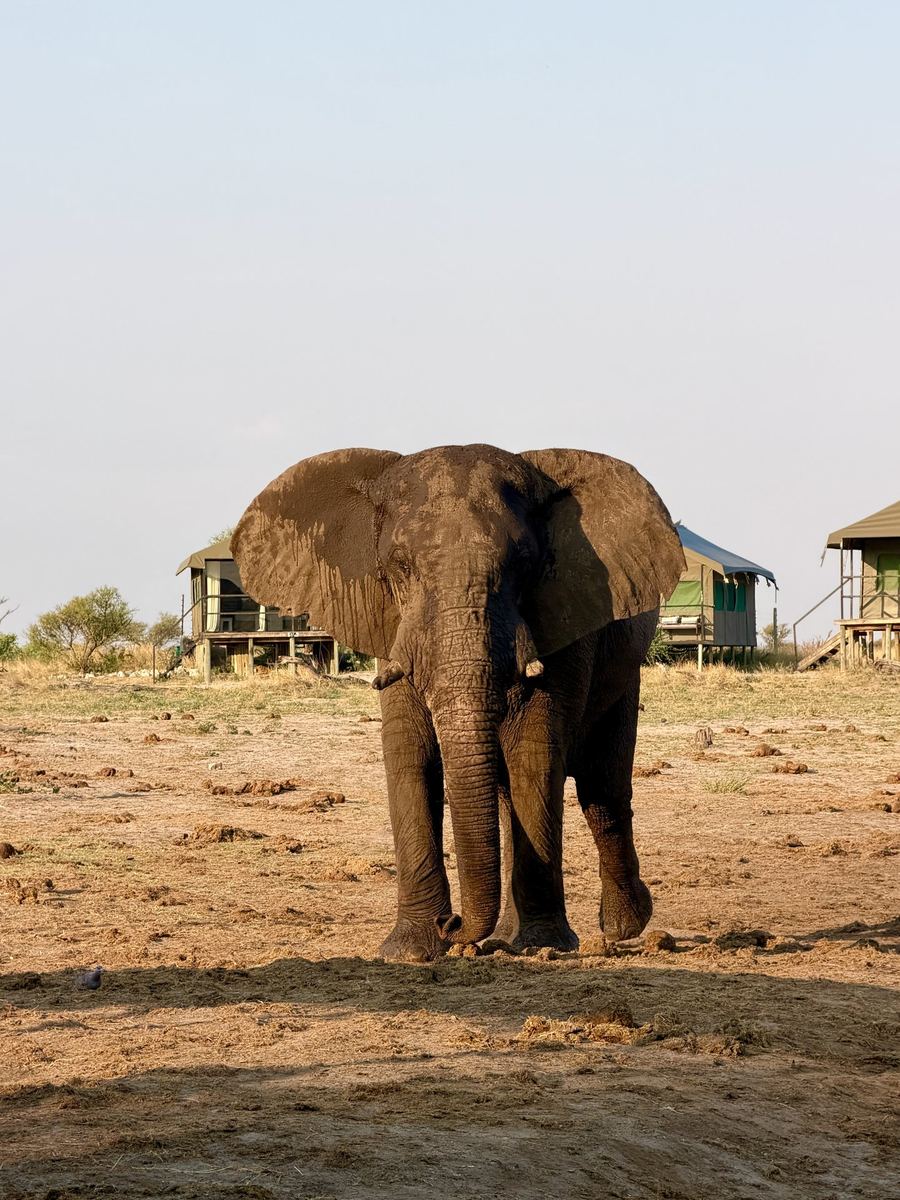
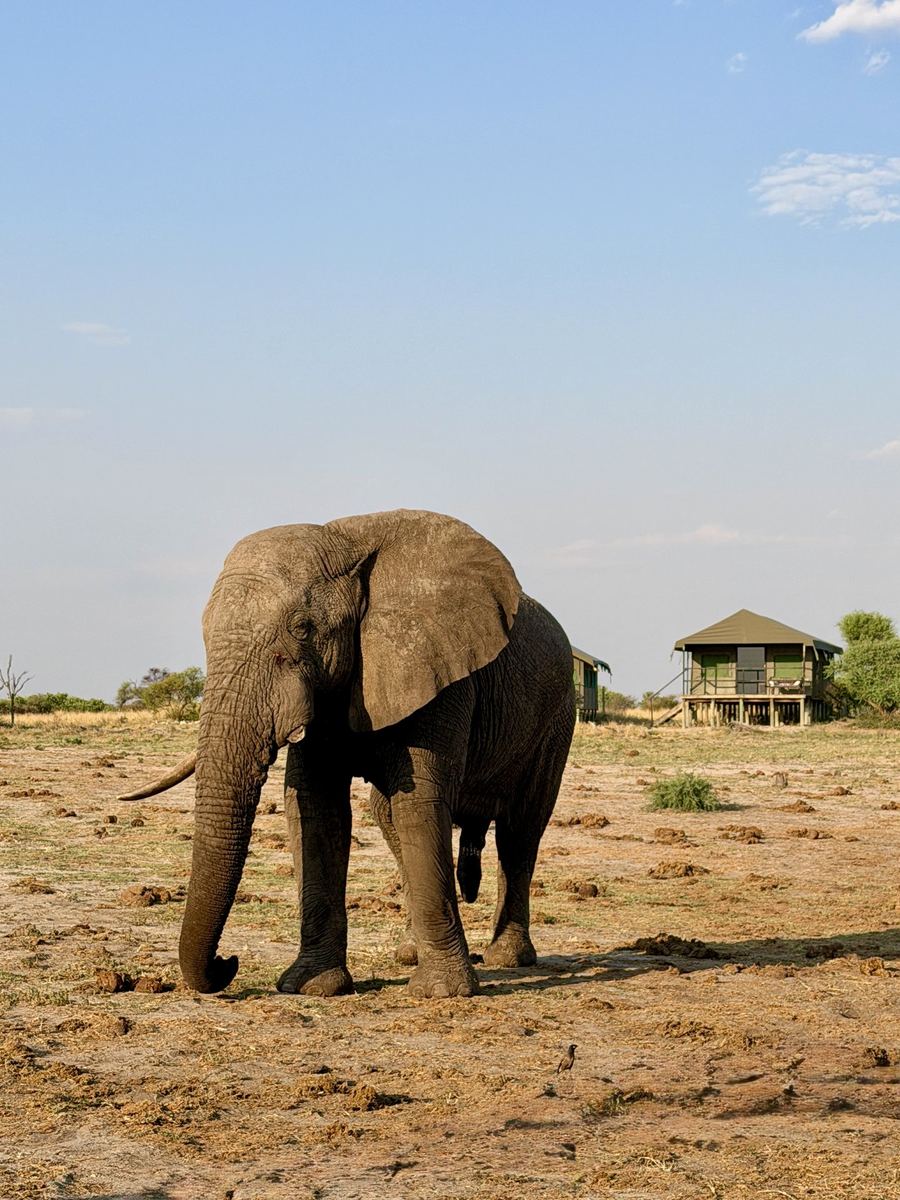
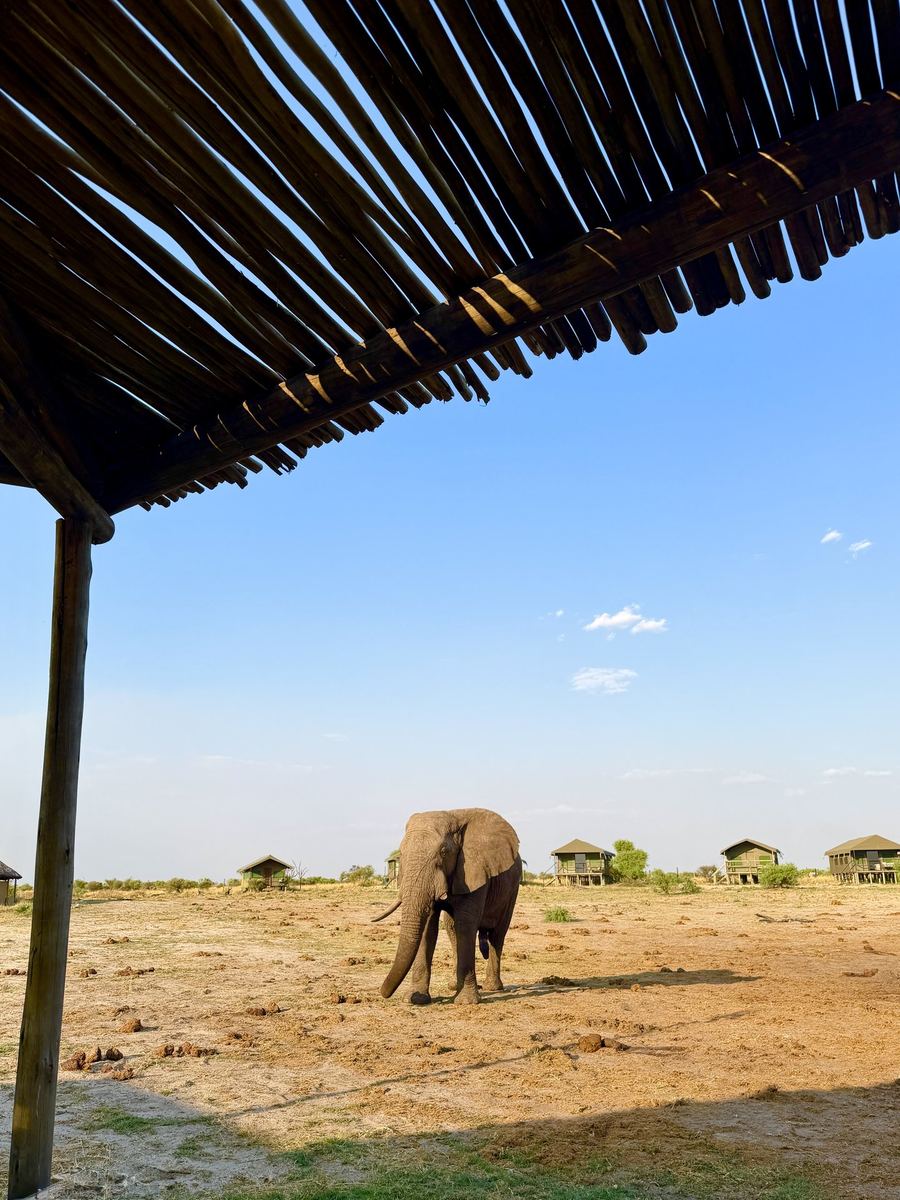
We saw so many elephants of all sizes throughout the day, and watched them at the waterhole as the sun set. Botswana has the largest elephant population in the world, around 130,000, and it certainly felt like it.
A Sunset Cruise
From Nata we headed north to Kasane, on the edge of Chobe National Park, and stayed at the Thebe River Safaris Lodge.
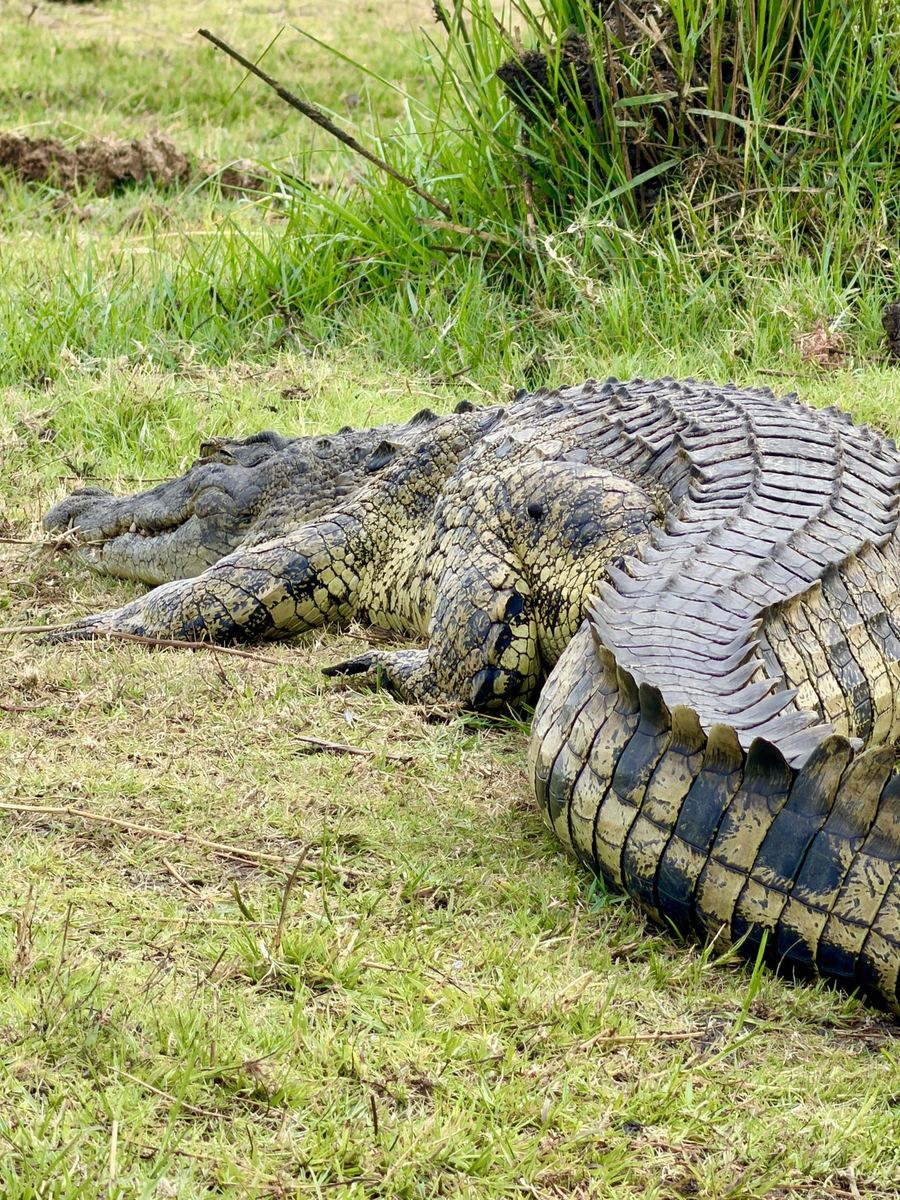
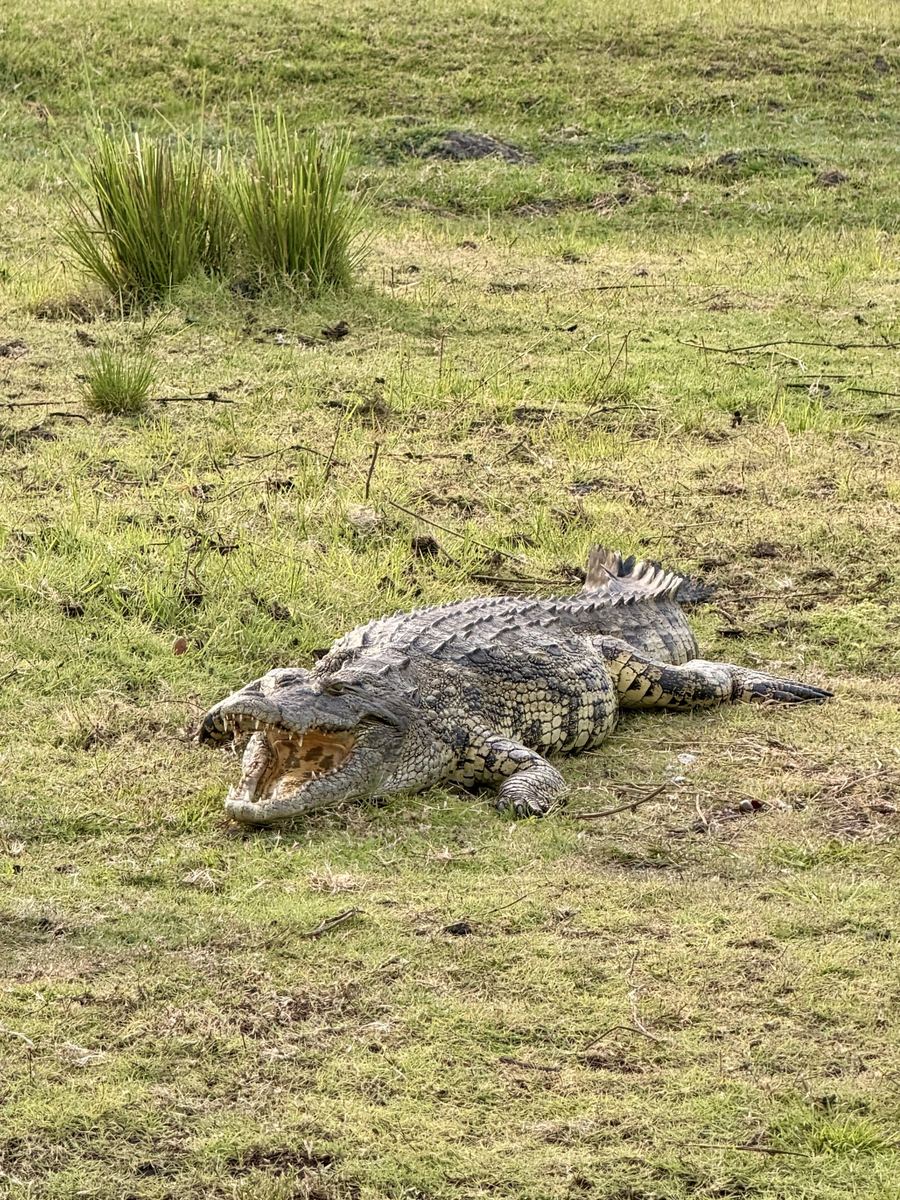
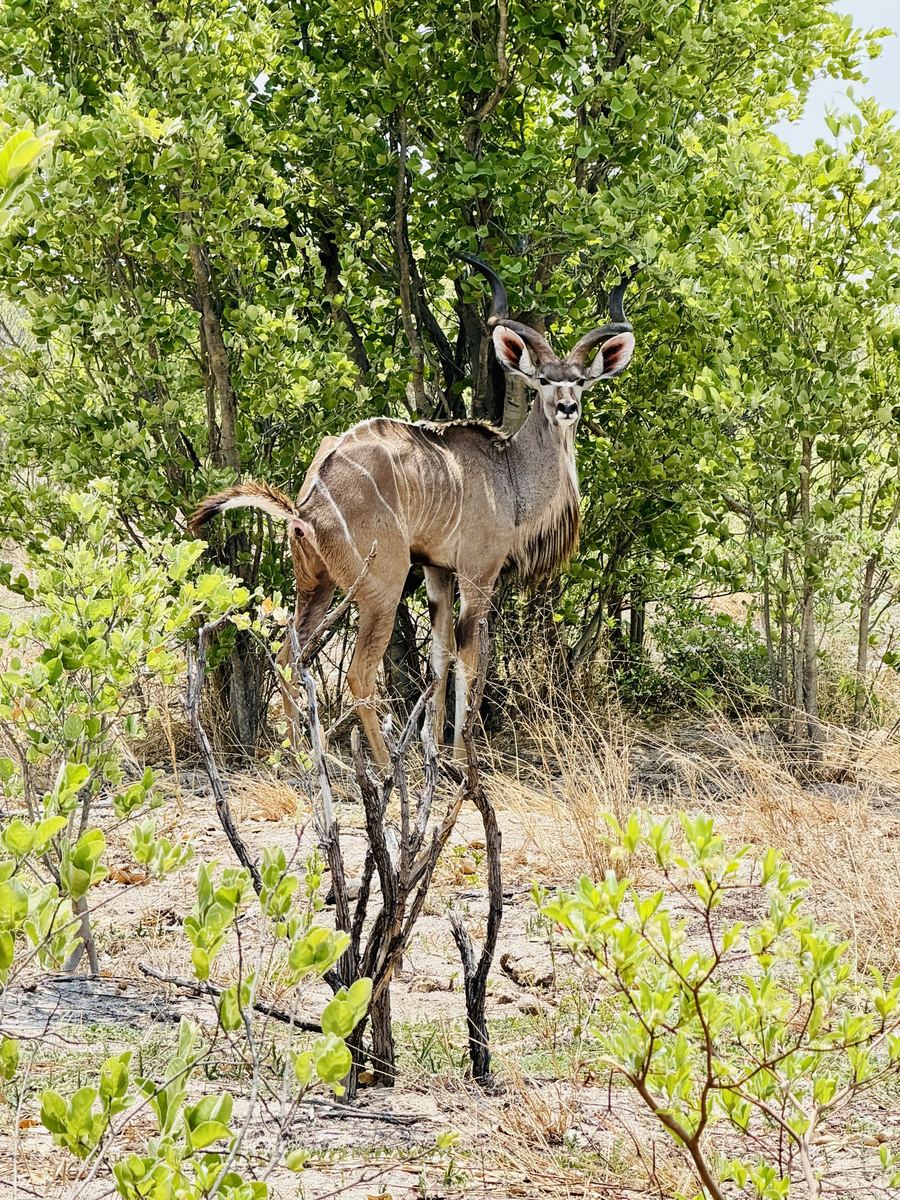
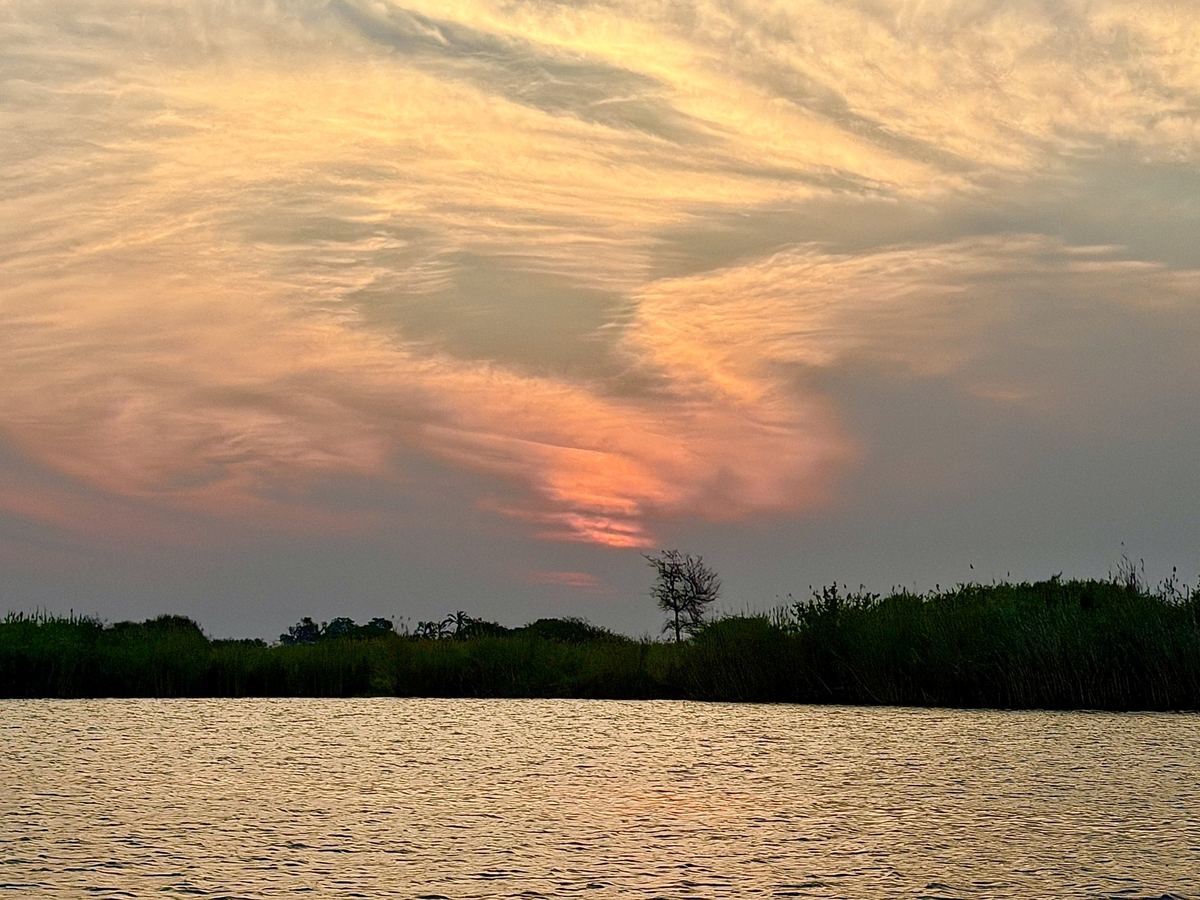
In the evening we took a cruise along the Chobe River as the sun set, and it was a fantastic evening. Chobe is famous for its elephants, and there were loads of them along the riverbanks, along with plenty of hippos, crocodiles, buffalo and kudu, all surprisingly close to the boat.
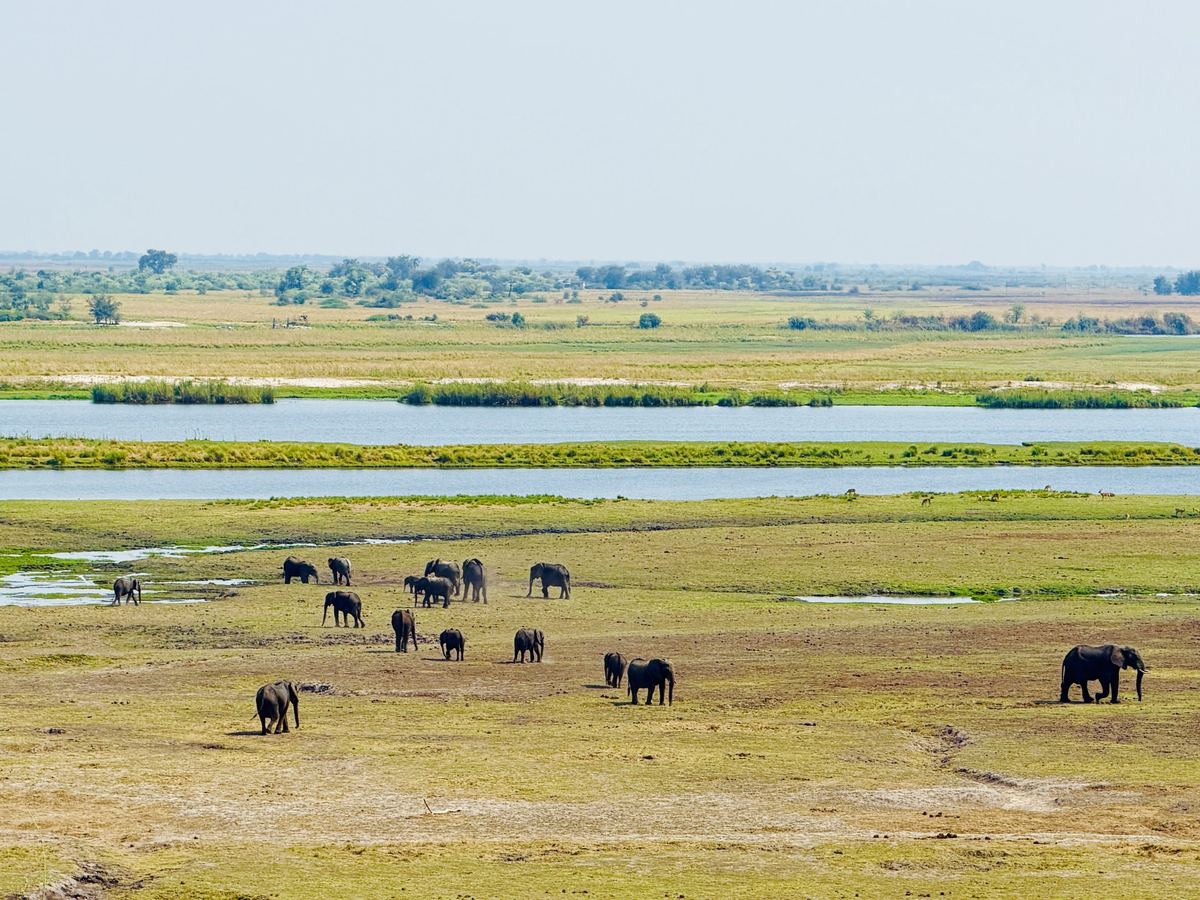
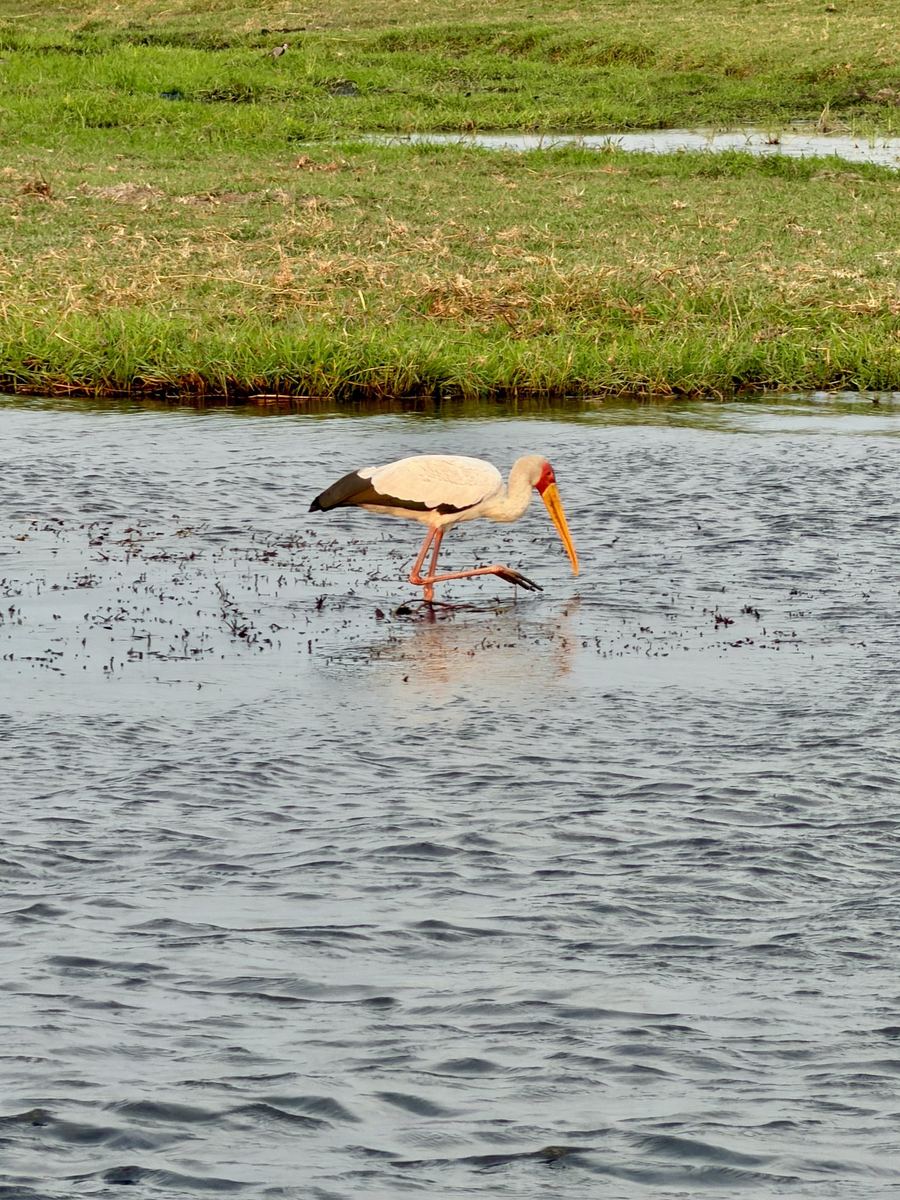
The birdlife was amazing too, including yellow-billed storks and the very tall marabou stork, which honestly looked like it was wearing a tuxedo (no wonder it’s nicknamed the “undertaker bird”)!
The Smoke That Thunders
Our last morning in Botswana started with a game drive through Chobe National Park, where we saw loads more animals, including a lion resting under a tree in the shade.
Then it was on to the border and into Zimbabwe, country number four! A quirky thing on this trip: at the borders, everyone had to dip every pair of shoes and trainers in a disinfectant bath, part of the measures to stop foot-and-mouth disease spreading between countries.
We arrived in Victoria Falls, checked into the Shearwater Explorers Village and had lunch with a local women’s group, who cooked us a traditional Zimbabwean meal.
Then, despite the blistering heat, we went straight to the falls on the Zimbabwe side. It was the first time I had seen Victoria Falls at ground level, and it was unbelievable: the sound, the atmosphere and the sheer ferocity of the water were just stunning. I got soaked by the spray and was rewarded with a rainbow!
Locally it’s called Mosi-oa-Tunya, “the Smoke That Thunders”, and standing there it’s not hard to see why. It’s around 1.7km wide and 108 metres high, and one of the classic 7 Natural Wonders of the World (more on those in my 7 Natural Wonders of the World article).
Being late October, it was the low-water season, so the Zimbabwe side had most of the water while parts of the Zambian side were almost dry. The upside is that it’s the only time of year you can swim in Devil’s Pool… more on that later!
Day 23 was where the tour ended and the group went their separate ways, so I was back on my own. Several of us were still at the hotel, though, and by now we had become really good friends.
I moved to the Bayete Guest Lodge, a quieter spot in a residential part of town, though I ended up using the Shearwater Explorers Village as my base because it was so much closer to everything.
A few of us went to The Lookout Café, perched on the edge of the Batoka Gorge, with fantastic views down the gorge and across to the Victoria Falls Bridge. The lunch was superb, and we watched the zipliners and bungee jumpers throwing themselves into the gorge.
That afternoon I walked across the Victoria Falls Bridge and over the border into Zambia: country number five! The whole walk, from the hotel, across the border, around the falls on the Zambian side and back again, took around three to four hours. As I was crossing the border several times, I used the KAZA UniVisa, a single visa that covers both Zimbabwe and Zambia.
Watching the sun go down over Victoria Falls from the Zambian side, I took probably one of the best photos of my life. The lighting was just superb.
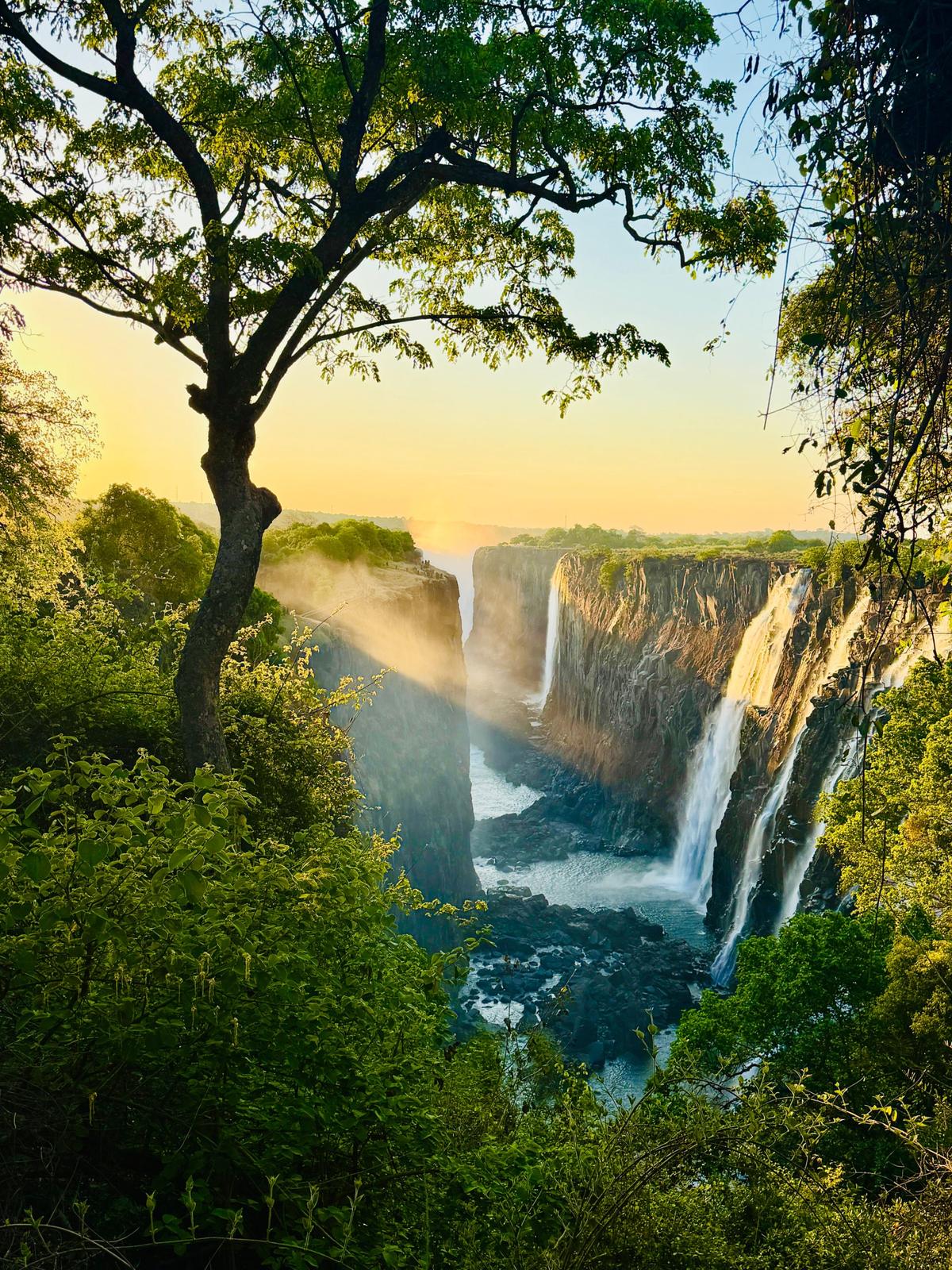
Walking over the border into Zambia and watching the sun set over the Smoke That Thunders. Five countries, and one of the best photos of my life.
Day 24 I crossed back into Zambia for the experience I had been most excited about: Devil’s Pool. Booked through GetYourGuide, it started with a short boat ride to Livingstone Island, passing hippos on the way. The island is where David Livingstone is said to have first seen the falls in 1855.
Once on the island, we changed into our swimming gear and waded and swam out to Devil’s Pool, a natural rock pool right on the lip of Victoria Falls. The power of the water rushing over the edge just next to you is incredible, and because we were at just the right angle, there were vivid rainbows everywhere.

The one thing they don’t tell you is that the pool is full of tiny fish that nibble your skin! People were jumping in before me and leaping straight back out again, screaming, and I had no idea why until I got in myself. After a while, the nibbling actually started to hurt!
I got some great shots hanging over the edge of the falls. The funny thing is that on the Zimbabwe side there are rows of spectators doing the Victoria Falls walk, all looking across the gorge to watch people like me in Devil’s Pool. Two days earlier, I had been one of them!
Lying on the very lip of one of the 7 Natural Wonders of the World, with the Zambezi thundering past and a rainbow below me.
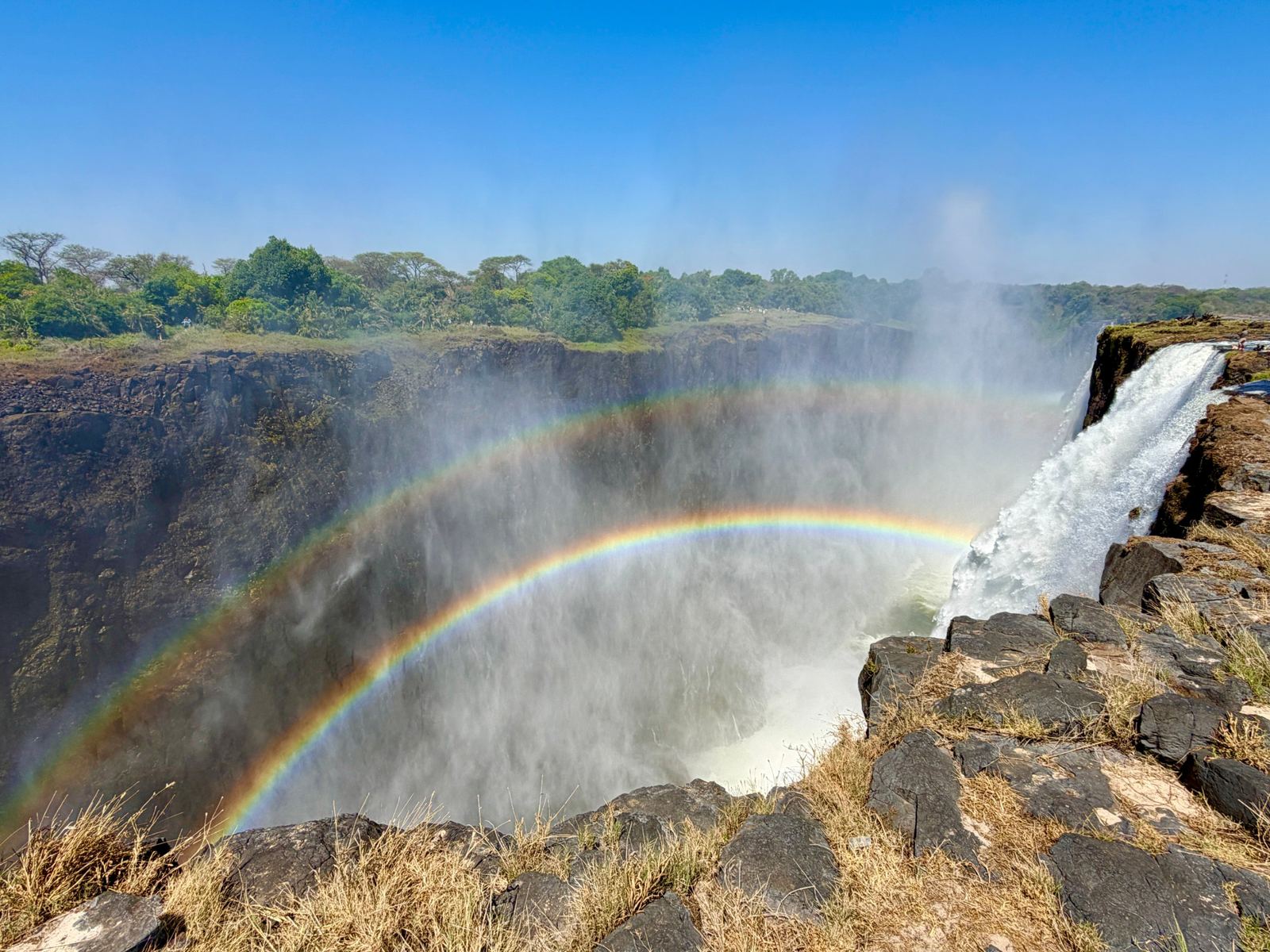
We finished with lunch on Livingstone Island, before heading back over the border. If you want to do it, plan around the season: it’s only open when the river is low, roughly mid-August to January, when a natural rock lip under the water stops you going over the edge (very reassuring when you’re lying on it!).
Day 25 was one I had been really looking forward to: a helicopter flight over Victoria Falls, booked through GetYourGuide again. I was picked up at 9am and chose the longer 25-minute flight.
These flights are nicknamed the “Flight of Angels”, because David Livingstone wrote that scenes so lovely must have been gazed upon by angels in their flight. Once I was up there, I could see what he meant!
Our flight took us over both sides of the falls, along the Batoka Gorge and up the upper Zambezi River, past the islands upstream and over the Zambezi National Park, where we spotted hippos and buffalo from the air. It was fantastic, and it completed my set: I had now seen Victoria Falls from the ground, from the Zambian side, from the very edge and from the air.
The rest of the day was a lazy one by the pool at the Shearwater Explorers Village, with a quick return trip to The Lookout Café.
My last full day was spent simply relaxing between The Lookout Café and Shearwater, soaking up the views and looking back on everything I had seen over the past four weeks.
On my final afternoon I crossed into Zambia one last time, this time to Livingstone Airport, for an internal flight to Lusaka, then on to Dubai and finally home to Gatwick. Five countries, 27 days, and one very tired traveller!
Five Countries, One Adventure
This trip was everything I hoped it would be and more. The animals were incredible, but if I had to pick a favourite, it would be Namibia’s landscapes: the dunes, sleeping out in the Namib Desert, Sandwich Harbour with its whales, and those unreal dead trees of Deadvlei. It was just such an amazing experience.
I wouldn’t do a trip like this any other way than with a small group, and my tour was with G Adventures, the same company I have used for my trips to Vietnam, Cambodia and Thailand, Norway, Costa Rica, Australia, and Jordan and Egypt. Yet again, they absolutely smashed it out of the park. They were so good!
It wasn’t all easy, though. The hardest part was the very long drives. I don’t think there were more than two days where we weren’t on the road for six to nine hours in the minibus. Being unwell was tough too, especially when you are out in remote areas, on safari or in the desert, where help isn’t close by. And the full-day safari in Etosha, ten hours in mid-40s heat with no let-up, being bounced around all day, was a long day, but completely worth it for the animals.
As for the Big Five, I managed four out of five: lion, elephant, black rhino and buffalo. The leopard gave me the slip, so I guess I’ll just have to come back!
If you’re thinking of doing a similar trip, here’s my one-line verdict on each country:
- Namibia was by far the best country of the five.
- Botswana is fantastic for wildlife.
- Zimbabwe is all about the natural wonder of the world, Victoria Falls.
- South Africa (Cape Town) has incredible coastlines.
- Zambia was just full of adventure.
All in all, I would say this was a solid 9/10 trip for me: an epic adventure through some of the wildest places I have ever been, and one I will never forget.
Take the trip home in print
Every favourite frame from all five countries, gathered into one collectable book you can flip through, page by page.
Africa
One book, five countries: South Africa, Namibia, Botswana, Zimbabwe and Zambia, each with its own chapter. Red dunes, white clay pans, the Okavango Delta and the Smoke That Thunders, all in print. The flip-through preview is on its way.
The Bookshelf
Every destination, gathered in one place. The full collection of photography chapters, from Iceland to Costa Rica, is being bound now. Base Camp members get first look and a members’ price.
Join Base CampRead the notes.
Then go deeper.
Full itineraries, exact routes, real costs and the best week of each month, the planning I'd only give a friend. Everything you need to turn a month on this page into your own trip.