I’ve spent years slowly working my way round the New Seven Wonders of the World, the man-made ones like Petra and Machu Picchu. But when people search for the 7 wonders of the world, many of them are really after the natural ones: the reefs, waterfalls, mountains and skies that no one built.
The confusing part is that there are two lists. This guide explains both, and for each wonder covers what it is, when to go, how to visit and a photo tip. I’ve been lucky enough to see six of the fourteen: the Grand Canyon, the Great Barrier Reef, the northern lights, Victoria Falls, Ha Long Bay and Table Mountain. For the rest, this is my research and my wish list.
What are the 7 natural wonders of the world?
The classic Seven Natural Wonders of the World is the list most often quoted, popularised by CNN in the late 1990s. The second is the New7Wonders of Nature, chosen by a huge global public vote run by the New7Wonders Foundation, with the results announced in 2011 and confirmed in 2012.
- The classic seven: the Grand Canyon, the Great Barrier Reef, the Harbour of Rio de Janeiro, Mount Everest, the Aurora, Parícutin volcano and Victoria Falls.
- The New7Wonders of Nature: the Amazon rainforest, Ha Long Bay, Iguazu Falls, Jeju Island, Komodo National Park, the Puerto Princesa Underground River and Table Mountain.
The classic Seven Natural Wonders of the World
1. The Grand Canyon, USA
Carved by the Colorado River in Arizona, the Grand Canyon is about 446km long and more than 1.8km deep, with layers of rock showing almost two billion years of geology. I saw it on a trip to the USA in September 2014, and no photo prepares you for the scale. The South Rim is open all year and is the easiest to reach from Las Vegas or Phoenix. The higher North Rim is usually only open from mid May to mid October, and a wildfire in 2025 destroyed its historic lodge, so check what’s running. Spring and autumn are the best seasons. Don’t try to hike to the river and back in one day, as the park service warns. For photos, go at sunrise or sunset, when low side light picks out the layers.
2. The Great Barrier Reef, Australia
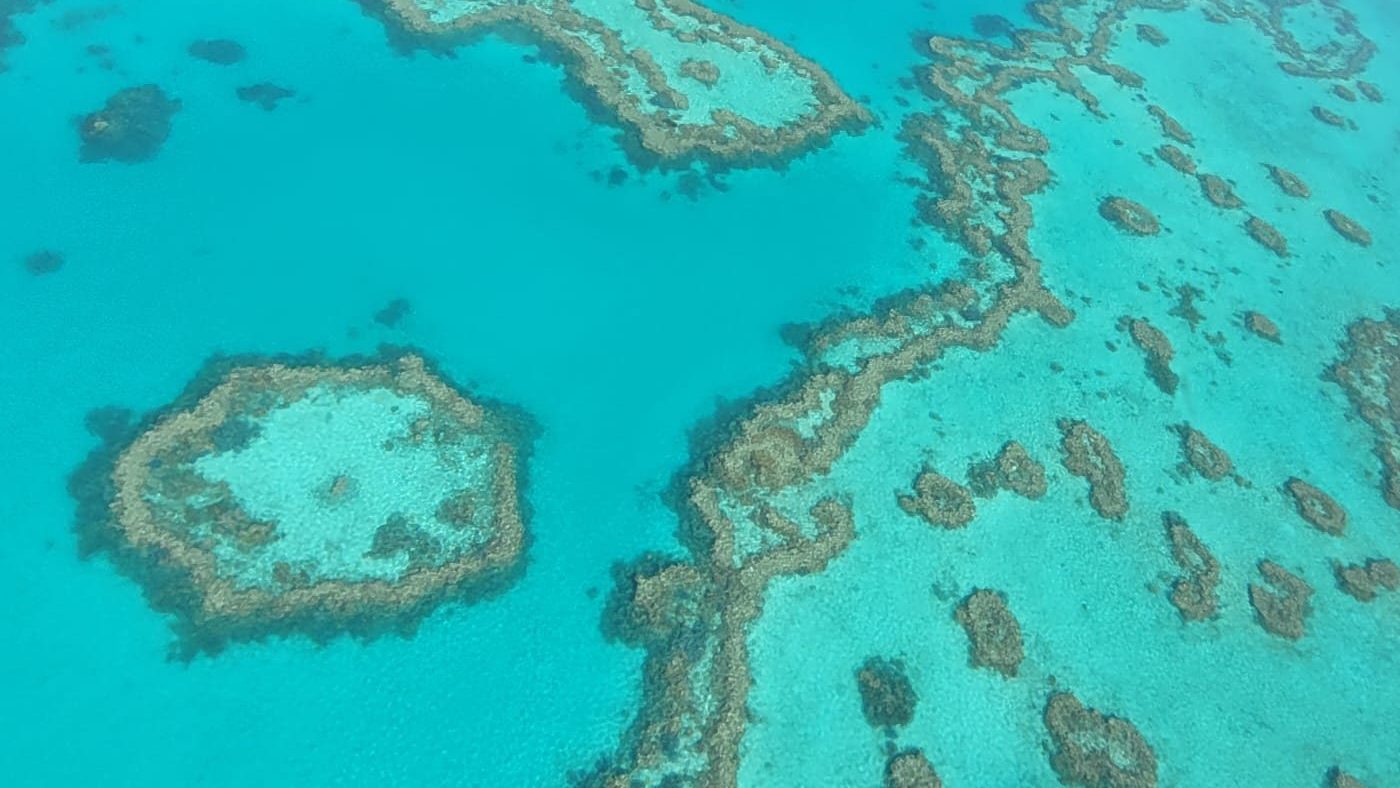
The world’s largest coral reef system stretches more than 2,300km along the coast of Queensland. I spent several days exploring it in October 2025 on my Australia east coast trip: snorkelling with turtles at Green Island off Cairns, taking my first ever helicopter flight over the reef, where the water was so clear I could see dolphins and turtles from the air, and joining a boat trip from Cape Tribulation, where the Daintree Rainforest meets the reef, out to a remote coral cay with blacktip reef sharks in the shallows. I also spent a day on the water around the Whitsundays and Whitehaven Beach. The best time is roughly June to October, when it’s drier and the water is clear; from about November to May it’s stinger season and you’ll wear a lycra suit. Cairns, Port Douglas and Airlie Beach are the main bases. The famous Heart Reef is in the Whitsundays and can only be seen on a scenic flight. Choose eco-certified operators and reef-safe sunscreen, as the reef is under real pressure from warming seas.
3. The Harbour of Rio de Janeiro, Brazil
Guanabara Bay is one of the largest natural bays in the world, ringed by granite peaks, beaches and the city itself. You see it best from above: take the cable car up Sugarloaf Mountain, and the train or a van up Corcovado to the statue of Christ the Redeemer. The cooler, drier months from around May to October are more comfortable than the hot, rainy summer. Petty crime is a real issue, so read the FCDO advice and keep your camera discreet. Sunset from Sugarloaf, with the city lights coming on, is the classic shot.
4. Mount Everest, Nepal and Tibet
At 8,849m, Everest is the highest mountain on Earth. For most of us, seeing it means trekking to Everest Base Camp in Nepal, a hike of around 12 to 14 days there and back from Lukla, which you reach by a small plane on a famously weather-dependent flight. Altitude is the real challenge, so take the acclimatisation days seriously. The best seasons are March to May and October to November. Everest is barely visible from Base Camp itself; the classic view is from the nearby hill of Kala Patthar. If trekking isn’t for you, scenic mountain flights from Kathmandu fly along the Himalaya on clear mornings.
5. The Aurora (northern lights)
The only wonder on the list that moves. The aurora happens when charged particles from the sun hit our atmosphere, and in the north it’s best seen from roughly September to March in places like Iceland, northern Norway, Lapland, Canada and Alaska. I saw it on my first four nights driving Iceland’s Ring Road in November 2023, and spent my last night watching it from a clear bubble in a forest. You need darkness, clear skies and patience. My guide on how to see the northern lights has all the detail. Use a tripod and a wide lens, and include a foreground.
6. Parícutin volcano, Mexico
Parícutin is the surprise on the list. In 1943 it began erupting in a farmer’s cornfield in Michoacán, rose more than 300 metres within about a year, and kept erupting until 1952, burying two villages. Today the tower of the San Juan Parangaricutiro church still rises out of the black lava, and that’s the image to aim for. Visits start from the village of Angahuan, on foot or horseback with local guides, either to the church or on a full-day trip to the cone. Parts of Michoacán are covered by FCDO warnings, so check the latest advice carefully before planning a visit.
7. Victoria Falls, Zambia and Zimbabwe
Known locally as Mosi-oa-Tunya, the smoke that thunders, Victoria Falls is where the Zambezi drops over a cliff around 1.7km wide and more than 100 metres high. I saw it from both the Zambian and Zimbabwean sides on my Southern Africa trip this autumn. Timing matters. At high water, roughly February to May, the spray is enormous and you’ll be soaked. Late in the dry season, from around September to December, the flow drops and parts of the Zambian side can run almost dry, while the Zimbabwe side keeps more of the main falls. Low water is also when Devil’s Pool, right on the lip of the falls, is usually open. Livingstone and Victoria Falls town are the bases, and the KAZA visa has allowed easy crossing between the two. Look for rainbows in the spray in the sunshine.
The New7Wonders of Nature
The Amazon rainforest, South America
The largest tropical rainforest on the planet spreads across nine countries and territories, with Brazil and Peru holding the most. The usual way in is from Manaus in Brazil, Iquitos or Puerto Maldonado in Peru, or the Ecuadorian Amazon, staying at a jungle lodge with local guides. High water, roughly December to May in much of the basin, means exploring the flooded forest by canoe, while low water brings more walking trails, though seasons vary by region. Humidity fogs lenses, so let your camera acclimatise before shooting.
Ha Long Bay, Vietnam
Around 1,600 limestone islands and islets rise out of the emerald water of the Gulf of Tonkin. I sailed Ha Long Bay on my Indochina trip in 2024, spending the night on a wooden junk boat and climbing up to the enormous Sung Sot (Surprise) Cave the next morning. It’s about two and a half to three hours from Hanoi, and an overnight cruise is far better than a day trip. Neighbouring Lan Ha and Bai Tu Long bays are quieter. Spring and autumn are best; winter is often misty, which actually suits moody photos of layered karsts.
Iguazu Falls, Argentina and Brazil
Iguazu is a horseshoe of around 275 separate falls stretched along almost 3km of the Iguazu River, with the thundering Devil’s Throat at its heart. Visit both sides: the Argentine side has walkways that take you right over and among the falls and needs a full day, while the Brazilian side gives the big panorama in a few hours. Stay in Puerto Iguazú or Foz do Iguaçu. Spring and autumn are more comfortable than the hot, humid summer. Bring a waterproof cover for your camera.
Jeju Island, South Korea
Jeju is a volcanic island off South Korea’s south coast, around an hour’s flight from Seoul. Hallasan, at 1,947m, is the country’s highest mountain, and the summit trails have needed booking in advance. Seongsan Ilchulbong, a crater rising straight from the sea, is the famous sunrise spot, and the Manjanggul lava tube is one of the longest in the world. Look out for the haenyeo, the island’s female free divers. Spring and autumn are the best seasons.
Komodo National Park, Indonesia
This group of rugged islands between Sumbawa and Flores is the only place to see Komodo dragons in the wild, the world’s largest lizards. You visit Komodo or Rinca with a park ranger, then snorkel with manta rays and climb Padar Island for its famous three-bay viewpoint. The gateway is Labuan Bajo, a short flight from Bali, and the dry season from about April to November is best. Fees and rules have changed several times, so check before booking.
Puerto Princesa Underground River, Philippines
On the island of Palawan, a navigable river runs for more than 8km through a limestone cave system before flowing into the sea. Tours paddle a short stretch by boat, past huge chambers, bats and swiftlets. Permits are limited, so book ahead. It’s a couple of hours by road from Puerto Princesa to Sabang, then a short boat ride. The drier months from around December to May are best, as rough seas can stop the boats. Flash is restricted, so bump up your ISO.
Table Mountain, South Africa
The flat-topped mountain above Cape Town rises to around 1,085m, and I saw it on my Southern Africa trip this autumn. You can ride the rotating cable car or hike up, with Platteklip Gorge the most direct route at roughly two to three hours of steep steps. The cable car closes in high winds, and the famous tablecloth of cloud can roll in quickly, so go up on the first clear day. For photos, shoot it from Signal Hill or across the bay at Bloubergstrand. There are more shots from the trip in my South Africa gallery.
Frequently asked questions
What are the 7 natural wonders of the world?
The classic Seven Natural Wonders of the World are the Grand Canyon, the Great Barrier Reef, the Harbour of Rio de Janeiro, Mount Everest, the Aurora, Parícutin volcano in Mexico and Victoria Falls. A separate list, the New7Wonders of Nature, was chosen by public vote and includes the Amazon, Ha Long Bay, Iguazu Falls, Jeju Island, Komodo, the Puerto Princesa Underground River and Table Mountain.
What are the New7Wonders of Nature?
The New7Wonders of Nature are the Amazon rainforest, Ha Long Bay in Vietnam, Iguazu Falls in Argentina and Brazil, Jeju Island in South Korea, Komodo National Park in Indonesia, the Puerto Princesa Underground River in the Philippines and Table Mountain in South Africa. They were chosen in a global public vote run by the New7Wonders Foundation, announced in 2011 and confirmed in 2012.
When is the best time to visit Victoria Falls?
It depends what you want. At high water, roughly February to May, the falls are at their most powerful but the spray can hide the view and soak you. From around September to December the flow drops, parts of the Zambian side can run nearly dry, and the Zimbabwe side shows more of the falls. Devil’s Pool is usually open at low water.
When is the best time to visit the Great Barrier Reef?
June to October is generally the best time, with drier weather, lower humidity and good water clarity. From around November to May it’s stinger season, when box jellyfish can be present, so operators provide lycra stinger suits for snorkelling. The reef can be visited all year from Cairns, Port Douglas and Airlie Beach, but summer brings more rain and storms.
Why is Parícutin a natural wonder of the world?
Parícutin is on the list because people witnessed its entire birth. In 1943 it erupted out of a farmer’s cornfield in Michoacán, Mexico, grew more than 300 metres within about a year and kept erupting until 1952, burying two villages. The tower of the San Juan Parangaricutiro church still rises from the lava field and can be visited from Angahuan.