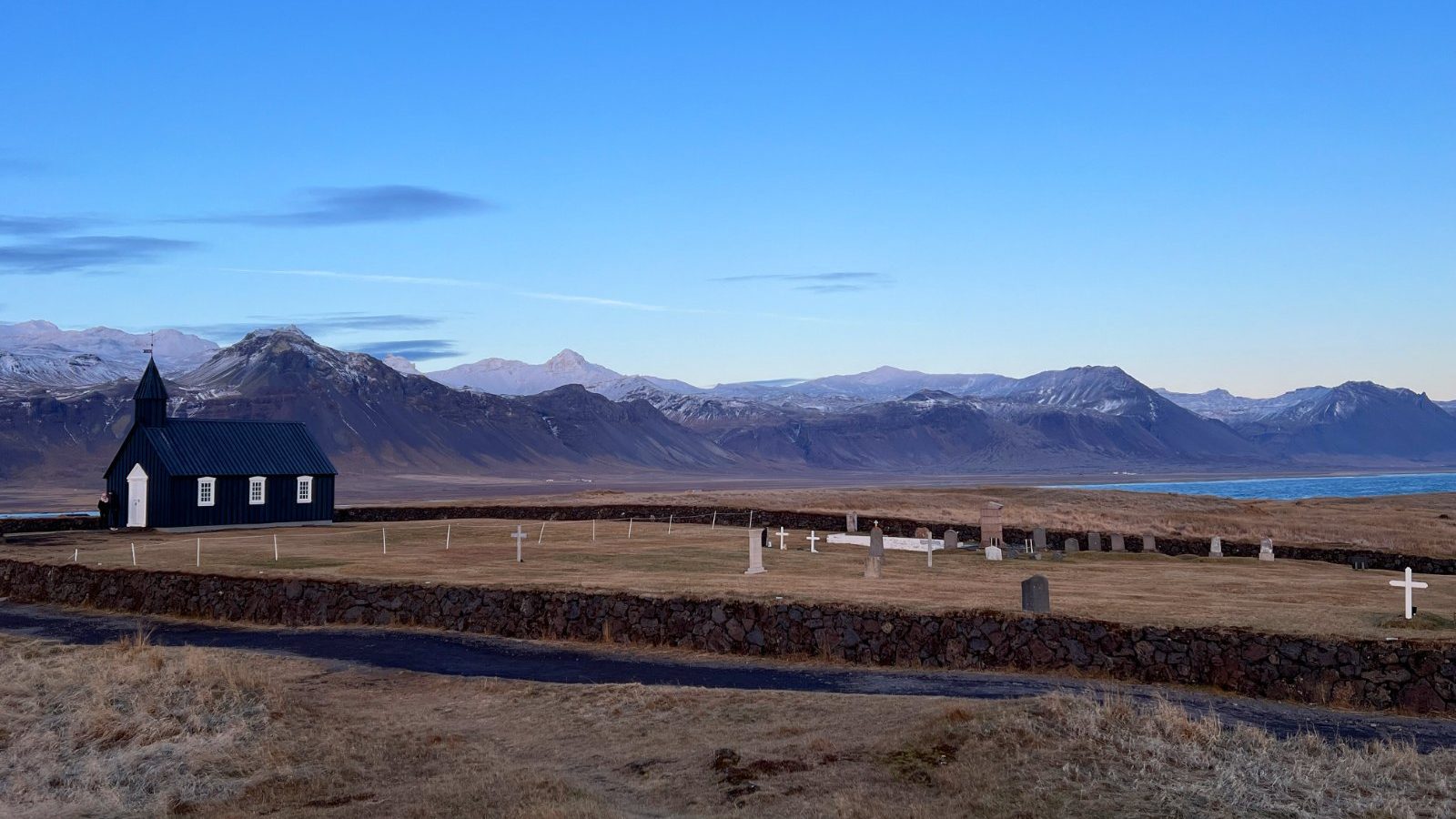
Three years ago this month I picked up a 4x4 campervan in Keflavík and spent 14 days driving Iceland’s Ring Road with a small group of travel and photography enthusiasts. It was the start of winter, the temperature dropped to minus 16 °C in the north, and it was one of the best trips I’ve ever done. We saw the northern lights on our first four nights, and went ice caving inside a glacier.
Winter in Iceland is magical, but it’s also the season when planning matters most. The days are short, the weather changes by the hour and roads can close without much warning. This guide covers daylight hours, driving, campervans, what to pack, ice caves, the main sights in winter, costs and itineraries. The full story of my trip is in my Iceland Ring Road journal.
How many hours of daylight does Iceland have in winter?
Less than you’re used to, but more usable than you’d think, as the sun stays low and you get long spells of soft golden light and twilight either side. These are rough figures for Reykjavík; the north gets a little less in midwinter.
- November: around 8 hours at the start of the month, falling to about 5 by the end.
- December: about 4 to 5 hours, with the shortest days around the solstice (sunrise after 11am, sunset around 3.30pm).
- January: around 4 to 5 hours at first, rising to about 7 by the end of the month.
- February: roughly 7 to 10 hours.
- March: around 10 to 13 hours, passing 12 at the equinox.
In mid November it was pitch black by 6pm, which meant plenty of time for aurora hunting but also that every drive needed planning so we weren’t on unfamiliar roads long after dark. I’d aim to be at your main sight for the day at sunrise and keep the long drives for the middle of the day.
What is the weather like in Iceland in winter?
The south and west coasts are milder than you’d expect for the latitude, often hovering around freezing, while the north and the interior get much colder. Wind is the real issue. Storms can bring gusts strong enough to close roads and rip car doors off their hinges, and conditions can swing from blue sky to blizzard in an hour.
Three websites will become your best friends. Road.is shows live road conditions and closures, safetravel.is posts alerts and lets you leave a travel plan, and vedur.is, the Icelandic Met Office, has the forecasts, wind warnings and the cloud cover forecast you’ll want for the aurora.
Should you drive the Ring Road in winter?
You can, and I’d do it again, but only with the right car, plenty of spare time and a willingness to change plans. Route 1 is about 1,322km long, and with detours we covered more than 2,000km. The main road is cleared regularly, but mountain passes in the north and east are often the first to close in bad weather.
- Hire a 4x4. Winter rentals usually come with studded tyres, which make a huge difference on ice.
- Forget the F-roads. The highland roads are closed through winter and normally only open in summer.
- Never drive off the marked road. It’s illegal and dangerous. We tried to help two tourists who had driven miles off the road and been stuck for hours, and their tow out cost them around £150.
- Check road.is every morning and before every mountain pass.
- Hold car doors with both hands in strong wind, as wind damage usually isn’t covered by insurance.
- Never stop on the road to watch the lights or take photos. Use a proper pull-in.
If you’re not confident driving on snow and ice, there’s no shame in sticking to the south coast or taking guided day tours from Reykjavík. My guide on how to plan a road trip has more on building in buffer days, which matters even more in Iceland in winter.
Can you do Iceland in a campervan in winter?
Yes, and I loved it. I had an Easy Viking 4x4 from CampEasy, and it had everything: heating, insulation, a cooker, a fridge, back-up batteries, curtains and a proper bed. It handled minus 16 °C in the north without any trouble. You do need to accept a bit more admin than in summer, though.
In Iceland you’re only allowed to stay overnight in a campervan at official campsites, and far fewer of them are open in winter, so check which ones open all year before you plan your route. The local swimming pools are brilliant for hot showers, and condensation inside the van is a daily battle. My campervan holiday guide covers the basics if you’ve never done it before.
What to pack for Iceland in winter
- Thermal base layers, a fleece or down mid layer, and a waterproof, windproof shell jacket and trousers.
- Warm, waterproof boots with good grip, plus a pair of microspikes for icy paths and car parks.
- A hat, a buff and two layers of gloves, so you can work a camera without exposing your hands.
- A swimsuit and a quick-dry towel for the hot pools.
- A head torch and a power bank, as the cold drains batteries fast.
- Sunglasses. The low sun on snow and wet roads is surprisingly dazzling.
Ice caves and glaciers
Going ice caving under the Fláajökull glacier was one of my highlights of the whole trip. The natural blue ice caves form in the glaciers of Vatnajökull and are usually visited from around November to March, when it’s cold enough for them to be stable. You must go with a licensed guide, who will check conditions and provide helmets and crampons. The caves change every year and tours get cancelled if it’s too warm or wet, so book a flexible slot early in your trip.
Diamond Beach, waterfalls and the south coast
Diamond Beach, beside the Jökulsárlón glacier lagoon, was one of the biggest surprises of my trip: a strip of black sand scattered with chunks of glacier ice that sparkle like diamonds. On the south coast we saw seven waterfalls in one day, including Skógafoss and Kvernufoss, which you can walk behind. In winter, the path behind Seljalandsfoss is often closed because of ice, so don’t be disappointed if you can’t go round it.
Be very careful at Reynisfjara and other black sand beaches, where sneaker waves can surge much further up the beach than the others and have swept people out to sea. Stay well back from the water and never turn your back on the waves. Further east, the snowy fjords and the basalt columns of Stuðlagil Canyon are quiet and wild in winter, though paths down into the canyon can be icy, so take care.
The Golden Circle and Snæfellsnes in winter
The Golden Circle is the easiest winter day trip from Reykjavík: Þingvellir National Park, the Geysir area where Strokkur erupts every few minutes, and Gullfoss, which is especially dramatic half frozen. The paths can be like ice rinks, so wear those microspikes.
Snæfellsnes, a couple of hours north of Reykjavík, is often called Iceland in miniature. Our first stop on the trip was the little black church at Búðir, sitting alone beneath snowy mountains, and Lóndrangar’s jagged, wind-beaten coastline was one of my favourite places in the west. Kirkjufell is here too, and it’s a good choice for a shorter trip as it’s quieter than the south coast.
Hot springs and lagoons
Soaking in hot water while the snow falls is one of the great joys of Iceland in winter. The Blue Lagoon is the famous one, but volcanic activity on the Reykjanes peninsula has closed it at times in recent years, so check before you go. Sky Lagoon near Reykjavík, the Secret Lagoon at Flúðir, the Forest Lagoon near Akureyri and the Mývatn Nature Baths in the north are all good alternatives, and the baths at Mývatn were a welcome warm-up for us. Book the popular ones in advance.
Seeing the northern lights in Iceland
The aurora season runs from roughly September to mid April, and winter’s long nights give you the most chances. You need dark, clear skies, so check the cloud forecast on vedur.is and get away from town lights. We were lucky to see them on our first four nights, and they usually appeared from around 10pm. On my last night I stayed at the Bubble Hotel, lying in a clear bubble in a pine forest watching the lights overhead. My full guide on how to see the northern lights covers forecasts and the best locations.
How much does Iceland cost in winter?
Iceland is expensive at any time of year, but winter is usually cheaper than summer for flights, car hire and accommodation, apart from Christmas and New Year. Eating out is the big cost, so a campervan or a room with a kitchen and a trolley from the budget supermarkets will save you a lot. Budget for guided tours such as ice caves, which aren’t cheap but are worth it.
How many days do you need in Iceland in winter?
It depends how far you want to drive and how much spare time you leave for the weather. These are the two trips I’d suggest for a first winter visit.
Five days: Reykjavík and the south coast
Spend day one on the Golden Circle, then head east along the south coast past Seljalandsfoss, Skógafoss and Vík. Stay near Skaftafell or Höfn so you can be at Jökulsárlón and Diamond Beach for sunrise, ideally with an ice cave tour booked the same day, then drive back west over the last two days with time for anything the weather made you skip. With a week, add Snæfellsnes.
10 to 14 days: the full Ring Road
For the whole loop in winter I’d allow 10 to 14 days. We went clockwise, starting with Snæfellsnes, then the north, the East Fjords and finishing along the south coast. In the north, Goðafoss, Dettifoss and the steaming orange ground at Hverir are the big sights, and Aldeyjarfoss, with its basalt columns, was the highlight of my whole trip, though it’s down a rough track that can be hard to reach once the snow sets in. Fourteen days worked perfectly for us and still gave us room for bad weather.
For the night shots, a sturdy tripod is essential, and my guide to night photography for beginners explains the settings I use.
Frequently asked questions
Is it safe to drive in Iceland in winter?
It can be, if you hire a 4x4 with studded tyres, check road.is and vedur.is every day and are willing to change plans. Storms can close roads quickly, especially mountain passes in the north and east. Never drive off marked roads and avoid long drives in the dark. If you’re unsure, stick to the south coast or join guided tours.
How many hours of daylight does Iceland have in December?
Reykjavík gets roughly four to five hours of daylight in December, with sunrise after 11am and sunset around 3.30pm near the winter solstice. The north of Iceland gets a little less. The sun stays low, so there’s long twilight and soft light either side, which makes the short days more usable than the numbers suggest.
Can you see the northern lights in Iceland in November?
Yes. The aurora season runs from roughly September to mid April, and November’s long, dark nights are a good time to look. You need clear skies and darkness away from town lights, so check the cloud forecast on vedur.is. On my November trip I saw them on the first four nights, usually from around 10pm.
Can you drive the Ring Road in winter?
Yes, Route 1 is kept open as much as possible in winter, but sections can close in storms, particularly in the north and east. Hire a 4x4 with studded tyres, allow 10 to 14 days so you have spare days, and check road.is before every drive. The highland F-roads are closed all winter.
When is ice cave season in Iceland?
The natural blue ice caves in Vatnajökull are usually visited from around November to March, when it’s cold enough for them to be stable. They can only be visited with a licensed guide, who checks conditions and provides helmets and crampons. Tours can be cancelled in mild or wet weather, so book early in your trip.