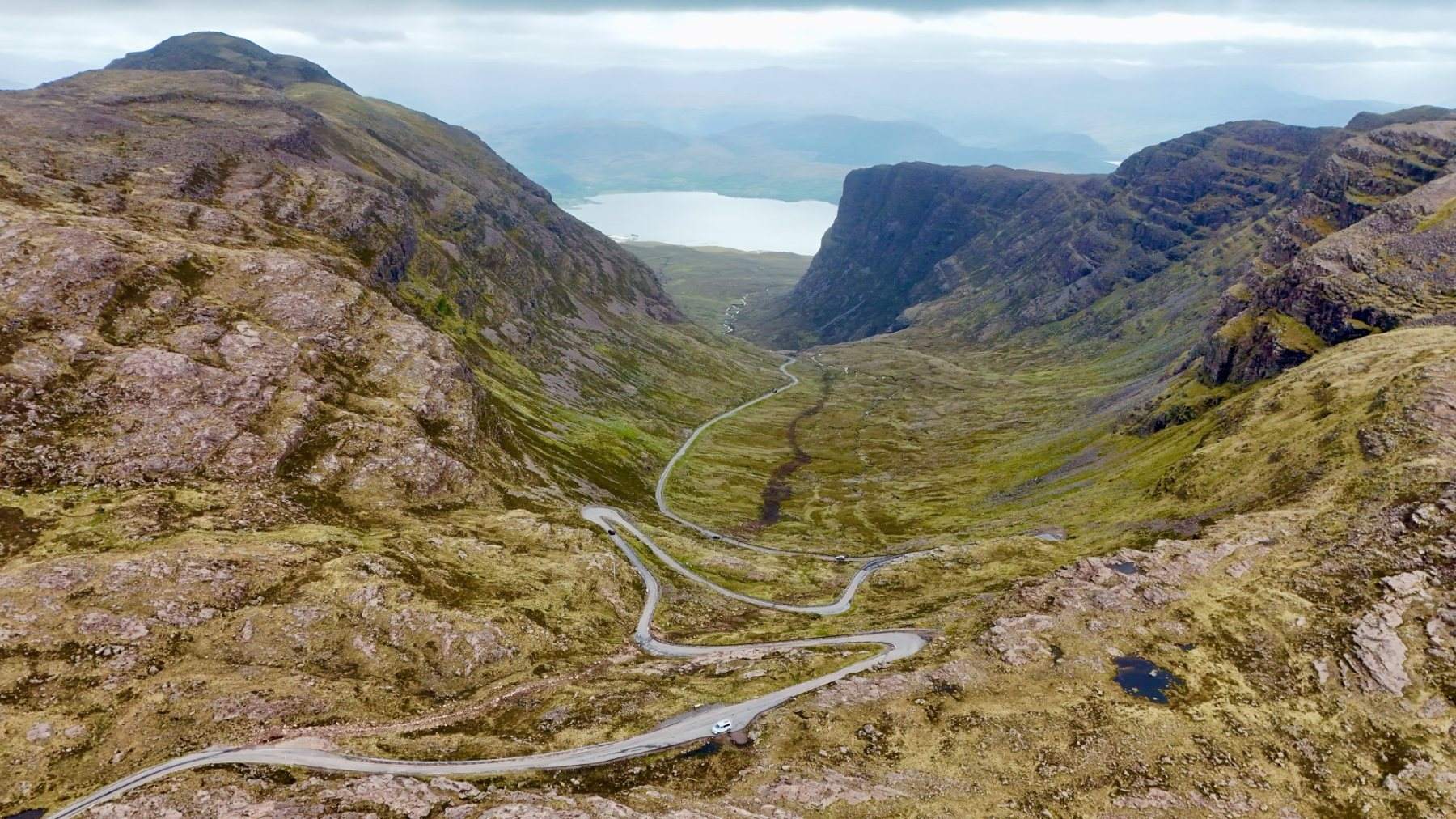
I didn’t really know what to expect from my first campervan trip, which was Iceland’s Ring Road in November 2023, in the snow, with very short days and the chance of the northern lights. It turned out to be one of the best ways I’ve ever travelled, and it gave me a real taste for campervan life. So in April this year I flew up from Gatwick to Glasgow, picked up a VW T5.1 pop-top from a hire company there, and spent 15 days driving the NC500 clockwise.
Both trips taught me a lot, and a few things I’d have loved to know before the first one. So this guide covers choosing and hiring a van, where you can actually stay overnight, what daily life in a campervan is like, driving tips and a packing list, plus a few ideas for your first trip.
Campervan vs motorhome: what’s the difference?
The words get used loosely, but a campervan is generally a van that’s been converted to sleep in, like a VW Transporter, with a bed, a small kitchen and not much else. A motorhome is bigger and usually purpose-built, often with a separate bathroom with a toilet and shower, more storage and fixed beds.
A motorhome is more comfortable if you’re travelling as a family or want your own bathroom, but a campervan is far easier to drive and park, uses less fuel and fits down the narrow roads where the best views tend to be. For a couple or a solo traveller on a first trip, I’d go for a campervan every time.
What size campervan should you hire?
Think about the roads before you think about the space. On Scotland’s single-track roads I was so glad to be in something the size of a normal van, as passing places, tight bends and small car parks are much less stressful. A pop-top, where the roof lifts up to give you standing room and often a second bed, is a great compromise, as you get headroom when parked and a low roof when driving, which gets you under more height barriers and into more car parks.
Big motorhomes come into their own on wide roads and in places with lots of campsites set up for them, but they can be hard work on country lanes. It’s also worth checking your licence. In the UK, a standard car licence usually covers vehicles up to 3,500kg, and many larger motorhomes are over that, so check the weight of the van and what your licence allows.
Campervan hire tips for first-timers
Hiring a campervan isn’t quite like hiring a car, and the small print really matters. These are the things I’d check before booking.
- Insurance excess. It can be large on a campervan, so look at what it is and whether an excess reduction is worth it.
- Mileage. Some hires include unlimited miles and others have a daily limit, which adds up fast on a long road trip.
- One-way fees. Dropping off somewhere different can cost a lot, so a loop is often cheaper.
- What’s included. Bedding, towels, cooking kit, camping chairs and gas can all be extras.
- Driver requirements. Check the minimum age, how long you need to have held your licence and any extra driver charges.
- Heating. For colder trips, ask whether the van has a night heater that runs with the engine off.
When you collect the van, take your time. Walk round it and take photos or a video of every scratch and dent, make sure you know how the gas, water, heater, leisure battery and pop-top roof all work, and check where the spare wheel and tools are. A good hire company will talk you through all of this, and mine also gave me some fantastic local advice, as it was their tip that sent me clockwise around the NC500 so I had more time on the West Coast.
Where can you park a campervan overnight?
This is where most first-timers get confused, and the rules really do change from country to country.
Campsites are the easy option. You get electric hook-up, showers, toilets and somewhere to fill up with water and empty your waste, and in busy places like Scotland in summer they’re well worth booking ahead. Many campsites in remote areas close for the winter, so check what’s open if you’re going out of season.
Aires and stopovers are basic overnight spots for campervans and motorhomes, common in France and other parts of Europe. The UK has far fewer, although some pubs, farms and village car parks welcome vans overnight, sometimes for a small fee or in return for eating in.
Wild camping is where you really need to know the local rules. Scotland is famous for its access rights, but the Scottish Outdoor Access Code is clear that those rights don’t include motor vehicles, so sleeping in a van by the roadside isn’t covered in the same way as wild camping in a tent. Some areas, like parts of Loch Lomond and the Trossachs, also have seasonal camping permit zones. In England and Wales, overnight parking generally needs the landowner’s permission, so look out for signs and don’t assume.
In Iceland it’s simpler, as staying overnight in a campervan outside a registered campsite isn’t allowed unless you have the landowner’s permission, and that’s taken seriously. Rules change, so always check the latest official guidance for wherever you’re going, and if you do stop somewhere informal, leave no trace at all.
What is daily life in a campervan like?
It’s simpler than you think, but it does take a few days to get into a routine. Most campervans have a fresh water tank, a grey water tank for sink water, and a leisure battery that runs the lights, fridge and USB sockets. Plugging into electric hook-up at a campsite tops everything up, so I’d plan a campsite every couple of nights even if you mix in more basic stops.
Plenty of smaller campervans don’t have a toilet, or just have a small portable one, so you’ll lean on campsites and public toilets. Cooking is usually on a two-ring gas hob, and simple one-pot meals are your friend. Always empty grey water and toilet waste at proper disposal points, never on the ground or into drains.
Nights can get properly cold, even in spring. In Iceland in November and in Scotland in April, a good heater, a warm sleeping bag and a hat made all the difference, and I learnt quickly to crack a window or the roof vent a little to stop condensation, then wipe the windows down in the morning.
Driving a campervan: tips for first-timers
- Know your height. Write it on a note on the dashboard so you never have to guess at a barrier or bridge.
- Use passing places properly. On single-track roads, pull into a passing place on your left, or wait opposite one on your right, and let faster traffic overtake. Never park in them.
- Allow more time. A van is slower than a car, especially on hills and narrow roads, so plan shorter driving days.
- Watch the wind. High-sided vans get pushed around on exposed roads, and in Iceland you have to hold the doors firmly when you open them.
- Secure everything. Put things away before you drive, or the cupboards will empty themselves on the first bend.
Campervan packing list
Space is tight, so soft bags that squash into cupboards are much better than a hard suitcase. This is what I’d pack beyond clothes.
- A warm sleeping bag or duvet, even if bedding is included.
- A head torch.
- Layers, a warm hat and waterproofs.
- A multi-socket USB charger and power bank.
- Microfibre towels, which dry quickly in a small space.
- Washing up liquid, a sponge and a tea towel.
- Bin bags and a few reusable bags.
- Slippers or sliders for trips to the campsite showers.
- Offline maps and a list of campsites along your route.
- A small first aid kit.
Best campervan trips for first-timers
For a first trip, pick somewhere with good campsites, reasonable driving distances and scenery that makes every stop worth it. The NC500 is a fantastic choice, although it gets busy in summer, so spring or autumn can be nicer. Shorter loops around the Highlands or the Isle of Skye are good if you’ve got less time.
Iceland’s Ring Road is amazing in a campervan, and in summer it’s a much easier first trip than in winter, when the days are short and the weather can shut roads. Norway’s fjords and New Zealand’s South Island are also great for campervans, with lots of campsites set up for them. Campervans also suit solo travel really well, and there’s more on that in my solo travel tips.
Whatever you choose, don’t try to cram too much in, and have a look at my guide on how to plan a road trip before you start booking. The best days in a campervan are usually the ones where you’ve left time to stop!
Frequently asked questions
What is the difference between a campervan and a motorhome?
A campervan is usually a converted van, like a VW Transporter, with a bed and a small kitchen, and often no bathroom. A motorhome is larger and purpose-built, typically with a separate toilet and shower and more living space. Campervans are easier to drive and park on narrow roads, while motorhomes are more comfortable for families and longer trips.
Can you wild camp in a campervan in Scotland?
Scotland’s access rights cover walking and wild camping in a tent, but the Scottish Outdoor Access Code says they don’t include motor vehicles. Overnight parking in a campervan depends on local rules and landowners, and some areas, like parts of Loch Lomond and the Trossachs, have seasonal permit zones. Use campsites where you can and always check signs and the latest guidance.
Do you need a special licence to drive a campervan?
In the UK, a standard car licence usually covers vehicles up to 3,500kg, which includes most campervans, like a VW Transporter. Some larger motorhomes are heavier and may need a different licence category, depending on when you passed your test. Check the van’s weight with the hire company and what your own licence allows before you book.
Can you sleep anywhere in a campervan in Iceland?
No. In Iceland, staying overnight in a campervan outside a registered campsite isn’t allowed without the landowner’s permission, and the rule is enforced. There are plenty of campsites around the Ring Road, but many close outside the summer season, so if you’re travelling in winter check which ones are open before you set off each day.
Is a campervan holiday cheaper than hotels?
It depends on where and when you go. Campervan hire, fuel and campsite fees can add up, especially in peak season, but you save on accommodation and eating out, and you get far more freedom. Compare the total cost of a van, fuel and campsites against hotels and a hire car for the same route and dates.