Petra had been on my list for as long as I can remember. It’s one of the New Seven Wonders of the World, and earlier this year it became my fourth, after the Great Wall of China, Machu Picchu and the Colosseum. I’d always pictured it as one great building cut into a cliff, the Treasury you see on every poster, but it’s really a whole city of tombs, temples, theatres and staircases spread across miles of desert valleys.
I visited in late February and early March 2026 on a 14-day small group tour of Jordan, with two days at Petra and a night in a desert camp at Wadi Rum before I flew on to Egypt. The full story is in my Petra to the Pyramids journal. This guide is the practical side: tickets and the Jordan Pass, what to see, the Monastery hike, how many days you need and how to plan a night in the desert.
Where is Petra and how do you get there?
Petra is in the mountains of southern Jordan, and the town that serves it is Wadi Musa, which runs right up to the entrance. The city was carved by the Nabataeans, who grew rich on the incense and spice trade around 2,000 years ago, and it has been a UNESCO World Heritage Site since 1985.
Most visitors fly into Queen Alia International Airport near Amman. From there it’s around three hours to Petra by road on the Desert Highway, or longer on the slower and more scenic King’s Highway. We stopped at Mount Nebo and Karak Castle on the way. The JETT bus company runs a coach between Amman and Wadi Musa, and taxis and private drivers are easy to arrange. From Aqaba on the Red Sea it’s roughly two hours.
The Jordan Pass and Petra tickets
If you’re visiting from the UK and staying a few nights, the Jordan Pass is the first thing to look at. It’s an online pass that bundles your Petra ticket with the tourist visa fee and entry to dozens of other sites, including Jerash, Wadi Rum, the Amman Citadel and Karak Castle. The visa fee is waived as long as you buy the pass before you arrive and stay in Jordan for at least three consecutive nights. There are three versions, and the only real difference is how long you get at Petra.
- Jordan Wanderer: one day at Petra.
- Jordan Explorer: two consecutive days at Petra.
- Jordan Expert: three consecutive days at Petra.
The passes have cost roughly 70 to 80 Jordanian dinars, which works out much cheaper than paying the visa fee and a Petra ticket separately. Without a pass, you buy Petra tickets at the visitor centre for one, two or three days, and there’s a much higher price for day-trippers who aren’t spending a night in Jordan, such as people on a cruise or a day tour from a neighbouring country. Prices and the visa rules do change, so check the official Jordan Pass website and the Visit Petra site before you book.
Petra opens early, usually around 6am, and closes in the late afternoon or early evening depending on the time of year.
What to see at Petra
Petra is huge. On my full day I walked over 20km in the heat and still only scratched the surface. These are the main sights, in roughly the order you’ll reach them.
The Siq
From the visitor centre a wide path leads down past the first tombs to the Siq, a narrow sandstone gorge around 1.2km long with cliffs rising high on either side. You can still see the channels the Nabataeans cut into its walls to carry water. Horse carts rattle through it, so step to the side when you hear one coming.
The Treasury (Al-Khazneh)
The Siq ends at a slot in the rock, and through it you get your first glimpse of the Treasury. Walking out of the shade of the gorge to see it glowing in the sun was the moment I’d waited years for. Despite the name, it was most likely a royal tomb.
The Street of Facades, the Theatre and the Royal Tombs
Beyond the Treasury the valley widens into the Street of Facades, a row of tombs cut into the cliffs, and then the Theatre, carved straight out of the mountain. Across the valley are the Royal Tombs, including the Urn Tomb with its arched terraces, which look their best in the late afternoon sun. The Colonnaded Street then leads on to the Great Temple and Qasr al-Bint, close to where the climb to the Monastery begins.
The Monastery (Ad Deir)
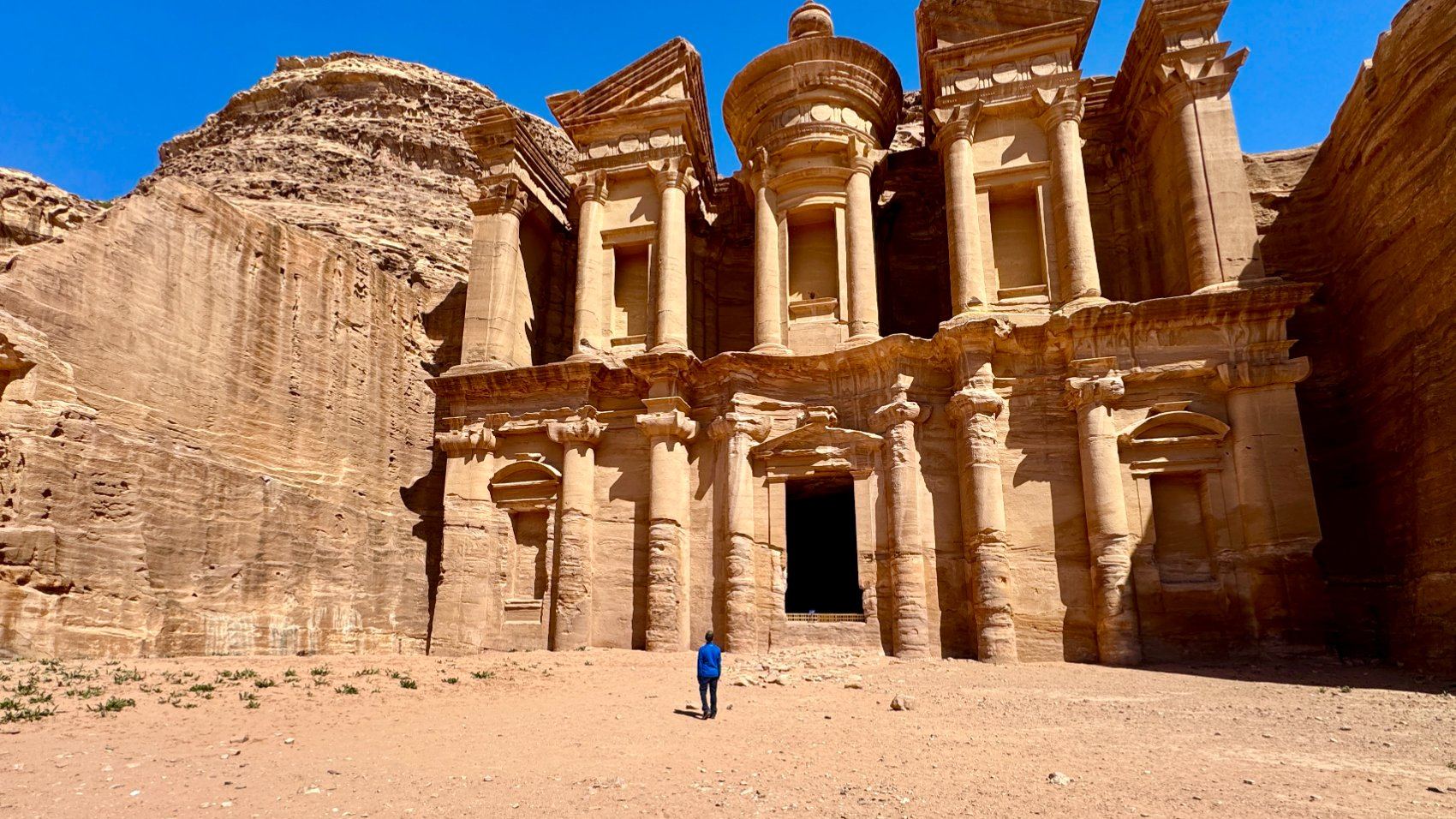
The Monastery is even bigger than the Treasury, and for many people it’s the highlight of Petra. It sits high above the valley at the top of roughly 800 rock-cut steps, and the climb takes most people 40 minutes to an hour. It’s steep with very little shade, so go in the morning or late afternoon rather than in the midday heat. You’ll be offered donkeys all the way up, but I’d walk, as those steps are hard on the animals. At the top there’s a small café and a couple of viewpoints looking out towards Wadi Araba.
The High Place of Sacrifice
Steps near the Theatre climb steeply to an ancient ritual platform on a mountaintop, with big views over the whole site. You can come back the same way, but I’d descend through Wadi Farasa past the Lion Fountain and the Garden Tomb, which brings you out near the Colonnaded Street. Allow two to three hours.
The Treasury viewpoint
The famous view looking down on the Treasury from above is taken from the cliffs opposite. The usual way up is the Al-Khubtha trail, which starts near the Royal Tombs and climbs a long series of steps. Allow a couple of hours for the round trip. Bedouin-run lookouts near the top may ask for a small fee, and the edges are unfenced, so take care.
Is Petra by Night worth it?
Petra by Night runs on a few evenings a week. You walk through the Siq by candlelight to the Treasury, where you sit in front of the facade surrounded by hundreds of candles. It isn’t covered by the Jordan Pass, so you buy it separately. We went the evening we arrived, straight after dropping our bags at our hotel in Wadi Musa, and the show included music and animations projected onto the Treasury telling the story of Petra and the people who built it. It gets busy, but it was a lovely way to start.
How many days do you need at Petra?
Two days is the sweet spot for most people. On day one, walk the Siq, see the Treasury and the main valley, and climb to the Monastery. On day two, go early for the High Place of Sacrifice and the Treasury viewpoint, then catch the Royal Tombs in the afternoon light. Three days lets you slow down or add a guided hike from Little Petra to the Monastery.
Stay in Wadi Musa, ideally within walking distance of the entrance, so you can be at the gate at opening before the coach groups arrive. Little Petra (Siq al-Barid), a short drive north, is a smaller and much quieter site that’s well worth an hour or two. My guide to avoiding crowds when travelling has more ideas, but at Petra it really comes down to timing.
What to wear and take to Petra
- Walking shoes with good grip, as the sandstone steps are worn smooth and can be slippery.
- Plenty of water. You can buy more inside, but it costs more the further in you go.
- A sun hat, sunscreen and sunglasses, even in winter.
- A warm layer for early mornings and evenings, which are chilly from November to March.
- Modest clothing, with shoulders and knees covered.
- Cash in small notes for drinks, snacks and tips.
If you visit during Ramadan, be discreet about eating and drinking in public during the day. The dates move earlier each year, so check them before you book.
Wadi Rum: how to visit the desert
Wadi Rum is a protected desert area in the far south of Jordan, a couple of hours’ drive from Petra and around an hour from Aqaba. It’s a landscape of red sand, huge sandstone mountains and natural rock bridges, and it became a UNESCO World Heritage Site in 2011. It looks so much like another planet that it has stood in for one in films including The Martian, Rogue One, Star Wars: The Rise of Skywalker and Dune, and of course it’s where much of Lawrence of Arabia was filmed.
You pay to enter the protected area at the visitor centre near Rum village (it’s included in the Jordan Pass). You can’t simply drive a hire car out into the sand; tours are run by local Bedouin operators in 4x4s, and most camps will arrange one for you.
Jeep or camel?
Most people tour by 4x4 for a half or full day. We swapped our minibus for two 4x4 trucks fitted out so we could sit in the back behind a cage, with room on the cab roof too, and spent half a day racing up and down dunes, which was brilliant fun, with stops at rock formations that looked like Mars. Typical stops include Lawrence’s Spring, Khazali Canyon’s ancient inscriptions and the Um Fruth and Burdah rock bridges. Camels are slower and more peaceful, and a short sunset ride is a nice add-on.
Choosing a desert camp
Camps range from simple Bedouin tents to comfortable huts and clear bubble or dome tents. Ours was in the middle of nowhere, with basic but beautifully decorated wooden huts at the foot of an enormous sandstone cliff that sheltered us from the wind and blowing sand. We spent the whole evening round a campfire telling stories and toasting marshmallows, and it was one of the best nights of the trip.
Be ready for the cold. The days were warm, but on our night in early March the temperature dropped to the low single digits, and in midwinter it can get close to freezing. Camps provide blankets, but bring a warm layer, a hat and something cosy to sleep in.
When is the best time to visit Petra and Wadi Rum?
Spring (March to May) and autumn (September to November) are the best times, with warm days and cool nights. Summer is very hot, often well into the 30s °C, so you’d want to start walking at dawn. Winter is cooler and quieter, but you can get rain, cold nights and occasional flash floods that close the Siq.
Is it safe to visit Jordan?
Jordan is a well-established tourist destination, and the people I met everywhere were incredibly hospitable and proud of their country. It does sit in a volatile region, though. My trip coincided with the start of the conflict involving the US, Israel and Iran at the end of February 2026, and for a few days we heard air raid sirens and airspace across the region closed. Our guide handled it calmly, the tour carried on, and I left as planned via Egypt.
My advice is simple: check the UK FCDO travel advice for Jordan before you book and again before you travel, sign up for its email alerts, make sure your travel insurance covers you, book with some flexibility and have a plan B for getting home. You can see more from the trip in my Jordan gallery.
Frequently asked questions
How many days do you need in Petra?
Two days is ideal for most people. That gives you time for the Siq, the Treasury and the Monastery on one day, and the High Place of Sacrifice, the Treasury viewpoint and the Royal Tombs on the next. One day is possible but rushed. If you love hiking, three days lets you add longer guided routes and slow down.
Is the Jordan Pass worth it?
For most UK visitors staying at least three nights, yes. The Jordan Pass includes Petra entry for one, two or three days, waives the tourist visa fee if you buy it before arrival, and covers dozens of other sites such as Jerash and Wadi Rum. It usually works out cheaper than paying separately. Check the official website for current prices and conditions.
How many steps are there to the Monastery at Petra?
The climb to the Monastery (Ad Deir) is roughly 800 rock-cut steps from near Qasr al-Bint at the end of the main valley. Most people take 40 minutes to an hour to reach the top. It’s steep and exposed with little shade, so go early or late in the day, carry plenty of water and wear shoes with good grip.
How cold does Wadi Rum get at night?
Much colder than people expect. Even when the days are warm, desert nights can drop into single figures, and in winter they can approach freezing. On my night there in early March it fell to the low single digits. Camps provide blankets, but pack a warm layer, a hat and something cosy to sleep in.
Is it safe to travel to Jordan right now?
Jordan is a popular, welcoming destination, but it sits in a volatile region and the situation can change quickly. Always check the latest UK FCDO travel advice for Jordan before booking and again before you go, sign up for alerts, and make sure your insurance is valid. Flexible bookings and a backup plan for getting home are sensible.