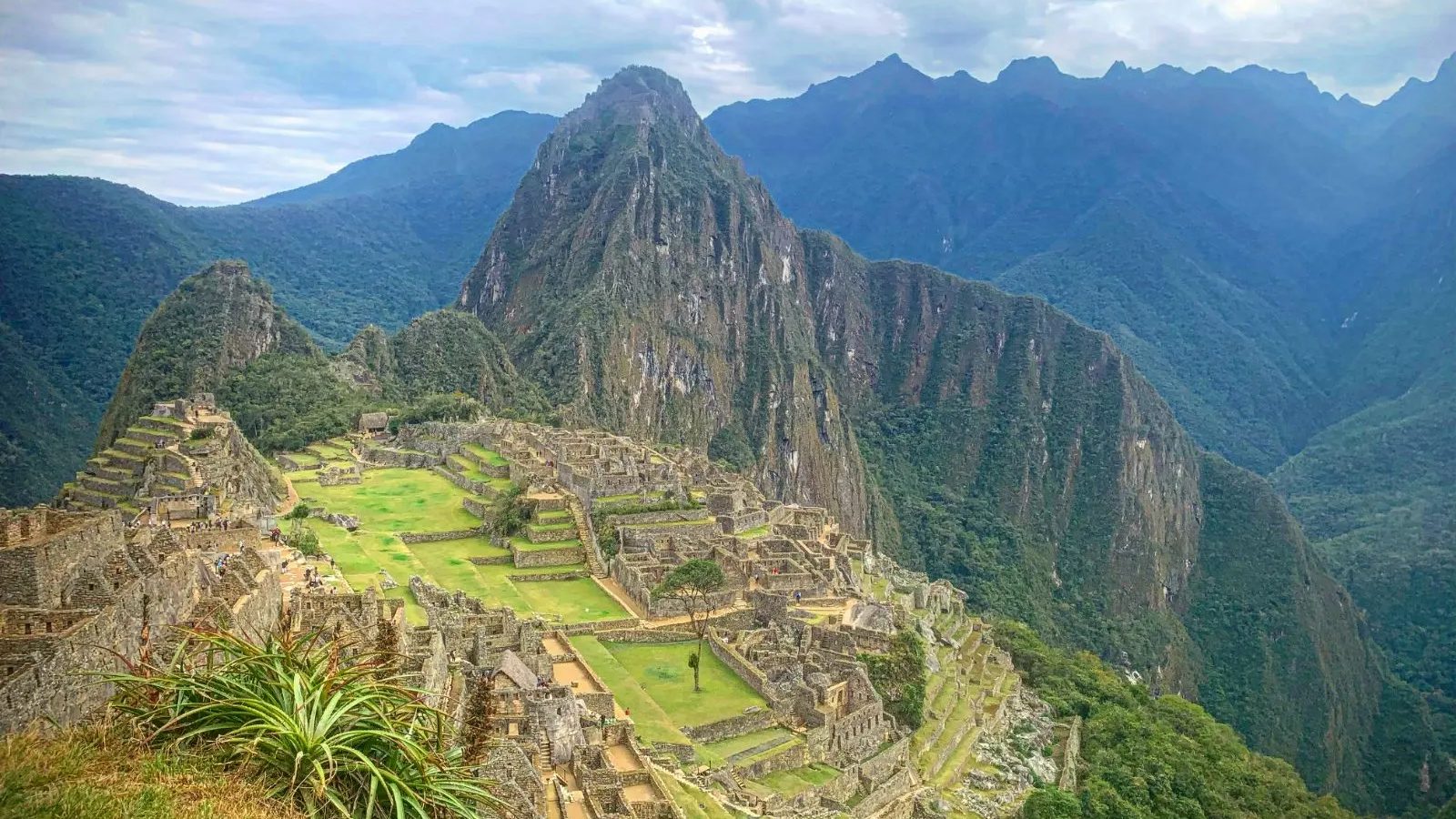
Machu Picchu was one of those places I’d seen in photos for years, and standing there in person, with the cloud slowly lifting off the mountains around it, was an amazing feeling. My time in Peru also took me to Cusco, the Colca Canyon and up into the mountains around Rainbow Mountain, and every one of those was a real eye opener.
Getting to Machu Picchu isn’t as simple as turning up, though. There are timed tickets, circuits, trek permits and a fair bit of altitude to think about. This guide covers how to get there, how the tickets work and when to go, so you can plan it properly.
How do you get to Machu Picchu?
There’s no road all the way to the site. Everyone ends up in the small town of Aguas Calientes (also called Machu Picchu Pueblo) at the foot of the mountain, and from there you take a shuttle bus up the zigzag road to the entrance, or walk up a long, steep path of steps if you’re feeling energetic. How you reach Aguas Calientes is the big decision, and there are two main ways, by train or on foot.
If you’ve got an early entry time, I’d really recommend staying the night before in Aguas Calientes. The first buses up the mountain fill quickly and there’s often a long queue before dawn, so being in town means you’re not relying on a very early train. It also gives you the chance to see the site in the softer morning light, and to head back down at your own pace afterwards rather than rushing for a train.
Taking the train from Cusco or Ollantaytambo
Most visitors go by train. PeruRail and Inca Rail both run services to Aguas Calientes, with a range of classes from simple backpacker carriages to more luxurious options with panoramic windows. Trains leave from the Cusco area and from Ollantaytambo in the Sacred Valley, though which station is used from Cusco can change with the season, so read your ticket carefully.
Ollantaytambo is where I’d start if you can. It’s closer, the journey is shorter and it means you can stay in the Sacred Valley beforehand, which helps with acclimatising (more on that below). The views along the Urubamba river are lovely too, so try to get a seat by the window. Book trains well ahead for the busy months, and make sure your train times line up with your Machu Picchu entry time.
Inca Trail vs Salkantay: which trek should you do?
If you’d rather arrive on foot, there are several great treks, and they’re quite different from each other. I’ve written about other routes like these in my guide to the world’s greatest multi-day treks.
The classic Inca Trail
The classic Inca Trail is usually done over four days and follows original Inca paths past a string of ruins, before arriving at Machu Picchu through the Sun Gate. The highest point, Dead Woman’s Pass, is over 4,200 metres, so it’s a proper challenge.
The number of permits is limited each day and you can only hike it with a licensed tour operator, who books the permit in your name using your passport details. Permits for the popular months can sell out many months in advance, so book as early as you can. The trail also closes every February for maintenance, and that’s also the height of the rainy season.
The Salkantay trek
Salkantay is the most popular alternative, usually around four to five days. It crosses a high pass beneath the snowy Salkantay mountain at roughly 4,600 metres, then drops down into cloud forest before reaching Aguas Calientes. It’s higher and wilder than the Inca Trail and has fewer ruins, but it doesn’t need an Inca Trail permit, so it’s much easier to book at short notice. You’ll still need a separate Machu Picchu ticket.
The Lares trek
The Lares trek is a shorter option, often three or four days, that takes you through remote Andean villages and past hot springs rather than Inca ruins. You usually finish by taking the train from Ollantaytambo. It’s a good choice if you’re interested in rural life in the Andes and want something a bit quieter.
The short Inca Trail
If you don’t have the time or the legs for four days, the short Inca Trail is a one-day hike from a point along the railway known as Km 104. It passes the ruins of Wiñay Wayna and still enters through the Sun Gate. It needs a permit and a licensed operator, just like the classic trail, so it also books up.
How do Machu Picchu tickets work?
Tickets are sold for a specific date, entry time and circuit, and numbers are capped each day. In recent years the site has been divided into set circuits, each with a few route options, and you follow one-way paths without doubling back. As things stood in early 2025 there were three main circuits, broadly an upper route with the classic panoramic viewpoint, a classic route through the main ruins, and a lower route focused on the royal area. Each route has its own time limit once you’re inside.
The rules and the ticket system have changed several times, so always buy from the official Ministry of Culture site or a reputable operator, and check the latest circuits, prices and ID requirements before you go. You’ll need your passport to enter. For the busy months, book your ticket as soon as you know your dates, and before you book trains or hotels.
Huayna Picchu or Machu Picchu Mountain?
Some tickets add a hike up one of the two peaks overlooking the site, and they’re sold in limited numbers, so book them early. Huayna Picchu is the steep peak you see in the classic photos. The climb is short but very steep, with narrow stone steps and some exposed sections, so it’s not ideal if you’re uncomfortable with heights.
Machu Picchu Mountain, on the other side, is higher and takes longer, but the path is generally wider and less exposed. The views back down over the ruins and the river are wonderful. Either way, go early, take water and allow plenty of time.
Altitude: acclimatising in Cusco and the Sacred Valley
Cusco sits at around 3,400 metres, which is a lot higher than Machu Picchu itself (roughly 2,400 metres). When I was in Cusco I noticed it straight away, even walking up the steep streets felt like hard work for the first day or two.
A lot of people now fly into Cusco and head straight down to the Sacred Valley, which is lower, spend a couple of nights there and then come back up to Cusco. Either way, take it easy for the first few days, drink plenty of water, go light on alcohol and give yourself at least two or three days before any big hike. If you’re doing the Inca Trail or Salkantay, this matters even more. Talk to your doctor before you go if you have any health concerns about altitude.
When is the best time to visit Machu Picchu?
The dry season, roughly May to September, is the most popular time, with clearer skies and less rain on the trails. It’s also the busiest, so tickets and permits go fastest. April and October are good shoulder months, with fewer people and still decent weather, though you’ll likely get some showers.
The rainy season runs roughly November to March, and January and February are usually the wettest. The site stays open, and you’ll get green mountains and moody clouds, but expect rain, and the classic Inca Trail is closed in February.
Whatever month you go, the early morning often starts with mist wrapped around the peaks, which then burns off as the day goes on. As a photographer I loved watching the ruins appear out of the cloud. You can see some of my photos from Peru in my Peru gallery.
Is Machu Picchu worth it?
For me, absolutely. It’s one of the New Seven Wonders of the World for good reason, and the setting among the mountains is even more dramatic than the photos suggest. Give yourself enough time around it to enjoy Cusco and the Sacred Valley too, and if you’re building a longer list of big trips, my travel bucket list ideas might give you a few more.
Frequently asked questions
How do you get to Machu Picchu?
Most people take the train from the Cusco area or Ollantaytambo to Aguas Calientes, then a shuttle bus up to the entrance. The alternative is to hike, either the classic Inca Trail with a licensed operator, the short Inca Trail, or an alternative trek such as Salkantay or Lares. Whichever way you arrive, you’ll need a timed Machu Picchu ticket.
Which is better, the Inca Trail or Salkantay?
It depends on what you want. The Inca Trail follows original Inca paths past several ruins and ends at the Sun Gate, but permits are limited and must be booked through a licensed operator months ahead. Salkantay is higher, wilder and more scenic in terms of mountains, with fewer ruins, and doesn’t need an Inca Trail permit, so it’s easier to book.
How far in advance should you book Machu Picchu tickets?
For the dry season, roughly May to September, book as soon as you know your dates, as tickets for popular circuits and times sell out, and Huayna Picchu or Machu Picchu Mountain tickets go even faster. Inca Trail permits often sell out several months ahead. Buy from the official site or a reputable operator, and check current rules before you go.
When is the Inca Trail closed?
The classic Inca Trail usually closes every February for maintenance and conservation work, which is also the wettest time of year. Machu Picchu itself stays open, so you can still visit by train or take an alternative trek such as Salkantay. Always check the latest official information, as dates and rules can change.
How do you avoid altitude sickness in Cusco?
Take it slowly. Cusco is around 3,400 metres, so many travellers spend their first nights in the lower Sacred Valley before going up to Cusco. Rest on the first day, drink plenty of water, avoid heavy drinking and allow two or three days before hiking. Speak to your doctor beforehand if you have any concerns about altitude.