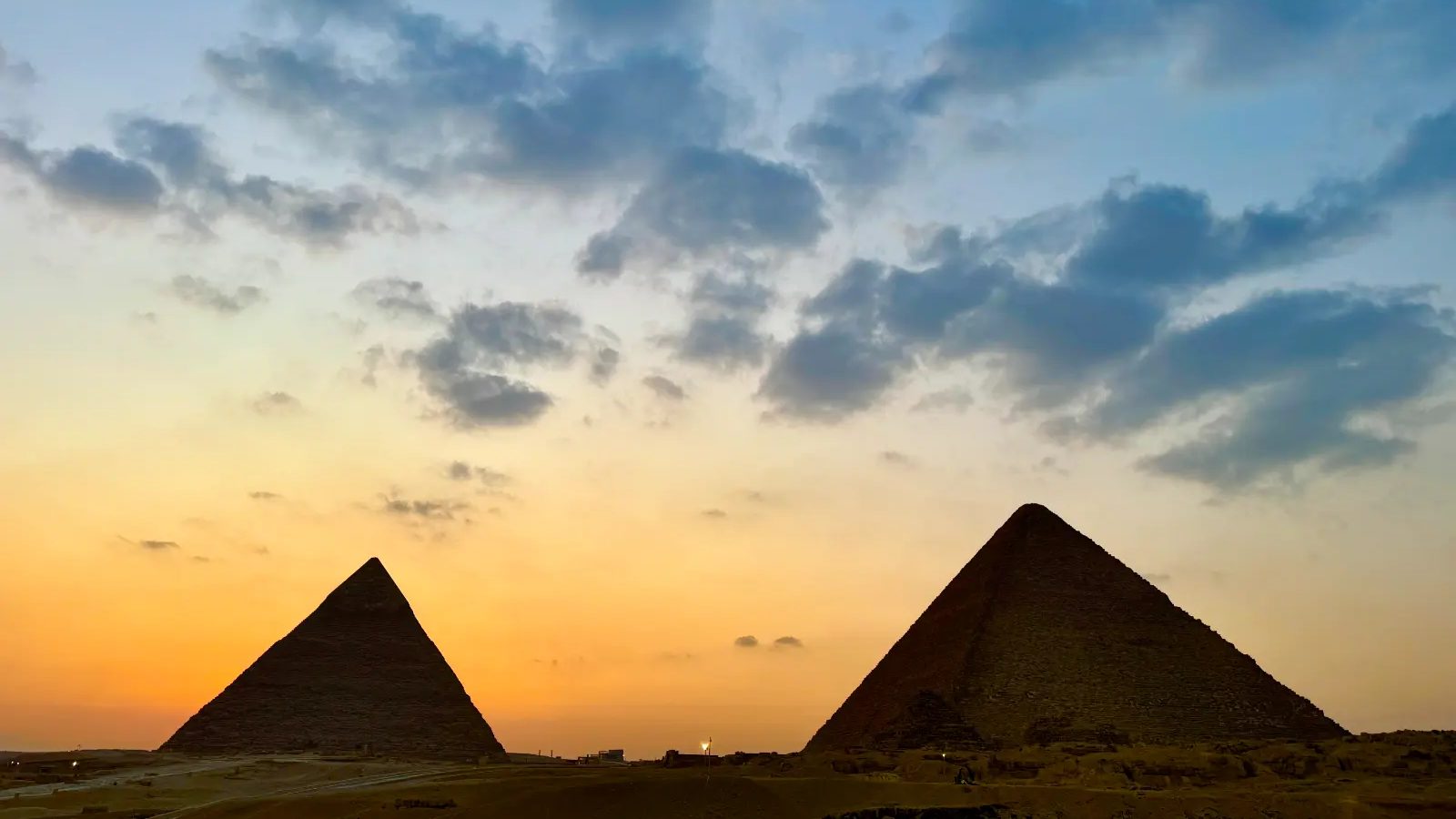
I first went to Egypt back in 2013, to Sharm El-Sheikh on the Red Sea, where the snorkelling was brilliant. I didn’t make the trip to see the Pyramids, and it nagged at me for years. So this March, at the end of a tour of Jordan, I flew to Cairo with one goal: to see the Great Pyramid of Giza from the outside, from above and from the inside.
I managed all three, and the full story is in my Petra to the Pyramids journal. This guide covers what a first-timer needs to know: whether Egypt is safe, visas, the best time to go, Cairo and Giza, Luxor, Aswan and the Nile, the Red Sea, money and photo rules, plus a 10-day itinerary. I’ll be clear about what I’ve seen myself and what is advice, as I haven’t been to Luxor or Aswan yet.
Is Egypt safe for tourists?
Millions of people visit Egypt every year, including a lot of British holidaymakers, and the main tourist areas of Cairo, Giza, Luxor, Aswan and the Red Sea resorts see very large numbers of visitors without problems. Security is visible, with police at the big sites and checks at hotel entrances. That said, the UK FCDO advises against all travel, or all but essential travel, to some parts of the country, such as North Sinai and areas near the Libyan border, and the wider region has been tense this year. Read the FCDO travel advice for Egypt before you book and again before you go, and make sure your insurance is valid for where you’re travelling.
For most visitors the real challenge is hassle rather than danger. Around the Pyramids especially, you’ll be approached constantly by people offering camel rides, horses, photos and souvenirs. A few simple habits help a lot.
- Agree any price clearly before you get on a camel, into a taxi or accept a service.
- Be polite but firm, and keep walking. A smile and ‘la, shukran’ (no, thank you) goes a long way.
- Ignore anyone who tells you a site is closed and offers to take you somewhere else.
- Use ride-hailing apps in Cairo, which avoids haggling over taxi fares.
- Consider a licensed guide for the big sites, as touts generally leave you alone.
Do you need a visa for Egypt?
UK citizens need a visa for Egypt. You can apply for an e-visa in advance through the official Egyptian government portal, or buy a visa on arrival at the main airports, which has been around US$25 paid in cash. If you’re only visiting the resorts of South Sinai, such as Sharm El-Sheikh, a free entry stamp for short stays has been available. These rules change, so check the FCDO entry requirements page and only use the official e-visa website, as there are lots of lookalike sites charging extra.
When is the best time to visit Egypt?
October to April is the best time for sightseeing. December to February is the most comfortable but also the busiest, and evenings in Cairo can feel cool. Spring can bring dusty winds, and from around May to September it gets extremely hot in Luxor and Aswan, often over 40 °C, so you’d want to sightsee at dawn and rest in the afternoon. The Red Sea resorts work all year, and they’re a popular source of winter sun from the UK. Ramadan moves earlier each year, so check the dates, as opening hours can be shorter.
Cairo and the Pyramids of Giza
I arrived in Cairo around midnight, and even at that hour it was a total sensory overload: traffic everywhere, horns, fumes, animals wandering the streets and sellers on every corner. I’ve been to plenty of busy cities, and Cairo is the most hectic of all of them. My advice is to stay in Giza rather than central Cairo. My hotel had a rooftop with a view straight onto the Pyramids lit up at night, and walking up there in the early hours was something I’ll never forget.
Seeing the Pyramids and the Sphinx
The Great Pyramid was built for the pharaoh Khufu around 4,500 years ago and is the only one of the Seven Wonders of the Ancient World still standing. It sits on the Giza plateau with the pyramids of Khafre and Menkaure and the Great Sphinx. The plateau has been reorganised in recent years with a new visitor entrance and shuttle buses, so check how access currently works when you go. I took a private guided tour with a brilliant Egyptian guide who walked me round the whole plateau and the Sphinx, and having someone with me made the hassle much easier to deal with.
Can you go inside the Great Pyramid?
Yes, with an extra ticket on top of your plateau entry. The highlight of my time at Giza was climbing up through the Great Pyramid’s passages to the King’s Chamber and Khufu’s granite sarcophagus. Be warned: the passages are steep, narrow and very warm, you’re bent double for parts of it, and it’s properly claustrophobic. If you’re fine with that, standing inside the last surviving Ancient Wonder is an incredible feeling. Ticket numbers and prices change, so check before you go.
The Pyramids from above
I booked a 15-minute microlight flight over the Pyramids through a big online tour platform, and it was the most exciting quarter of an hour of the whole trip. You get a real sense of the layout of the plateau, and I could see the Grand Egyptian Museum from the air too. Flights depend on the weather and permissions, so book a flexible slot early in your stay.
The Grand Egyptian Museum
Right next to the plateau, the Grand Egyptian Museum finally opened in full in late 2025, and it’s often described as the largest archaeological museum in the world devoted to one civilisation. A colossal statue of Ramesses II greets you in the atrium, a huge staircase lined with statues leads up to the galleries, and Tutankhamun’s treasures are displayed together. I spent half a day there and it was easily the highlight of my time in Egypt. Book tickets online and allow at least half a day.
Saqqara, Dahshur and old Cairo
If you have an extra day, head south to Saqqara for the Step Pyramid of Djoser and on to Dahshur for the Bent Pyramid and the Red Pyramid, which you can usually go inside with far fewer people around. Back in the city, the Khan el-Khalili bazaar, the Citadel and Coptic Cairo are the classic sights.
Luxor: Valley of the Kings, Karnak and hot air balloons
Luxor is next on my list, and it’s where most people fall in love with ancient Egypt. It’s about an hour’s flight from Cairo, or an overnight sleeper train. On the East Bank are Karnak, a vast temple complex of giant columns and obelisks, and Luxor Temple, which is beautiful lit up in the evening. On the West Bank are the Valley of the Kings, where a standard ticket covers a set number of royal tombs with special ones such as Tutankhamun’s costing extra, the terraced Temple of Hatshepsut and the Colossi of Memnon. A sunrise hot air balloon flight over the West Bank is hugely popular; choose an established operator and accept that flights are cancelled in poor weather. Luxor also lies in the path of the total solar eclipse on 2 August 2027, which is covered in my solar eclipse 2027 guide.
Aswan and Abu Simbel
Aswan is more relaxed than Luxor, with granite islands, Nubian villages and feluccas drifting on the Nile. Philae Temple, moved stone by stone to save it from the rising waters of the Aswan High Dam, is the main sight. Abu Simbel, the great temples of Ramesses II, lies far to the south near the border with Sudan, roughly three and a half hours each way by road from Aswan, so most people go on a very early day trip or take a short flight. Twice a year, around 22 February and 22 October, the rising sun lights up the statues in the inner sanctuary.
Nile cruise or dahabiya?
The classic way to travel between Luxor and Aswan is by boat, usually over three or four nights, stopping at the temples of Edfu and Kom Ombo. Large cruise ships are comfortable and good value, with a pool on the top deck, but they all tend to arrive at the same sites at the same time. A dahabiya is a traditional sailing boat with only a handful of cabins. It’s slower and more expensive, but you moor at quieter spots and it feels much more like the Nile of old. If I were going, I’d lean towards a dahabiya.
The Red Sea: Hurghada, Sharm El-Sheikh and Marsa Alam
Egypt’s Red Sea coast is around five hours’ flight from the UK and has some of the best snorkelling and diving within easy reach of Europe. When I stayed in Sharm in 2013, the snorkelling was the highlight. Hurghada is the big all-round resort, and Marsa Alam further south is quieter, with a chance of turtles and even dugongs. Adding a few beach days to the end of a sightseeing trip is a brilliant way to recover.
A 10-day Egypt itinerary
- Days 1 to 3: Cairo and Giza. The Pyramids and Sphinx, inside the Great Pyramid, and a half day at the Grand Egyptian Museum.
- Day 4: Saqqara and Dahshur, then fly or take the sleeper train to Luxor.
- Day 5: Luxor’s East Bank, with Karnak and Luxor Temple at night.
- Day 6: A sunrise balloon flight, then the Valley of the Kings and the Temple of Hatshepsut.
- Days 7 to 9: Cruise or sail to Aswan via Edfu and Kom Ombo, with an early trip to Abu Simbel.
- Day 10: Fly back to Cairo for your flight home, or swap the last days for the Red Sea.
If you’ve come from Jordan, as I did, Cairo is only a short flight from Amman, and my guide on how to visit Petra and Wadi Rum covers that side of the trip.
Money, tipping, dress and food
The currency is the Egyptian pound. Cards work in hotels and bigger restaurants, but you’ll need cash for taxis, markets and tips, and small notes are gold dust. Tipping, or baksheesh, is part of daily life: toilet attendants, guards who show you a hidden corner, drivers and guides all expect something. Dress modestly with shoulders and knees covered, and women should carry a scarf for mosques. Try koshari, ful medames and ta’ameya, Egypt’s falafel. Drink bottled water and be a bit careful with salads and ice.
Photography rules in Egypt
Taking photos with a phone or camera is allowed at most sites, but rules vary, and some tombs ban photography or charge an extra ticket. Tripods often need a permit. Leave your drone at home: Egypt restricts drones heavily and they can be confiscated at the airport. My guide to drone travel photography has more on checking the rules before you fly anywhere. There’s more from my trip in my Egypt gallery.
Frequently asked questions
Is Egypt safe for tourists?
The main tourist areas, including Cairo, Giza, Luxor, Aswan and the Red Sea resorts, receive millions of visitors a year, and security is visible at major sites. The UK FCDO advises against travel to some regions, such as North Sinai and areas near the Libyan border. Always check the latest FCDO advice before booking and travelling, and expect hassle from touts rather than danger.
Do UK citizens need a visa for Egypt?
Yes. UK citizens can apply for an e-visa online through the official Egyptian government portal or buy a visa on arrival at the main airports, which has cost around US$25. A free short-stay stamp has been available for visitors staying only in South Sinai resorts such as Sharm El-Sheikh. Check the FCDO entry requirements page for the current rules.
Can you go inside the Great Pyramid of Giza?
Yes, with a separate ticket on top of the Giza plateau entry. You climb steep, narrow and very warm passages, including the Grand Gallery, to reach the King’s Chamber and Khufu’s granite sarcophagus. Parts are low enough that you’ll be bent double, so it’s not for anyone claustrophobic. Ticket prices and numbers change, so check before your visit.
What is the best time to visit Egypt?
October to April is the best time for sightseeing, with warm days and cooler nights. December to February is the most comfortable but busiest period. From around May to September, Luxor and Aswan can top 40 °C, so you’d need to visit sites at dawn. The Red Sea resorts are good all year and popular for winter sun.
How many days do you need in Egypt?
Ten days is a good length for a first trip, giving you three or four days in Cairo and Giza, two in Luxor, a few days on the Nile to Aswan and a visit to Abu Simbel. With a week, focus on Cairo and Luxor. Add three or four days if you want time on the Red Sea coast.