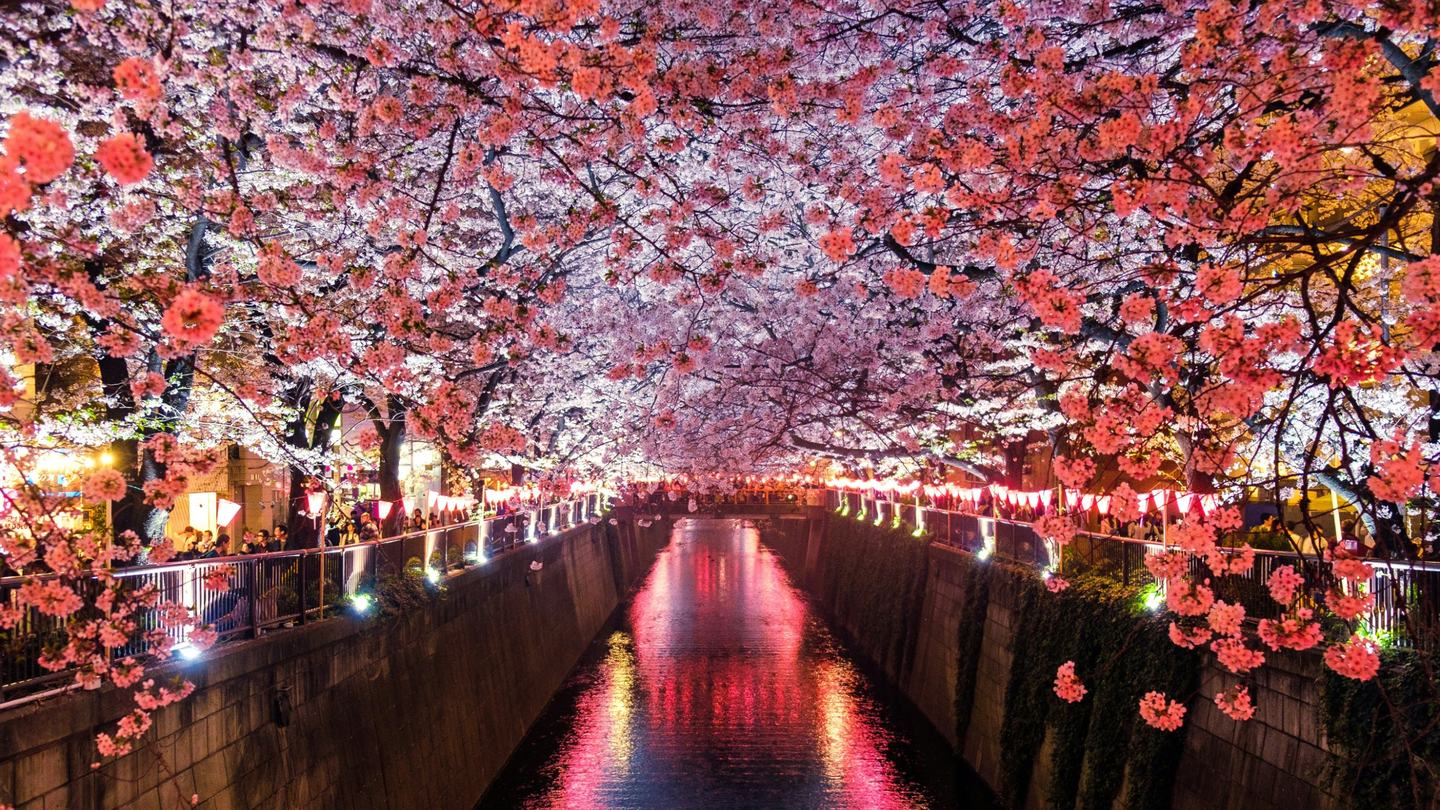
Every spring, Japan turns pink. For a week or two the cherry trees burst into flower, the parks fill with picnics, and whole cities stay out late under the blossom. Sakura season is one of the most photographed events on the planet, and it’s been near the top of my own travel list for years.
I haven’t made it to Japan yet, so this is a researched guide rather than a trip report, written from a photographer’s point of view. It covers when the blossom arrives, how the forecasts work, the best places to see it, hanami etiquette and the planning that makes the difference between a magical trip and a frustrating one. If you’re thinking about a Japan holiday this spring, the most important advice is simple: book soon.
When is cherry blossom season in Japan?
The blossom moves up the country like a slow wave, starting in the warm south and finishing in the cool north. Japanese weather forecasters even call it the cherry blossom front. As a rough guide, based on typical years:
- Okinawa: January to February, with a darker pink early-flowering variety.
- Kyushu and southern Honshu: late March to early April.
- Tokyo, Kyoto and Osaka: usually late March to early April.
- Mount Fuji area: early to mid April, a little later than Tokyo because of the altitude.
- Tohoku in the north of Honshu: mid to late April.
- Hokkaido: late April into May.
Most of the trees you’ll see in the big cities are a variety called Somei Yoshino, with pale pink, almost white flowers. In any one place, it’s usually about a week from the first flowers opening to full bloom, and full bloom only lasts a few days before the petals start to fall. Rain or a strong wind can bring that forward. Recent years have also tended to run early, so don’t assume the averages will hold.
How do cherry blossom forecasts work?
Cherry blossom forecasting is taken very seriously in Japan. Private forecasters, including the Japan Meteorological Corporation, Weathernews and the Japan Weather Association, publish predictions from early in the year and update them regularly as spring approaches, giving expected flowering and full bloom dates for cities across the country. English versions are easy to find online.
Each city also has an official sample tree. In Tokyo it’s at Yasukuni Shrine, and the season officially opens there once a handful of flowers have opened on that tree. The first forecasts are educated guesses, so if you’re booking months ahead, use the long-term averages and give yourself as much flexibility as you can.
The best places to see cherry blossom in Tokyo
Tokyo is where most trips start, and it’s a brilliant city for blossom because it’s spread across so many parks, rivers and shrines. Even if you only have a couple of days, you can see several of the famous spots by train. These are the four I’d prioritise, though you’ll find cherry trees flowering in almost every neighbourhood.
Meguro River
Hundreds of trees line both banks of the Meguro River in Nakameguro, arching over the water so the blossom almost meets in the middle. In the evenings during the season, lanterns are lit along the river and the whole stretch glows pink. It’s beautiful, but it’s also one of the busiest spots in the city, with one-way pedestrian routes on peak nights. Go on a weekday, or early in the morning when the cafés are still closed and you have the bridges to yourself.
Shinjuku Gyoen
This big national garden has a huge range of cherry varieties that flower at different times, so it’s a good bet if your dates don’t quite line up with peak bloom elsewhere. There’s an entry fee, alcohol isn’t allowed, and in recent springs it has used advance reservations at the busiest times, so check the official site before you go.
Ueno Park
Ueno is the classic hanami party park, with a long avenue of trees and groups picnicking underneath from morning until night. Come here for the atmosphere rather than a quiet photo.
Chidorigafuchi
The moat beside the Imperial Palace is one of the most photogenic places in Tokyo, with trees leaning out over the water. You can hire a rowing boat and paddle underneath the branches, although the queue for the boats can be very long at peak times. The walkway is usually lit up in the evenings during the season.
The best places to see cherry blossom in Kyoto
Kyoto’s temples, wooden houses and gardens make it the place most people picture when they think of sakura. The blossom here usually arrives at about the same time as Tokyo, or a few days later.
- Philosopher’s Path. A stone path of around two kilometres beside a canal lined with cherry trees, running between Ginkaku-ji and the Nanzen-ji area. Go at sunrise, as it’s narrow and fills up quickly.
- Maruyama Park. Kyoto’s favourite hanami park, centred on a large weeping cherry tree that’s lit up after dark. It’s lively in the evenings and close to the old Gion district.
- Arashiyama. Blossom on the hillsides above the Togetsukyo Bridge and along the river, with boats on the water. Combine it with an early walk through the bamboo grove before the crowds arrive.
Beyond the cities: Mount Fuji, Himeji, Hirosaki and Yoshino
Mount Fuji and the Chureito Pagoda
The view of the five-storey Chureito Pagoda with cherry blossom in front and Mount Fuji behind is one of the most famous images of Japan. It’s at Arakurayama Sengen Park in Fujiyoshida, a few hundred steps up the hillside, and the blossom here usually peaks a week or two after Tokyo. It has become so popular that the town cancelled its cherry blossom festival in 2024 because of overcrowding. Arrive before sunrise, and remember that Fuji hides in cloud a lot of the time, so build in a spare day if you can.
Himeji Castle
Japan’s best-preserved original castle, a brilliant white UNESCO World Heritage Site, is surrounded by cherry trees that flower at roughly the same time as Kyoto and Osaka. It’s an easy day trip by bullet train from either city.
Hirosaki Castle
In Aomori in the far north of Honshu, Hirosaki Castle Park has thousands of trees and usually blooms from around late April. When the petals fall they cover the moats in a pink carpet. It’s a great option if your trip falls later in April, though it clashes with Japan’s Golden Week holidays, so book early.
Yoshino
Mount Yoshino in Nara Prefecture has been famous for cherry blossom for centuries, with tens of thousands of trees spread across the mountainside. They flower in stages from the bottom to the top, which stretches the season over a few weeks in April. It’s a slightly fiddly trip by train from Osaka or Kyoto, but well worth the effort.
Hanami etiquette: how to enjoy the blossom respectfully
Hanami simply means flower viewing, and it usually involves a picnic under the trees with friends, food and often a drink or two. It’s a joyful thing to join in with, and a few simple rules keep it that way.
- Never pick flowers, shake the branches or climb the trees, even for a photo.
- Take all your rubbish home with you, as public bins are rare in Japan.
- Check the rules for each park, as some ban alcohol or limit where you can spread a picnic sheet.
- Don’t block paths or step over barriers to get closer to the trees.
- Ask before photographing people, especially families and anyone in kimono.
How to plan a Japan holiday around cherry blossom season
Sakura season is the busiest and most expensive time of year to visit Japan, and the best-located hotels in Tokyo and Kyoto can sell out months ahead. I’d book flights and accommodation as early as you can, ideally with free cancellation in case the forecasts shift. Prices rise sharply around peak bloom, and Golden Week from late April into early May is a big domestic holiday period, which makes trains and hotels even busier.
For a first trip, around 10 to 14 days works well. Spend four or five days in Tokyo, a night near Mount Fuji, then take the bullet train to Kyoto for three or four days, with day trips to Nara, Himeji or Osaka. If you have more time, carry on north to chase the blossom to Tohoku. Japan’s trains are fast and reliable, but the national Japan Rail Pass became much more expensive in 2023, so compare it with buying individual tickets before you commit. Spring days are usually mild, but evenings can be chilly, so pack a warm layer for night-time hanami.
If you can’t make Japan work this spring, February to April is also a good time for other parts of Asia. My Vietnam travel guide and the journal from my three-week Indochina trip through Vietnam, Cambodia and Thailand might give you some other ideas.
How to photograph cherry blossom
Pale pink blossom against a bright sky is surprisingly tricky to photograph well. The flowers easily turn into white, washed-out blobs, so these are the approaches I’d use.
Go early, or go after dark
Sunrise is the only time many famous spots are anything like quiet, and the soft light is kinder to the petals. After dark, the night illuminations (yozakura) transform places like the Meguro River and Maruyama Park. You’ll want a tripod or something steady to rest on, and my guide to night photography for beginners covers the settings.
Use a longer lens
A telephoto lens compresses the scene, stacking rows of trees together so they look even fuller, and it lets you pick out a temple roof or a pagoda framed by blossom while leaving the crowds out of the shot. For the close-ups, find a single branch against a clean background, such as a dark wall, a blue sky or the shadows under the trees.
Don’t write off cloudy days or falling petals
A cloudy day gives soft, even light that shows off the colour of the blossom far better than harsh midday sun. And don’t be disappointed if you arrive as the petals start to fall. The pink snowstorm of petals, and the carpets they leave on rivers and paths, can make the most beautiful photos of the season.
Frequently asked questions
When is cherry blossom season in Japan?
In Tokyo and Kyoto the cherry blossom usually flowers from late March to early April, with full bloom lasting only a few days. The season starts earlier in Okinawa and the south, around January to March, and finishes later in the north, with Tohoku in mid to late April and Hokkaido from late April into May. Exact dates change every year, so check the latest forecasts.
How long does cherry blossom season last in Japan?
In any one place, the blossom usually lasts around one to two weeks from the first flowers opening to the petals falling, and full bloom itself only lasts a few days. Rain and wind can shorten it. Across the whole country the season runs for several months, so travelling north as spring progresses gives you more chances to see it.
Where is the best place to see cherry blossom in Japan?
Kyoto is the classic choice, with the Philosopher’s Path, Maruyama Park and Arashiyama. In Tokyo, the Meguro River, Shinjuku Gyoen, Ueno Park and Chidorigafuchi are favourites. Further afield, the Chureito Pagoda with Mount Fuji, Himeji Castle, Hirosaki Castle and Mount Yoshino are some of the most famous cherry blossom spots in the country.
When are cherry blossom forecasts released for Japan?
Japanese forecasters such as the Japan Meteorological Corporation, Weathernews and the Japan Weather Association usually publish their first cherry blossom forecasts early in the year and update them regularly into spring. Early predictions can shift by a week or more, so book flexible accommodation if you can and keep an eye on the updated forecasts as your trip gets closer.
Is it expensive to visit Japan during cherry blossom season?
Yes, sakura season is one of the busiest and most expensive times to visit Japan. Hotel prices in Tokyo and Kyoto rise sharply around peak bloom and the best places sell out months ahead. Booking early, staying slightly outside the main areas and travelling on weekdays all help, and visiting cities further north can be quieter.