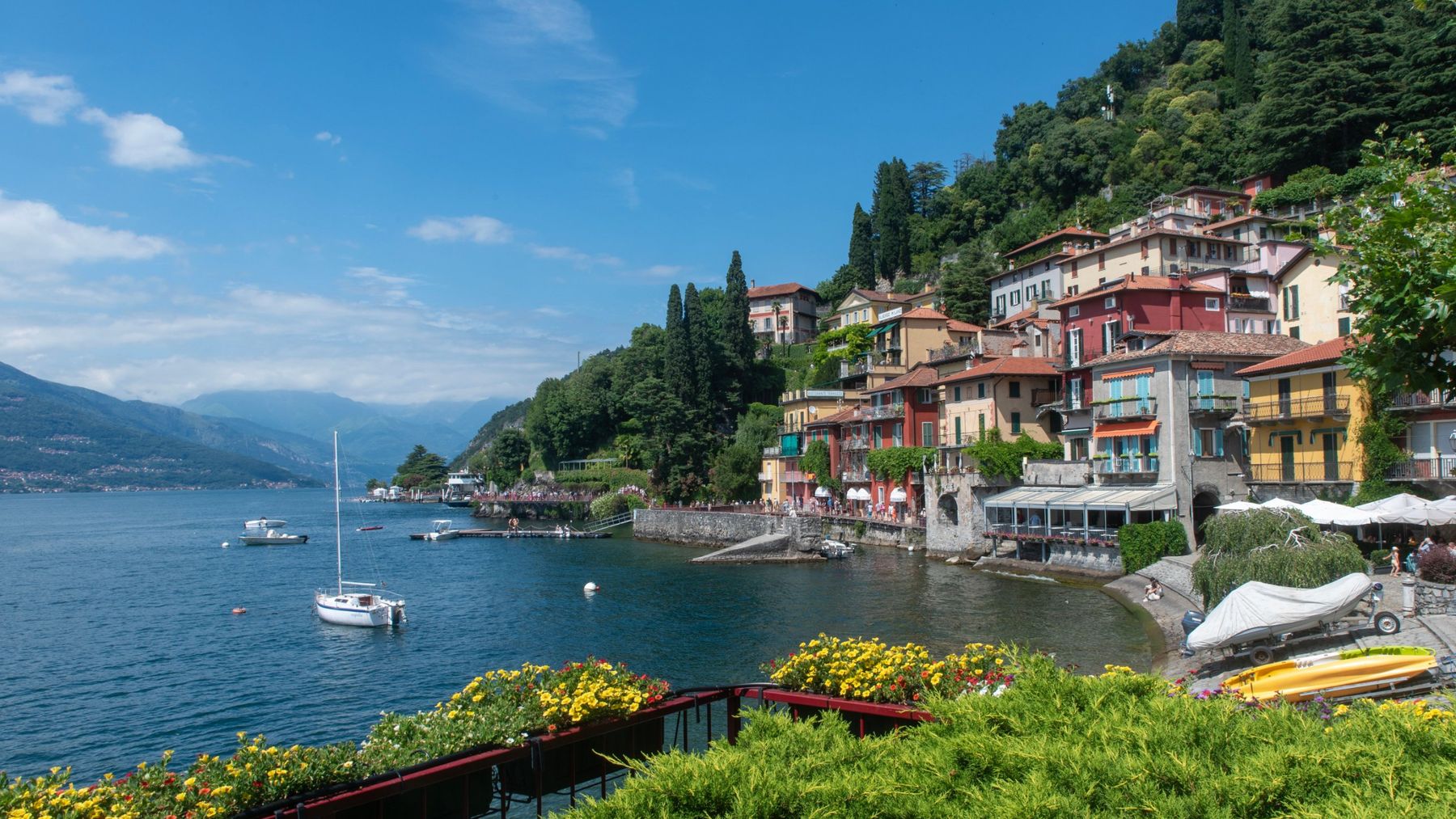
Lake Como has been pulling in travellers for a very long time, from Roman writers to Romantic poets and, these days, film crews and anyone with a camera. It sits at the foot of the Alps in Lombardy, a long, deep lake shaped like an upside-down Y, with steep green mountains on every side and a string of colourful villages along the shore.
It’s also very easy to reach from the UK, as Milan is only a couple of hours’ flight away and the lake is about an hour from the city by train. This guide covers the best towns, where to stay, how to get there and get around, the villas and walks worth your time, when to go and a simple three-day plan, with a few photo spots along the way.
Is Lake Como worth visiting?
Yes, as long as you go in with the right expectations. It’s one of the most popular places in northern Italy, and in July and August the central villages, the ferries and the famous villas get very busy. What makes it special is the setting. The mountains rise straight out of the water, the villages are stacked up the hillsides in shades of ochre, pink and yellow, and moving between them by boat is half the fun.
If you want quiet, you can still find it. Go in spring or early autumn, stay somewhere slightly off the main triangle, and get out early in the morning before the day trippers arrive from Milan. The northern end of the lake and the villages on the east shore are noticeably calmer than Bellagio on a summer afternoon.
The best towns on Lake Como
Most first-time visitors focus on the centre of the lake, where the three arms meet. This is where you’ll find the ‘golden triangle’ of Bellagio, Varenna and Menaggio, all linked by frequent ferries.
Varenna
If I could pick only one base, it would be Varenna. It’s small, very photogenic and has its own railway station on the line from Milan, which makes arriving without a car really simple. There’s a lakeside walkway (the Passeggiata degli Innamorati), the gardens of Villa Monastero, and a steep path up to Castello di Vezio for the view back down over the rooftops. It’s quiet once the day visitors leave.
Bellagio
Bellagio sits on the point of the peninsula between the two southern arms and is the best known town on the lake. It’s elegant, with stepped lanes full of shops and cafés, the gardens of Villa Melzi and views up all three arms from Punta Spartivento. It’s also the busiest and generally the priciest place to stay, so I’d consider it more for a night or two than as a base if you’re watching your budget.
Menaggio
Menaggio, on the west shore, is a bit more of a working town, with a lively square, a lakeside promenade and good value hotels compared to Bellagio. It’s a handy hub for walking and for buses heading north or towards Lugano in Switzerland.
Tremezzo and Cernobbio
Tremezzo, just south of Menaggio, is home to Villa Carlotta and a handful of grand old hotels facing Bellagio across the water. Cernobbio, near the southern end of the western arm, is where you’ll find Villa d’Este and a more upmarket, quieter feel, while still being close to Como town.
Como
Como itself is a proper city with a lovely old centre, a cathedral and a lakefront, and it’s the quickest part of the lake to reach from Milan. It makes a good base if you want restaurants and transport on your doorstep, but you’re a long ferry ride from the central villages.
Where to stay on Lake Como
For a first visit, I’d stay in the centre of the lake. Varenna is the easiest for anyone arriving by train, Menaggio is good value and well placed for walking, and Bellagio has the most choice at the top end. If you’re on a short trip or a tighter budget, Como town has the widest range of hotels and apartments and the best connections, and you can still reach the central villages by fast boat.
Wherever you stay, book early for summer, as the best value rooms in the central villages go months ahead. A room with a lake view really does make a difference here, and I’d rather have a smaller room facing the water than a bigger one facing the road. Bear in mind that many hotels close for the winter, roughly from November to March.
How to get to Lake Como and get around
From Milan by train
The train is the easiest way. Regional trains from Milano Centrale to Tirano stop at Varenna-Esino, and the journey usually takes around an hour. For Como, trains run from Milano Centrale to Como San Giovanni, and from Milano Cadorna to Como Nord Lago, which is right by the lake and the ferry pier. Tickets are cheap and you don’t normally need to book ahead, but check the Trenitalia and Trenord websites for times.
Malpensa, Linate and Bergamo airports all have transfers into Milan, and some private transfer companies run straight to the lake. Driving is possible, but the lakeside roads are narrow and twisty, parking in the villages is limited and expensive, and some town centres have restricted traffic zones. Unless you’re touring further afield, I’d go without a car.
Lake Como ferries
The ferries are the best way to get around and a sightseeing trip in themselves. The public service is run by Navigazione Laghi, with slow ferries, car ferries in the centre of the lake and faster hydrofoils (with a supplement) on longer routes. The busiest stretch is the short hop between Bellagio, Varenna, Menaggio and Cadenabbia, which runs frequently through the day.
- Buy tickets at the pier ticket offices or machines before boarding, and keep them until you get off.
- Day passes for the central lake are usually good value if you’re making more than a couple of trips, but check the current options and prices on the Navigazione Laghi website.
- The timetable changes with the seasons and the last boats can be earlier than you’d expect, so check the time of your ride home.
- In summer, queues at Bellagio and Varenna can be long, so travel early or later in the afternoon if you can.
- Private boat hire and water taxis are widely available if you want to see the villas from the water at your own pace.
Villas and gardens on Lake Como
Villa del Balbianello
On a wooded headland near Lenno, this is the villa everyone wants to see, and you might recognise it from Star Wars and the Daniel Craig Casino Royale. The terraced gardens and loggia are glorious. It’s run by FAI, the Italian National Trust, and it’s often reached by boat from Lenno or along a footpath on certain days, with the villa interior on guided tours. Opening days and booking rules change, so check the FAI website before you go.
Villa Carlotta
In Tremezzo, Villa Carlotta has a museum full of sculpture and paintings and huge gardens that are at their best in spring, when the azaleas and rhododendrons are in flower. It’s an easy stop on the ferry.
Villa Monastero and Villa Melzi
Villa Monastero in Varenna has a long, narrow garden right along the shore with lovely views across the water. Over in Bellagio, the gardens of Villa Melzi are a peaceful walk along the lakefront, with old trees and a Japanese-style pond.
Hiking around Lake Como
The lake is surrounded by proper mountains, and there’s far more walking here than most visitors realise. You don’t need to be a serious hiker to enjoy it, either.
- The Greenway del Lago di Como follows old paths and lanes along the west shore from Colonno to Cadenabbia, roughly 10 kilometres through villages, gardens and olive groves. It’s mostly easy and you can catch a bus or ferry back.
- The Brunate funicular climbs from Como town up to the village of Brunate in a few minutes, and from there you can walk up to the Volta lighthouse at San Maurizio for huge views over the lake and, on a clear day, the Alps.
- The Sentiero del Viandante runs along the east shore, with a pleasant section between Varenna and Bellano that’s easy to do as a half day.
- For something bigger, Monte San Primo above Bellagio and the hills behind Menaggio offer proper mountain walking with views down the lake.
If the lakes and the mountains are your thing, the high peaks of the Dolomites are a few hours’ drive to the east, and my Chamonix gallery has more alpine inspiration, both great to combine with northern Italy if you have more time.
When is the best time to visit Lake Como?
May, June and September are the sweet spot. The weather is warm, the ferries run a full timetable, the gardens are in good shape and it’s less crowded than high summer. April is lovely for the flowers, though some days can be cool and wet.
July and August are hot, busy and expensive, and afternoon thunderstorms are common in the mountains. October can be beautiful and calm, with autumn colour on the hills, but services wind down towards the end of the month. In winter the lake is quiet and atmospheric, though many hotels, restaurants and attractions close and the ferry service is reduced.
How many days do you need at Lake Como?
You can see the highlights of the central lake in a day trip from Milan, but it’s rushed and you miss the best light. Three days is a good minimum to enjoy it properly, and four or five lets you add walks, a boat trip and a day exploring Como town or the quieter north. This is how I’d spend three days with a base in Varenna or Menaggio.
- Day 1: Arrive by train, settle in, walk to Castello di Vezio above Varenna, then stroll the lakeside walkway and the gardens of Villa Monastero before dinner by the water.
- Day 2: An early ferry to Bellagio before the crowds, wander the lanes and Villa Melzi, then cross to Tremezzo for Villa Carlotta and finish with sunset in Menaggio.
- Day 3: Take the boat to Lenno for Villa del Balbianello, walk a section of the Greenway, then head down to Como for the Brunate funicular and an evening train back to Milan.
Lake Como on a budget
Lake Como has a reputation for being expensive, and parts of it are, but a few simple choices make a big difference. Stay in Como town, Menaggio or the quieter villages rather than Bellagio. Use the slow ferries and the day passes rather than private boats. Have lunch at a bakery or deli and save the lakeside restaurants for one special dinner. Travelling in May, June or September usually means better rates than in August, too.
Walking is free and some of the best views on the lake cost nothing, so mixing a couple of villa visits with walks and ferry rides gives you a full, varied trip without spending a fortune. If you’d rather build a trip around a longer self-drive adventure, my Iceland Ring Road journal is full of planning ideas.
The best photo spots on Lake Como
Varenna from the water or from the walkway south of the harbour is the classic view, and Castello di Vezio gives you the rooftops from above. In Bellagio, Punta Spartivento looks up the lake towards the mountains, and the stepped lanes make good frames. Villa del Balbianello looks best from the water, so a boat from Lenno is worth it for the photos alone. For a wide view of the southern arm, Brunate is hard to beat, especially in the evening as the lights come on in Como below. Bring a light tripod or something to rest your phone on for the blue hour, when the villages glow against the dark water.
Frequently asked questions
Is it better to stay in Bellagio or Varenna?
Varenna is usually the better choice if you’re arriving by train, as it has its own station on the line from Milan, and it’s smaller and quieter in the evenings. Bellagio has more shops, restaurants and hotels, but it’s busier and generally more expensive. Both are in the centre of the lake and linked by frequent ferries, so it’s easy to visit the other.
How do you get from Milan to Lake Como?
The easiest way is by train. Regional trains from Milano Centrale to Tirano stop at Varenna-Esino in around an hour, while trains to Como run from Milano Centrale to Como San Giovanni and from Milano Cadorna to Como Nord Lago. Tickets are cheap and don’t normally need booking ahead, but check Trenitalia and Trenord for current times.
How many days do you need at Lake Como?
Three days is a good minimum for a first visit. That gives you time to explore Varenna, Bellagio and Menaggio by ferry, visit a couple of villas such as Villa del Balbianello and Villa Carlotta, and fit in a walk. With four or five days you can add Como town, the Brunate funicular, longer hikes or the quieter northern end of the lake.
What is the best month to visit Lake Como?
May, June and September are generally the best months, with warm weather, a full ferry timetable and fewer crowds than high summer. April is good for flowers in the gardens but can be cool. July and August are hot, busy and expensive. Many hotels and attractions close from roughly November to March, so check before planning a winter visit.
Do you need a car at Lake Como?
No, and for most visitors a car is more trouble than it’s worth. Trains link Milan with Varenna and Como, and the ferries connect all the main lakeside villages. The roads around the lake are narrow and winding, parking in the villages is limited and expensive, and some town centres have restricted traffic zones. Buses fill in the gaps along the shore.