Japan has been on my list for a long time, and every time I start planning it I end up with the same question everyone asks: how do you fit it all into one trip? The honest answer is that you can’t, so the trick is to pick a route that flows, doesn’t waste days on trains and gives you a proper taste of both the modern cities and the old temples.
I haven’t been yet, so this isn’t a trip report. It’s the two-week route I’d plan for a first visit, pulled together from a lot of research and the way I like to travel, with a couple of slower days built in. It covers Tokyo, a night near Mount Fuji, Kyoto, Osaka and Hiroshima, plus how the trains work and when to go. If you’re heading over for the blossom, my guide to cherry blossom in Japan has the timings and the best spots.
Is two weeks enough for Japan?
Two weeks is a really good length for a first trip. It’s enough to see the classic route between Tokyo and Hiroshima without rushing, and to add a night in the mountains or by a lake. What it isn’t is enough to see everything, so I’d resist the urge to add Hokkaido, Okinawa or the far north. Japan rewards going slower, and the best moments are often in a quiet side street rather than at the famous sight.
The other thing that helps is flying into one city and out of another. An open-jaw ticket into Tokyo and home from Osaka’s Kansai airport saves you the long trip back to the capital at the end, and it often costs much the same.
My two-week Japan itinerary at a glance
- Days 1 to 4: Tokyo
- Day 5: Hakone or the Fuji Five Lakes (one night)
- Days 6 to 9: Kyoto, with a day trip to Nara
- Days 10 to 11: Osaka, with an optional stop at Himeji Castle
- Days 12 to 13: Hiroshima and Miyajima
- Day 14: Fly home from Osaka (Kansai)
Days 1 to 4: Tokyo
Tokyo is enormous, but it’s really a collection of neighbourhoods, each with its own feel, and the trains make it easy to hop between them. I’d stay somewhere central and well connected, like Shinjuku, Shibuya or near Tokyo Station, and plan each day around one or two areas rather than criss-crossing the city.
- Shibuya and Harajuku: the famous scramble crossing, the Shibuya Sky viewpoint, the quiet forest around Meiji Jingu shrine and the fashion streets of Harajuku.
- Asakusa: Senso-ji, Tokyo’s oldest temple, with its giant lantern and the Nakamise shopping street. Go early, before the tour groups.
- Shinjuku: neon, tiny bars in Golden Gai and the free observation decks at the Tokyo Metropolitan Government Building.
- Something different: teamLab’s digital art museums, the Tsukiji outer market for breakfast, or the Ghibli Museum if you can get tickets, which sell out early.
Use your first day gently, as the flight from the UK is long and the jet lag hits on the second afternoon. If you want a day trip, Kamakura and its Great Buddha is easy from Tokyo, and Nikko’s ornate shrines in the mountains make a longer but rewarding day.
Day 5: Mount Fuji, Hakone or the Fuji Five Lakes
Seeing Mount Fuji is high on most people’s list, but it’s famously shy and often hides in cloud, especially in summer. Winter and early spring mornings give you the best chance of a clear view.
You have two main choices. Hakone is the classic loop, with a mountain railway, a ropeway over steaming volcanic vents and a boat across Lake Ashi, and it’s the easier option if you’re carrying on to Kyoto. Lake Kawaguchiko, in the Fuji Five Lakes, is closer to the mountain and gives the famous reflections. Either way, I’d stay one night in a ryokan, a traditional inn, with an onsen hot spring bath and a long multi-course dinner. It’s one of the experiences people remember most.
Days 6 to 9: Kyoto and Nara
Kyoto was the imperial capital for over a thousand years, and it’s where you’ll find the temples, gardens and wooden streets most people picture when they think of Japan. It’s also very busy, so the way you plan your days makes a big difference here.
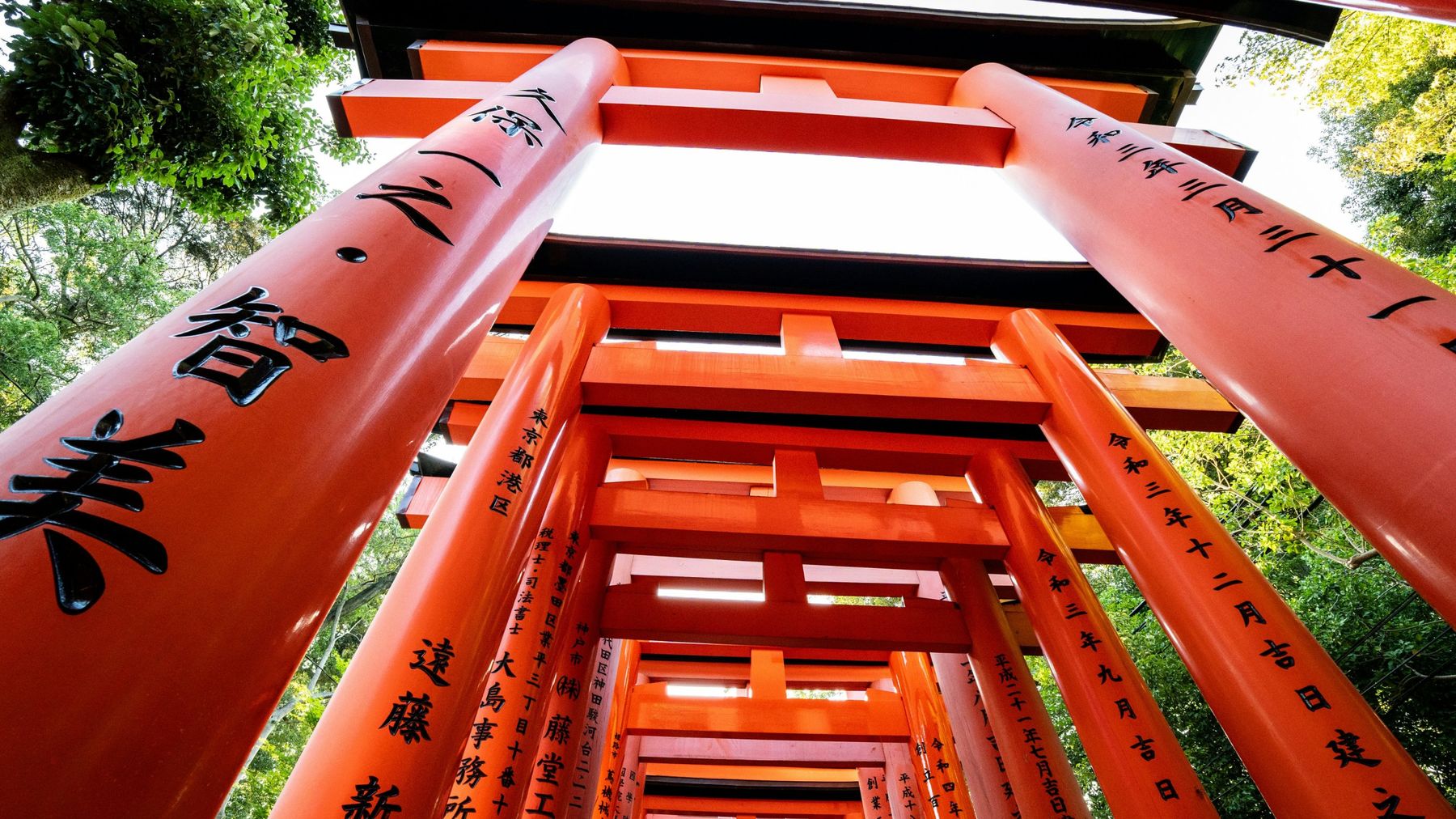
- Fushimi Inari: thousands of orange torii gates winding up a hillside. Go at sunrise, or keep walking past the first section, as the crowds thin out the higher you climb.
- Higashiyama and Gion: the stone lanes up to Kiyomizu-dera temple, and the old teahouse district in the evening. Please don’t chase or photograph geiko and maiko without asking.
- Arashiyama: the bamboo grove (early again), the Togetsukyo bridge and the riverside temples.
- Kinkaku-ji: the Golden Pavilion, best on a sunny day when it reflects in the pond.
Nara is an easy half-day or full-day trip from Kyoto, about 45 minutes by train. Its park is home to hundreds of free-roaming deer that bow for biscuits, and Todai-ji temple holds one of the largest bronze Buddhas in Japan. It’s a lovely change of pace after the busy Kyoto sights.
Days 10 to 11: Osaka (and Himeji Castle)
Osaka is only around 15 minutes from Kyoto by bullet train, and it feels completely different: louder, more relaxed and obsessed with food. The canal-side Dotonbori area is the place to go after dark, with its giant neon signs and street stalls selling takoyaki (octopus balls) and okonomiyaki (savoury pancakes). Kuromon Market is good for a grazing lunch, and Osaka Castle is worth a look from the outside and the park around it.
Osaka is also hosting Expo 2025 from April to October this year, so expect it to be busier than usual and book hotels early if your dates overlap.
On the way to Hiroshima, I’d break the journey at Himeji. The castle is Japan’s best-preserved original, a brilliant white UNESCO World Heritage Site only a few minutes’ walk from the station, and you can leave your bags in a station locker while you visit.
Days 12 to 13: Hiroshima and Miyajima
Hiroshima is a moving place to spend time. The Peace Memorial Park and Museum tell the story of the atomic bomb in 1945 in a way that stays with you, and the ruined dome beside the river is a powerful sight. The city today is friendly and easy-going, and it has its own style of okonomiyaki, layered with noodles, that’s well worth trying.
From Hiroshima, a short train and ferry takes you to Miyajima, where the great red torii gate of Itsukushima Shrine appears to float on the water at high tide. At low tide you can walk right out to it. If you can, stay a night on the island, as it empties once the day-trippers leave and you have the evening and the early morning almost to yourself. There’s a small visitor tax to land on the island, which you pay with your ferry ticket.
Getting around: is the Japan Rail Pass worth it?
The national Japan Rail Pass used to be an easy decision, but its price rose sharply in 2023, and for this route it often no longer pays for itself. A single journey from Tokyo to Kyoto, then on to Osaka and Hiroshima, can work out cheaper bought as individual tickets, especially as you won’t be using the pass inside the cities much. The pass can now be used on the fastest Nozomi trains too, but you pay an extra supplement for them.
My advice is to plug your route into a fare calculator before you buy, and look at the regional passes as well, which can be good value if you’re spending more time in one area. Bullet train tickets are easy to buy at the station machines in English, or online in advance.
In the cities, get a rechargeable IC card such as Suica or Pasmo, either as a physical card or added to your phone’s wallet. You tap it on every train, metro and bus, and it works in convenience stores and vending machines too.
When is the best time to visit Japan?
- Spring (late March to April): cherry blossom season. Beautiful and very busy, with the highest prices.
- Early summer (June to mid July): the rainy season across most of the country.
- Summer (late July to August): hot and humid, with festivals and fireworks, and a big domestic holiday in mid August.
- Autumn (October to early December): clear days and the maples turning red and gold, my pick for photography.
- Winter (December to February): cold, crisp and often clear, with the best views of Mount Fuji and fewer visitors outside the ski areas.
I’d avoid Golden Week, from late April into early May, when much of Japan is on holiday and trains and hotels are packed.
Practical tips for a first trip to Japan
- UK passport holders can visit visa-free for up to 90 days, but always check the latest entry rules before you travel.
- Japan is still more cash-based than the UK. Cards are widely accepted in cities, but carry yen for small restaurants, temples and shrines. Convenience store ATMs accept foreign cards.
- There’s no tipping in Japan, and it can cause confusion.
- Keep your voice down and your phone on silent on trains, and don’t eat while walking along busy streets.
- Bins are rare, so carry a small bag for your rubbish.
- An eSIM or pocket wifi makes navigating far easier.
How to photograph Japan’s cities
Japan’s cities come alive in the blue hour, when the sky still has some colour and the neon signs are glowing. Shinjuku, Shibuya and Dotonbori are at their best then, and rain is your friend, as wet streets double the reflections. My guide to night photography for beginners covers the settings for low light.
For the temples, the rule is simple: be there early. The famous spots are packed by mid-morning, but at sunrise you’ll often share them with a handful of locals. Be respectful too, as photography isn’t allowed inside many halls and some private streets in Gion now ban it altogether.
And if Japan doesn’t fit this year, Southeast Asia is a great alternative over the same months. My Vietnam travel guide and the journal from my Indochina trip are a good place to start.
Frequently asked questions
Is two weeks enough time in Japan?
Yes, two weeks is a great length for a first trip. It lets you see Tokyo, Mount Fuji, Kyoto, Nara, Osaka and Hiroshima at a comfortable pace, with a night in a ryokan along the way. It won’t cover the whole country, so I’d leave Hokkaido, Okinawa and the far north for another trip rather than rushing.
Is the Japan Rail Pass worth it for two weeks?
Not always. The national pass became much more expensive in 2023, and for a simple Tokyo to Hiroshima route, individual bullet train tickets can work out cheaper. Use an online fare calculator to compare your exact route, and look at the regional passes too, which can be better value if you spend longer in one area.
Should I fly into Tokyo or Osaka?
For a first trip I’d fly into Tokyo and home from Osaka’s Kansai airport, or the other way round. An open-jaw ticket saves you travelling back across the country at the end, and it’s often similar in price. Tokyo has two airports, Narita and Haneda, and Haneda is much closer to the city centre.
What is the best month to visit Japan?
It depends on what you want. Late March and early April bring cherry blossom, and November brings the autumn colours, but both are busy and expensive. Winter is quieter, with clear views of Mount Fuji. I’d avoid the rainy season in June and early July, the hot and humid peak of summer, and the Golden Week holidays.
Do I need cash in Japan?
Yes, it helps to carry some yen. Cards and phone payments are now widely accepted in cities, hotels and chain shops, but smaller restaurants, temples, shrines and rural areas often prefer cash. Convenience store ATMs, such as those in 7-Eleven, accept most foreign cards, so it’s easy to top up as you go.