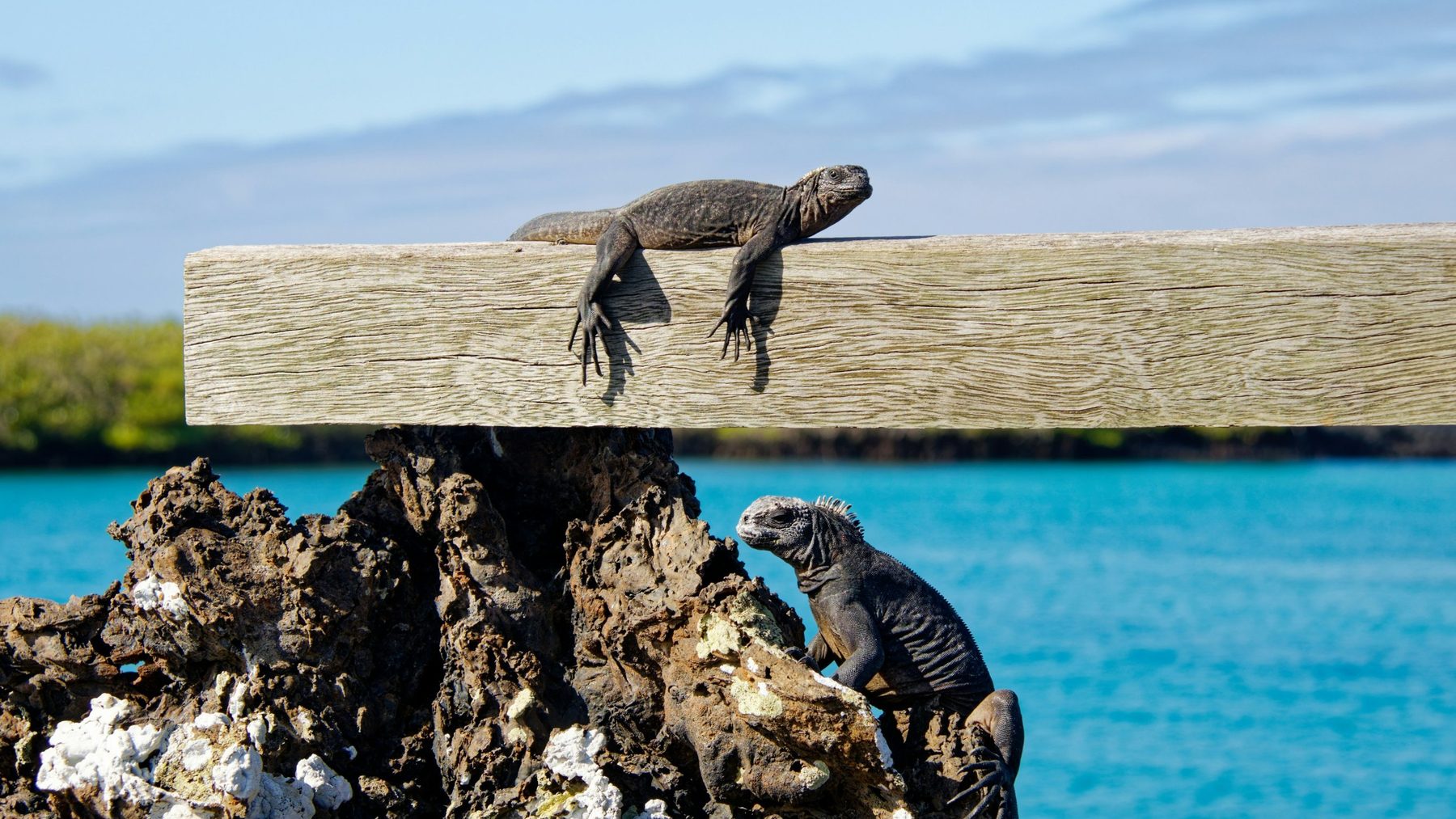
The Galápagos Islands are the place I’d most like to point a camera at that I haven’t yet been to. They sit in the Pacific Ocean, around 1,000 kilometres off the coast of Ecuador, and because the animals evolved with few natural predators, many of them simply aren’t afraid of people. Sea lions sleep on park benches, marine iguanas pile up on the rocks like little dragons, and blue-footed boobies carry on their dances a couple of metres from the path.
I’ve just come back from Costa Rica, where spotting sloths, frogs, turtles and toucans in the rainforest usually meant searching the trees for a while first. The Galápagos is famous for being the opposite. This is a researched guide, covering the wildlife you can expect to see, the main islands, whether to choose a cruise or a land-based trip, the best time to go and the rules you need to know.
What wildlife will you see in the Galápagos?
Around 97 per cent of the land is protected as the Galápagos National Park, and the waters around it form one of the largest marine reserves in the world. Charles Darwin’s visit in 1835 helped shape his theory of evolution, and the islands were among the very first places named as UNESCO World Heritage Sites. These are the animals most people come to see.
Marine iguanas
The only lizards in the world that feed in the sea, diving for algae and then warming up on the black lava rocks. You’ll see them on almost every island, sometimes in their hundreds. On Española some turn red and green in the breeding season.
Giant tortoises
The animals that gave the islands their name (galápago is an old Spanish word for tortoise). The easiest place to see them in the wild is the highlands of Santa Cruz, where they graze in the farmland and muddy pools, and you can learn about the breeding programmes at the Charles Darwin Research Station in Puerto Ayora.
Sea lions
Galápagos sea lions are everywhere: on beaches, jetties, benches and boats. The young ones are very curious and will often swim right up to snorkellers, which is one of the highlights of any trip.
Seabirds
Blue-footed boobies, with their famous feet and comic courtship dance, nest on islands including North Seymour and Española. Magnificent frigatebirds inflate huge red throat pouches to attract a mate, and Genovesa is home to large numbers of red-footed boobies. The waved albatross, which nests almost nowhere else in the world, breeds on Española roughly from April to December, so it’s absent in the first few months of the year.
Penguins and life under the water
Galápagos penguins are the only penguins found naturally on the equator, mainly around Isabela and Fernandina. Snorkelling is half the experience here, with green sea turtles, rays, colourful reef fish and harmless white-tipped reef sharks resting on the bottom. Hammerheads and, in some months, whale sharks gather around the remote northern islands of Darwin and Wolf, but those are only reached on specialist diving liveaboards.
The main Galápagos islands and what each is best for
There are 13 larger islands and many smaller ones, each with slightly different wildlife and landscapes. Only a handful are inhabited.
- Santa Cruz. The main hub, with the largest town, Puerto Ayora. Giant tortoises in the highlands, the Charles Darwin Research Station and the long white sands of Tortuga Bay.
- San Cristóbal. Home to the islands’ capital, Puerto Baquerizo Moreno, where sea lions take over the town beach. It has its own airport and is close to Kicker Rock (León Dormido), a famous snorkelling and diving spot.
- Isabela. The largest island, shaped a bit like a seahorse, with active volcanoes, flamingo lagoons, penguins and the lava tunnels of Los Túneles. Puerto Villamil is a quiet, sandy little town.
- Española. The oldest island in the south-east, with the waved albatross, blue-footed boobies, colourful marine iguanas and a beautiful beach at Gardner Bay. Mostly visited by cruise.
- Fernandina. The youngest and most volcanically active island, with huge marine iguana colonies and flightless cormorants. Only reached by cruise.
- Genovesa. Known as Bird Island, a collapsed volcanic crater in the north full of red-footed boobies, frigatebirds and short-eared owls. Also cruise only.
Galápagos cruise or land-based: which is better?
This is the biggest decision you’ll make, and there isn’t a wrong answer, only the right one for your budget and your stomach.
Cruising the Galápagos
A small expedition boat or yacht lets you reach the remote islands, including Española, Fernandina and Genovesa, that you can’t easily visit from the towns. You move between islands at night, wake up somewhere new and go ashore by small boat with a naturalist guide, often twice a day. Itineraries are set by the national park and usually last from four to fifteen days, and many boats carry 16 passengers or fewer. It’s the best way to see the full range of wildlife, but it’s the most expensive option, and the open crossings can be rough, so take seasickness remedies seriously.
Land-based island hopping
Staying in hotels on Santa Cruz, San Cristóbal and Isabela and travelling between them by public speedboat is cheaper and more flexible. You can add guided day trips by boat to islands like North Seymour, Bartolomé, Santa Fe or Plaza Sur, and you sleep on dry land. The trade-off is that you won’t reach the far-flung islands, and the speedboat transfers of around two hours can be bumpy and early. For a first visit on a tighter budget, I’d lean towards a land-based trip of around a week, with as many day trips as you can fit in.
When is the best time to visit the Galápagos?
The Galápagos is a year-round destination, with two main seasons shaped by the ocean currents rather than any proper summer and winter.
Warm and wet season: December to May
Air and sea temperatures are at their warmest, the sea is generally calmer and there are short tropical showers with plenty of sunshine in between. The islands look greener, snorkelling is more comfortable and it’s a good time for sea turtles and many land birds. It’s also a popular time for families around Christmas and Easter.
Cool and dry season: June to November
Cooler currents bring colder water, more mist in the highlands and choppier seas, so you’ll want a wetsuit for snorkelling. But the cool water is rich in food, which means lots of marine life and busy seabird colonies, and it’s prime time for the waved albatross on Española and blue-footed boobies courting. If you’re prone to seasickness and planning a cruise, the warm season is usually gentler.
How to get to the Galápagos
There are no direct flights from the UK to Ecuador, so you’ll fly to Quito or Guayaquil, usually via a European hub such as Madrid or Amsterdam, or via the United States. From there, domestic flights go to Baltra (for Santa Cruz) or San Cristóbal, with flights from Guayaquil taking around two hours. Many people spend a night or two in Quito or Guayaquil on the way, which also gives you a buffer if your long-haul flight is delayed.
Before you fly to the islands you’ll need to buy a transit control card at the airport in Quito or Guayaquil, and your bags are checked for biosecurity, so don’t pack fresh fruit, seeds or plants. On arrival in the Galápagos you pay the national park entry fee, which rose to US$200 for most foreign adult visitors in August 2024. Fees and rules change, so check the official Galápagos National Park and Ecuadorian government information before you travel.
Galápagos rules: how to behave around the wildlife
The fact that the animals here are so relaxed around people is exactly what makes the rules so important. The national park asks visitors to follow some simple guidelines.
- Stay at least two metres away from all wildlife, even when an animal comes closer to you.
- Never touch, feed or chase the animals, and don’t use flash photography.
- Visit national park sites only with a licensed naturalist guide, except for a few signed sites near the towns.
- Stay on the marked trails and take nothing away, not even a shell or a piece of lava.
- Leave the drone at home, as flying one requires special permission that tourists generally can’t get.
Good guides will remind you of all this, and they’re a big part of what makes the trip, so choose your boat or day tours partly on the quality of the guiding.
How much does a Galápagos trip cost?
Honestly, it isn’t a cheap trip. On top of long-haul flights, you have domestic flights, the park fee and transit card, and either a cruise or a mix of hotels and day tours, which add up quickly. Cruises vary enormously in price depending on the size and standard of the boat and the length of the itinerary. Land-based trips are generally the more affordable way to go, and some travellers pick up last-minute cruise deals once they’re in Ecuador, although that relies on flexibility and luck. Remember to budget for tips for your guide and crew too.
Photography tips for the Galápagos
The Galápagos is famously easy to photograph because the animals let you get close, but that doesn’t mean it’s always easy to take a great photo. The equatorial sun is harsh in the middle of the day, so make the most of early morning and late afternoon landings. A mid-range zoom covers most situations, and a longer lens is handy for birds in flight and for animals you can’t approach. Keep a wide lens or your phone ready for scenes like a sea lion on the beach with the landscape behind it.
Wet landings, where you step off the boat into shallow water, are common, so carry your gear in a dry bag. A small waterproof camera or an action camera is well worth having for snorkelling with sea lions and turtles. If you’re on a land-based trip, the skies over Isabela are dark at night, and my guide to night photography for beginners will help with the stars. For more rainforest wildlife ideas, my Costa Rica gallery shows a very different side of Latin America.
Frequently asked questions
What is the best time to visit the Galápagos Islands?
The Galápagos is good all year. December to May is the warm season, with warmer water, calmer seas and short showers. June to November is cooler and drier, with choppier seas and colder water, but lots of marine life and active seabird colonies. The waved albatross is on Española roughly from April to December, so plan around that if it’s on your list.
Is it better to do a Galápagos cruise or land-based trip?
A cruise reaches remote islands like Española, Fernandina and Genovesa and shows you the widest range of wildlife, but it costs more and the crossings can be rough. A land-based trip, staying on Santa Cruz, San Cristóbal and Isabela with day trips, is cheaper and more flexible. For a first visit on a budget, island hopping works well.
How much is the Galápagos entry fee?
The Galápagos National Park entry fee rose to US$200 for most foreign adult visitors in August 2024, with lower rates for some nationalities and for children. You also need a transit control card, bought at the airport in Quito or Guayaquil before your flight to the islands. Fees can change, so check the latest official information before you travel.
How many days do you need in the Galápagos?
Around a week is a good amount of time for a first visit, whether on a cruise or a land-based trip. That gives you time to see giant tortoises, sea lions, marine iguanas and the main seabirds, plus some snorkelling. Shorter cruises of four or five days lose a lot of time to flights and transfers, so I’d aim for longer if you can.
Can you visit the Galápagos without a tour?
Yes, you can travel independently between the inhabited islands of Santa Cruz, San Cristóbal and Isabela, staying in hotels and using public speedboats. Some sites near the towns can be visited on your own, but most national park visitor sites require a licensed naturalist guide, so you’ll need to book guided day trips or a cruise to see much of the wildlife.