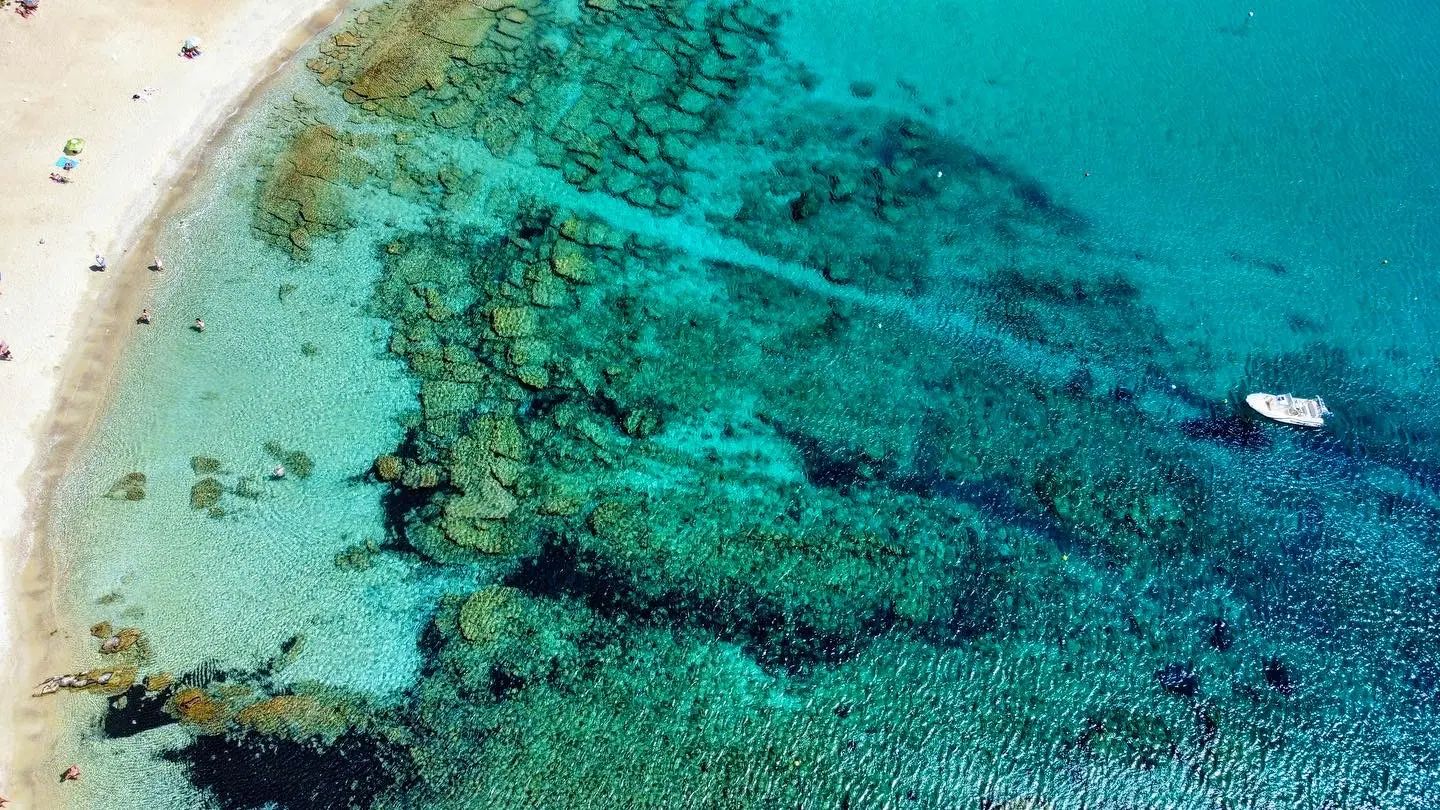
Santorini and Mykonos are famous for good reason, but in high summer they can feel more like a queue with a sea view than an island. Luckily Greece is enormous, and if you go just one ferry further than the big names you’ll find whitewashed villages, empty coves and tavernas where the owner still decides what you’re having for lunch.
I’ve photographed Thassos and Naxos and absolutely loved both of them, and the rest of this list comes from years of asking myself where I’d go if I wanted Greece without the crowds.
What are the least touristy Greek islands?
Quiet is relative in Greece, and no island is empty in mid-August when Greeks are on their own holidays. Some islands are far calmer than others though, usually because they don’t have an international airport or many ferry connections, or they just haven’t become famous on Instagram yet. These eight are calm but still have plenty to do.
1. Thassos
Thassos is the most northerly Greek island and it looks nothing like the Cyclades, as it’s green and covered in pine forest with beaches all the way round and clear, calm water. When I was there it felt much more like a family holiday island than a party one, and that’s a big part of why I liked it so much.
Make sure you see Giola, a natural rock pool on the south coast with just a lip of stone between it and the sea. It’s small and gets busy by midday, so go early. Marble Beach (Saliara) near the port town of Limenas has dazzling white marble pebbles and turquoise water, and inland the old capital of Theologos and the mountain village of Panagia, with its stone roofs and running springs, are lovely places to spend a slow afternoon.
It’s easy to reach. Fly to Kavala, then take the short ferry from Keramoti to Limenas or the longer crossing from Kavala to Prinos. Have a look at my Thassos gallery to see the colours.
2. Naxos
Naxos is the largest of the Cyclades and it’s busier than the others on this list, but it’s big enough that the crowds spread out. It’s the island I always recommend to people who want that classic Cycladic look without Santorini’s prices or packed lanes.
Start at the Portara, the huge marble doorway of an unfinished temple of Apollo beside the harbour, which frames the sunset beautifully. Wander up through the Venetian Kastro above Chora, then drive into the mountains to Halki, with its old distillery, and on to Apeiranthos, a village built almost entirely from marble. On the west coast there are long sandy beaches like Agios Prokopios, Plaka and Mikri Vigla, and they’re so long you can always find some space. My Naxos gallery has the Portara at dusk.
3. Milos
Milos has become better known over the last few years, but it still feels relaxed compared with its famous neighbours. The volcanic coastline is what brings people here, with the white, moon-like rocks of Sarakiniko, the sea caves of Kleftiko (best reached by boat) and colourful little fishing villages like Klima. June or September gives you the best balance.
4. Folegandros
Folegandros is small, steep and beautifully understated. Its Chora is strung along a clifftop and is one of the most dramatic villages in the Aegean, and the handful of beaches are reached by rough paths or small boats. It suits walkers and anyone happy to do very little! Ferry connections are more limited, so plan your trip around them.
5. Sifnos
Sifnos is the one for food lovers, as it has a strong cooking tradition as well as a network of marked walking trails linking villages and chapels, and the tiny Chrysopigi monastery sitting on a rock by the sea. It mostly attracts Greek visitors and has managed to avoid large-scale development.
6. Ikaria
Ikaria in the eastern Aegean is known for how long its residents live and for its slow, late-night pace of life. In summer the villages hold panigyria, all-night festivals with music, dancing and food, and going to one is the best way to get to know the island. It’s rugged and wild with some fine beaches on the north coast, and you’ll want a car.
7. Kythira
Kythira sits off the southern tip of the Peloponnese, away from the main ferry routes, which keeps it quiet. There’s a Venetian castle above the village of Chora, the harbour at Kapsali, waterfalls around Mylopotamos and a surprising number of empty coves. It’s a good add-on to a Peloponnese road trip.
8. Alonissos
In the Sporades, Alonissos is the quieter neighbour of Skiathos and Skopelos. Much of the sea around it is a national marine park that protects the endangered Mediterranean monk seal, and the boat trips around the islets are the highlight. The old hilltop village is lovely at sunset. Do follow the park’s rules and keep a respectful distance from any wildlife you see.
When is the best time to visit the Greek islands without crowds?
June and September are the months I’d go for. The sea is warm, the tavernas and ferries are all running, and the prices and crowds drop noticeably from their peak in July and August. Late September is my favourite, as the water is warm after a long summer and the evening light is gorgeous.
May and October are good too, especially for walking, but some of the smaller islands feel a bit sleepy then, with fewer ferries and some hotels closed. Mid-August, around the national holiday on the 15th, is the busiest time of the year all over Greece, so avoid it if you can or book everything well in advance.
I’ve written lots more about this in my guide on how to avoid crowds when travelling.
How to get around the Greek islands by ferry
The ferries are part of the fun, but they do reward a bit of planning. Timetables are released in stages and can change, so check them close to your dates on the operators’ websites or a booking platform like Ferryhopper.
- Book ahead for July and August, especially if you’re taking a car or want a cabin. Foot passengers have more flexibility in June and September.
- Check the wind. The meltemi is a strong northerly wind that blows mainly in July and August, and it can cancel or delay sailings, particularly on smaller boats.
- Don’t plan a tight connection with an international flight. I’d always leave at least one night spare.
- Fast boats are quicker but cost more and they’re more affected by rough seas. Slow ferries are cheaper and steadier.
- Stick to one island group. Hopping around the Cyclades is easy, but getting from Thassos to Naxos is a very long day.
How to choose the right quiet Greek island
I’d start with what you want from your days and then work backwards to an island.
- Easy beach holiday with the family: Thassos or Naxos
- Classic Cycladic villages without the crush: Naxos, Folegandros or Sifnos
- Dramatic coastline and photography: Milos or Folegandros
- Food, festivals and local life: Ikaria or Sifnos
- Properly off the usual circuit: Kythira or Alonissos
Think about how you’ll get there too. Thassos is easy from Kavala airport and Naxos and Milos have small domestic airports, while Folegandros and Sifnos are ferry-only, and the harder an island is to reach, the quieter it tends to be.
Photographing the quiet Greek islands
Greek summer light is hard and bright from late morning, and the whitewash throws it straight back at you, so make the most of the start and end of the day. On Naxos I planned my evenings around the Portara, getting there well before sunset to find a spot on the causeway and then staying on for the blue hour as the lights of Chora came on.
The inland villages look their best in the soft hour after sunrise, before the shutters open and the delivery vans turn up. On Thassos the pine-green hills and pale marble coves look richest in low side light, so I’d swim at midday and shoot later on. If you fly a drone, check the local rules first, as there are restrictions around archaeological sites and some towns.
Are the alternatives to Santorini really as good?
If you want a sunset over a caldera, nothing quite looks like Santorini. For beaches, food, villages and space to breathe, though, I think these islands match it or beat it, and they cost less too. If you really want to see Santorini, give it a night or two and spend the rest of your trip somewhere quieter.
For more places that deliver without the crowds, take a look at my list of underrated travel destinations, and you’ll find full island-hopping routes in Base Camp.
Frequently asked questions
What is the quietest Greek island to visit?
Among islands with good facilities, Kythira, Alonissos, Folegandros and Sifnos are some of the quietest. They don’t have big international airports and have fewer ferry connections, which keeps visitor numbers down. Properly empty islands exist too, but they often have very limited accommodation and services. For a quiet island that is still easy to reach, Thassos is a great choice.
What is a good alternative to Santorini?
Naxos is the best all-round alternative. It has classic whitewashed Cycladic villages, a lovely sunset at the Portara, long sandy beaches and mountain villages, with lower prices and fewer crowds. Milos is the pick for dramatic volcanic coastline, while Folegandros has a clifftop village with views that rival Santorini’s on a much smaller, calmer scale.
When is the best time to visit the Greek islands to avoid crowds?
June and September are the best months. The weather is warm, the sea is good for swimming, and the ferries and tavernas are running, but crowds and prices are lower than in July and August. Late September is especially good. Avoid mid-August, around the 15th, when Greek families are also on holiday and the islands are at their busiest.
How do I get to Thassos?
Fly to Kavala airport, or to Thessaloniki and drive east. From the mainland, take the short car ferry from Keramoti to Limenas, the island’s main port, or the longer crossing from Kavala to Prinos. Ferries run frequently in summer, but check current schedules and book ahead if you are travelling with a car in August.
Do you need to book Greek ferries in advance?
In July and August, yes, especially if you are taking a car or want a cabin, and on routes with only a few sailings a week. In June and September foot passengers can often book a few days ahead, but popular routes still sell out. Schedules can change and strong meltemi winds can cancel sailings, so leave a buffer before any flight.